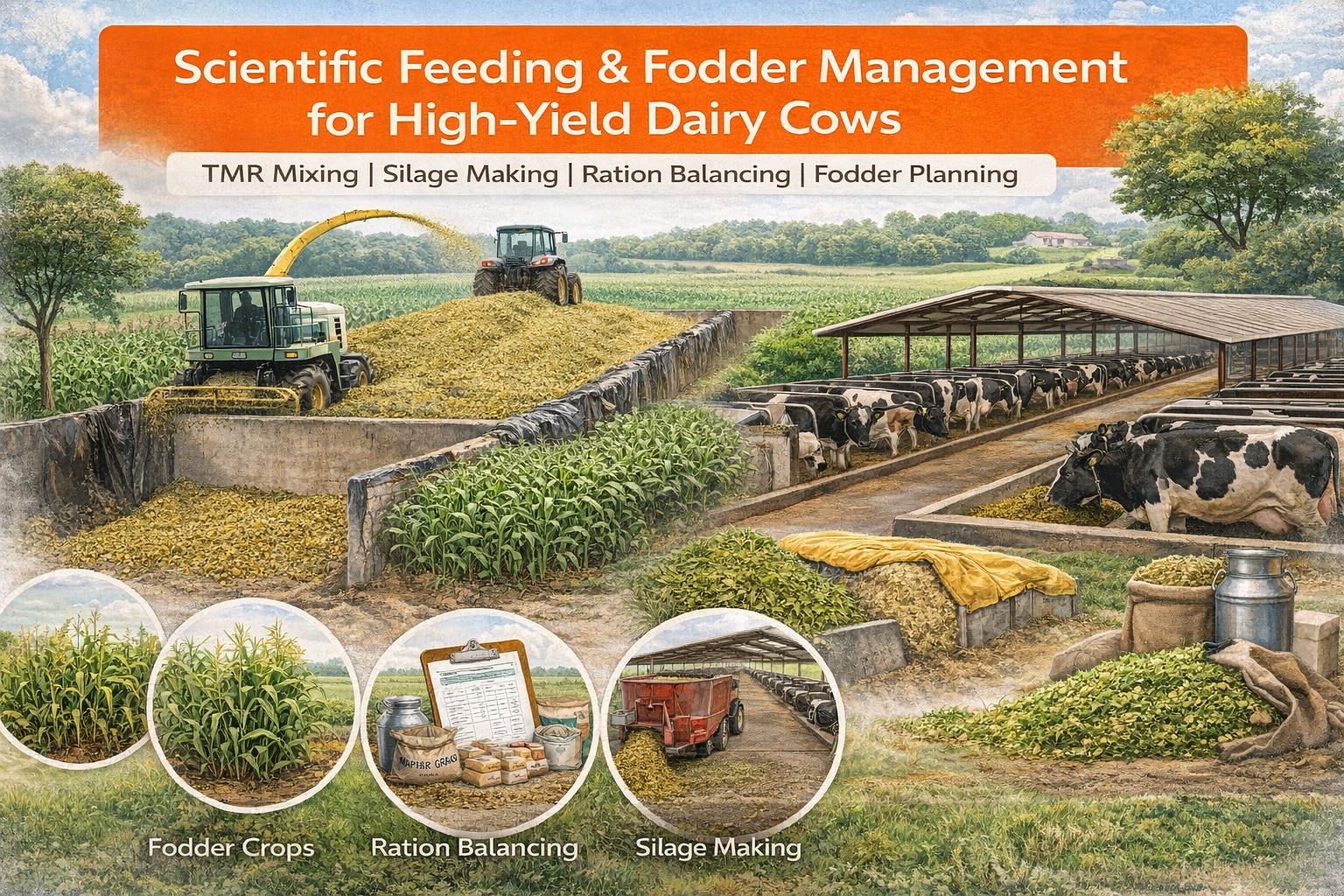
1. Introduction: Why Nutrition Determines Profitability
Proper feeding is the single largest factor affecting milk production. Even genetically superior cows cannot perform without adequate nutrition.
Modern dairy nutrition focuses on balancing energy, protein, fiber, minerals, vitamins, and water, ensuring each cow receives the right nutrients at the right time.
Key Facts (Bullet Points)
● 60–70% of dairy farm cost = feeding
● 1-liter milk requires 400–500 g digestible nutrients
● Underfeeding reduces milk yield and fertility
● Overfeeding increases cost and metabolic diseases
● Balanced nutrition improves calf health & longevity
A scientific feeding plan turns feeding from a cost into a profitable investment.
2. Components of a Dairy Cow Diet
A high-yield cow requires a balanced mix of green fodder, dry fodder, concentrates, minerals, and water. Each plays a unique physiological role.
2.1 Green Fodder (Fresh, Moist Feed)
Green fodder provides fiber, vitamins, minerals, and water.
Common High-Yield Green Fodders:
● Napier CO-4 / CO-5 / CO-6
● CO-FS 29 (fodder sorghum)
● Maize fodder
● Super Napier (BN Hybrid)
● Lucerne (rich in protein)
● Berseem (winter fodder)
Physiological Importance
● Maintains rumen activity
● Prevents acidosis
● Provides essential vitamins A, E & trace minerals
2.2 Dry Fodder (Roughage Source)
Dry fodder ensures proper rumination and rumen pH balance.
Examples:
● Paddy straw
● Wheat straw
● Groundnut haulms
● Maize stover
Dry fodder is low in protein and energy — hence must be balanced with green fodder or concentrates.
2.3 Concentrates (High Energy & Protein Feed)
Concentrates supply digestible energy and essential amino acids.
Types of Concentrates:
● Commercial dairy feed (balanced)
● Oil cakes (groundnut, cottonseed, soybean)
● Grains (maize, barley)
● Bran (rice bran, wheat bran)
Functions (Bullet Points)
● Boosts milk yield
● Supports body maintenance
● Improves fertility
● Enhances early lactation gain
2.4 Mineral Mixture & Salt
Minerals are critical for reproduction, immunity, and milk production.
Essential Minerals:
● Calcium
● Phosphorus
● Magnesium
● Zinc
● Copper
● Iodine
● Selenium
A cow needs salt daily for electrolyte balance.
2.5 Water: The Forgotten Nutrient
Narration:
A high-yield cow producing 20–30 liters of milk needs 70–120 liters of water per day.
Water impacts milk yield more than any other nutrient.
Bullet Points:
● Water must be clean & accessible
● Should not be above 25°C
● Poor water = reduced milk fat & feed intake
3. Daily Feed Requirement Based on Milk Yield
A simple rule: A cow eats 3% of its body weight as dry matter (DM).
Example (HF Cow, 550 kg):
● Dry Matter: 16–18 kg/day
● Total fresh feed: 45–55 kg/day
Detailed Feed Breakdown
● Green fodder: 25–35 kg
● Dry fodder: 5–7 kg
● Concentrate: 1 kg per 2.5 liters of milk
● Mineral mixture: 50–60 g
● Salt: 30–40 g
● Water: 80–120 liters
4. TMR (Total Mixed Ration): The Global Standard
Narration:
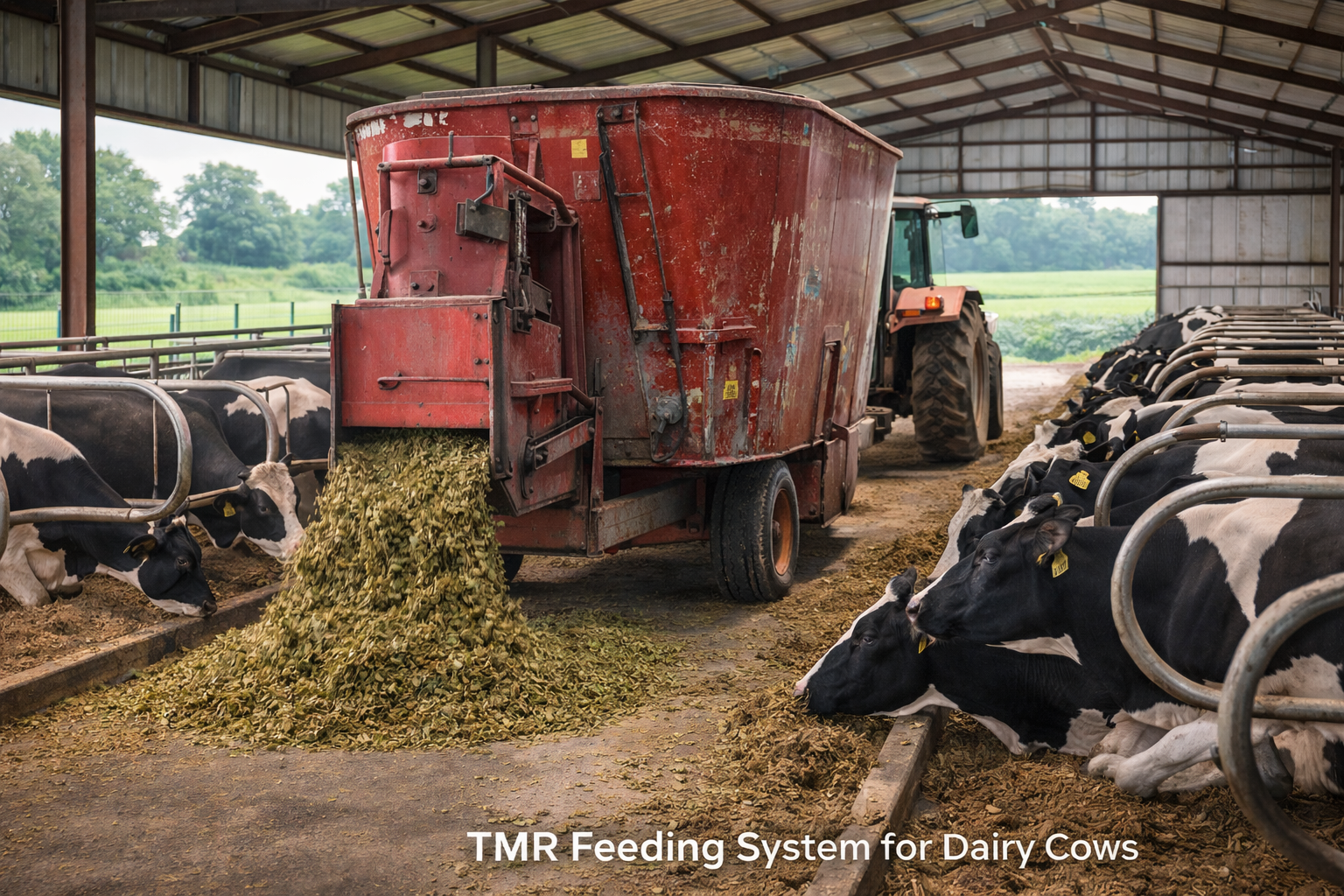
TMR is a scientifically formulated mixture of green fodder, dry fodder, concentrate, and minerals — all blended in a uniform mix using a TMR wagon.
Advantages of TMR
● Prevents selective feeding
● Improves milk yield 10–20%
● Better rumen function
● Precise nutrition delivery
● Reduces feed wastage
Ideal TMR Composition
● 40–50% green fodder
● 20–30% dry fodder
● 20–30% concentrate
● 1–2% mineral mix
● Adequate water for moisture
5. Silage Making: The Most Important Fodder Technology
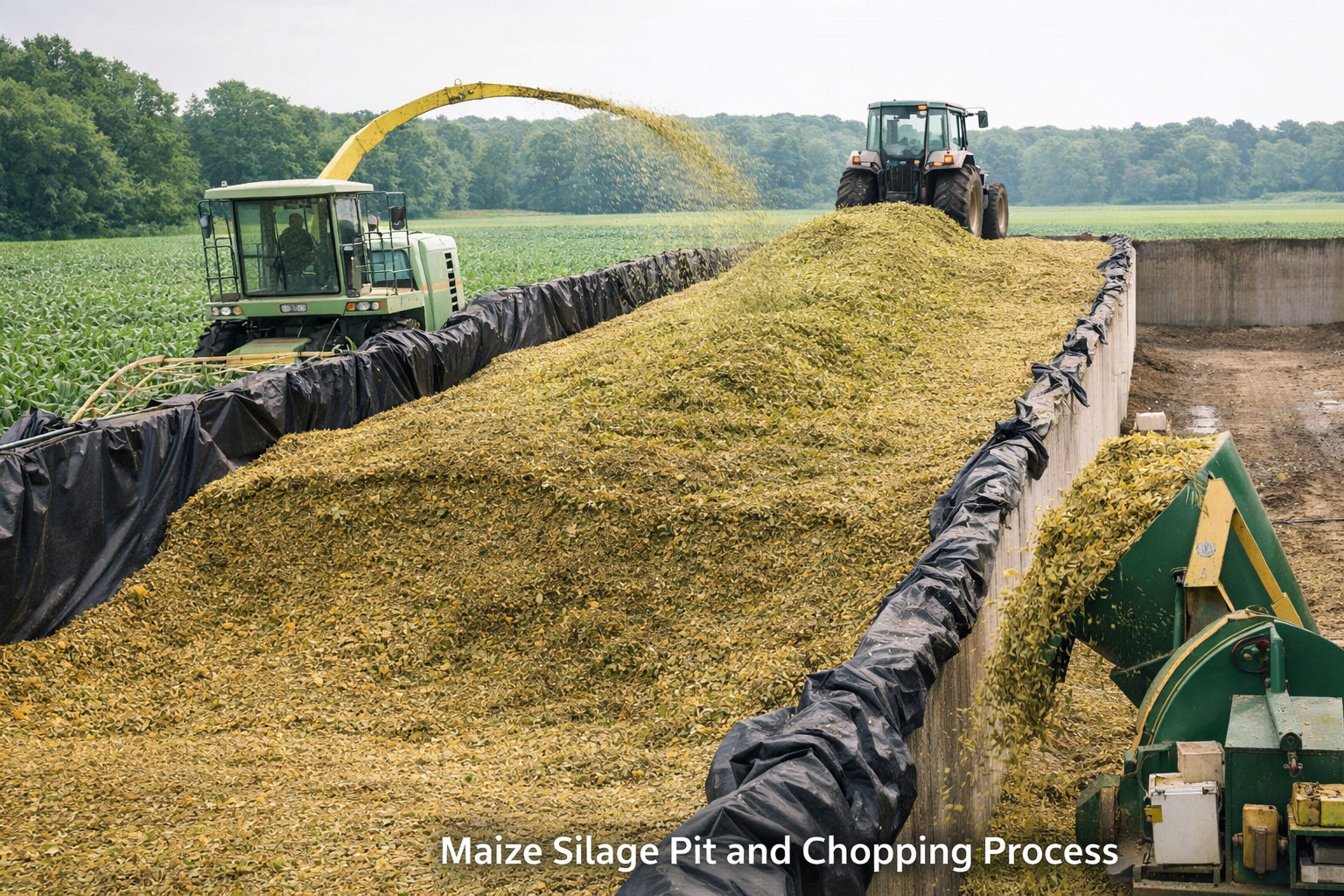
Silage is fermented green fodder stored anaerobically. It provides high-quality feed throughout the year.
Why Silage Is Essential
● Solves green fodder shortage in summer
● Increases milk yield by 10–15%
● Lower cost compared to commercial feed
● Can be stored for 1–2 years
Best Crops for Silage
● Maize
● Sorghum
● CO-4 / CO-5 / COFS-31
● Napier hybrid
Silage Quality Indicators
● Golden yellow color
● Pleasant fruity smell
● Moisture: 60–70%
● pH: 3.8–4.2
6. Ration Balancing: A Scientific Method
Ration balancing ensures the cow receives the exact nutrients required.
Factors Considered
● Body weight
● Milk yield & fat %
● Stage of lactation
● Body condition score
● Weather
● Breed type (Bos taurus vs Bos indicus)
Modern farms use:
● NDDB ration balancing software
● TMR mixing machines
● Nutritionist-designed feed charts
7. Feeding Schedule: When & How to Feed
Narration:
Feeding time influences metabolism and milk production. Cows perform best with predictable routines.
Recommended Schedule
● Early morning feeding
● Post-milking feed
● Evening feeding
● Fresh water refill thrice daily
● TMR feeding 2–3 times/day
Bullet Points:
● Avoid feeding immediately before milking
● Provide fresh fodder after each milk session
● Remove spoiled feed daily
8. Special Feeding for High-Yield Cows
Narration:
High-yield cows producing above 20 liters/day require precise nutrition.
High-Yield Diet Must Include
● High-energy concentrates
● Protein supplements (18–22%)
● Buffers to prevent acidosis
● Adequate calcium & phosphorus
● Yeast culture for gut health
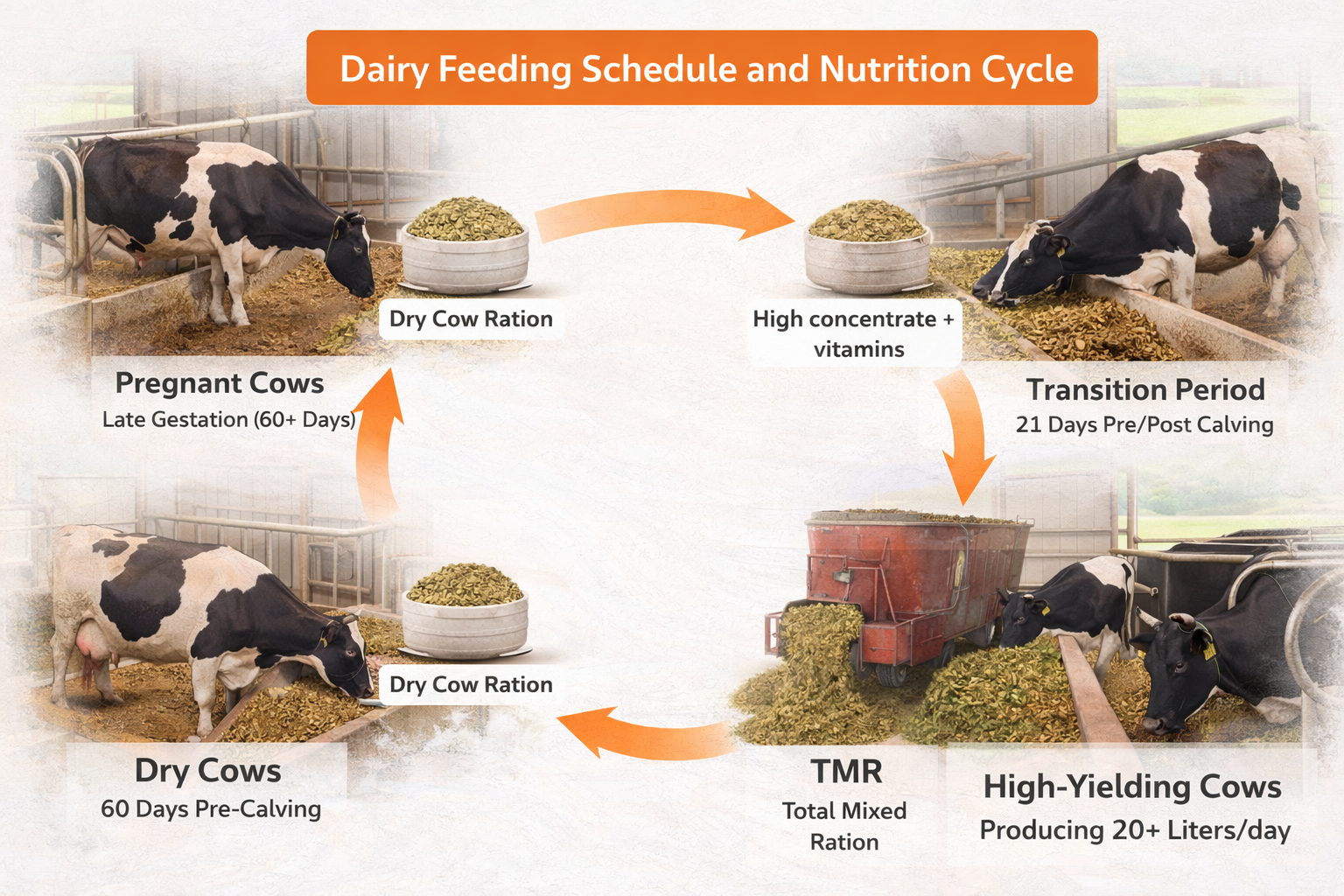
9. Feeding for Pregnant, Dry & Transition Cows
Each stage of life needs a different diet.
Pregnant Cows
● Moderate energy
● High mineral supplementation
● Avoid excessive body fat
Dry Cows (60 days pre-calving)
● Special dry cow ration
● Controlled calcium
● High-fiber diet to avoid milk fever
Transition Period (21 days pre/post calving)
● High digestibility ration
● Increased concentrate
● Extra vitamins
10. Role of Feed Additives
Feed additives help improve digestion and immunity.
Common Additives
● Yeast culture
● Bypass fat
● Bypass protein
● Calcium supplements
● Probiotics
● Enzyme blends
Benefits
● Improved milk yield
● Better rumen health
● Balanced pH
● Higher fat percentage
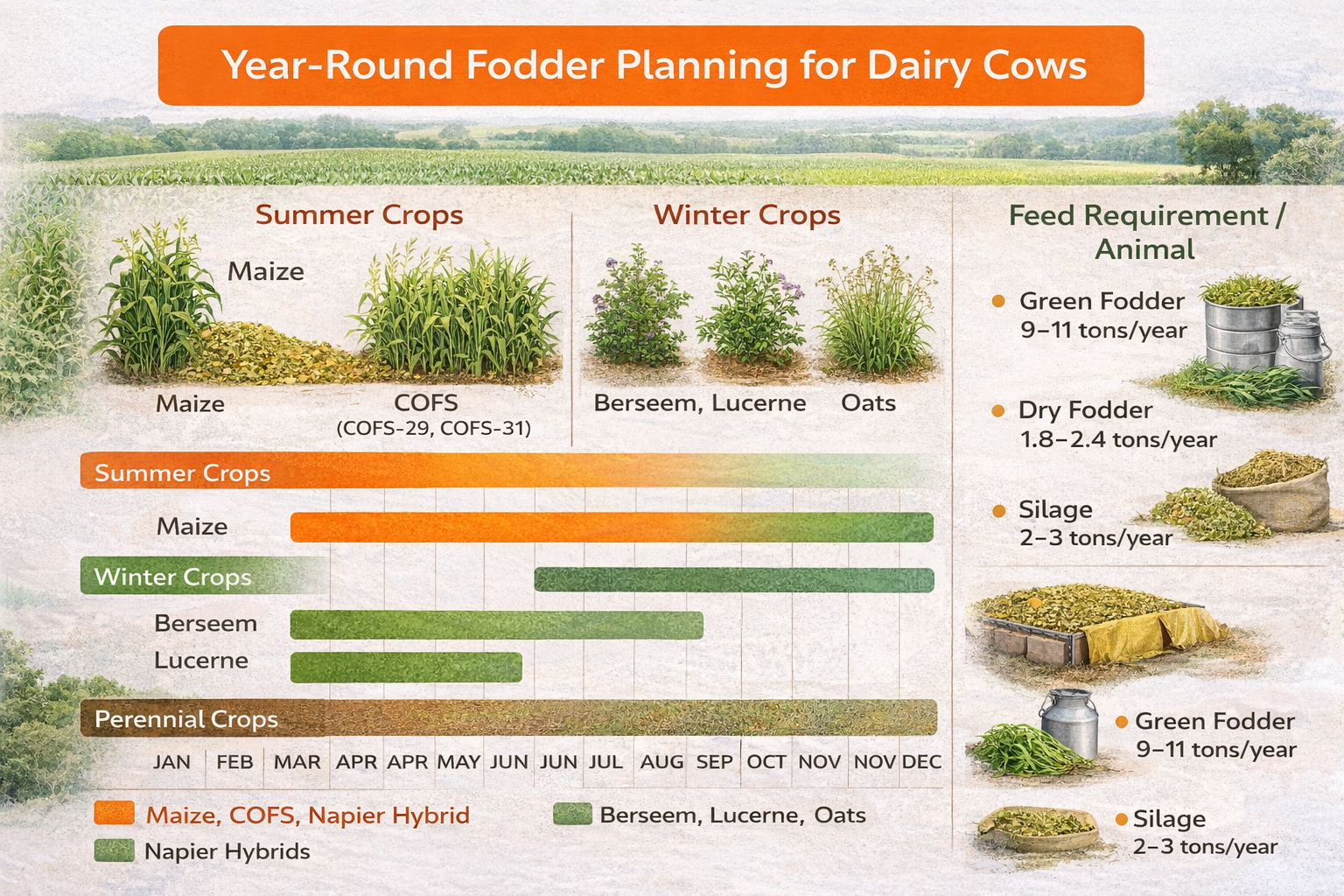
11. Fodder Cultivation Planning for 365 Days
Narration:
A commercial dairy farm must plan its fodder calendar for the entire year.
Fodder Planning Example (Per Animal)
● Green fodder: 25–30 kg/day ⇒ 9–11 tons/year
● Dry fodder: 5–7 kg/day ⇒ 1.8–2.4 tons/year
● Silage: 6–8 kg/day ⇒ 2–3 tons/year
365-Day Fodder Crop Calendar Example
● Summer crops: Maize, COFS, Napier
● Winter crops: Berseem, Lucerne, Oats
● Perennial crops: Napier hybrids
CONCLUSION: Nutrition Is the Engine of Milk Production
Feeding is not a routine chore — it is a science that drives milk production, fertility, animal health, and farm economics.
A well-fed cow is a profitable cow.
By using TMR feeding, silage making, balanced rations, and efficient fodder planning, dairy farmers can significantly improve their farm’s sustainability and income.