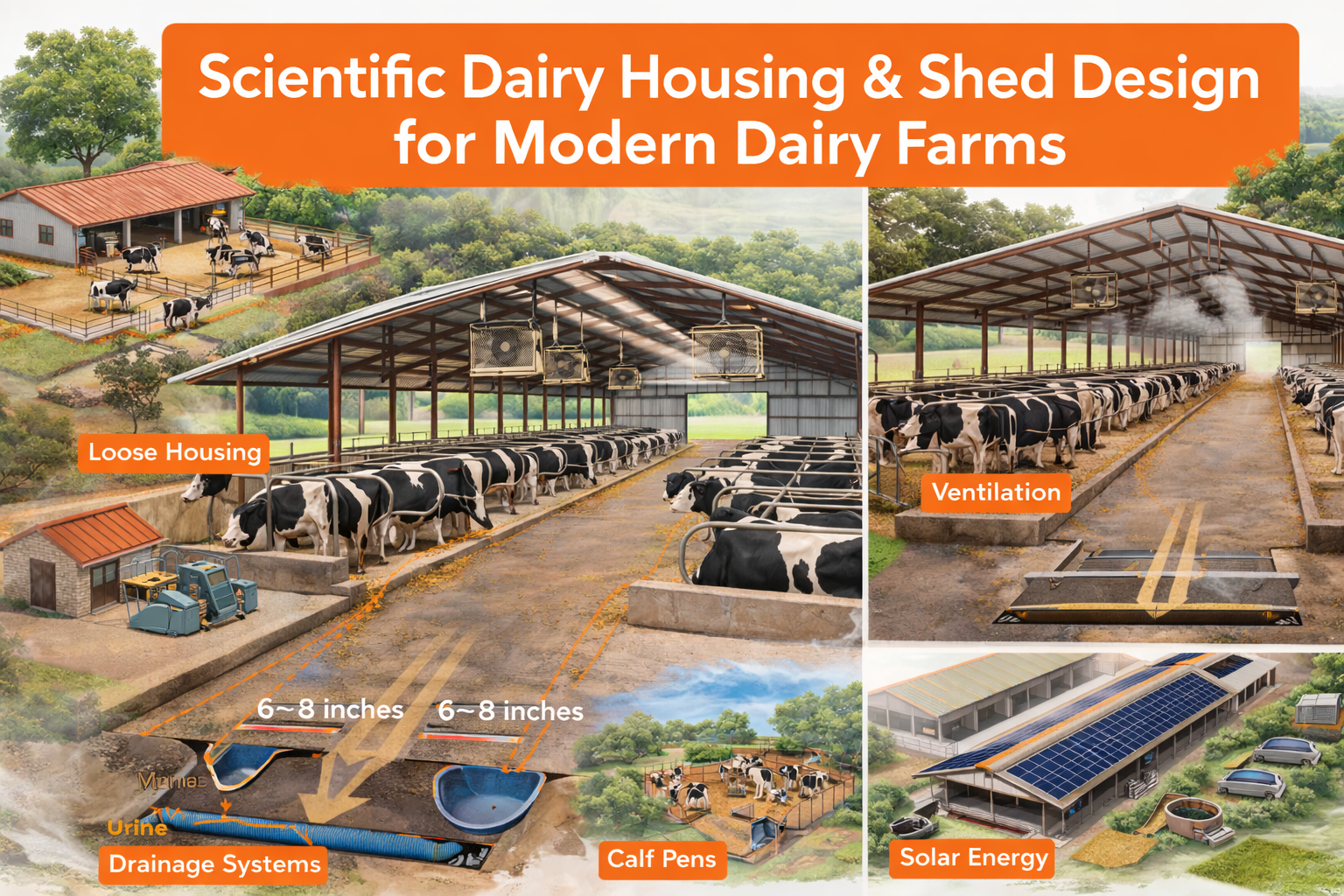
1. Introduction: Why Dairy Housing Matters More Than We Think
Scientific dairy housing is the foundation of modern milk production. A well-designed barn directly influences:
● Milk yield
● Cow comfort
● Disease prevention
● Heat stress reduction
● Labour efficiency
● Manure management
● Hygiene and mastitis control
Studies from ICAR–NDRI, FAO, and Wisconsin Dairy Science show that proper housing alone can increase milk production by 10–25%.
A dairy shed is not merely a structure; it is a controlled micro-environment where temperature, airflow, hygiene, and animal behavior are optimally managed.
2. Housing Principles: The Science Behind Cow Comfort
Cows are highly sensitive animals with specific comfort needs.
Key Biological Principles
● Ideal temperature: 5°C–25°C
● Above 28°C = heat stress → rapid decline in milk yield
● Resting time needed: 12–14 hours/day
● Lying comfort directly linked to udder blood flow
● Cows drink 70–120 liters of water/day
● Floor slipperiness causes injury and reduces feed intake
● Airflow is more important than ambient temperature
Modern dairy housing must align with these biological requirements.
3. Types of Dairy Housing Systems
There are three main categories globally.
3.1 Loose Housing System (Most common in India)
Cows move freely in an open area + feeding area + resting area.
Advantages
● Low construction cost
● Easy cleaning
● Reduced stress
● Ideal for Indian climate
Disadvantages
● Harder to monitor individual animals
● Higher space requirement
● More chance of feed wastage
3.2 Tie-Stall Housing
Cows tied individually in stalls.
Advantages
● Individual monitoring
● Controlled feeding
● Good for small farms
Disadvantages
● Labour-intensive
● Less animal freedom
● Not suitable for large farms
3.3 Modern Free-Stall Barns (Global standard for 50+ animals)Cows have open access to feed alley, water points, and cubicles for resting.
Advantages
● Best balance of comfort + hygiene
● Suitable for automation
● Efficient manure management
● High milk yield farms prefer this system
Disadvantages
● Higher construction cost
● Requires careful cubicle design
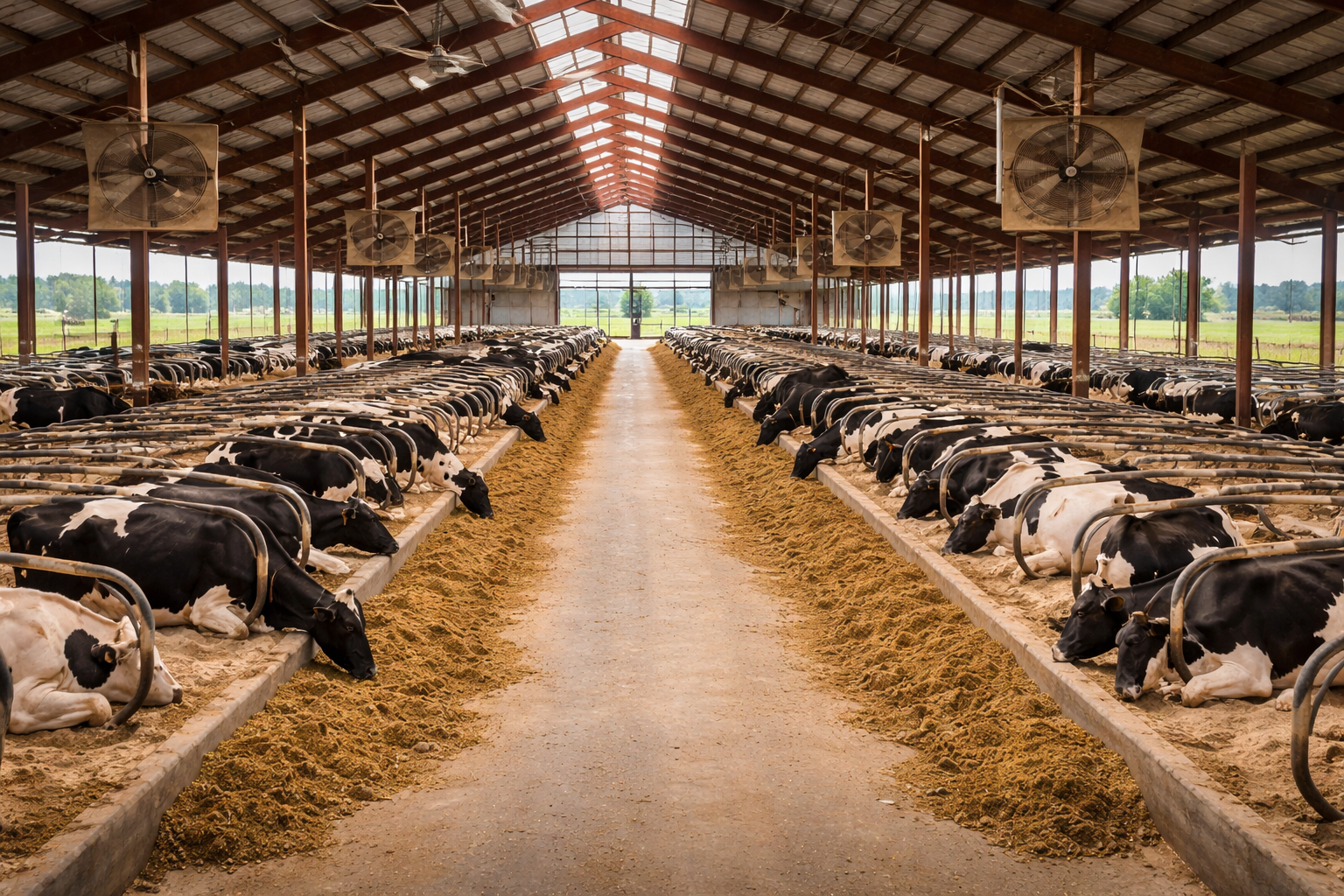
4. Dairy Shed Dimensions & Structural Engineering
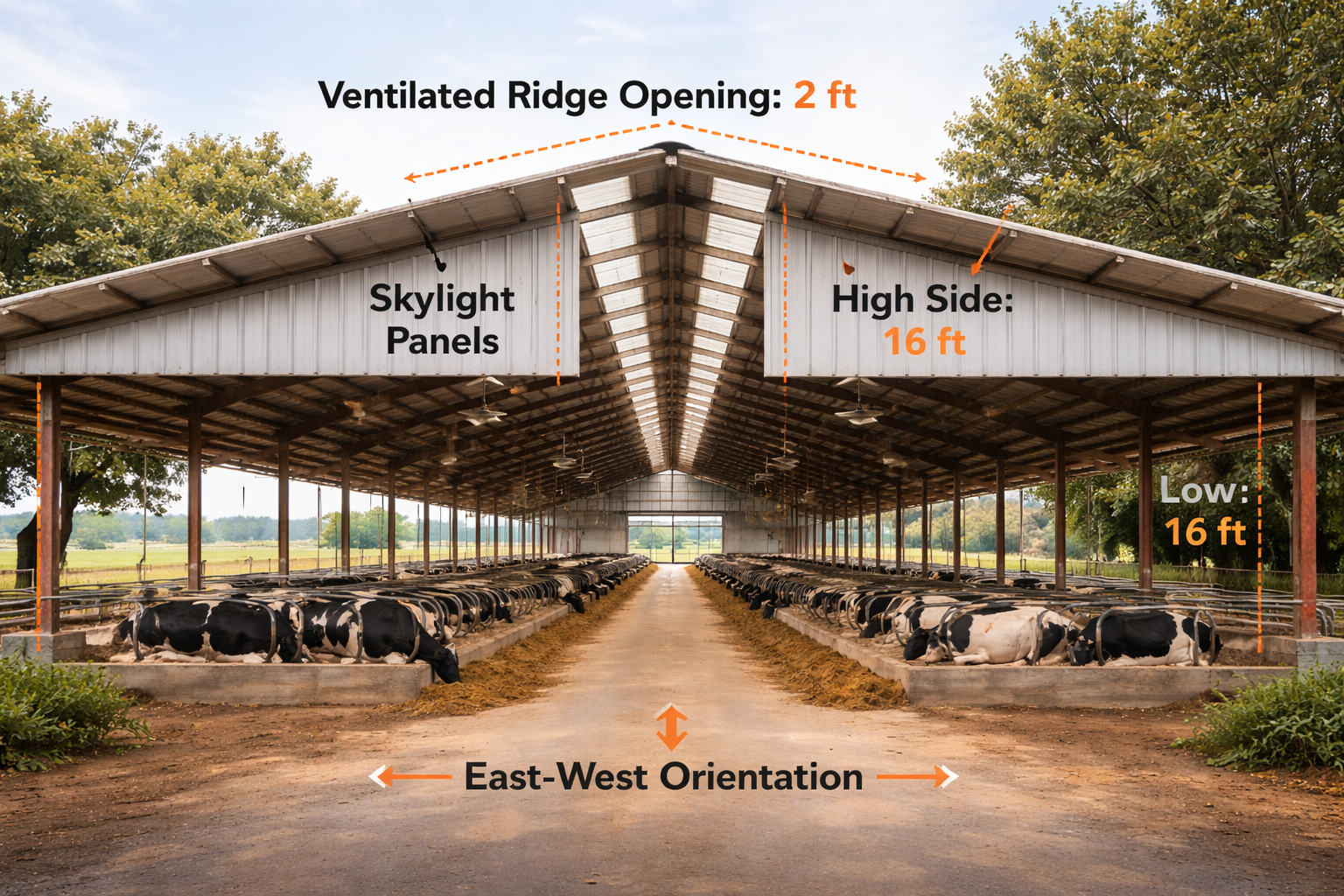
Ideal Orientation
East–West: Minimizes sun exposure on sides → reduces heat stress.
Recommended Roof Height
● Low side: 10–12 ft
● High side: 14–16 ft
High-slope roof improves airflow and hot air escape.
Roofing Materials
● GI sheet (galvanized iron)
● Fibre cement sheet
● Heat-resistant coated sheets
● Polycarbonate skylight panels (for natural light)
Benefits of Skylight Panels
● 20–30% better illumination
● Saves ₹1,500–5,000/month on electricity
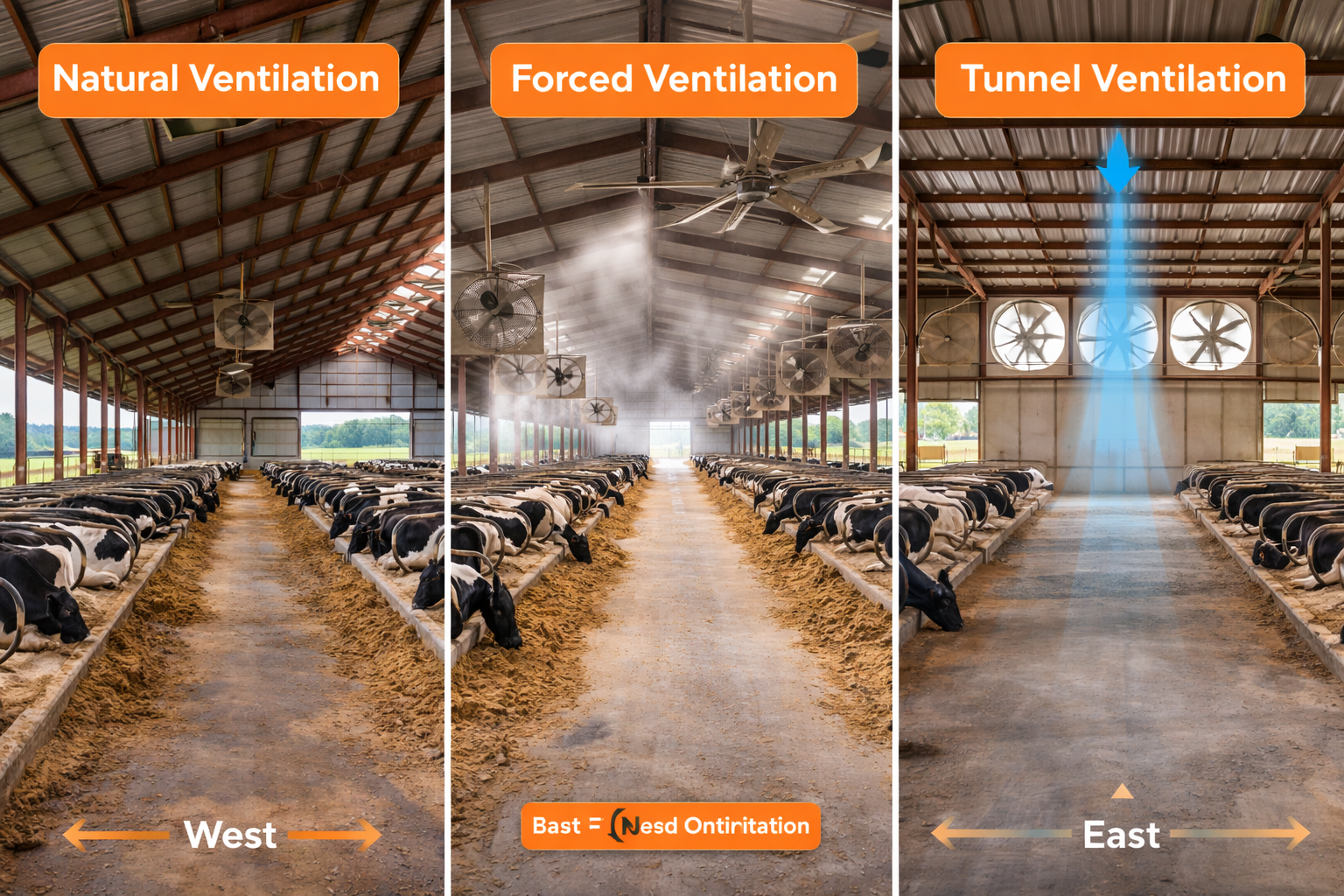
5. Ventilation: The Most Critical Component
Cow comfort depends primarily on airflow, not on temperature.
5.1 Natural Ventilation
Designed through open sides + ridge ventilation.
Key Principles
● Minimum 10–12 air changes per hour
● Ridge opening: 1 inch for every 10 feet of building width
● Side wall height: 8–10 feet usable opening
5.2 Forced Ventilation (Fans & Foggers)
Fans
● Industrial fans: 36–54 inches
● Mounted 8–10 ft above ground
● Should achieve 3–5 m/s airspeed at cow level
Foggers / Misters
Used to cool the shed by evaporative cooling.
Important:
Foggers must be used with fans, otherwise humidity increases → mastitis risk.
5.3 Tunnel Ventilation (Advanced Systems for >200 cows)
A closed barn where high-speed airflow is pushed through cows.
Benefits
● Complete airflow control
● Eliminates heat stress
● Works even in hot, humid climates
6. Flooring: Safety, Hygiene & Cow Longevity
The most neglected factor in Indian farms, but extremely important.
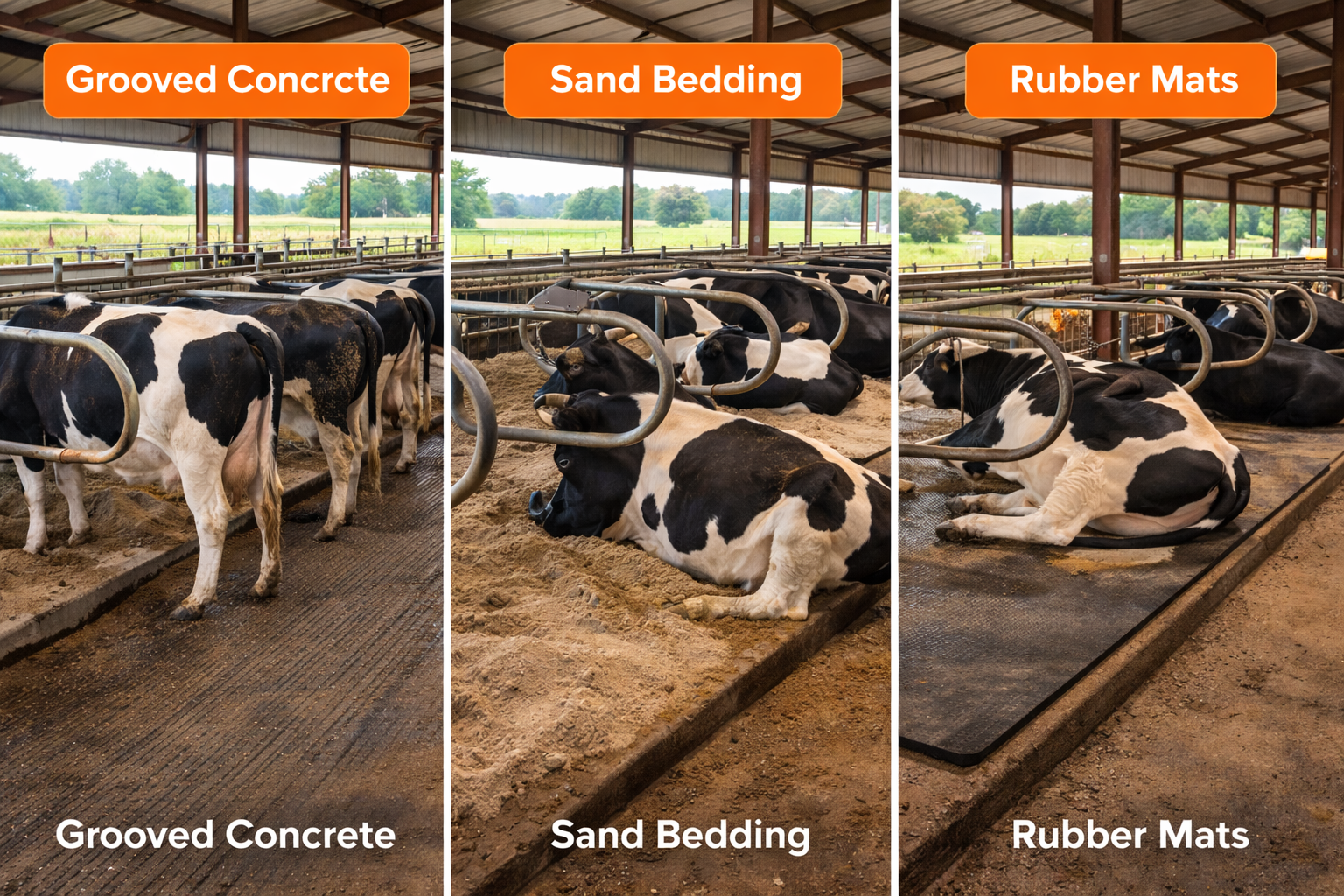
6.1 Recommended Flooring Materials
● RCC (Reinforced cement concrete)
● Grooved concrete (anti-slip)
● Rubber mats for resting areas
● Sand bedding for cubicles
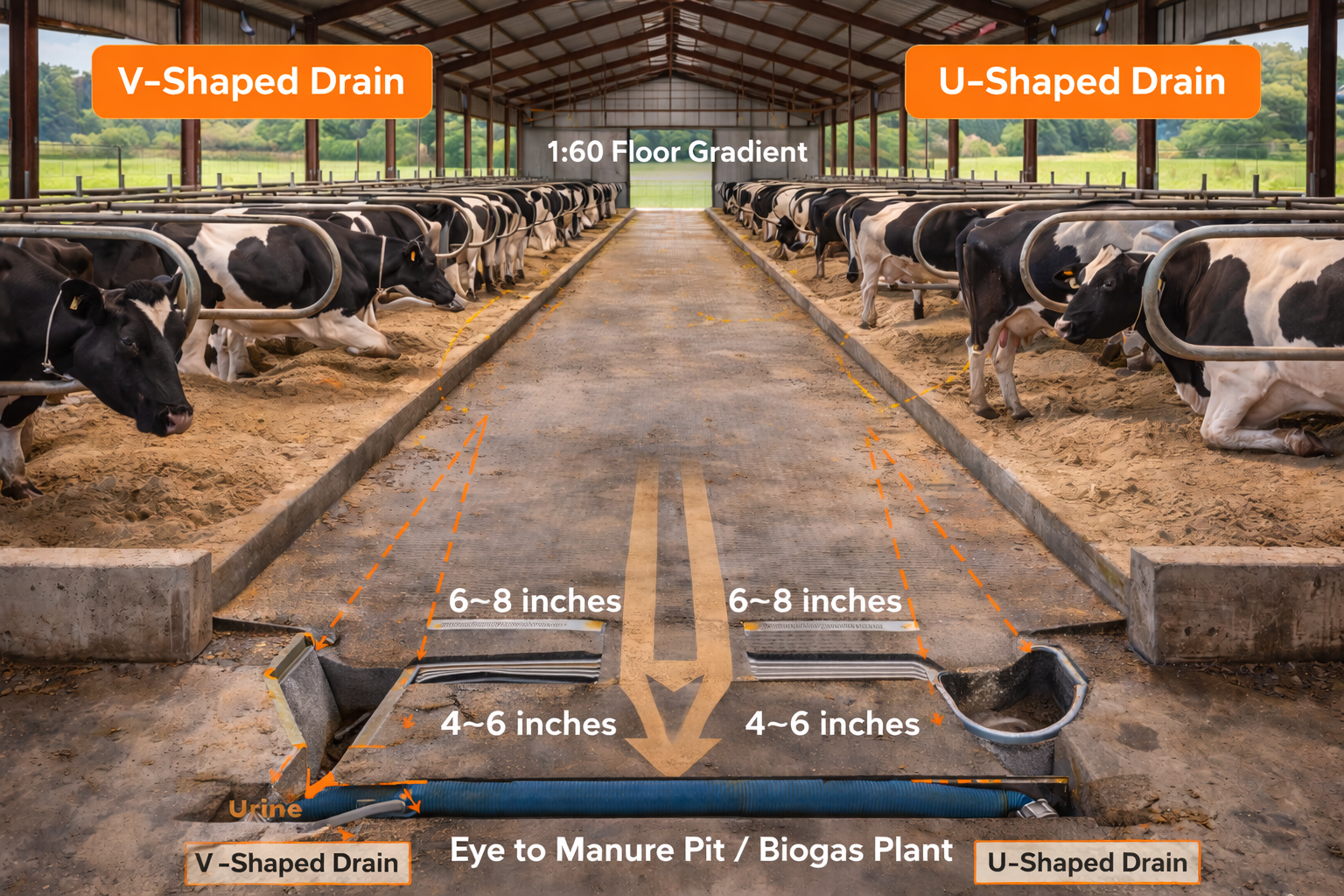
6.2 Floor Gradient
For proper drainage:
● 1:60 for resting & walking areas
● 1:40 for urine drainage alleys
Incorrect slope causes:
● Slipping
● Hoof diseases
● Stagnant urine → mastitis contamination
6.3 Bedding Options
● Sand (best globally) — soft, hygienic, reduces mastitis
● Rubber mats — comfortable but expensive
● Paddy straw — commonly used in Indian farms
7. Drainage System: Engineering for Cleanliness
Drain Types
● V-shaped drains
● U-shaped drains
● Slatted floor drains (European barns)
Key Principles
● Must carry urine rapidly
● Must NOT be too steep (slip hazard)
● Ideally discharge into manure pit or biogas plant
Minimum Dimensions
● Width: 6–8 inches
● Depth: 4–6 inches
8. Watering Systems
Cows must have 24/7 access to clean, cool drinking water.
Types of Water Systems
● Cement troughs
● Stainless steel auto-drinkers
● Plastic float-valve drinkers
Daily water requirement
● HF cow: 80–120 liters/day
● Indigenous cow: 40–60 liters/day
● Buffalo: 70–100 liters/day
Automatic systems reduce labour and improve intake.
9. Feeding Alleys, Mangers & TMR Zones
Feed Alley Width
Minimum: 10–12 ft
Manger Height
● 18–22 inches (cow)
● 22–26 inches (buffalo)
TMR (Total Mixed Ration) Feeding Zones
Used in commercial farms for balanced nutrition.
Advantages:
● Prevents selective feeding
● Increases milk yield 10–20%
10. Calf Pens, Dry Cow Pens & Isolation Areas
Calf Pens
● Individual pens for first 2 months
● Size: 4 ft × 6 ft
Dry Cow Area
Special rest area for pregnant animals.
Quarantine Area
For newly purchased animals to prevent disease introduction.
11. Choosing Your Shed Model Based on Herd Size
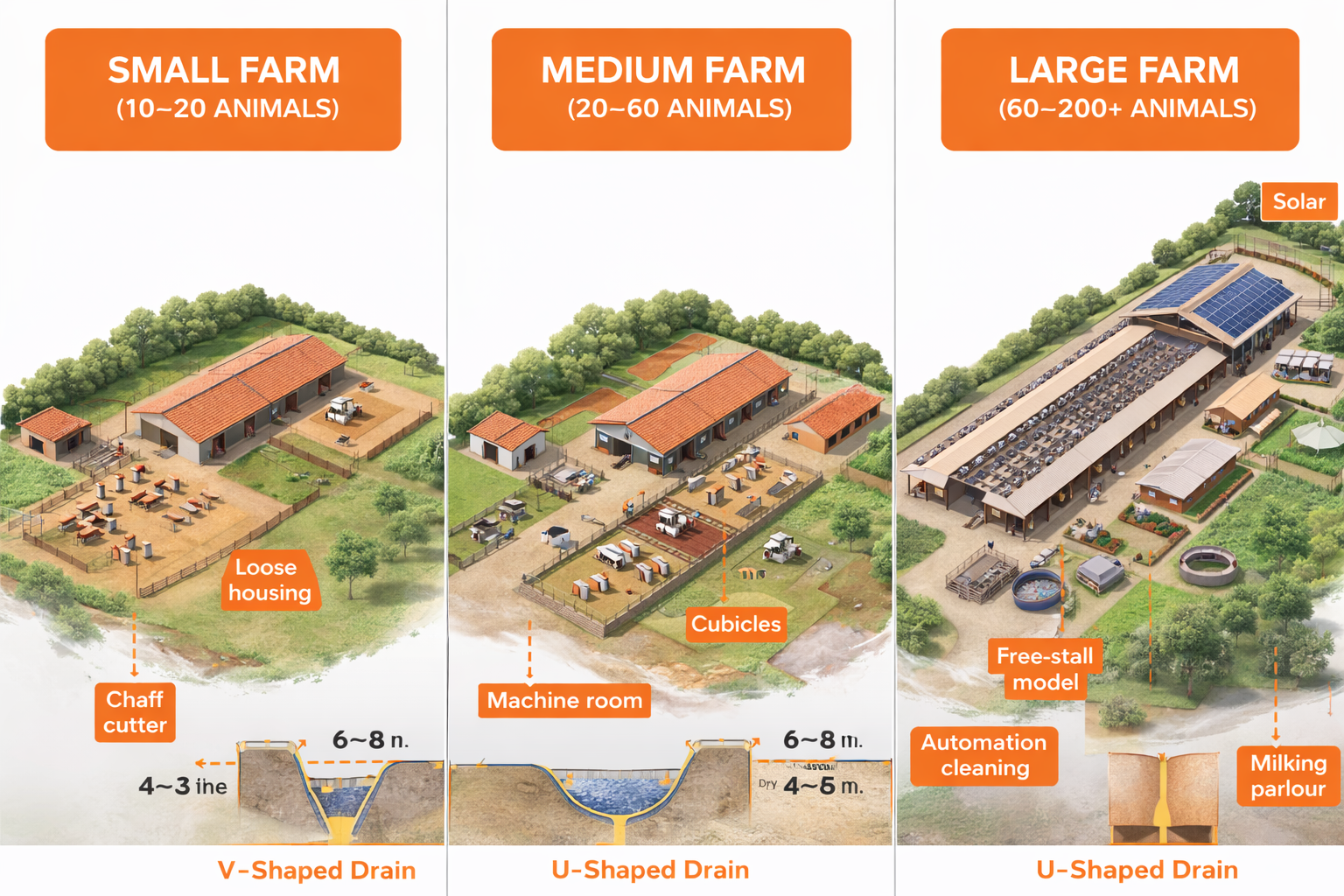
For 10–20 Animals
● Loose housing best
● Simple structure
● Low capital cost
For 20–60 Animals
● Hybrid model
● Cubicles + feeding alley
● Milking machine needed
For 60–200+ Animals
● Free-stall barn
● TMR feeding
● Mechanized cleaning
● Bulk milk cooler
● Heat stress mitigation systems
2. Full Farm Layout Plan (Example)
Ideal for 50 animals (HF, Jersey, or Buffalo)
Components
● Free-stall barn: 60 ft × 180 ft
● Feed alley: 12 ft
● Cubicle rows: 3 lines
● Calf shed
● Milking parlour
● Office room
● Chaff cutter room
● Manure compost pit
● Biogas plant
● Fodder area
13. Sustainability Add-Ons
Biogas Plant
Converts cow dung into:
● Cooking gas
● Electricity (via generator)
● Slurry fertilizer
Rainwater Harvesting
Reduces borewell dependency.
Solar Energy
Ideal for farms with frequent power cuts.
CONCLUSION: Dairy Housing Is a Science, Not a Shed
A well-designed dairy barn is an investment that pays off continuously through:
● Higher milk yield
● Lower veterinary expenses
● Better animal welfare
● Improved farm efficiency
● Longer productive life of cows
The shed you build today defines the success of your dairy farm for the next 20 years.