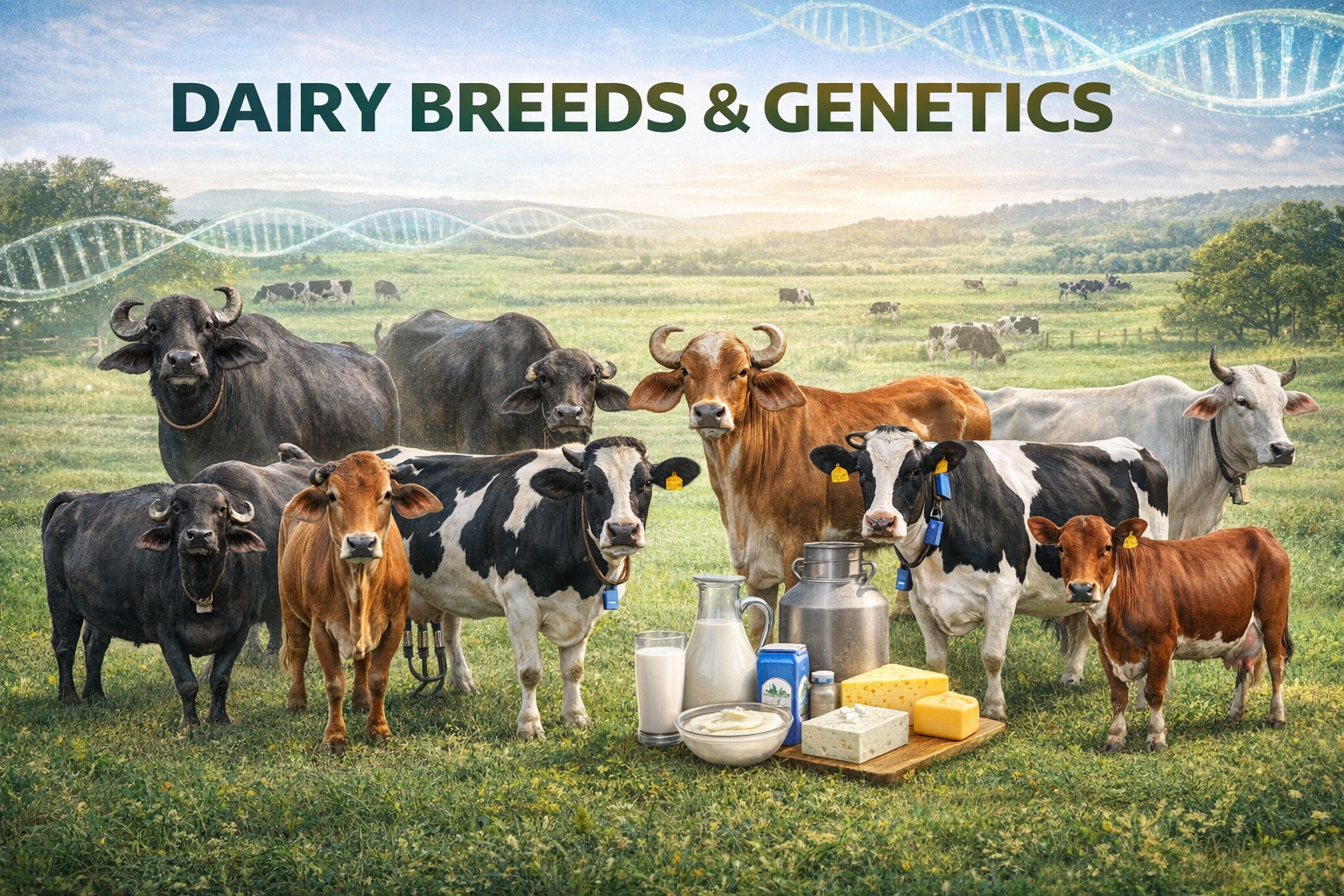
1. Introduction: Why Breed Selection Determines Dairy Success
Breed selection is the core decision that shapes milk yield, farm profitability, adaptability to climate, and long-term sustainability.
Different breeds evolved across continents under varying climatic and nutritional environments, leading to distinct genetic traits in:
● Milk production
● Fat percentage
● Heat tolerance
● Disease resistance
● Fertility
● Growth rate
Modern dairy farming integrates animal genetics, climate suitability, and farm objectives to choose the correct breed.
2. Scientific Classification of Dairy Animals
Before diving into individual breeds, it is essential to understand their taxonomic classification.
A. Cattle (Cows) – Scientific Classification
● Kingdom: Animalia
● Phylum: Chordata
● Class: Mammalia
● Order: Artiodactyla
● Family: Bovidae
● Genus: Bos
● Species (Humpless European Cattle): Bos taurus
● Species (Humped Indian Zebu Cattle): Bos indicus
B. Buffaloes – Scientific Classification
● Genus: Bubalus
● Species: Bubalus bubalis
● Common: Asian Water Buffalo
3. Global Categories of Dairy Cattle
Modern dairy cattle around the world fall into two genetically distinct groups.
3.1 Bos taurus (European / Temperate Breeds)
Scientific name: Bos taurus
These breeds evolved in cold climates and are known for:
● High milk production
● Lower heat tolerance
● Higher feed conversion efficiency
● Greater response to intensive management
Most high-yield commercial farms use Bos taurus genetics.
Common Bos taurus Dairy Breeds
● Holstein Friesian (HF)
● Jersey
● Ayrshire
● Brown Swiss
● Guernsey
3.2 Bos indicus (Indian Zebu Breeds)
Scientific name: Bos indicus
These breeds are native to tropical regions.
Key advantages:
● Excellent heat tolerance
● High disease resistance
● Long lifespan
● Low maintenance
Drawbacks:
● Lower milk yield than European breeds
● Lower udder development
● Longer calving intervals
Common Indian Zebu Dairy Breeds
● Gir
● Sahiwal
● Red Sindhi
● Tharparkar
● Rathi
4. Major Dairy Cow Breeds (With Scientific Names)
Below is a detailed profile for each major breed.
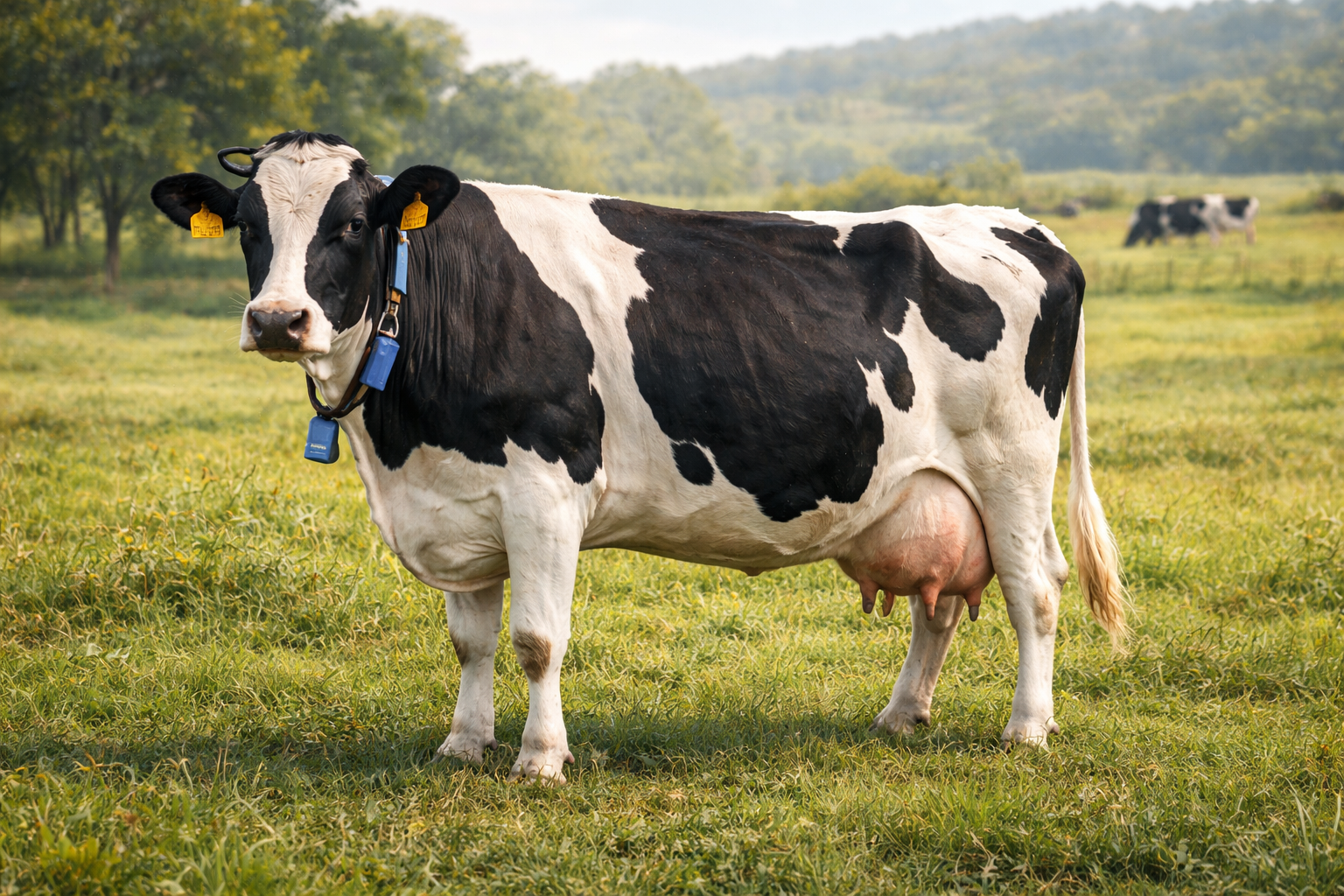
4.1 Holstein Friesian (HF)
Scientific name: Bos taurus taurus (subspecies)
Origin: Netherlands / Germany
Category: Highest-yielding dairy breed worldwide
Production Traits
● Milk yield: 25–40 liters/day (India); 40–60 liters/day (Europe/USA)
● Fat %: 3.2–3.8%
● Body weight: 580–750 kg
Strengths
● Highest milk production
● Responds excellently to TMR feeding
● Ideal for commercial farms
Limitations
● Low heat tolerance
● Susceptible to mastitis
● Needs strict management
4.2 Jersey Cow
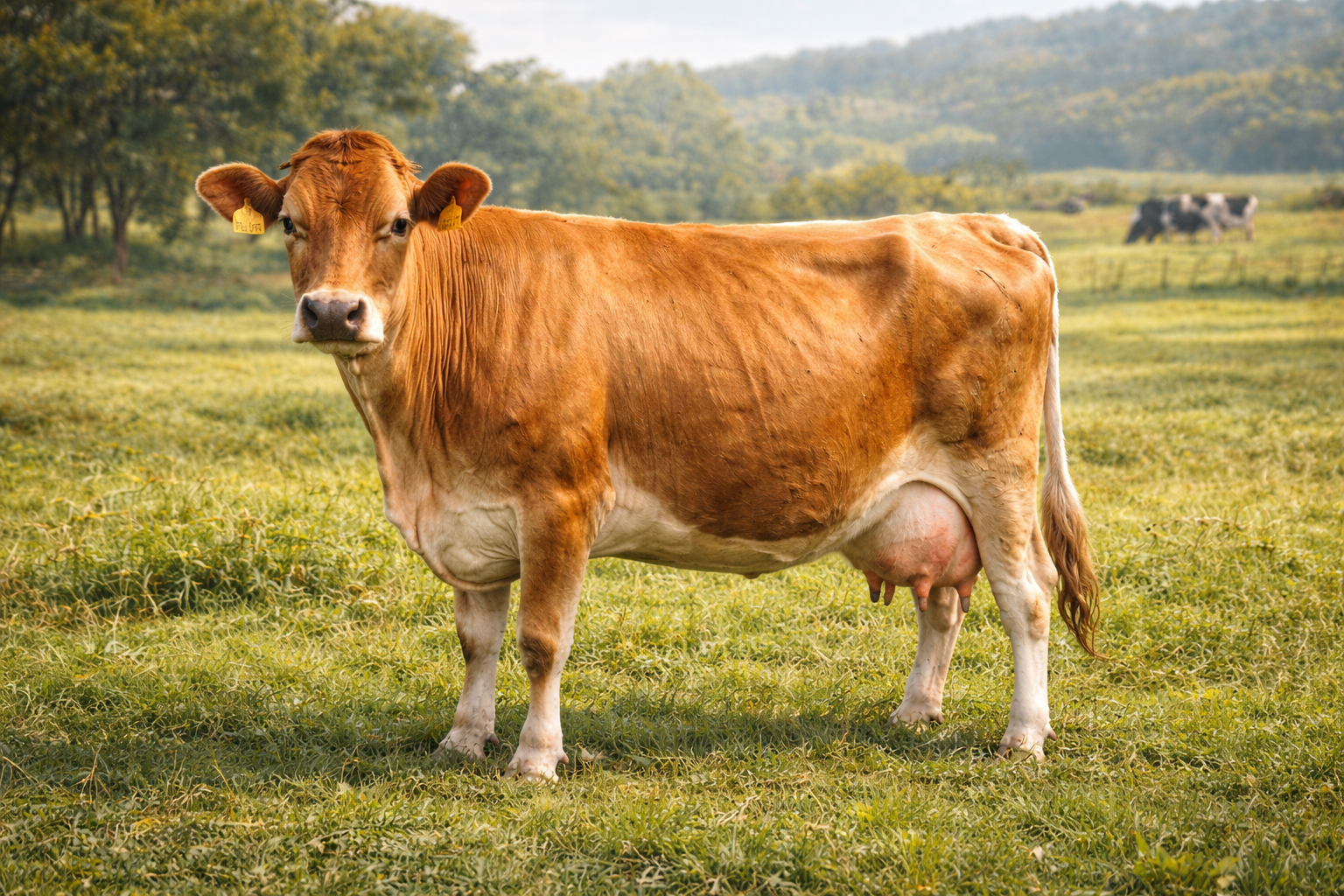
Scientific name: Bos taurus taurus
Origin: Jersey Island, UK
Feature: High-fat milk breed
Production Traits
● Milk yield: 15–25 liters/day
● Fat %: 4.8–6.2%
● Body weight: 380–450 kg
Strengths
● Very high-fat content ideal for ghee
● Feed efficient—low maintenance
● Good fertility
Limitations
● Sensitive to heat
● Needs balanced minerals to avoid milk fever
4.3 Gir Cow
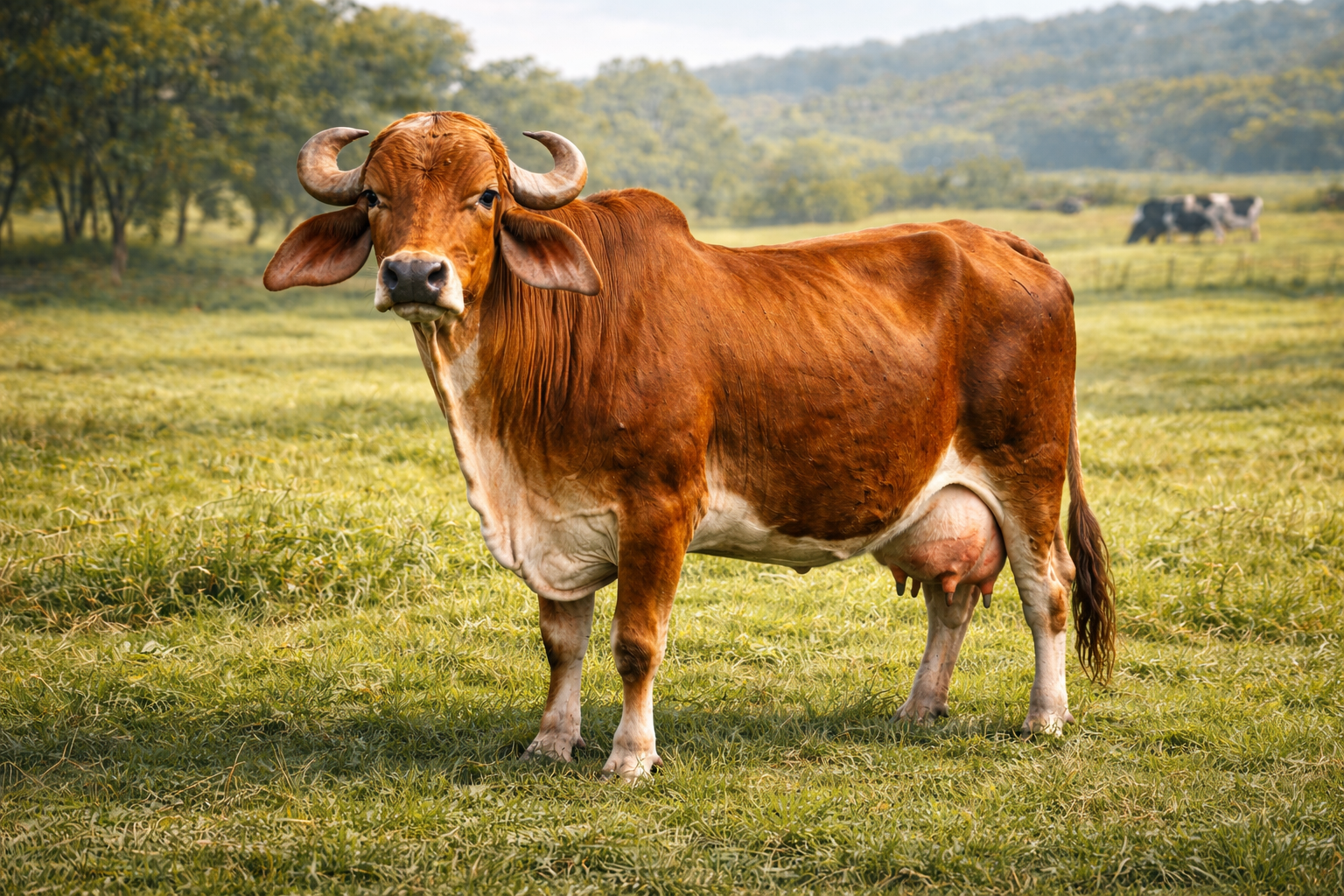
Scientific name: Bos indicus
Origin: Gujarat, India
Feature: Best Indian zebu dairy breed
Production Traits
● Milk yield: 12–20 liters/day
● Fat %: 4.5–5.2%
● A2 milk breed
Strengths
● Very heat tolerant
● High disease resistance
● Good for organic & A2 milk markets
Limitations
● Lower yield vs Bos taurus
● Long calving intervals
4.4 Sahiwal Cow
Scientific name: Bos indicus
Origin: Punjab region
Feature: Highest yielding Indian breed
Production Traits
● Milk yield: 12–18 liters/day
● Fat %: 4.0–4.5%
Strengths
● Excellent heat tolerance
● Good temperament
● Resistant to parasites
Limitations
● Slower growth rate
● Lower peak yield vs HF/Jersey
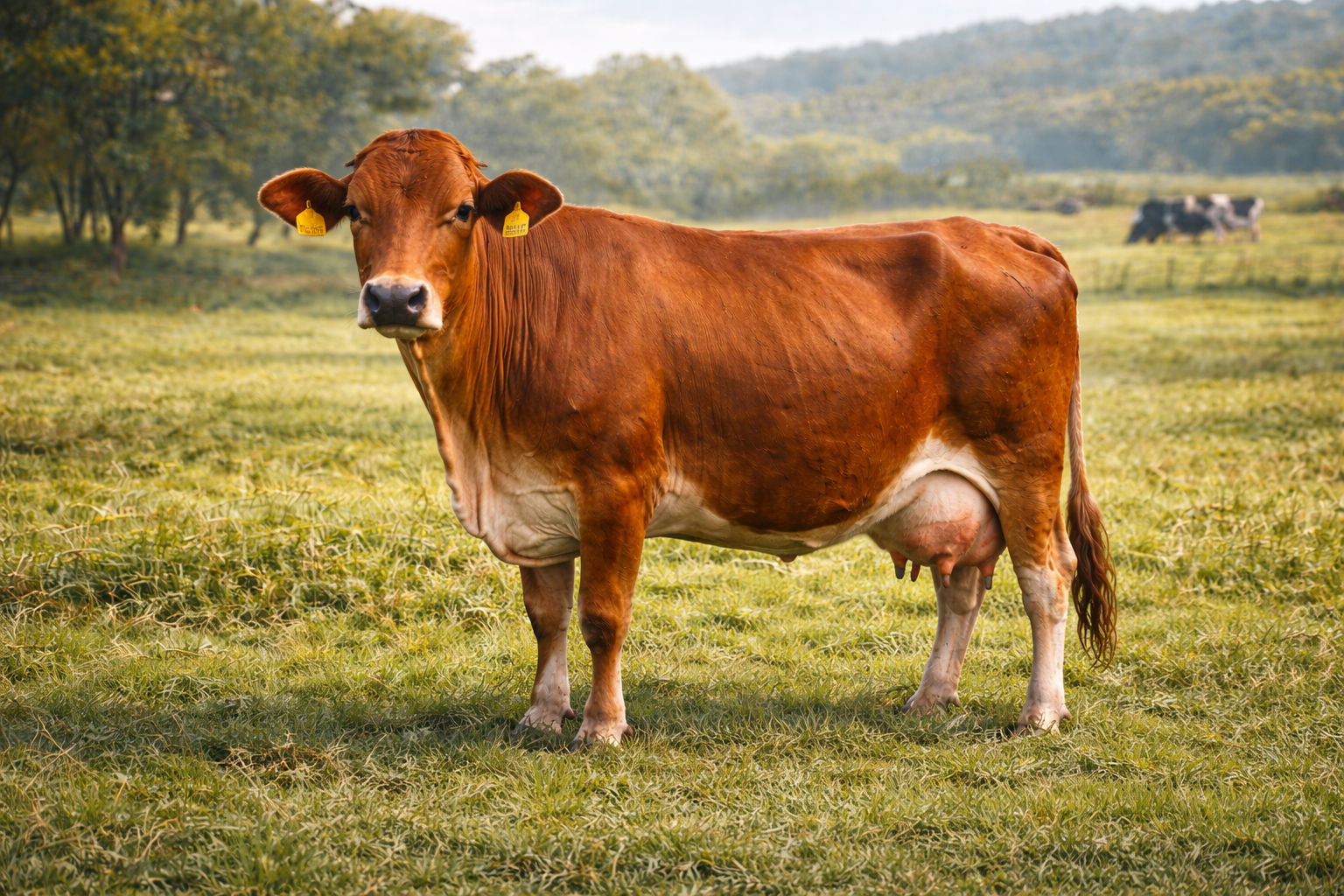
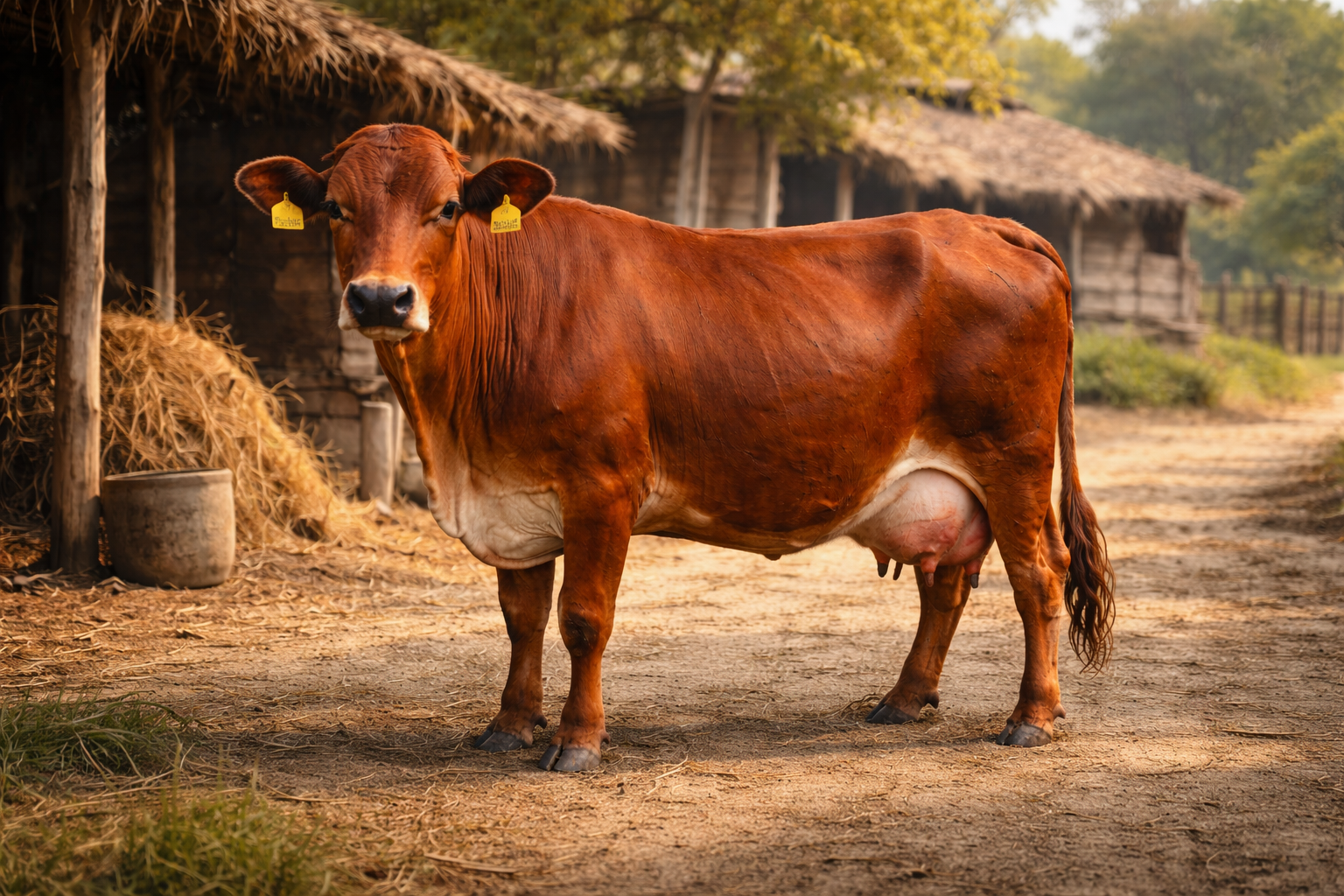
4.5 Red Sindhi
Scientific name: Bos indicus
Origin: Pakistan/India (Sindh region)
Feature: Strong disease resistance
Production Traits
● Milk yield: 8–15 liters/day
● Fat %: 4.0–4.8%
Strengths
● Thrives in harsh climates
● Long productive life
Limitations
● Lower udder development
● Moderate milk yield
5. Major Buffalo Breeds (With Scientific Names)
Buffaloes belong to the species Bubalus bubalis, known for:
● High-fat milk
● Heat tolerance
● High resistance to diseases
● Preferred for ghee manufacturing
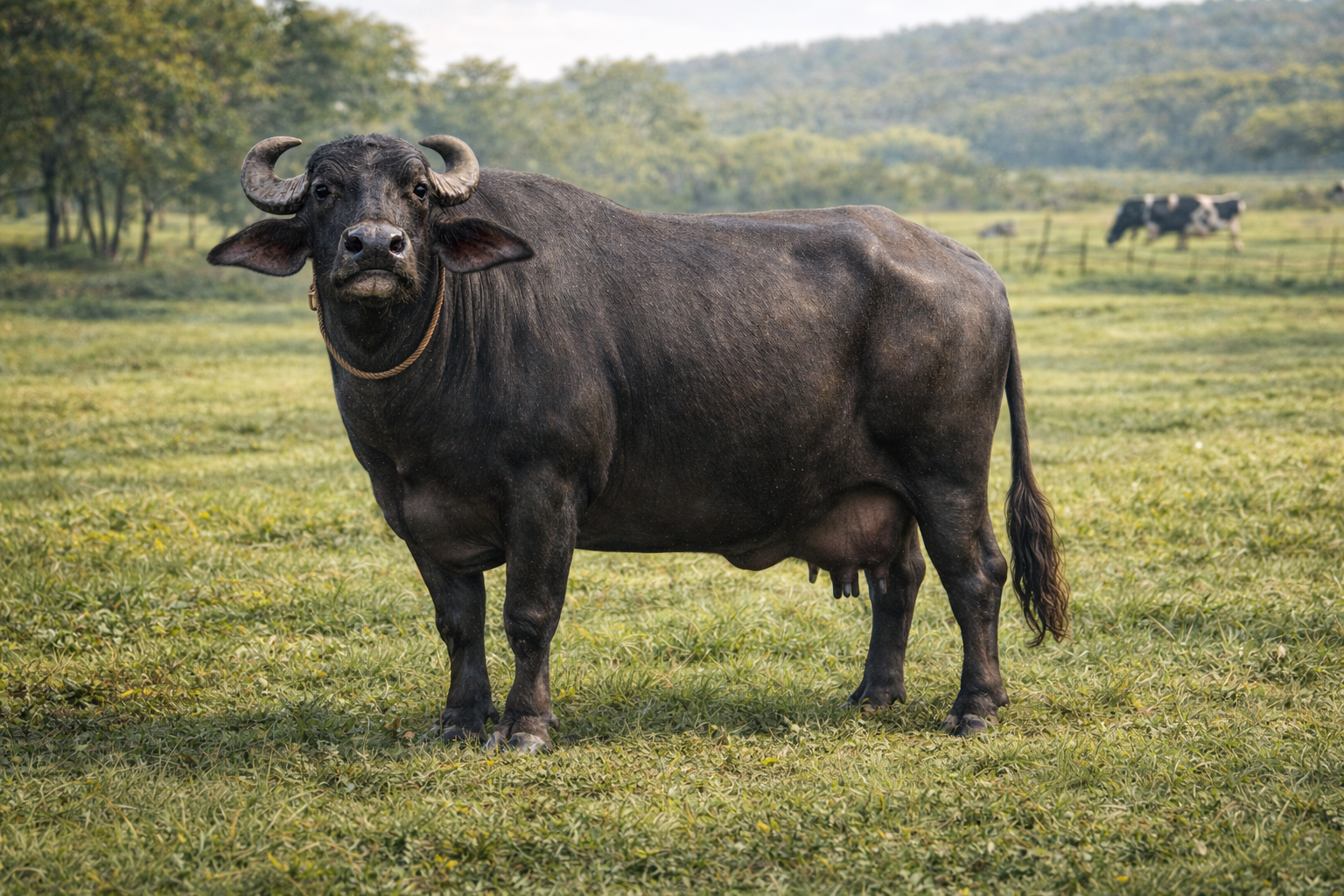
5.1 Murrah Buffalo
Scientific name: Bubalus bubalis (Murrah subtype)
Origin: Haryana, India
Feature: World’s best dairy buffalo breed
Production Traits
● Milk yield: 10–18 liters/day
● Fat %: 6.5–8.5%
● Body weight: 500–650 kg
5.2 Jaffarabadi Buffalo
Scientific name: Bubalus bubalis
Origin: Gujarat, India
Feature: Very large, massive body
Traits
● Milk yield: 8–15 liters/day
● Fat %: 7.0–9.0%
5.3 Mehsana Buffalo
Scientific name: Bubalus bubalis
Origin: Mehsana (Gujarat)
Feature: Cross of Murrah × Surti
Traits
● Milk yield: 9–14 liters/day
● Fat %: 6.5–8.0%
5.4 Surti Buffalo
Scientific name: Bubalus bubalis
Origin: Central Gujarat
Traits: 7–11 liters/day, 7–8% fat
6. Understanding Milk Genetics: A1 vs A2 Milk
A1 Milk
● Contains A1 beta-casein protein
● Common in Holstein Friesian, Ayrshire, British breeds
A2 Milk
● Contains A2 beta-casein protein
● Found in Gir, Sahiwal, Tharparkar, Indian buffaloes
Scientific Note:
A2 allele is ancestral; A1 mutation appeared in European cattle due to domestication.
7. Genetic Traits that Matter for Dairy Farms
When selecting animals for commercial farms, scientific parameters include:
Bullet Points
● Peak lactation yield
● Total lactation milk volume
● Fat & SNF levels
● Udder conformation
● Reproductive efficiency
● Heat tolerance
● Feed conversion ratio
● Disease resistance genetics
● Genomic breeding values (GBV)
8. The Future of Breed Selection: Genomics, Sexed Semen & AI
Modern Tools
● Sexed semen ensures 90% female calf births
● Genomic selection predicts milk yield BEFORE birth
● Embryo transfer (ET) multiplies elite animals
● In-vitro fertilization (IVF) accelerates genetic gain
CONCLUSION (Expanded)
The dairy breed you select determines the future of your farm. Whether choosing high-yield Bos taurus cows, hardy Bos indicus zebu breeds, or rich-fat buffaloes, your decision must be rooted in scientific understanding, climate suitability, and long-term farm planning.
This chapter provides the essential genetic foundation required to build a profitable, sustainable dairy operation.