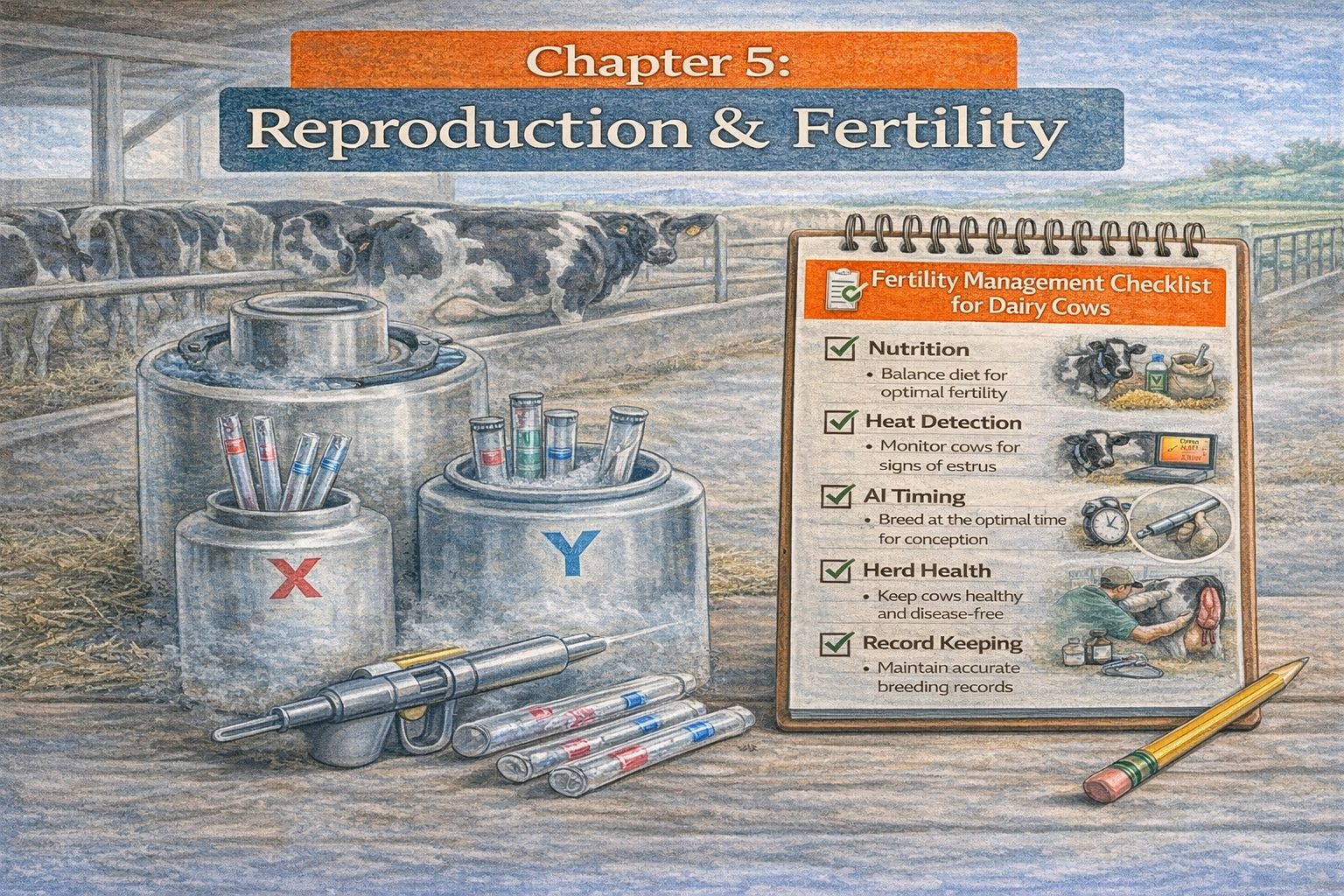
1. Introduction: Why Reproduction Is the Heart of Dairy Farming
Reproduction is the foundation of dairy economics.
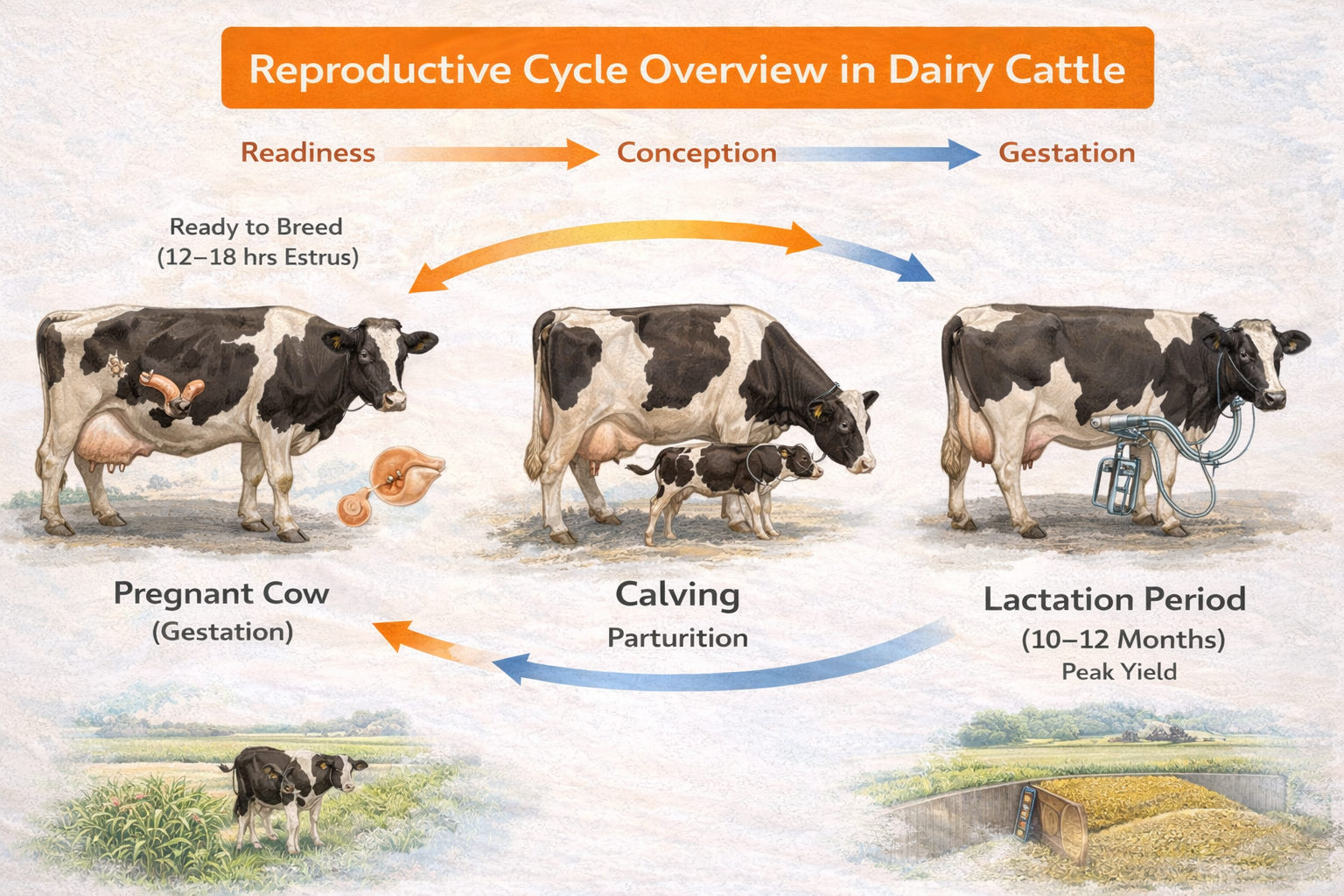
A cow must give birth every 12–14 months to maintain continuous lactation.
If cows fail to conceive on time, the farm faces:
● Reduced milk production
● Increased maintenance cost
● Extended dry periods
● Genetic stagnation
● Lower lifetime productivity
Scientific reproduction ensures that cows calve regularly, stay healthy, and contribute to herd improvement.
Modern dairy breeding combines biology, technology, nutrition, and genetics to reach optimal reproductive efficiency.
2. Understanding the Estrous (Heat) Cycle
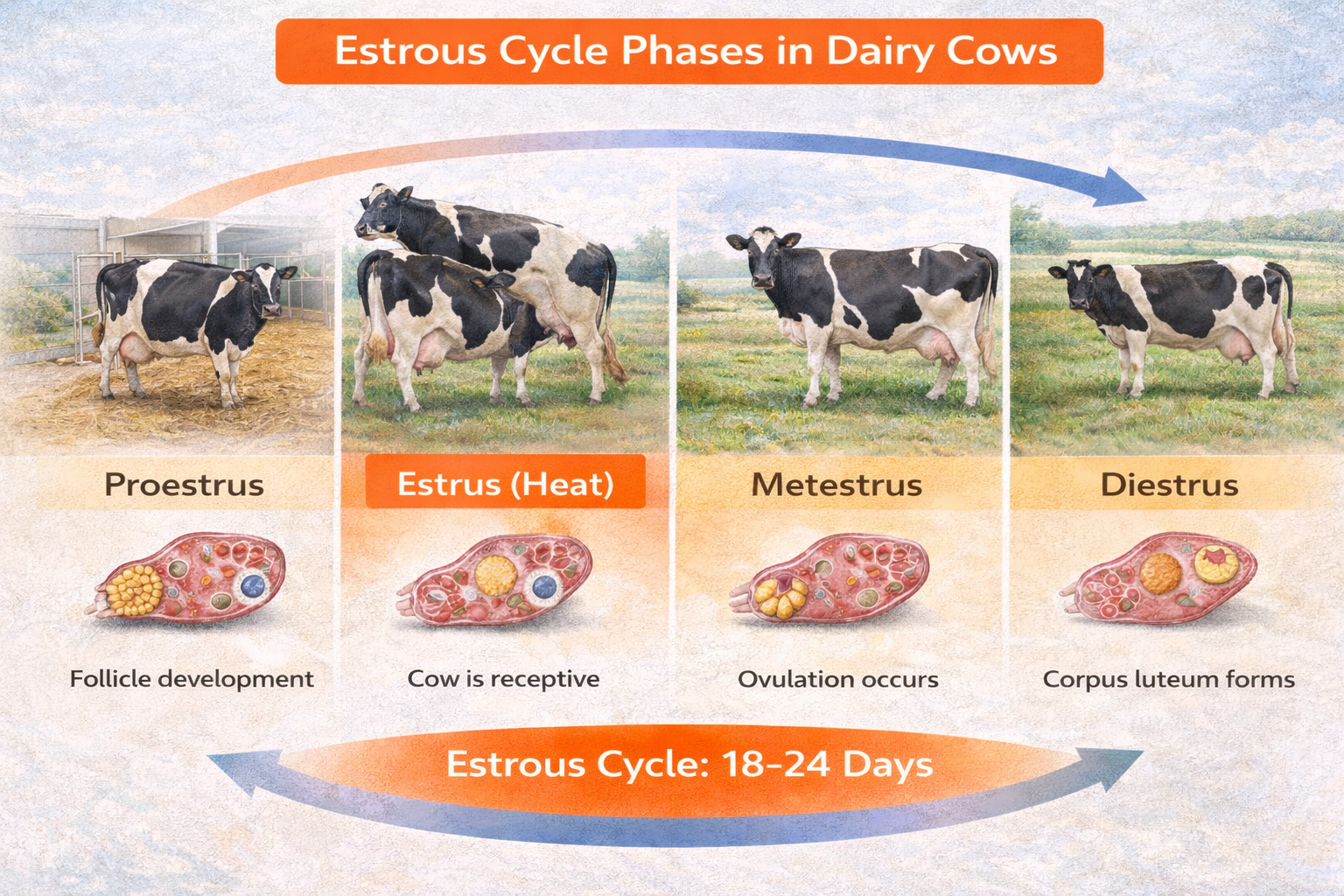
The estrous cycle in cows lasts 18–24 days, with an average of 21 days.
Phases of the Estrous Cycle (Narrative)
A cow moves through several hormonal phases that prepare her body for conception.
During estrus — the heat phase — she becomes fertile for a short window of time, usually lasting 12–18 hours.
This period is critical for successful insemination.
Bullet Summary
● Proestrus: Follicle development
● Estrus (heat): Cow is receptive
● Metestrus: Ovulation occurs
● Diestrus: Corpus luteum forms
Understanding these phases helps farmers breed at the right time.
3. Heat Detection: The Most Critical Skill in Dairy Breeding
Early and accurate heat detection improves conception rates dramatically.
Missing heat leads to delayed pregnancies and financial loss.
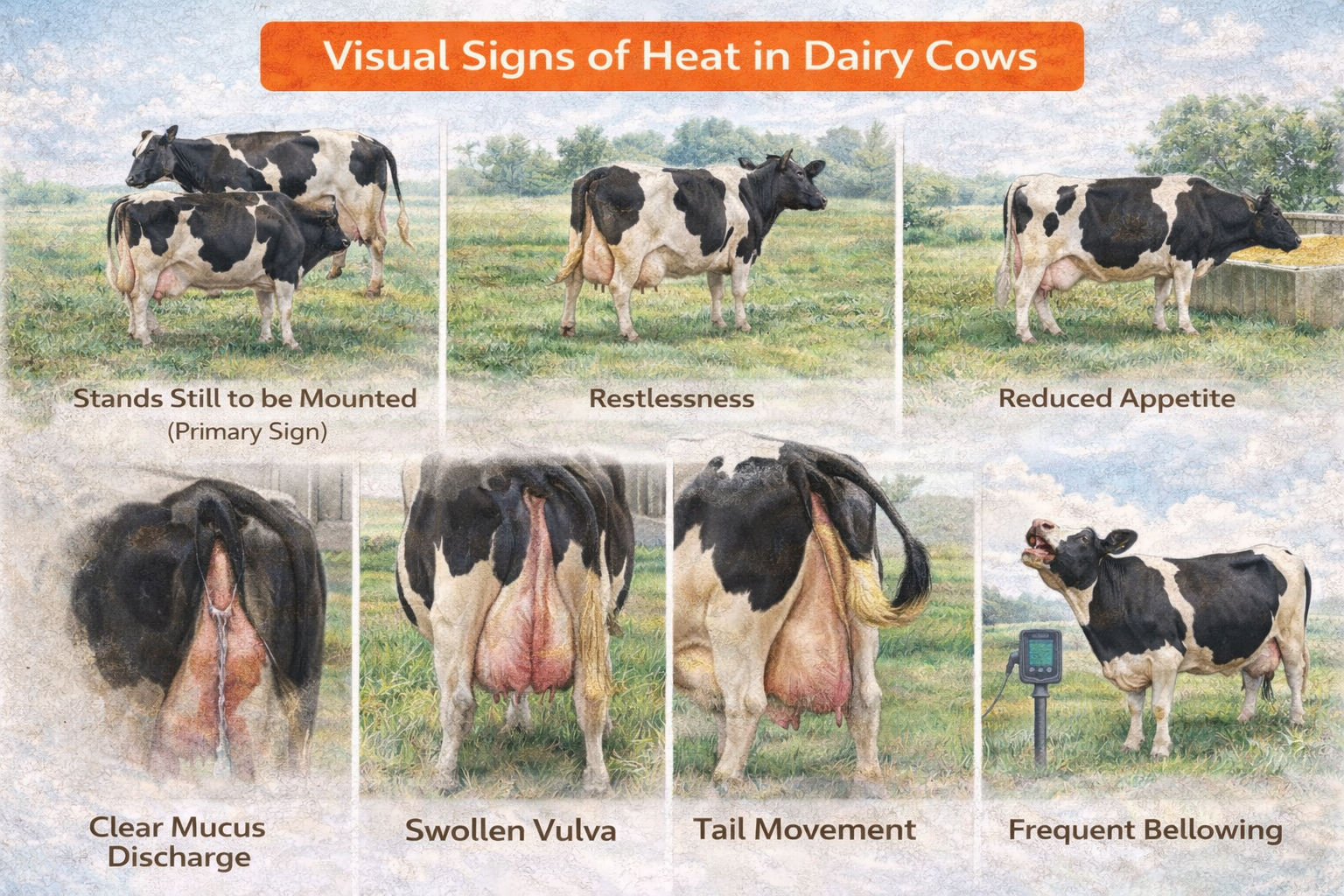
Common Signs of Heat
● Stands still to be mounted (primary sign)
● Restlessness
● Reduced appetite
● Clear mucus discharge
● Frequent bellowing
● Swollen vulva
● Tail movement increase
Silent Heat
Some high-yield cows show weak estrus signs, requiring close observation.
Narration:
Research shows that 60% of heat signs occur at night.
Thus, farms must implement regular observation routines or adopt technological tools.
Technological Heat Detection Systems
● Pedometers
● Neck collars with motion sensors
● Rumination monitoring devices
● Tail painting
● Activity monitoring cameras
These tools increase accuracy and reduce human error.
4. The Ideal Time for Artificial Insemination (AI)
Narration:
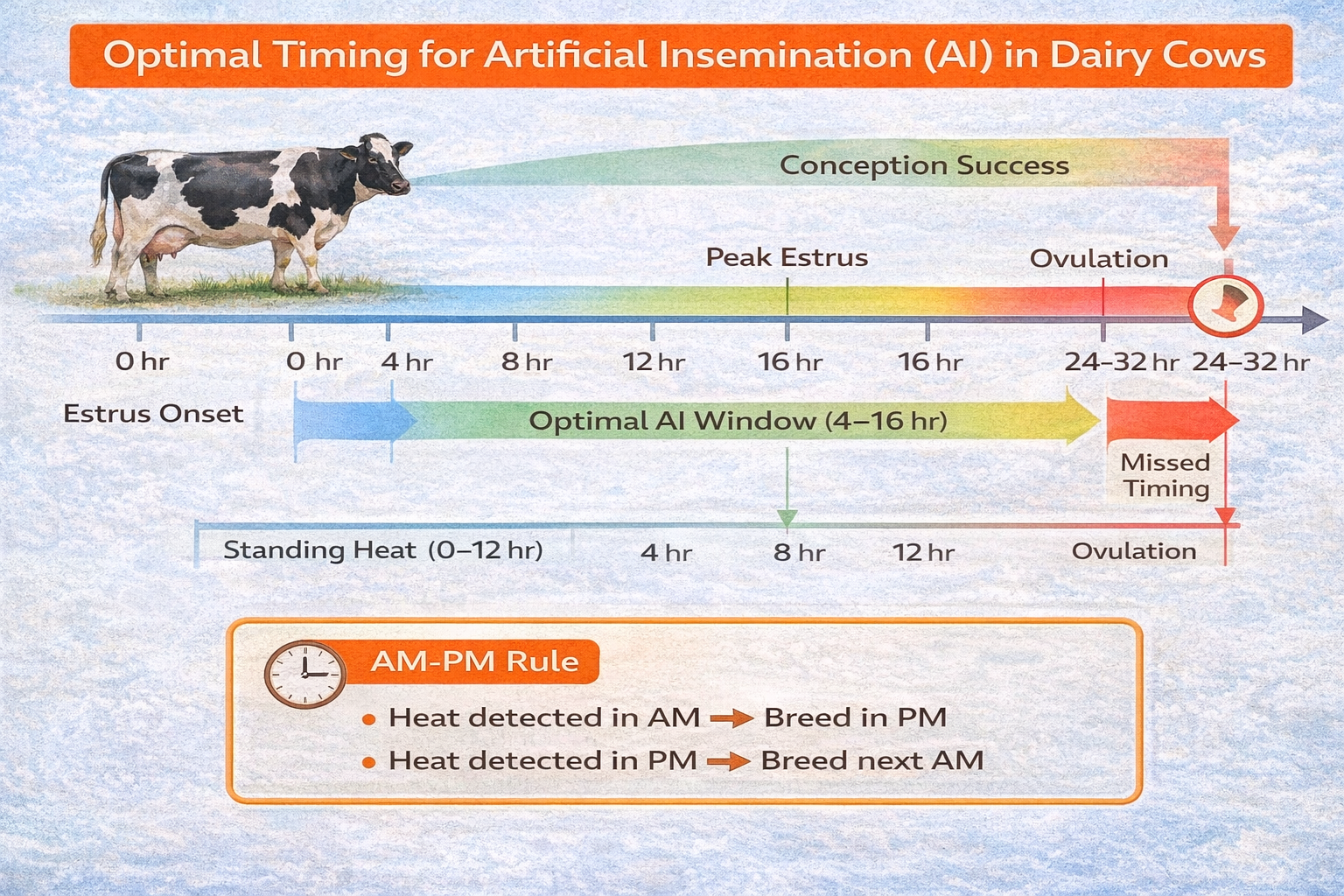
Artificial insemination is the most widely used breeding technique globally due to its safety, efficiency, and genetic advantages. Artificial insemination timing is critical because ovulation in dairy cows typically occurs about 24–32 hours after the onset of standing estrus (heat).
Spermatozoa need time to undergo capacitation — a process inside the cow’s reproductive tract that makes them capable of fertilizing the egg.
Therefore, AI is most successful if done prior to ovulation, usually 4–16 hours after the first observed signs of standing heat or based on the traditional AM-PM rule, where cows detected in heat in the morning are bred that evening and vice versa.
A simple, globally accepted guideline is:
The AM–PM Rule
● Cow shows heat in the morning → inseminate in the evening
● Cow shows heat in the evening → inseminate the next morning
Why This Works
Ovulation occurs roughly 12–16 hours after estrus ends.
Inseminating too early or too late reduces conception.
5. Artificial Insemination: Process, Benefits & Requirements
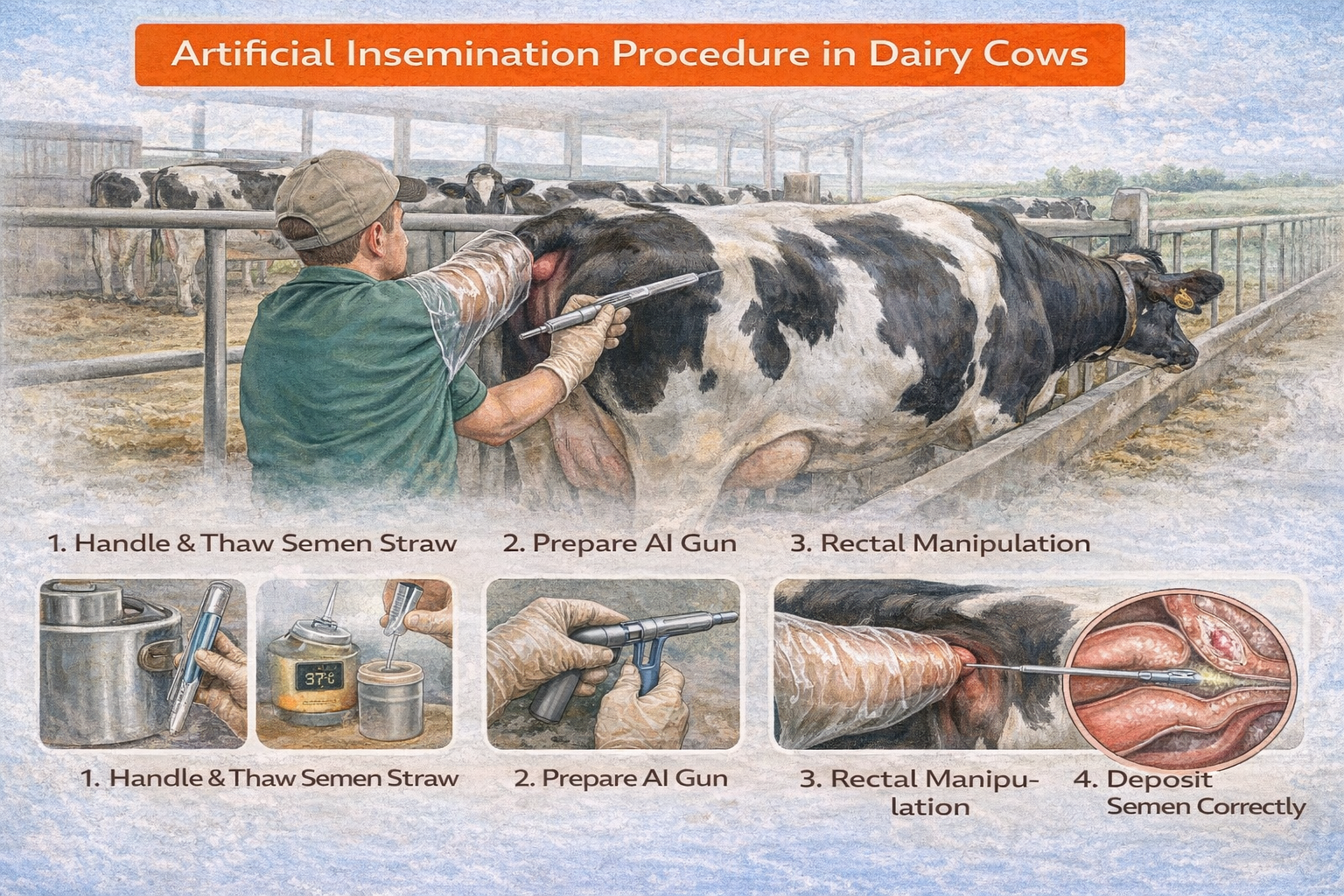
AI uses semen collected from genetically superior bulls.
Key Benefits (Bullet Points)
● Access to high genetic merit bulls
● Reduces risk of disease
● Eliminates need to keep a bull
● Cheaper than natural mating
● Faster genetic improvement
● Safer for cows and staff
AI Procedure (Narration)
A trained technician deposits semen into the reproductive tract using a sterile AI gun, ensuring proper placement near the uterine body.
Cleanliness, semen handling, and timing are crucial for success.
6. Semen Handling & Dosage Protocols
Narration:
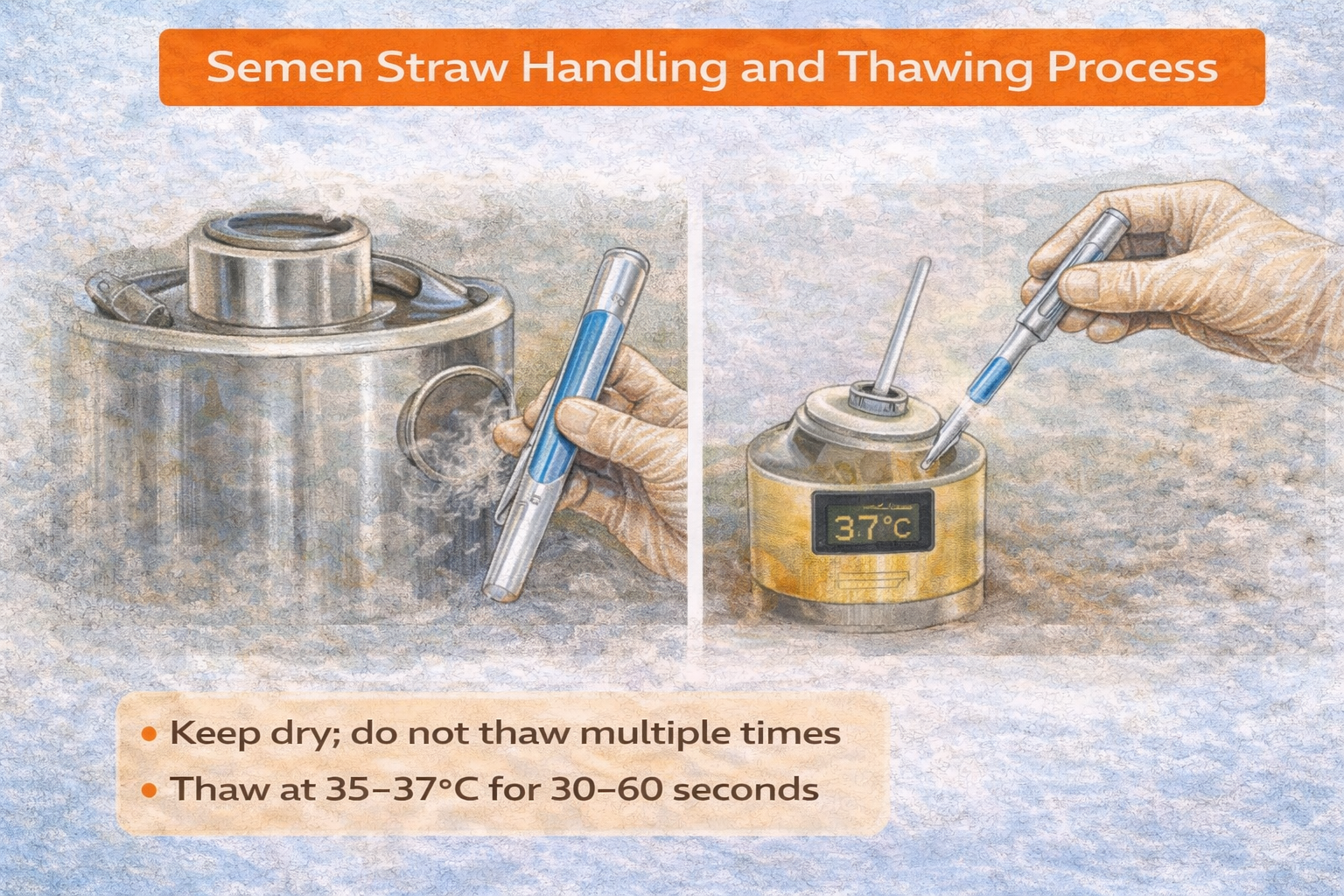
Frozen semen is stored in liquid nitrogen at -196°C.
If mishandled, semen becomes ineffective.
Best Practices
● Maintain nitrogen levels in semen tank
● Use thawing temperature of 35–37°C
● Keep semen straw dry
● Insert AI within 10 minutes of thawing
● Avoid repeated thawing
7. Pregnancy Diagnosis & Post-Breeding Care
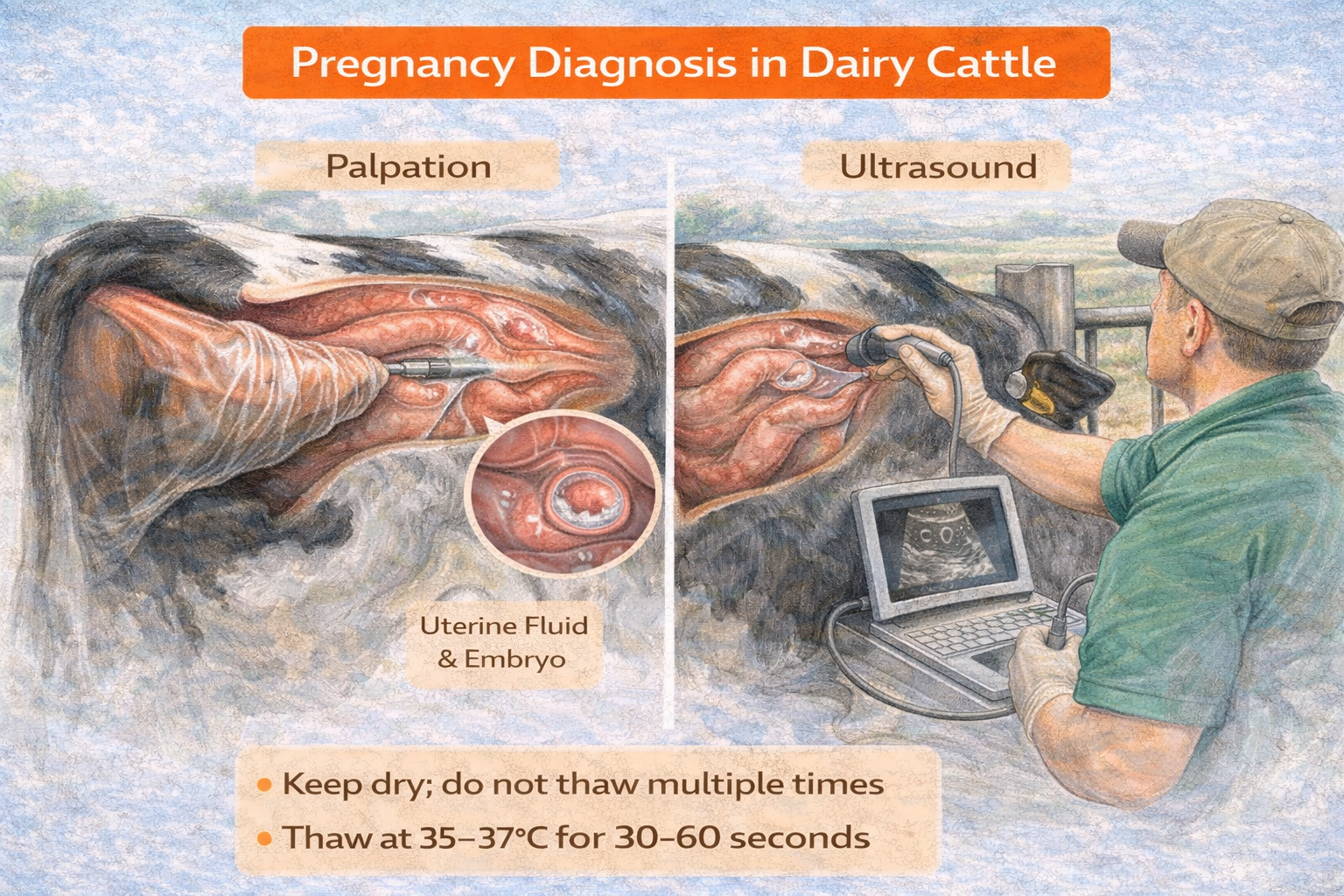
Pregnancy Detection Methods
● Rectal palpation (45–60 days)
● Ultrasound scanning (30 days)
● Blood/ milk progesterone tests (early stage)
Care After Breeding
● Avoid stress
● Provide mineral supplementation
● Maintain proper nutrition
● Keep cows separate from aggressive animals
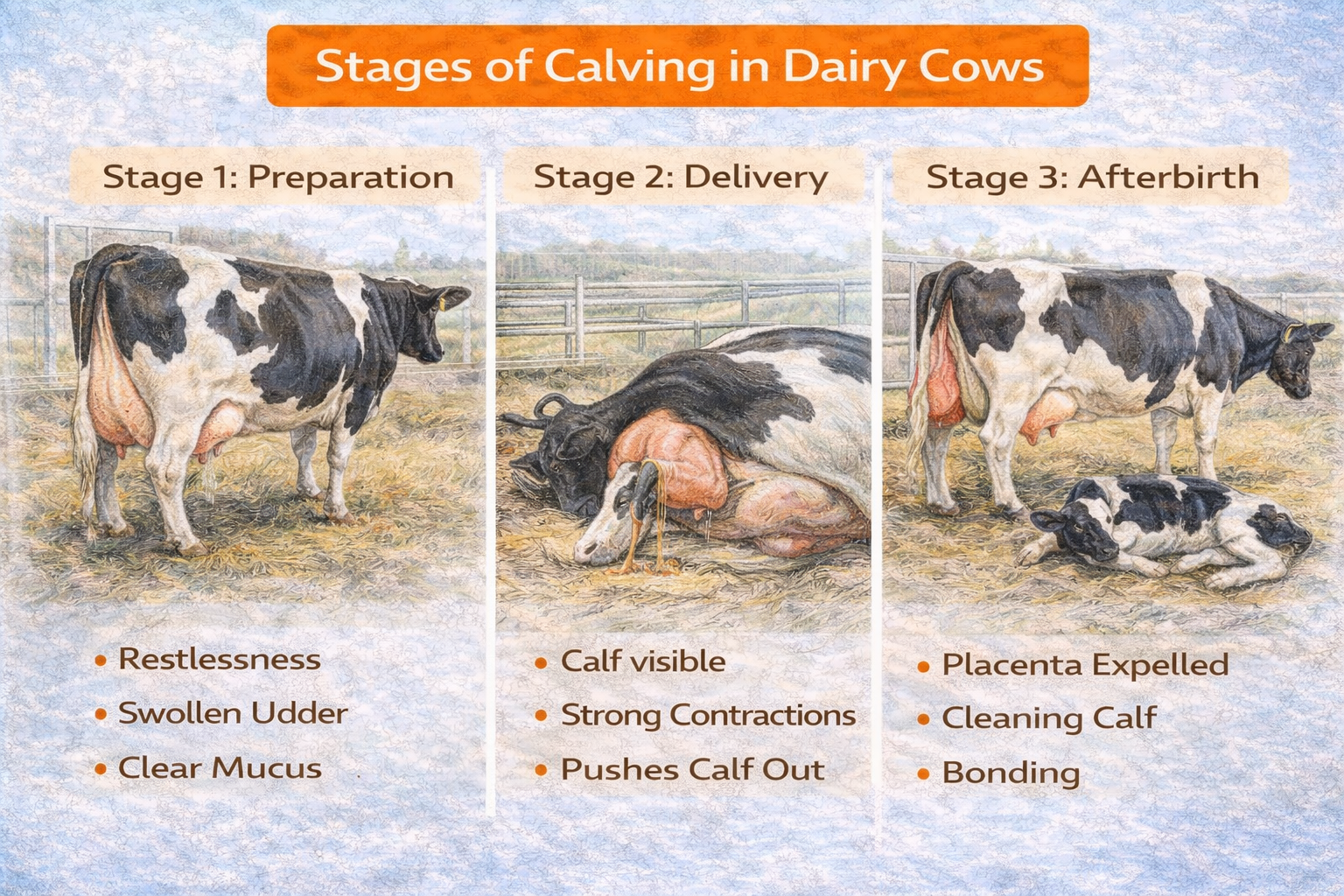
8. Gestation & Calving Management
Cow gestation lasts 280–290 days.
Calving Stages (Narration)
1. Dilation stage: Restlessness, isolation, mucous discharge
2. Delivery stage: Calf emerges, lasts 30–90 minutes
3. Afterbirth stage: Placenta expelled within 6–12 hours
Post-Calving Care
● Ensure calf receives colostrum within 1 hour
● Clean udder and teat dip
● Check for retained placenta
● Provide warm water with electrolytes
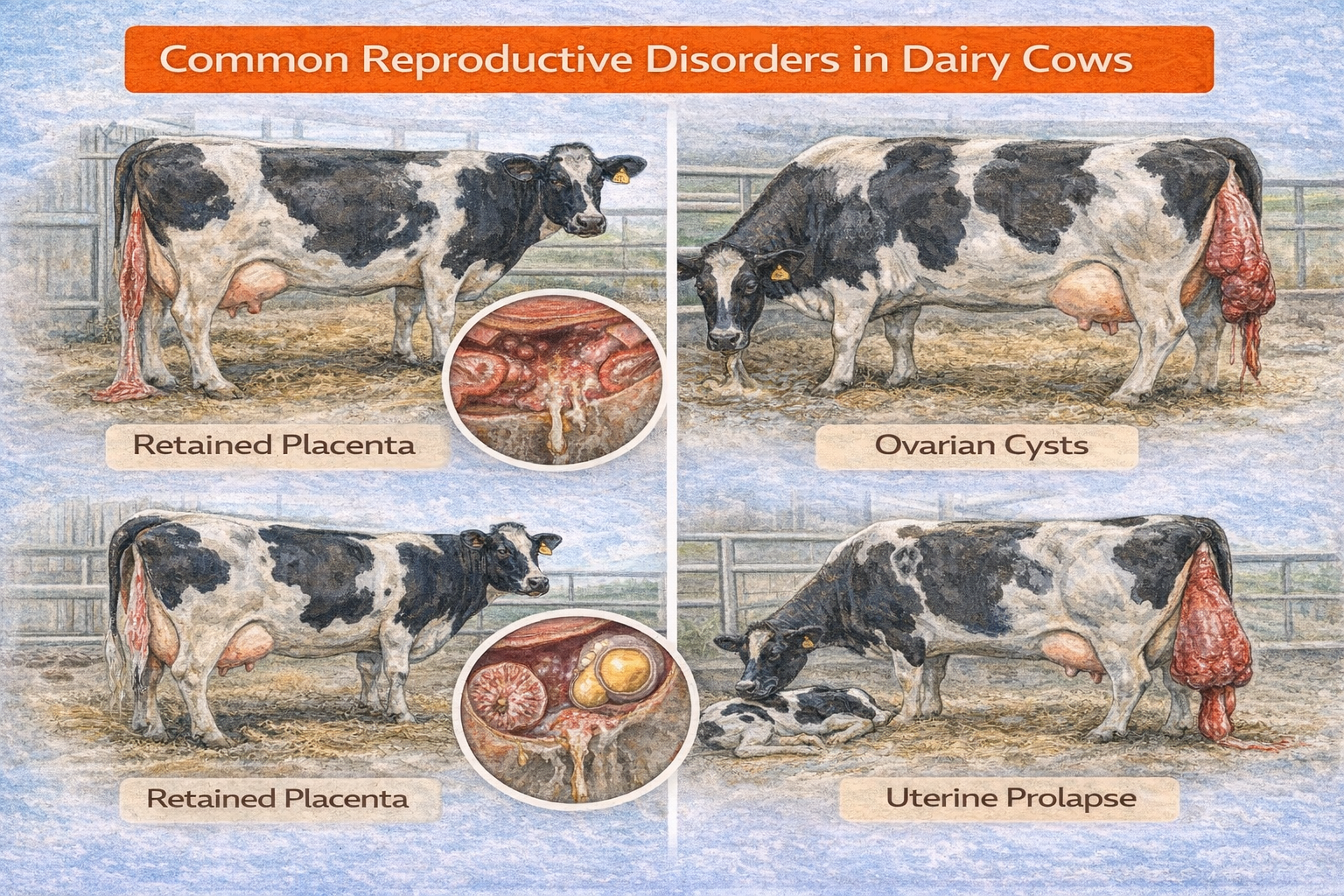
9. Reproductive Disorders: Causes & Prevention
Common issues:
● Anestrus (no heat)
● Repeat breeding
● Retained placenta
● Metritis
● Prolapse
● Cystic ovaries
Root Causes
● Poor nutrition
● Mineral deficiency
● Poor heat detection
● Infections
● Improper AI timing
● Stress and heat load
Prevention (Bullet Points)
● Balanced nutrition
● Regular mineral mix
● Clean housing
● Heat stress management
● Calving area hygiene
● Trained AI technician
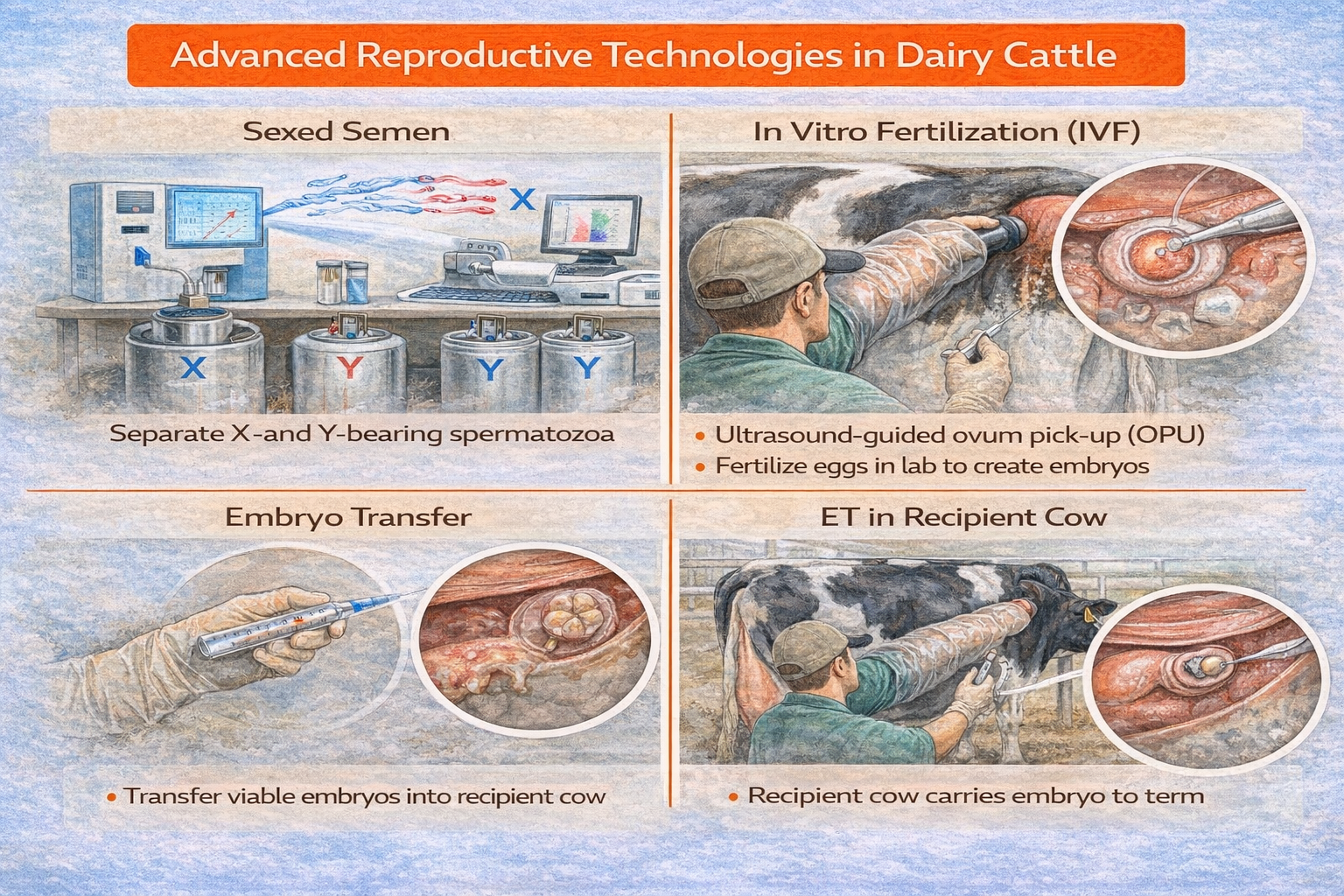
10. Advanced Reproductive Technologies
Sexed Semen
Produces 90% female calves, ideal for herd expansion.
Embryo Transfer (ET)
Elite cow → multiple embryos → implanted into surrogate cows.
In-Vitro Fertilization (IVF)
Eggs collected directly from the ovary for laboratory fertilization.
Genomic Selection
Uses DNA markers to predict genetic performance early in life.
These technologies can accelerate genetic improvement by several generations.
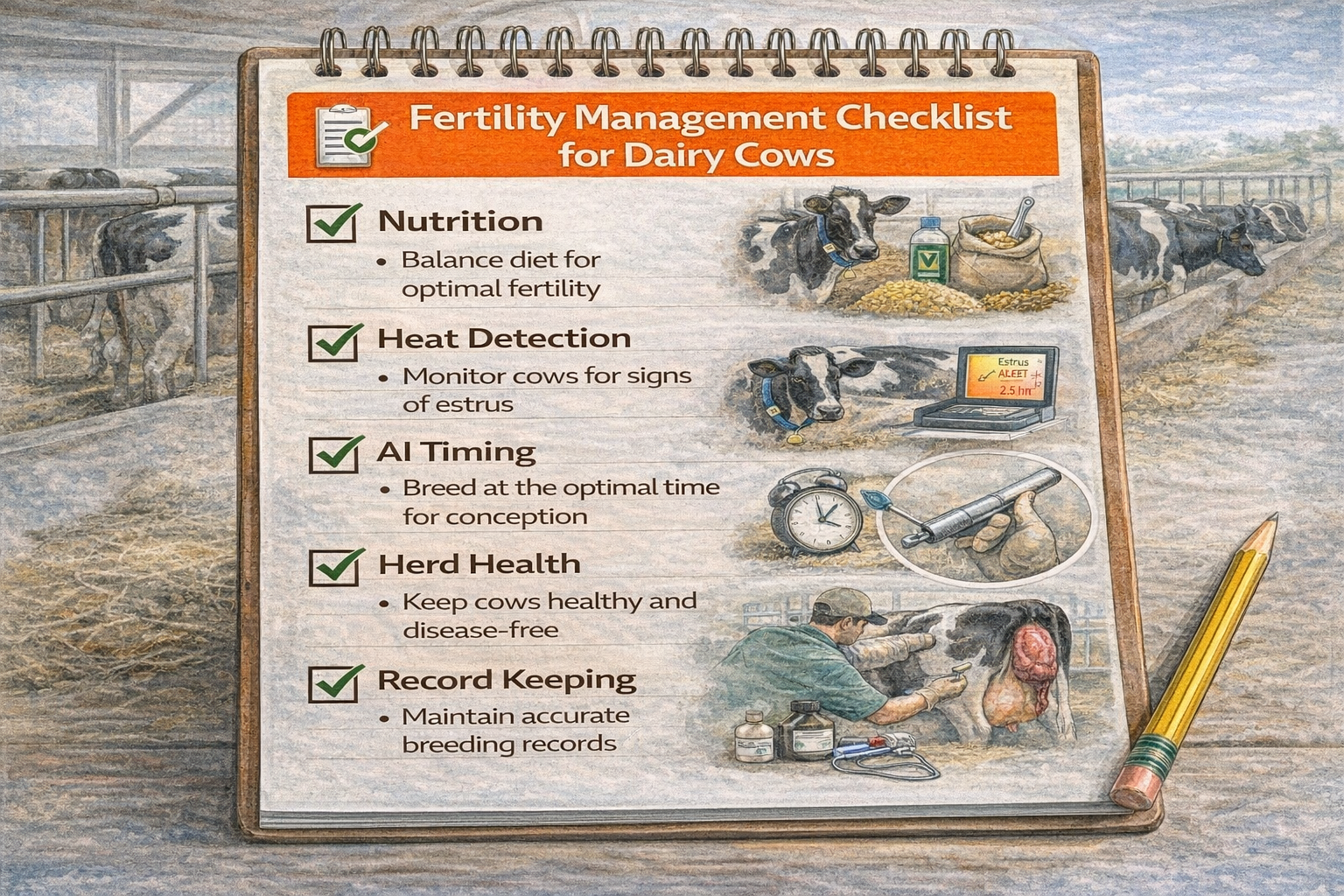
11. Building a High-Fertility Herd: Practical Guidelines
Narration:
Fertility is heavily influenced by management decisions, not just genetics.
Checklist
● Maintain Body Condition Score (BCS) of 2.75–3.5
● Avoid overweight dry cows
● Provide mineral mixture daily
● Ensure heat stress control
● Follow AM–PM rule
● Keep health records
● Use quality semen from proven bulls
When combined, these practices increase conception rates dramatically.
12. Summary: Reproduction Is a Science & a Strategy
Reproductive management is the backbone of dairy profitability.
Understanding heat cycles, timing AI correctly, managing calving, and using advanced genetics ensures consistent milk production and long-term herd improvement.
In modern dairy farming, reproduction is not luck — it is a strategy built on science, observation, and precision.