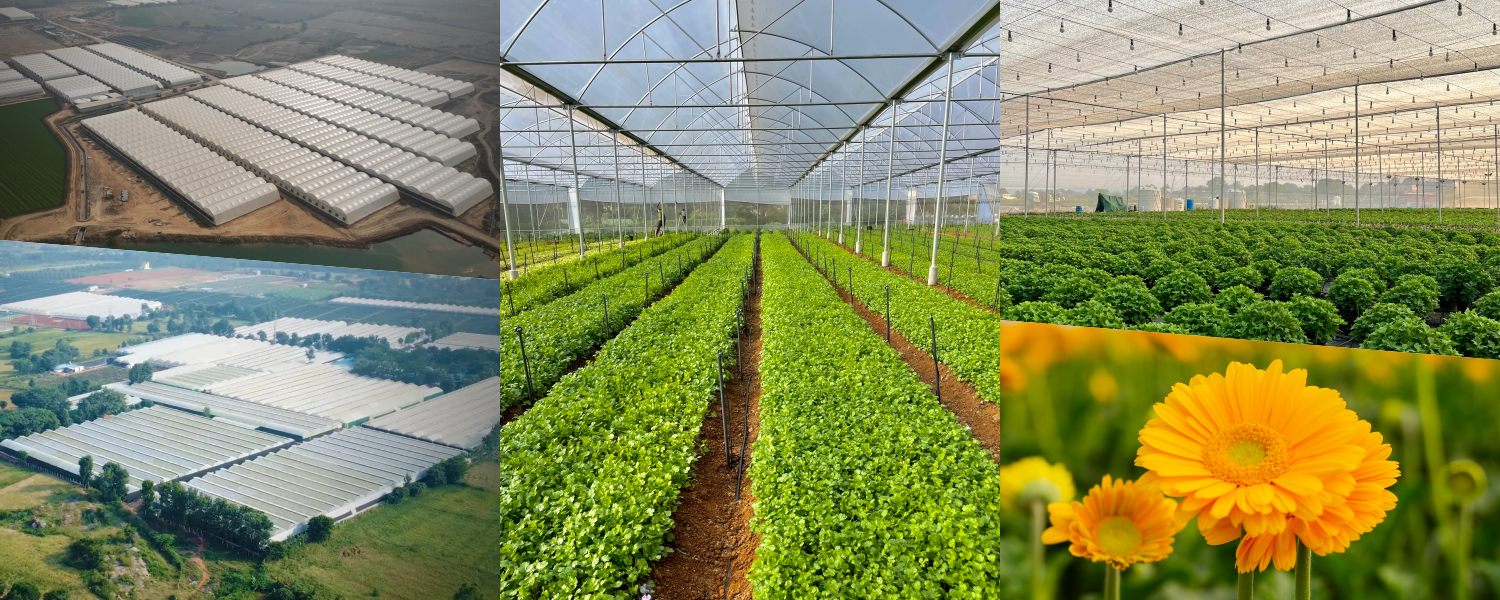
As protected cultivation moves from short-cycle leafy crops to long-duration fruiting and export-grade production, the demands placed on growing structures change fundamentally. Temperature stability, humidity control, rain exclusion, and year-round consistency become non-negotiable requirements rather than optional advantages. Polyhouses and glass greenhouses are engineered specifically to meet these demands. While both offer enclosed environments, they differ sharply in cost, complexity, and precision. Understanding these differences is critical for growers planning commercial-scale operations where infrastructure decisions directly determine yield reliability, market access, and long-term profitability.
Polyhouses
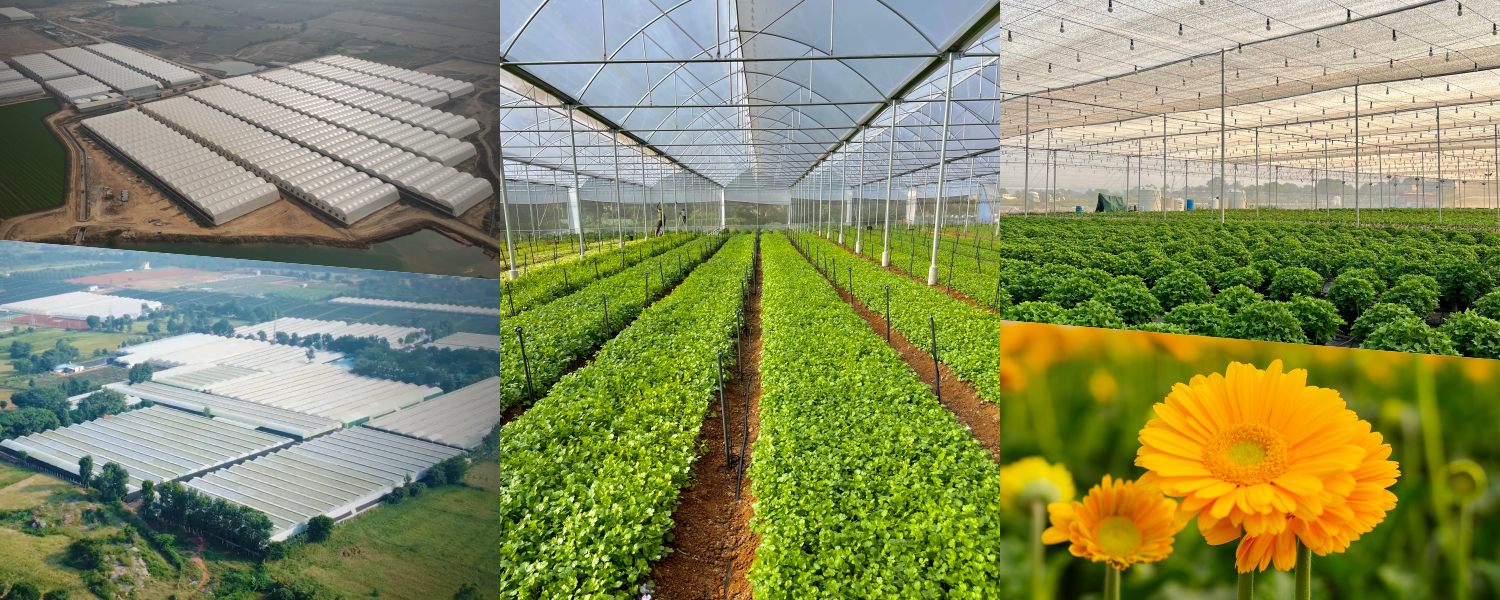
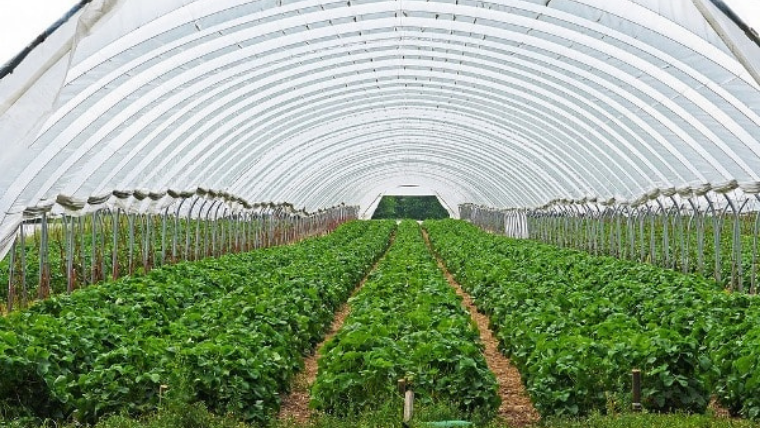
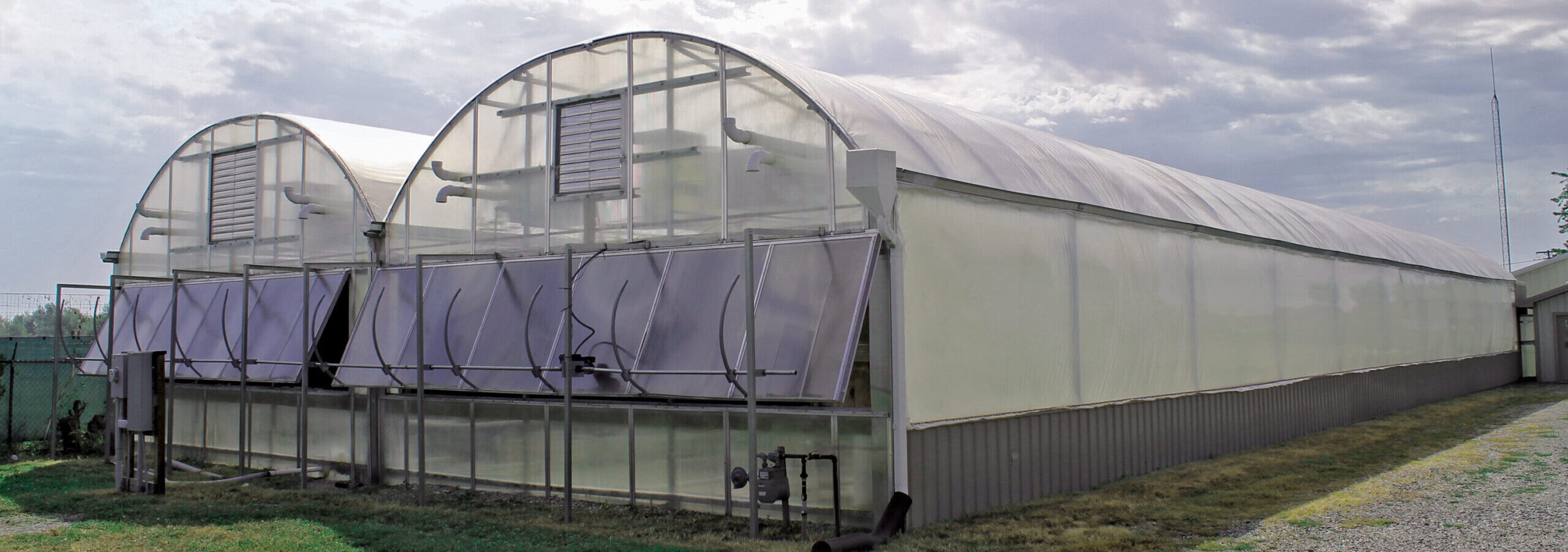
Polyhouses are semi-controlled protected cultivation structures that strike a practical balance between cost, climate control, and production flexibility. Constructed using a framed skeleton covered with UV-stabilized polyethylene (PE) film, polyhouses allow growers to significantly influence temperature, humidity, light diffusion, and crop protection while avoiding the high capital and operating costs of glass greenhouses. This balance makes polyhouses the most widely adopted commercial protected structure in India.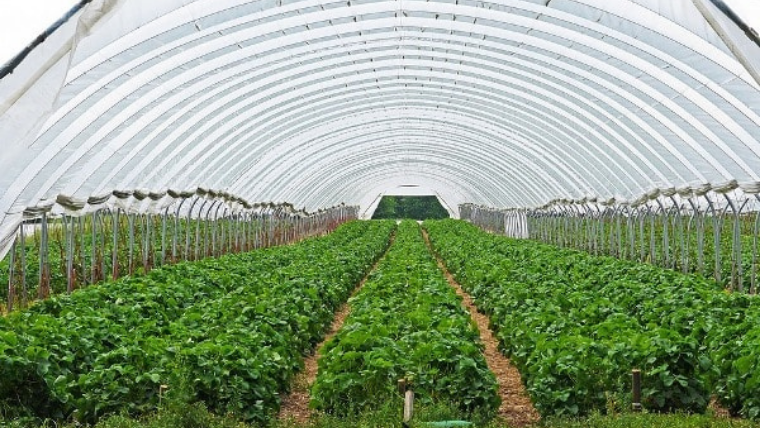 ________________________________________
Structural design and engineering concept
________________________________________
Structural design and engineering concept
A standard polyhouse consists of:
• Structural frame: Galvanized iron (GI) pipes or tubular steel, designed for wind and crop load
• Cladding material: UV-stabilized polyethylene film (typically 180–200 microns)
• Ventilation components:
o Side vents with insect net
o Roof vents (in naturally ventilated designs)
• Optional climate systems:
o Foggers or misters
o Exhaust fans and cooling pads
o Shade nets (internal or external)
Compared to shade net houses:
• Polyhouses form a continuous enclosure
• Air movement is regulated, not fully open
• Rain entry is fully blocked
The structure can be:
• Naturally ventilated (most common in India)
• Fan-and-pad cooled (hot regions)
• Climate-assisted (semi-automated)
 ________________________________________
Covering material: polyethylene film and its role
The polyethylene sheet is central to polyhouse performance.
Key properties:
• UV stabilization: Prevents rapid degradation under sunlight
• Light diffusion: Reduces harsh shadows and improves canopy penetration
• Rain protection: Eliminates leaf wetting and splash-borne diseases
• Thermal buffering: Retains some heat during cooler nights
Typical lifespan:
• 3–5 years for PE film (India conditions)
• Frame lifespan: 15–20 years with proper maintenance
Optional add-ons:
• Anti-drip films (reduce condensation)
• IR-treated films (reduce night heat loss)
________________________________________
Covering material: polyethylene film and its role
The polyethylene sheet is central to polyhouse performance.
Key properties:
• UV stabilization: Prevents rapid degradation under sunlight
• Light diffusion: Reduces harsh shadows and improves canopy penetration
• Rain protection: Eliminates leaf wetting and splash-borne diseases
• Thermal buffering: Retains some heat during cooler nights
Typical lifespan:
• 3–5 years for PE film (India conditions)
• Frame lifespan: 15–20 years with proper maintenance
Optional add-ons:
• Anti-drip films (reduce condensation)
• IR-treated films (reduce night heat loss)
 ________________________________________
Climate modification: level and limits of control
________________________________________
Climate modification: level and limits of control
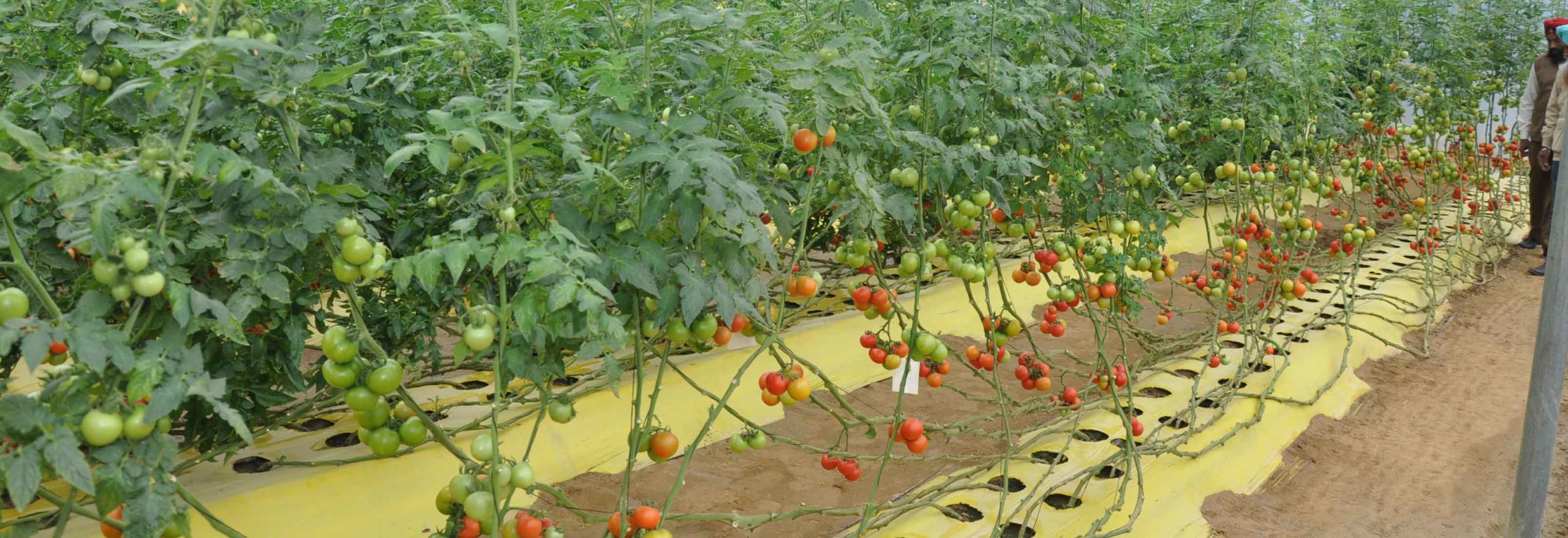
Polyhouses provide moderate to high environmental control, depending on design and accessories.
Key climate effects:
• Temperature:
o Daytime moderation through ventilation and shading
o Slight night-time heat retention
• Humidity:
o More stable than open field
o Can be managed through venting and fogging
• Light:
o Diffused, uniform light improves photosynthesis
• Wind and rain:
o Completely excluded from crop zone
Important limitation:
• Polyhouses do not fully isolate crops from external climate
• Performance is still influenced by ambient temperature and humidity
 ________________________________________
Production media flexibility
________________________________________
Production media flexibility
One of the biggest strengths of polyhouses is their production versatility.
They can support:
• Soil-based cultivation (raised beds)
• Soilless media (cocopeat, grow bags)
• Hydroponic systems (NFT, drip-fed slabs)
This allows growers to:
• Start with soil and gradually upgrade
• Shift crop systems without changing the structure
• Customize investment based on market response
________________________________________
Crop suitability: biological and economic fit
Polyhouses are ideal for crops that:
• Require stable temperatures
• Have long harvest durations
• Are sensitive to rain and wind
• Benefit from controlled humidity
Best-suited crops and reasons
• Tomato (indeterminate):
o Requires controlled humidity for pollination and disease reduction
o Long harvest window benefits from protection
• Capsicum (bell pepper):
o Highly sensitive to temperature fluctuations
o High yield response under polyhouse conditions
• Cucumber (parthenocarpic):
o Performs best in protected, warm, humid environments
• Chilli and strawberry:
o Improved fruit quality and uniformity
• Cut flowers and nurseries:
o Consistency and disease control are critical
Polyhouses are less suitable for:
• Very low-value crops
• Crops requiring extreme cold or heat control
• Fully automated, export-only precision systems
________________________________________
Geographic and climatic suitability
Polyhouses are adaptable across a wide range of regions:
Best suited for:
• Tropical and subtropical climates
• Regions with erratic rainfall
• Areas with moderate winter temperature drops
In India, they are successfully used in:
• Plains, plateaus, and semi-arid zones
• Peri-urban commercial belts
• Regions with strong local vegetable demand
In very hot zones, cooling systems become essential for summer operation.
 ________________________________________
Commercial applications and economics
________________________________________
Commercial applications and economics
Polyhouses form the commercial backbone of protected vegetable farming in India.
Typical applications:
• Medium to large-scale vegetable farms
• Contract farming for organized retail
• Farmer Producer Organizations (FPOs)
• Export-oriented production (selected crops)
Commercial characteristics:
• Balanced capital investment
• High yield improvement over open field
• Year-round or extended-season production
• Manageable technical complexity
Return on investment is driven by:
• Crop choice
• Market access
• Management discipline
• Climate suitability
________________________________________
Advantages and limitations
Key advantages
• Strong improvement in yield and quality
• Protection from rain and wind
• Flexible crop and system choices
• Scalable and upgrade-friendly
Key limitations
• Film replacement cost every few years
• Partial dependence on external climate
• Disease buildup if ventilation is poor
• Requires trained crop management
________________________________________
Position in the protected cultivation spectrum
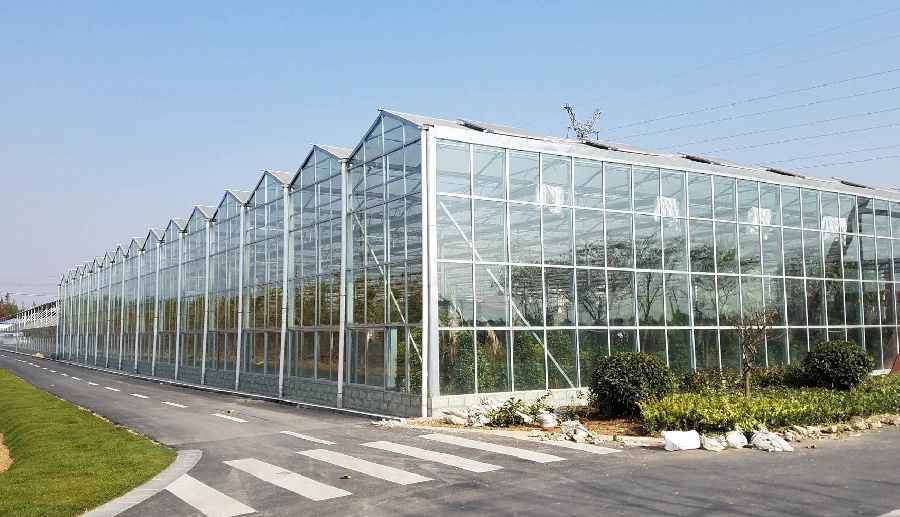
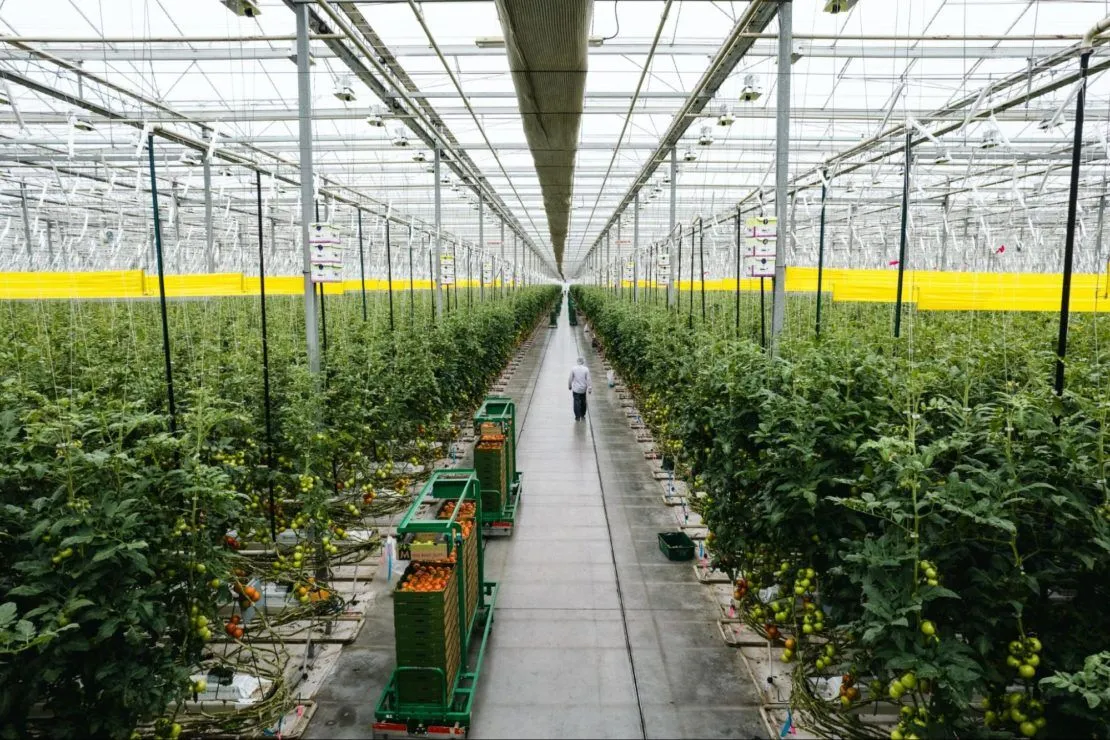 Glass greenhouses represent the most advanced and capital-intensive form of protected cultivation, designed to deliver near-complete environmental control over crop growth. Unlike shade net houses and polyhouses—which moderate climate—glass greenhouses are engineered to actively create and maintain an optimal growing environment, independent of external weather conditions. This precision makes them the preferred choice for large-scale, high-value, and export-oriented agricultural enterprises.
Structural design and engineering philosophy
A glass greenhouse is a permanent, engineered structure, built to support automation, climate systems, and long-term intensive cropping.
Core structural components include: • Heavy-duty galvanized steel or aluminum frame • Toughened or tempered glass panels (roof and side walls) • High roof height (6–8 m or more) for thermal buffering • Sealed enclosure with controlled ventilation points Engineering priorities: • Maximum light transmission • Structural stability under wind, rain, and crop load • Long operational lifespan (20–30 years) Unlike polyhouses: • Glass greenhouses are airtight by design • Ventilation is regulated, not incidental • Structural strength supports suspended crops, screens, and automation rails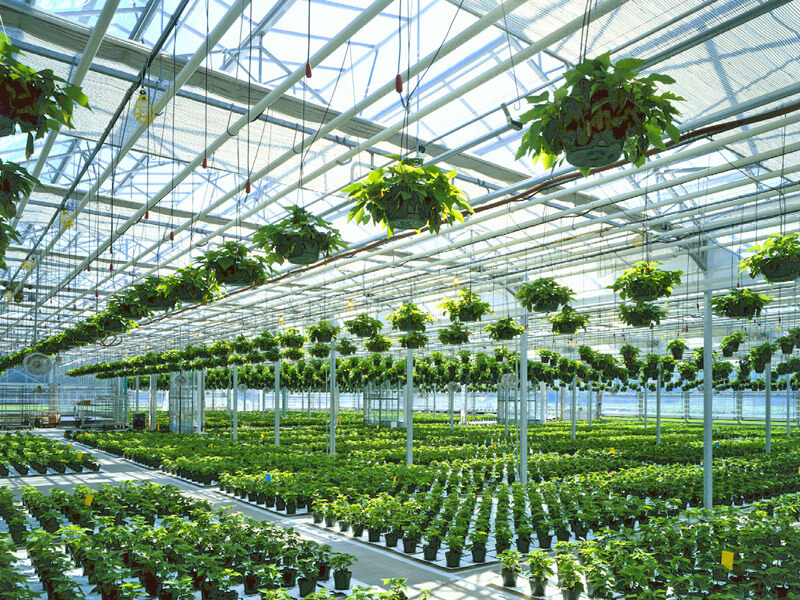 ________________________________________Covering material: why glass matters
Glass is not used for aesthetics—it is used for optical and thermal performance.
Key advantages of greenhouse glass:
• Very high light transmission (88–92%)
• Stable light quality (does not yellow with age)
• Excellent durability (decades, not years)
• Easy cleaning and sanitation
Modern glass greenhouses may also use:
• Diffused glass (reduces leaf scorching)
• Low-iron glass (maximizes photosynthetically active radiation)
While the upfront cost is high, the long lifespan and consistent performance justify glass in high-value systems.
________________________________________Covering material: why glass matters
Glass is not used for aesthetics—it is used for optical and thermal performance.
Key advantages of greenhouse glass:
• Very high light transmission (88–92%)
• Stable light quality (does not yellow with age)
• Excellent durability (decades, not years)
• Easy cleaning and sanitation
Modern glass greenhouses may also use:
• Diffused glass (reduces leaf scorching)
• Low-iron glass (maximizes photosynthetically active radiation)
While the upfront cost is high, the long lifespan and consistent performance justify glass in high-value systems.
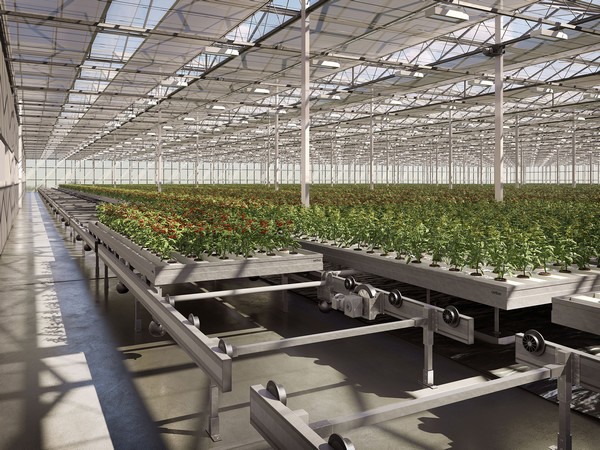
Climate control: precision across all parameters
Glass greenhouses offer multi-variable climate control, typically managed through centralized automation systems.
Key controllable parameters:
• Temperature:
o Heating systems (boilers, hot water pipes)
o Cooling via vents, fans, pads, or fogging
• Humidity:
o Dehumidification through ventilation and heating coordination
• Light:
o Natural sunlight + supplemental grow lights
o Shade screens for radiation control
• CO₂ enrichment:
o Maintains optimal photosynthesis rates
• Air circulation:
o Horizontal airflow (HAF) fans ensure uniform conditions
These systems work together to maintain crop-specific climate recipes, updated continuously using sensors and software.
________________________________________
Automation and control systems
Glass greenhouses rely heavily on automation and data-driven management.
Typical systems include:
• Climate computers and sensors
• Automated vent opening and screen deployment
• Irrigation and fertigation control
• CO₂ dosing systems
• Alarm and backup safety protocols
This automation:
• Reduces human error
• Enables 24/7 climate optimization
• Supports consistent year-round production
However, it also demands:
• Skilled technical teams
• Preventive maintenance
• Reliable power infrastructure
________________________________________
Crop suitability: matching biology with precision
Glass greenhouses are designed for crops that:
• Have long production cycles
• Generate high value per square meter
• Require stable, narrow climate ranges
• Are sensitive to light, humidity, and temperature fluctuations
Best-suited crops and rationale
• High-wire tomatoes:
o Continuous harvest for 8–11 months
o Strong response to CO₂ enrichment and light control
• High-wire cucumbers:
o Very high yield potential under stable conditions
• Exotic vegetables and herbs:
o Consistency and uniformity are critical for premium markets
• Export-oriented flowers:
o Strict quality and timing requirements
o Long stems and uniform blooms benefit from precision control
Glass greenhouses are not economical for:
• Low-value or short-cycle crops
• Markets without premium price realization
• Operations lacking technical expertise
Geographic and climatic suitability
Glass greenhouses can operate in:
• Extremely hot climates
• Cold regions with frost or snow
• High rainfall or storm-prone areas
However, success depends on:
• Correct system design for local climate
• Adequate insulation or cooling capacity
• Energy cost management
In India, they are typically located in:
• Regions with strong export logistics
• Areas with access to skilled labor and power
• Large, consolidated landholdings
________________________________________
Commercial applications and scale
Advantages and limitations
Key advantages
• Maximum yield and quality consistency
• Year-round, climate-independent production
• Export-grade uniformity
• Long structural lifespan
Key limitations
• Very high initial and operating costs
• Technical complexity
• Energy dependence
• Not forgiving of management errors
________________________________________
Position at the top of the protected cultivation hierarchy
Glass greenhouses sit at the peak of the protected cultivation pyramid. They are not merely structures but integrated production ecosystems, combining engineering, plant science, automation, and logistics.
They are suitable only where:
• Crop value justifies precision
• Scale supports investment
• Markets reward consistency and quality
For growers who meet these conditions, glass greenhouses offer unmatched control and productivity, making them the ultimate solution for high-performance commercial horticulture.
Choosing the right protected cultivation system is not about adopting the most advanced structure, but about selecting the most appropriate structure for a given crop, climate, investment capacity, and management capability. Each system occupies a distinct position on the control–cost–complexity spectrum, and commercial success depends on aligning these factors correctly.
________________________________________
Comparative positioning of protected cultivation systems
Shade net house – entry-level climate moderation
• Primary function: Reduce excess sunlight, wind stress, and evapotranspiration
• Level of control: Low (passive, climate-dependent)
• Best role:
o Leafy vegetables
o Seedling nurseries
o Seasonal production
• Commercial logic:
o Lowest investment
o Fast learning curve
o Risk reduction rather than yield maximization
• Best for:
o First-time protected cultivation adopters
o Regions with high solar radiation but moderate temperatures
o Support infrastructure for larger farms
________________________________________
NFT hydroponics – precision leafy green production
• Primary function: Precise root-zone control of water and nutrients
• Level of control:
o Very high at root level
o Dependent on external structure for canopy protection
• Best role:
o High-density leafy green production
o Urban and peri-urban farms
o Consistent, fast harvest cycles
• Commercial logic:
o High efficiency per square meter
o Requires skilled management and power reliability
• Best for:
o Commercial leafy green specialists
o Markets demanding clean, uniform produce
o Growers comfortable with technical systems
________________________________________
Polyhouse – balanced commercial workhorse
• Primary function: Moderate control of temperature, humidity, light, and rain
• Level of control: Medium to high (semi-controlled environment)
• Best role:
o Fruiting vegetables
o Cut flowers
o Long-duration crops
• Commercial logic:
o Best cost-to-control ratio
o Flexible production systems
o Scalable and upgrade-friendly
• Best for:
o Small to medium commercial farms
o Farmer Producer Organizations
o Year-round domestic market supply
________________________________________
Glass greenhouse – high-tech production ecosystem
• Primary function: Full climate optimization and automation
• Level of control: Very high (active, sensor-driven control)
• Best role:
o High-wire vegetables
o Export-grade flowers
o Exotic and premium crops
• Commercial logic:
o Highest productivity and consistency
o Long-term, capital-intensive investment
• Best for:
o Large-scale enterprises
o Export-oriented producers
o Operations with strong technical and financial capacity
________________________________________
Key selection criteria: how to decide correctly
The right protected cultivation system emerges from four interacting factors, not from technology alone.
1. Crop biology
• Leafy, short-cycle crops → Shade net or NFT
• Fruiting, long-cycle crops → Polyhouse or glass greenhouse
• High-value, climate-sensitive crops → Glass greenhouse
2. Local climate
• High sunlight, moderate temperatures → Shade net / polyhouse
• Extreme heat or cold → Polyhouse with cooling or glass greenhouse
• High rainfall or humidity → Enclosed structures with ventilation control
3. Capital availability
• Limited capital → Shade net house
• Medium investment capacity → Polyhouse or basic NFT
• High capital with long-term vision → Glass greenhouse
4. Management and technical skill
• Low technical skill → Shade net house
• Moderate skill and supervision → Polyhouse
• High technical capability and discipline → NFT and glass greenhouse
________________________________________
Strategic guidance for growers and agripreneurs
• Do not overbuild: Higher control does not guarantee higher profit if crop value is low
• Match structure to market: Export and premium markets demand consistency, not just yield
• Plan scalability: Many successful farms progress from shade net → polyhouse → advanced systems
• Factor operational risk: Power, labor, and maintenance are as important as structure cost
Protected cultivation works best when viewed as a business system, not just a construction decision.
________________________________________
This comparative framework allows growers to rationally select the simplest structure that reliably meets crop and market requirements, ensuring sustainable profitability rather than avoidable complexity.
Selecting a protected cultivation system is a long-term strategic decision, not merely a construction choice. The following checklist helps growers, agripreneurs, and investors evaluate technical, climatic, financial, and operational readiness before committing capital. A systematic assessment at this stage significantly reduces the risk of underperformance and costly redesigns later.
________________________________________
1. Local climate and seasonal extremes
Begin with a realistic assessment of the natural climate at the proposed site.
Key questions:
• What are the peak summer temperatures and heat duration?
• Are there cold nights, frost events, or winter drops?
• How intense and frequent is monsoon rainfall?
• Is wind speed a structural risk?
Why it matters:
• Shade net houses work only where climate stress is moderate
• Polyhouses need ventilation and cooling matched to heat load
• Glass greenhouses must be engineered for worst-case scenarios
Ignoring climate data is one of the most common causes of protected cultivation failure.
2. Target crop type and market demand
The structure should be selected after, not before, finalizing the crop and market.
Key considerations:
• Is the crop leafy, fruiting, or flowering?
• What is the production cycle length?
• Does the market demand year-round supply or seasonal volume?
• Are buyers paying a premium for quality and consistency?
Why it matters:
• Short-cycle leafy greens do not justify high-cost structures
• Long-duration fruiting crops need stable environments
• Export and organized retail require uniformity and traceability
Crop–structure mismatch directly erodes profitability.
3. Available capital and operational budget
Capital cost is only one part of the equation; operational sustainability is equally important.
Evaluate:
• Initial construction and equipment cost
• Recurring expenses (film replacement, power, labor, inputs)
• Cash flow during non-harvest periods
• Access to credit, subsidies, or investor support
Why it matters:
• High-tech systems fail more often due to operational underfunding than construction issues
• Conservative financial planning allows resilience during market fluctuations
A structure you can operate reliably is always better than one you can barely afford.
________________________________________
4. Technical skill availability
Protected cultivation increases management intensity.
Assess:
• Availability of trained farm supervisors
• Ability to monitor climate, nutrition, and pests
• Willingness to follow data-driven practices
• Access to advisory or technical support
Why it matters:
• Shade net houses tolerate management variability
• Polyhouses require disciplined crop and climate management
• NFT and glass greenhouses demand continuous monitoring
Skill gaps can negate the advantages of even the best infrastructure.
________________________________________
5. Long-term expansion and scalability goals
Protected cultivation systems should fit into a growth roadmap, not a one-time project.
Consider:
• Possibility of expanding area or upgrading structures
• Integration with nurseries, hydroponics, or automation
• Market expansion into premium or export segments
• Infrastructure compatibility for future upgrades
Why it matters:
• Many successful growers start small and scale up
• Choosing flexible systems prevents future redundancy
• Long-term planning improves return on investment
________________________________________
Final decision framework
A well-chosen protected cultivation system:
• Matches crop biology and market expectations
• Fits local climate realities
• Aligns with financial and technical capacity
• Supports future growth without forcing premature complexity
When these factors are aligned, protected cultivation becomes a predictable, scalable, and profitable production model, rather than an experimental risk.
________________________________________
References and further reading
•FAO – Protected cultivation guidelines
•National Horticulture Mission (India) manuals
•Peer-reviewed research on greenhouse and hydroponic systems