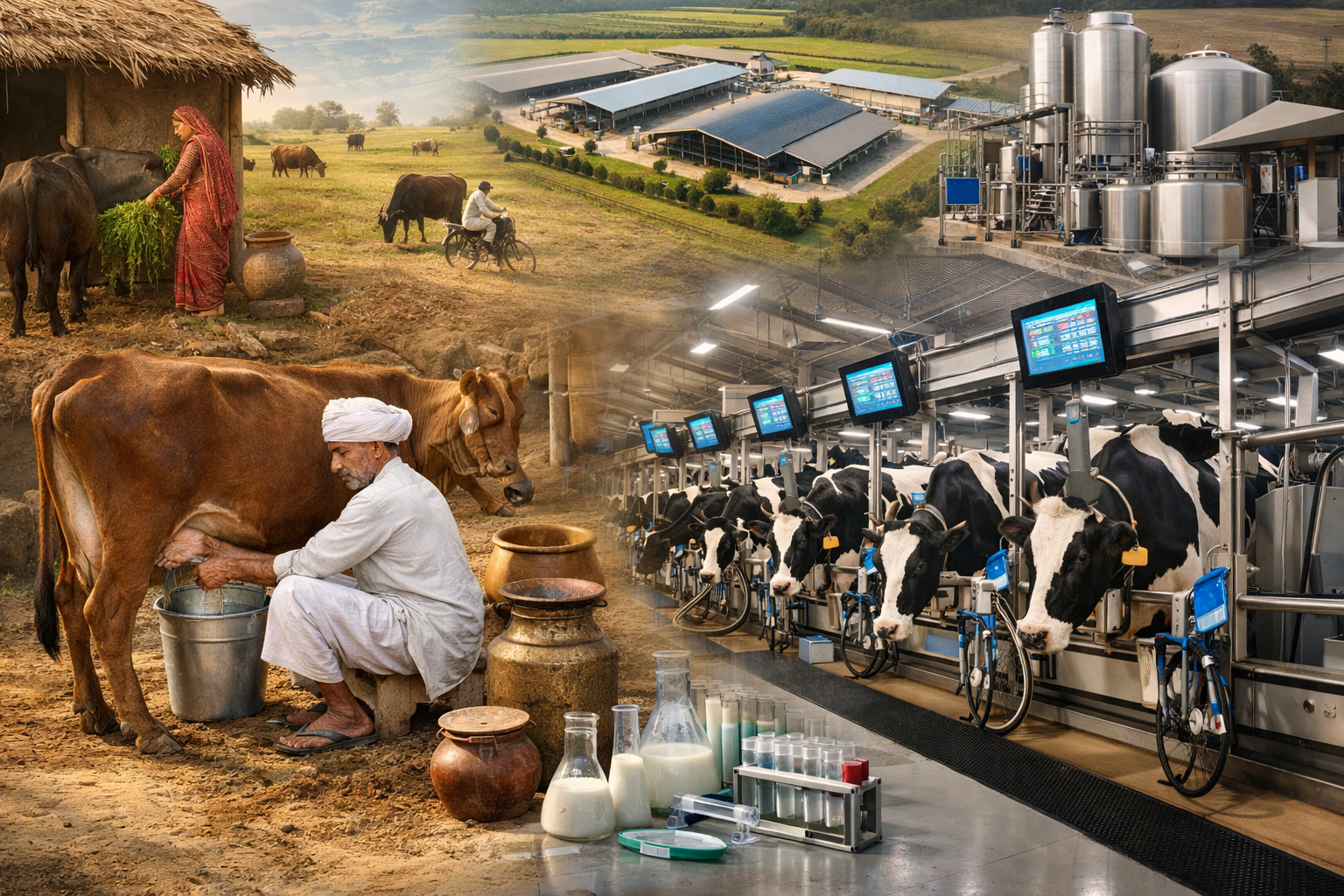
Introduction to Modern Dairy Farming
Dairy farming has played a central role in human civilization for millennia. Its evolution reflects advancements in animal husbandry, agricultural science, food technology, and economic systems. In contemporary times, dairy farming functions at the intersection of biology, technology, economics, and sustainability, making it a uniquely complex and high-impact agricultural sector.
Narrative Expansion
Milk production is one of the rare agricultural activities that ensures daily cash flow, fostering resilience in rural households. In developing nations like India, it has become a powerful tool for livelihood security, women’s empowerment, and nutritional enhancement.
As consumer expectations evolve—demanding higher quality, hygienic, traceable, and value-added dairy products—dairy farming must adopt a multidimensional approach guided by scientific principles.
This chapter lays a comprehensive foundation by expanding the understanding of:
● The civilizational roots of dairying
● The biological importance of milk
● The economic weight of the dairy sector
● The shift from traditional to modern systems
● Global and Indian dairy market trajectories
● Scientific models of production and sustainability
It prepares readers for subsequent detailed chapters on genetics, shed design, feeding systems, disease biology, AI technology, production economics, and milk processing.
2. Historical Evolution: A Journey from Rituals to Robotics
Extended Narrative
The roots of dairy farming stretch deep into human history. Archaeological records from the Indus Valley civilization depict cattle motifs, suggesting established dairy practices as early as 3000 BCE. Ancient Egyptians documented butter-making, while Europeans selectively bred cattle for both draft and milk production.
In India, cattle have been revered in texts like the Vedas and Upanishads, and dairy produce has been used in rituals, medicine (Ayurveda), and daily diet for centuries.
Evolutionary Milestones
● Neolithic era: Domestication of Bos indicus and Bos taurus
● Medieval periods: Expansion of dairy trade through caravans and early cooperatives
● 19th century: Mechanical cream separators and first milking machine prototypes
● 20th century: Pasteurization, cold chain, genetic selection
● 21st century: Automation, IoT-based monitoring, advanced reproductive technologies
Bullet Highlights
● Dairy has historically been a source of energy, wealth, and social status
● Industrial revolution mechanized many dairy processes
● Cooperative movements (e.g., Amul) transformed India’s dairy landscape
● Digitization and automation define today’s global dairy farms
3. Importance of Dairy Farming in Society
Milk is the most consumed animal protein in the world. It contributes significantly to nutrition security, childhood growth, immune function, and dietary diversity.
Extended Nutritional Narrative
Milk delivers a comprehensive nutrient profile unmatched by most natural foods. Casein and whey proteins are essential for muscle growth and recovery. Fat-soluble vitamins in milk help sustain bone health and metabolic functions. Lactose supports energy metabolism and gut flora.
In developing countries, dairy consumption directly correlates with reduced malnutrition rates.
Economic Importance
The dairy sector is an economic engine for rural transformation. Unlike cash crops dependent on seasons, milk yields steady income even in drought-prone areas.
Dairy farming creates jobs across:
● Farming
● Feed production
● Veterinary services
● Transport & logistics
● Dairy processing & packaging
● Retail
● Quality assurance & testing
Bullet Highlights
● Source of 9 essential nutrients
● Daily cash flow for rural households
● Largest share in India’s agricultural GDP
● Supports millions of female farmers
● Integral to child nutrition programs and mid-day meals
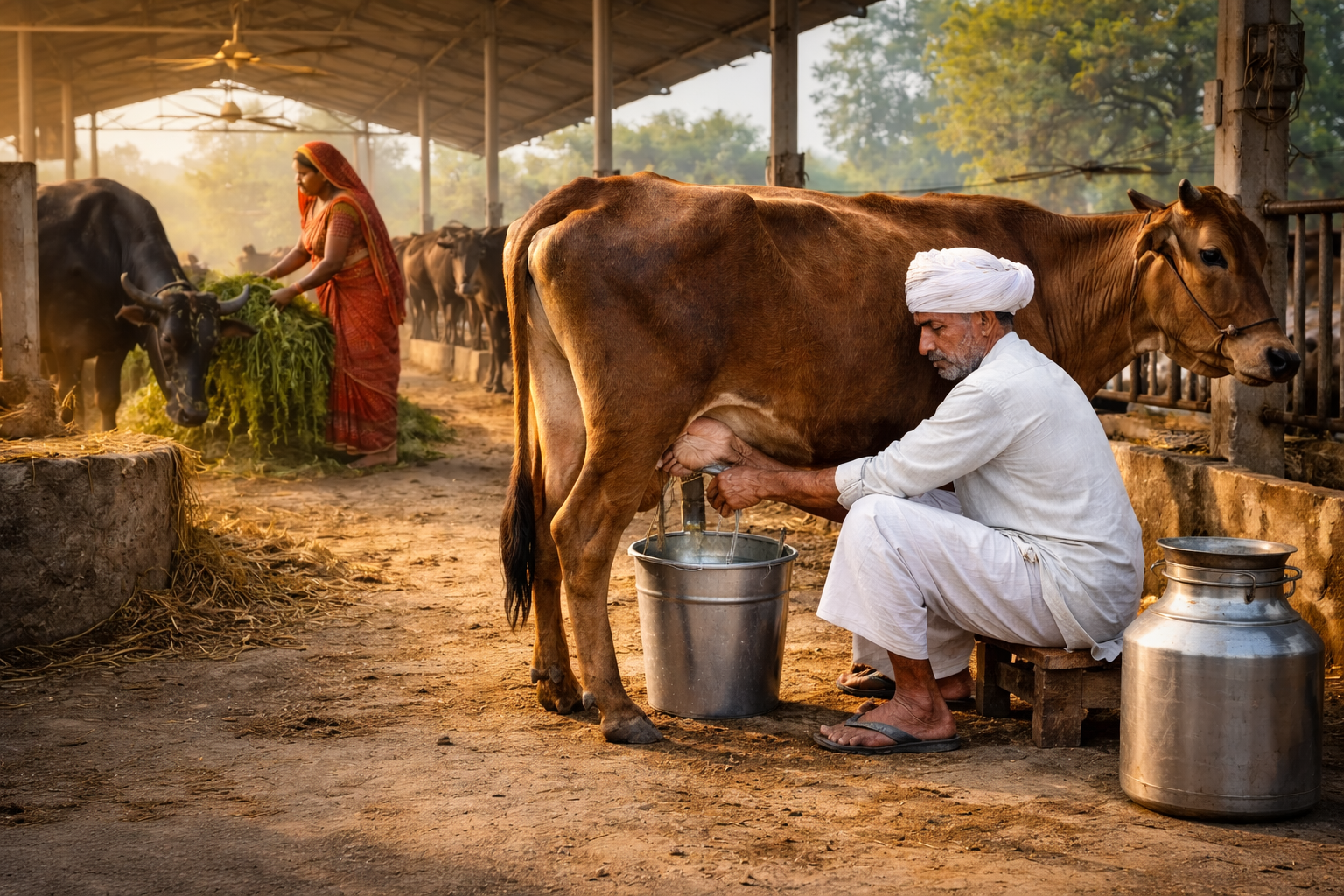
4. Defining Modern Dairy Farming: The Science Behind Productivity
Modern dairy farming is a cohesive system integrating animal physiology, genetics, engineering, climate control, and data analytics.
Expanded Scientific Narrative
At its core, dairy production depends on three biological pillars:
1. Genetic potential of the animal
2. Nutrient intake and feed conversion efficiency
3. Environmental comfort and stress reduction
Any disruption in these affects milk yield, reproductive efficiency, and disease resistance.
Modern farms adopt:
● Genomic testing to identify high-yield potential animals
● Precision feeding with balanced amino acids, minerals, and roughage
● Milking parlours for hygienic and standardized milk harvesting
● Sensors and wearables to detect heat cycles, rumination patterns, and illness
● Ventilation engineering to reduce heat stress
Bullet Highlights
● Planned breeding programs
● Data-driven health management
● Structural shed designs minimizing environmental stress
● Reduced human error in milking and feeding
● High standards of hygiene and milk handling
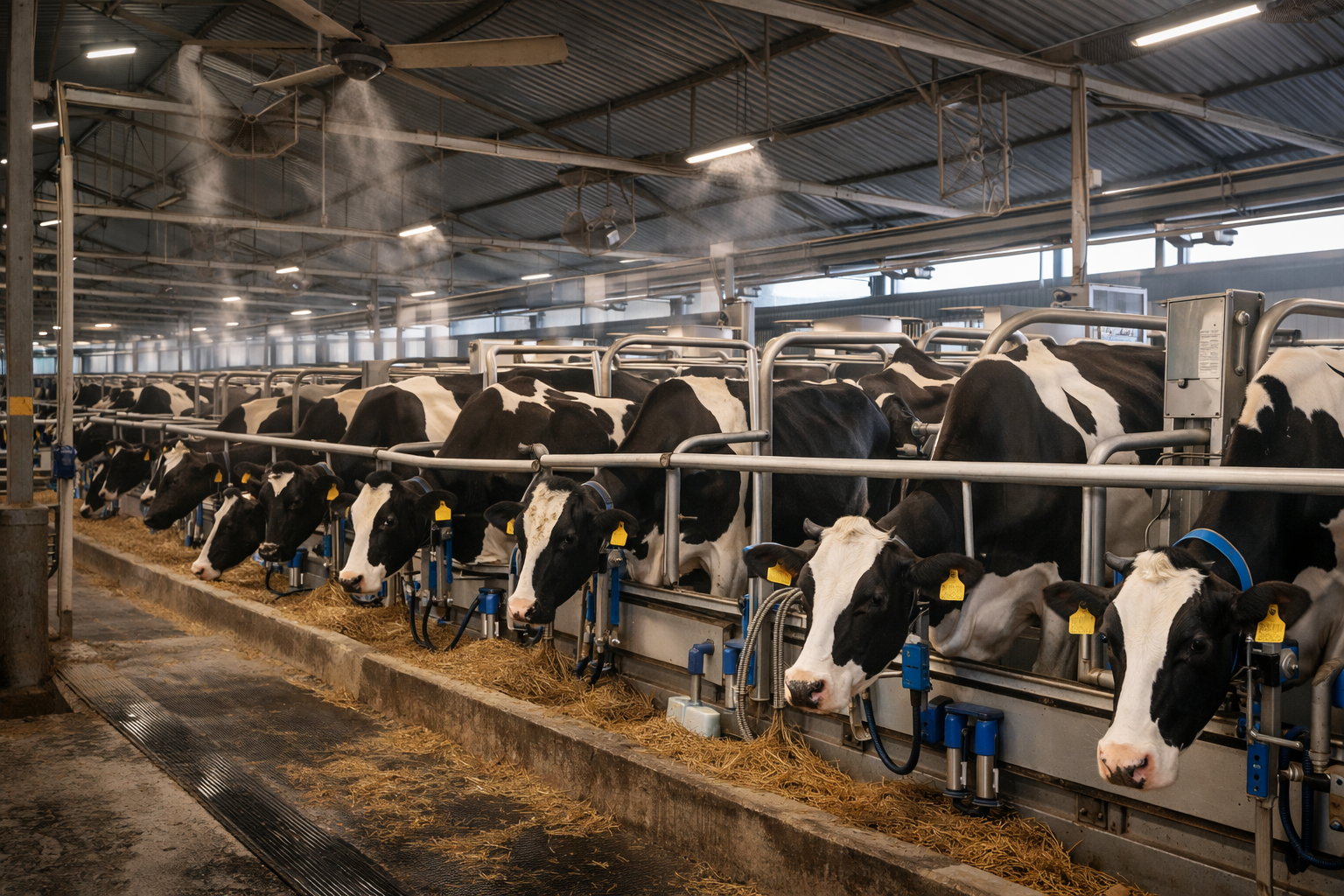
5. The Global & Indian Dairy Market: Analyzing an Expanding Sector
Extended Economic and Market Narrative
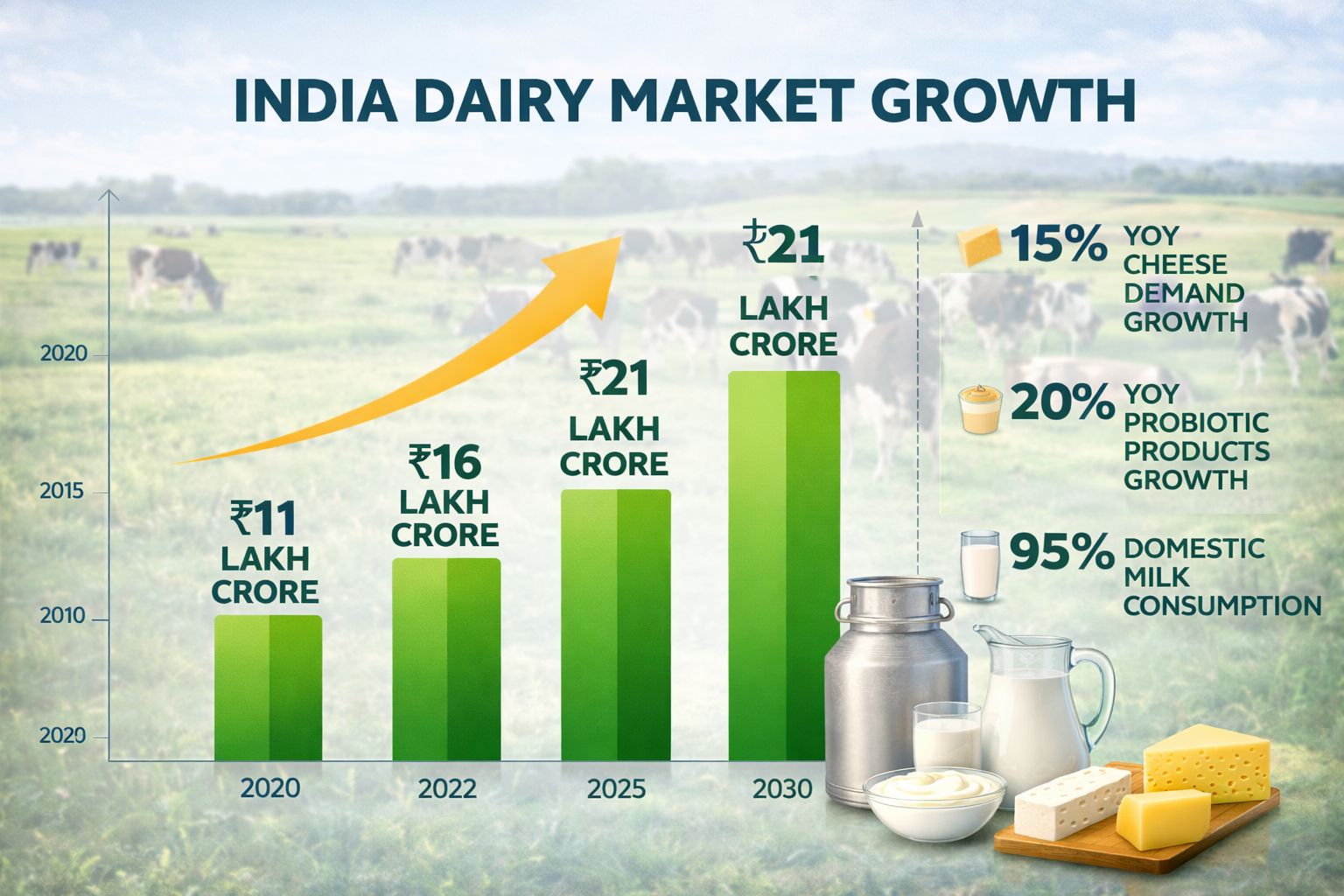
The global dairy industry is valued at over $900 billion, expected to cross $1.2 trillion by 2030. India leads production but lags in organized processing levels. As urban populations rise and dietary habits shift, processed dairy consumption is rapidly increasing.
Driving Forces
● Urban lifestyles favor packaged milk, paneer, cheese
● Food service industry growth boosts dairy ingredient demand
● Health-conscious consumers prefer protein-rich foods
● Expansion of refrigeration and logistics support organized dairy trade
Global Comparison
● USA: High-tech farms with 500–5,000 cows
● Europe: Focus on sustainability and organic dairy
● New Zealand: Pasture-based, large-scale grazing systems
● India: Smallholder-driven but transforming into larger commercial units
Bullet Highlights
● India consumes >95% of its milk domestically
● Per capita dairy consumption rising steadily
● Organized dairy sector still controls <30% of market
● Enormous scope for startups in value-added dairy processing
6. Production Systems in Dairy Farming
Extended Narrative
Understanding production systems helps farmers choose appropriate management practices, investment levels, and operational models.
System 1: Extensive (Pasture-Based)
● Low investment
● Animals graze freely
● Suitable for regions with abundant land
● Lowest milk yield
System 2: Semi-Intensive
● Balanced model
● Animals graze part-time, stall-fed rest of the day
● Moderate yield, moderate cost
System 3: Intensive / Commercial
● Shed-based, high-input
● Scientific feeding (TMR)
● Maximum milk output
● Essential for modern dairy enterprises and milk processing units
Bullet Highlights
● Intensive systems allow for predictable yield
● Feeding, breeding, milking are timed and controlled
● Proper manure management required
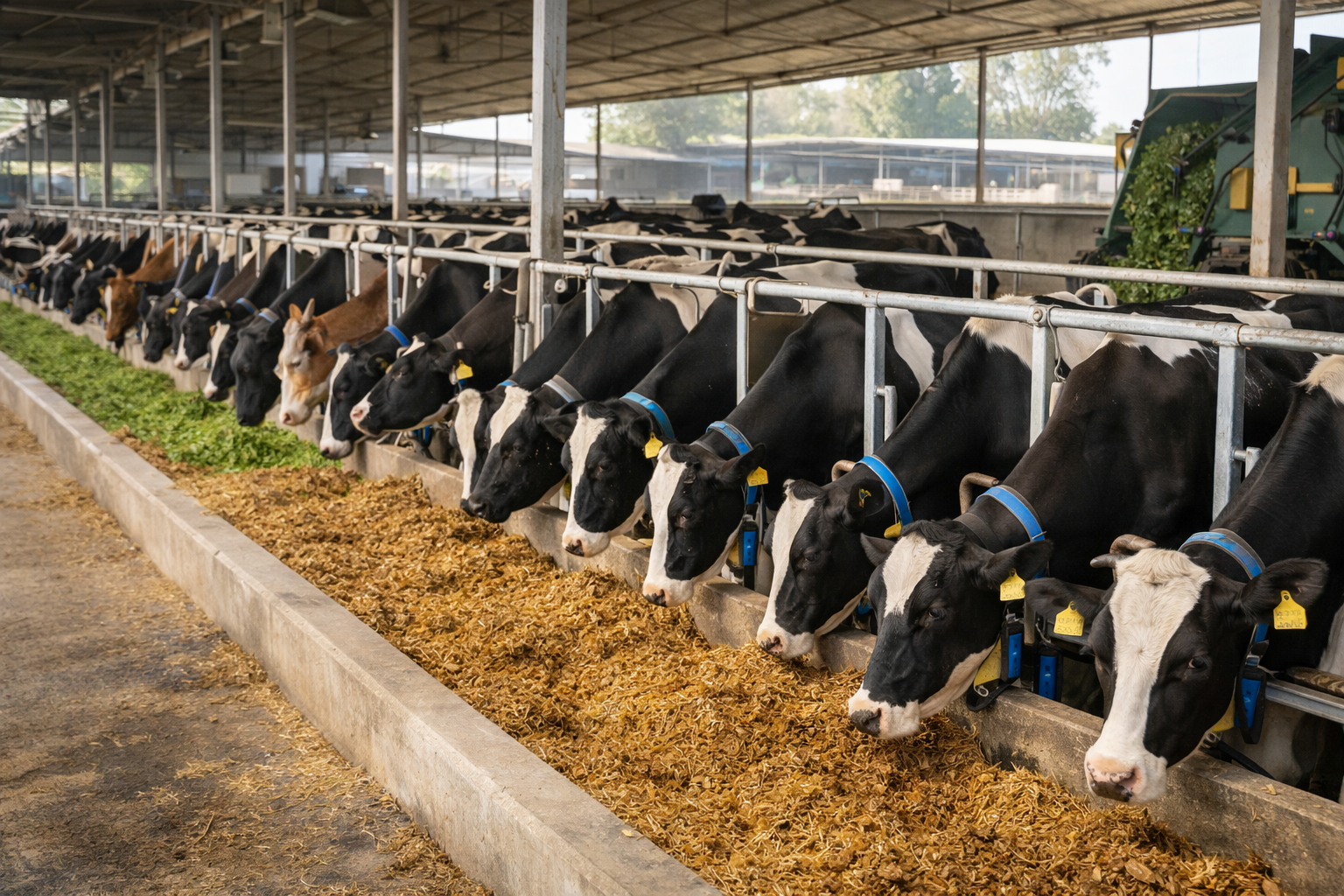
7. Understanding the Dairy Value Chain
Extended Narrative
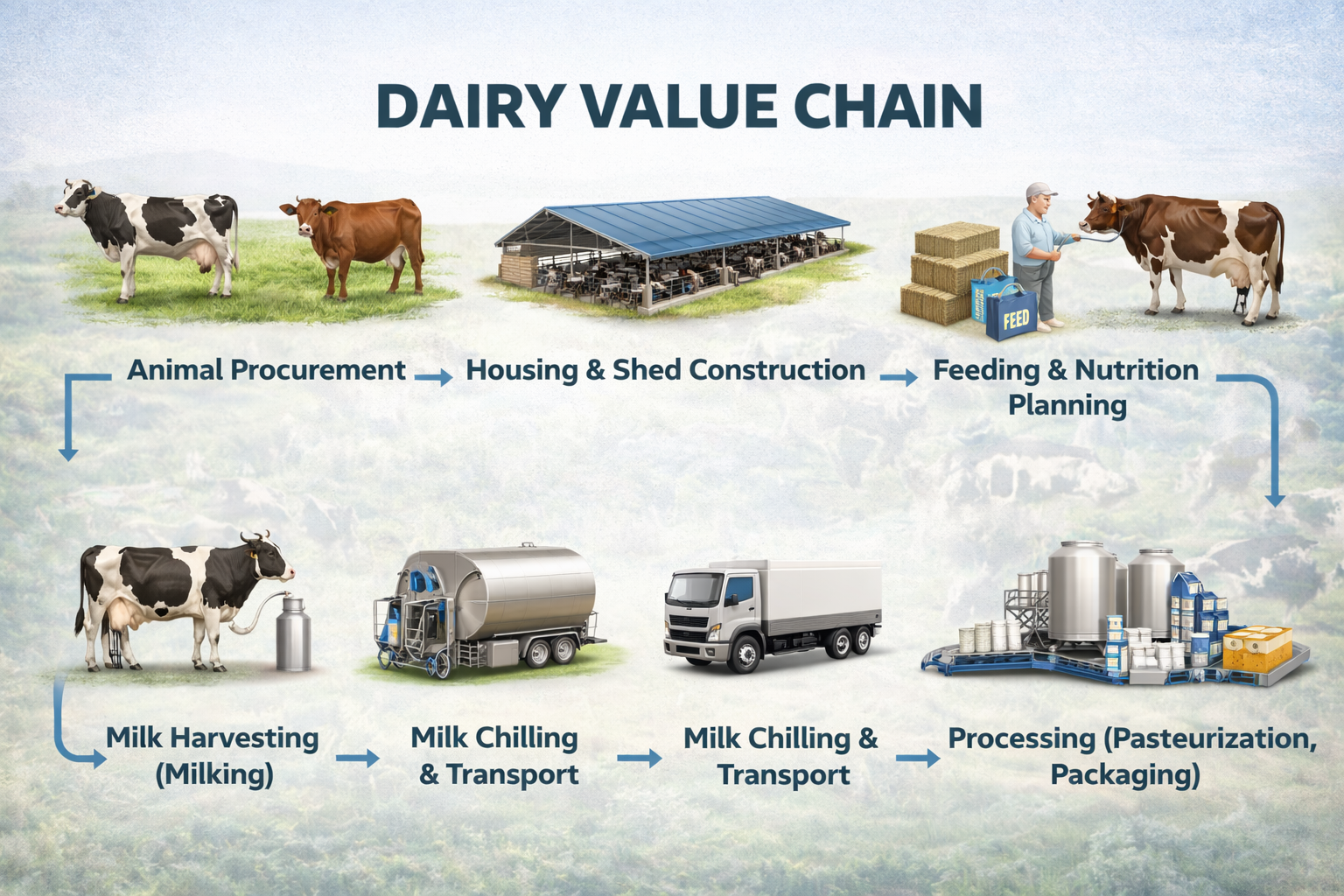
The dairy value chain consists of interconnected activities ensuring the transformation of raw milk into market-ready, safe, high-quality products.
Each step has distinct technical, economic, and compliance requirements.
Value Chain Steps Explained in Detail
1. Input Supply
Includes feed cultivation, mineral supplements, veterinary medicines, and breeding inputs (semen, AI services).
2. Production (Farm Level)
Core activities: feeding, breeding, health management, milking.
3. Collection & Chilling
Milk must be chilled to 4°C within 2–3 hours to maintain bacterial quality.
4. Processing
Pasteurization, homogenization, separation, fermentation, packaging.
5. Logistics & Retail
Cold chain transport ensures product stability and shelf life.
Bullet Highlights
● Hygiene at farm decides final product quality
● Cold chain is non-negotiable for safety
● Value-added processing increases profitability
● Branding and packaging create market identity
8. Future Technologies and Trends in Dairy Farming
Extended Narrative
The future of dairy farming is shaped by innovations blending biotechnology, automation, data analytics, and sustainability.
Emerging Technologies
● Genomic selection for disease resistance
● Sexed semen accelerating female calf generation
● Robotic milking reducing labor reliance
● IoT-based herd monitoring predicting illness before symptoms
● Precision fermentation (competitor sector producing milk proteins without animals)
● Methane reduction strategies using feed supplements
Bullet Highlights
● AI-powered prediction models improve breeding accuracy
● Renewable-energy-powered dairy farms gain traction
● Data-driven farming reduces wastage and increases margins
CONCLUSION (Expanded)
Dairy farming is both an ancient tradition and a technologically driven modern enterprise. Its role in nutrition, economy, rural employment, and food security makes it indispensable. The integration of science—genetics, nutrition, engineering, disease biology—and economics has reshaped the dairy sector globally.
This expanded chapter provides a comprehensive, research-level foundation to explore deeper technical aspects of dairy management in subsequent chapters.