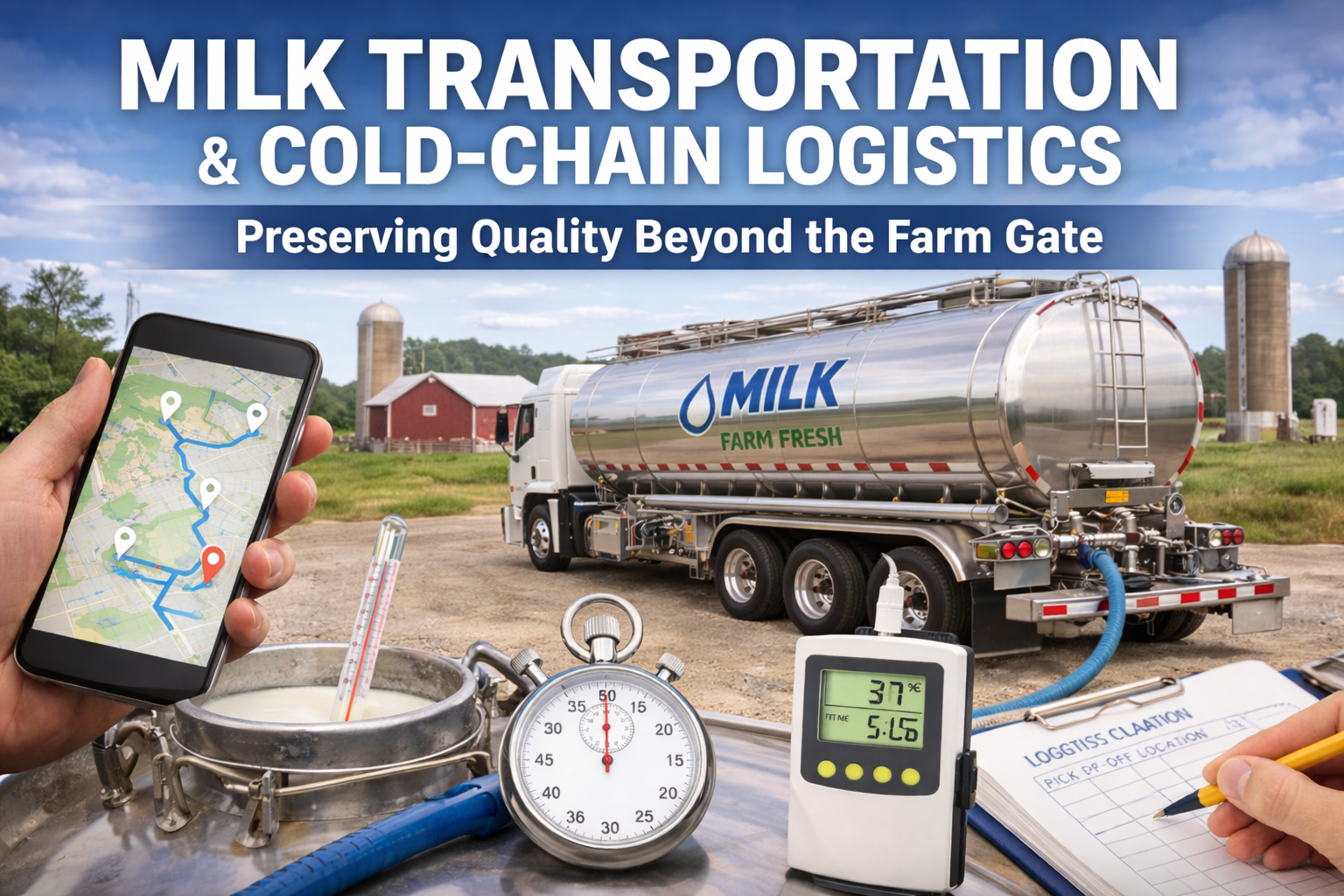
1. Transportation as the Second Critical Control Point
Once milk leaves the farm or processing plant, transportation becomes the second most critical quality control point in the dairy value chain. At this stage, milk is no longer protected by farm routines or plant hygiene systems and is exposed to time, temperature fluctuations, vibration, and human handling.
Transportation failures rarely announce themselves immediately. Instead, they shorten shelf life, increase spoilage risk, and compromise processing performance downstream.
Why transport discipline matters
● Bacteria multiply rapidly above 4 °C
● Temperature abuse accelerates enzymatic activity
● Physical agitation damages fat globule membranes
● Errors here cannot be corrected later
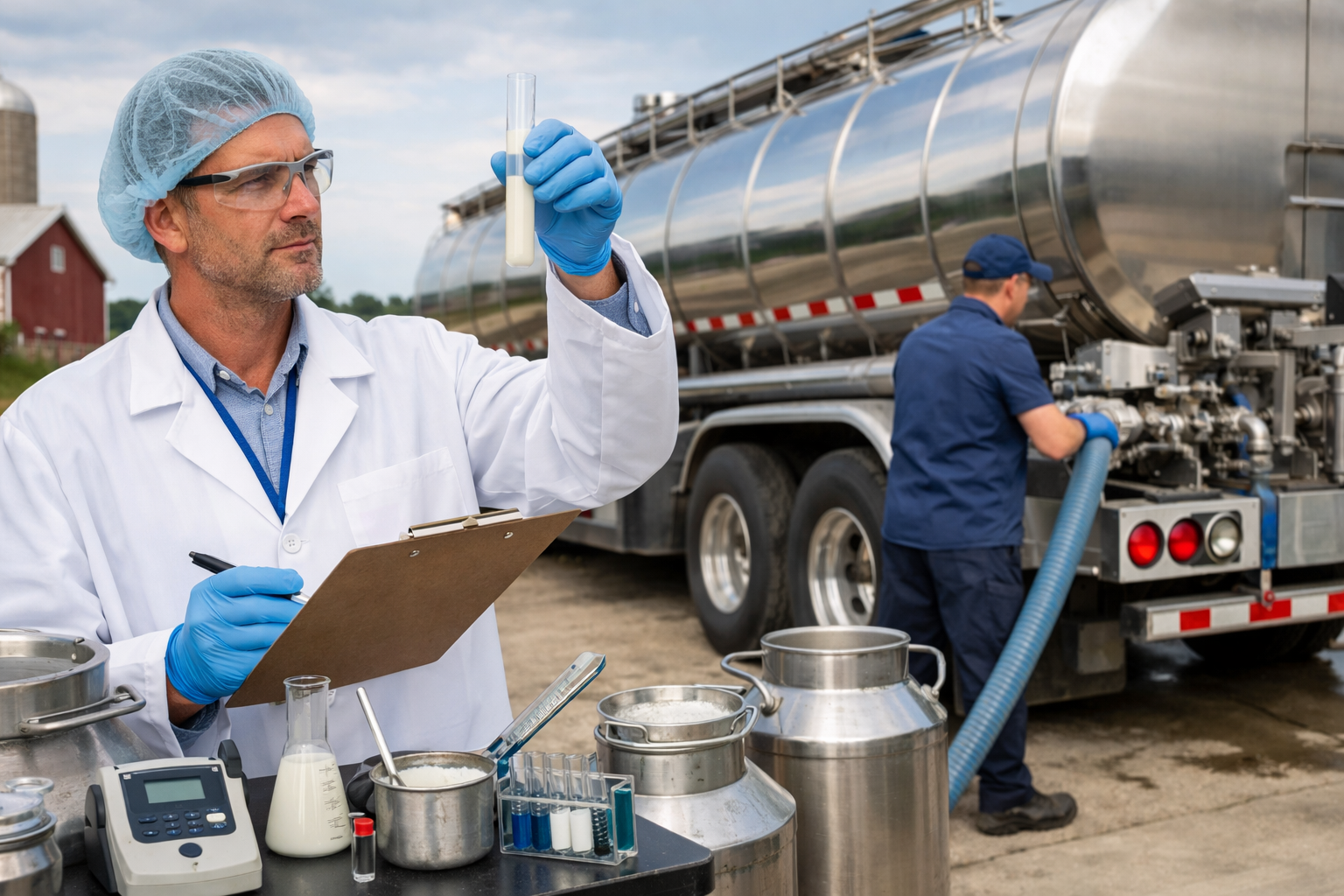
2. Cold-Chain Fundamentals: Time–Temperature Dynamics
The cold chain is not merely refrigeration; it is the continuous control of time and temperature from farm to consumer. Every break in this chain allows microbial growth that compounds cumulatively.
Milk quality degradation follows exponential kinetics—small delays can produce large losses.
Cold-chain principles
● Target temperature: ≤ 4 °C
● Faster cooling = longer shelf life
● Stable temperature is more important than extreme cold
● Monitoring is essential, not optional
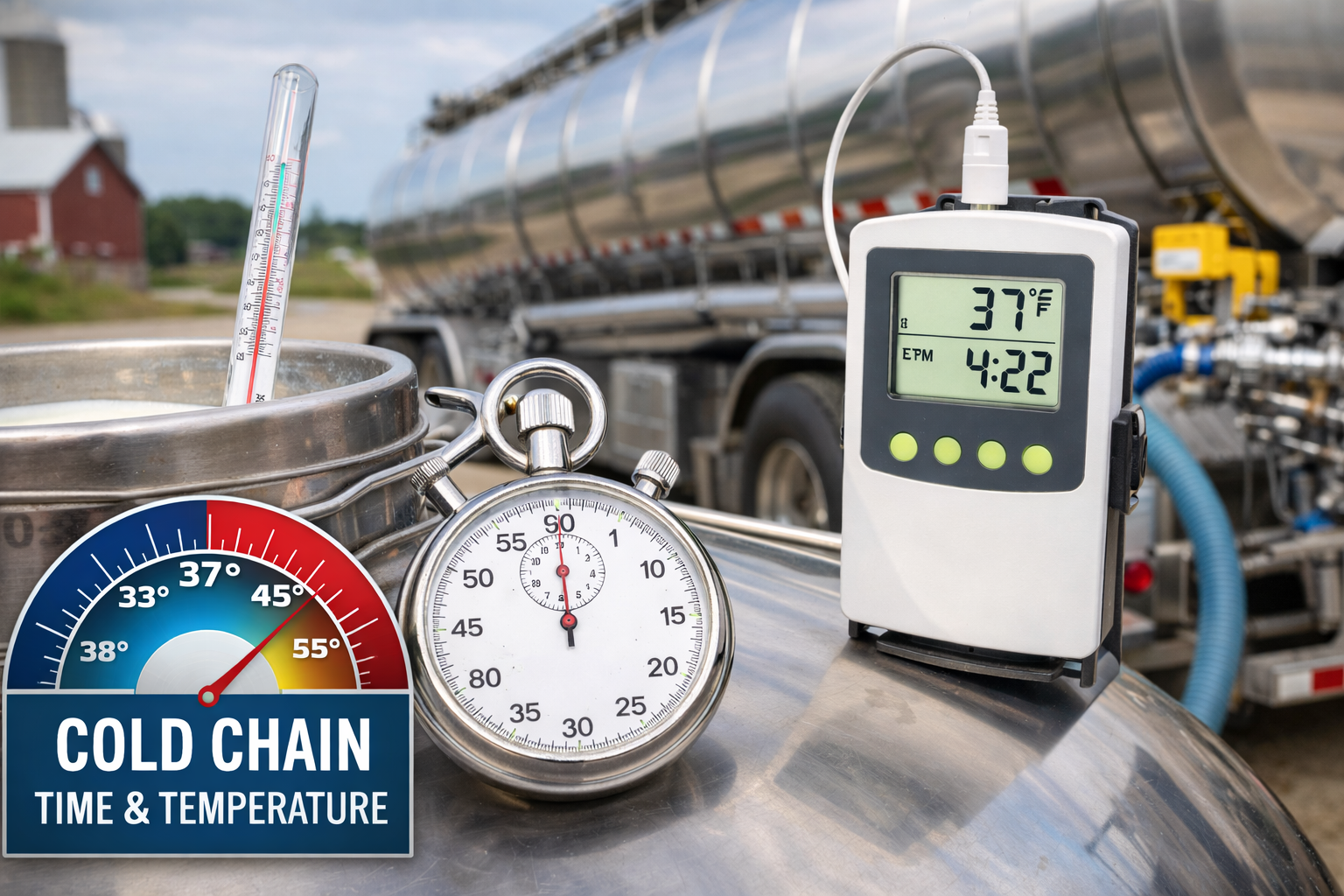 _
3. Milk Collection Systems in India
_
3. Milk Collection Systems in India
India’s dairy sector is unique due to its large smallholder base and decentralized milk production. Milk collection systems must balance efficiency, inclusivity, and quality control.
Common collection models
● Can-based village collection routes
● Insulated pickup vehicles
● Bulk milk tanker routes from chilling centres
● Direct farm-to-plant tanker collection
Each model carries distinct contamination and temperature risks.
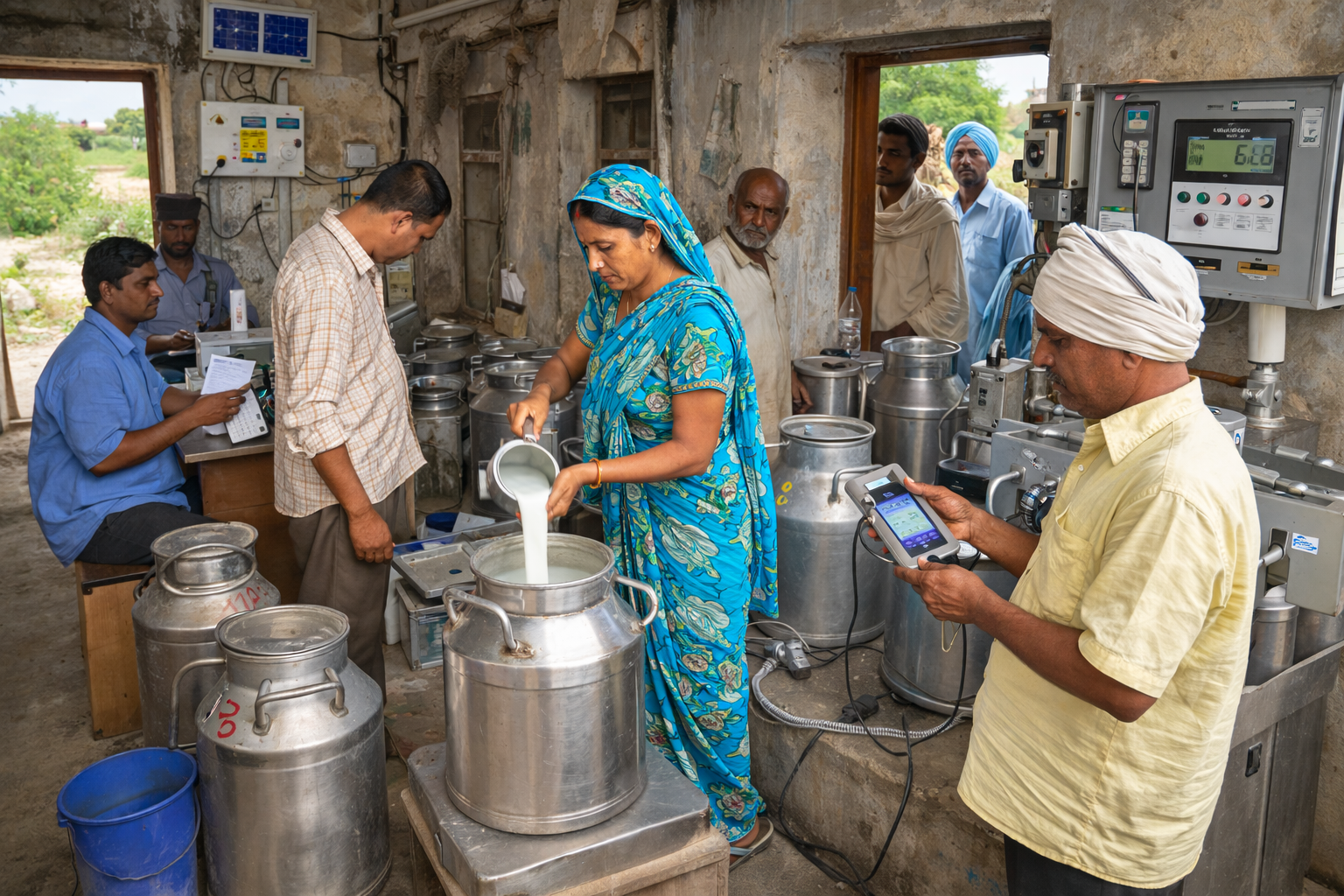
4. Milk Transportation Vehicles and Design
Transportation vehicles are mobile storage environments. Their design directly influences milk temperature stability, hygiene, and agitation.
Key vehicle design features
● Insulated stainless-steel tanks
● Smooth internal surfaces
● Sealed manholes and valves
● Proper drainage and cleaning access
Improvised or poorly designed vehicles undermine even the best upstream practices.

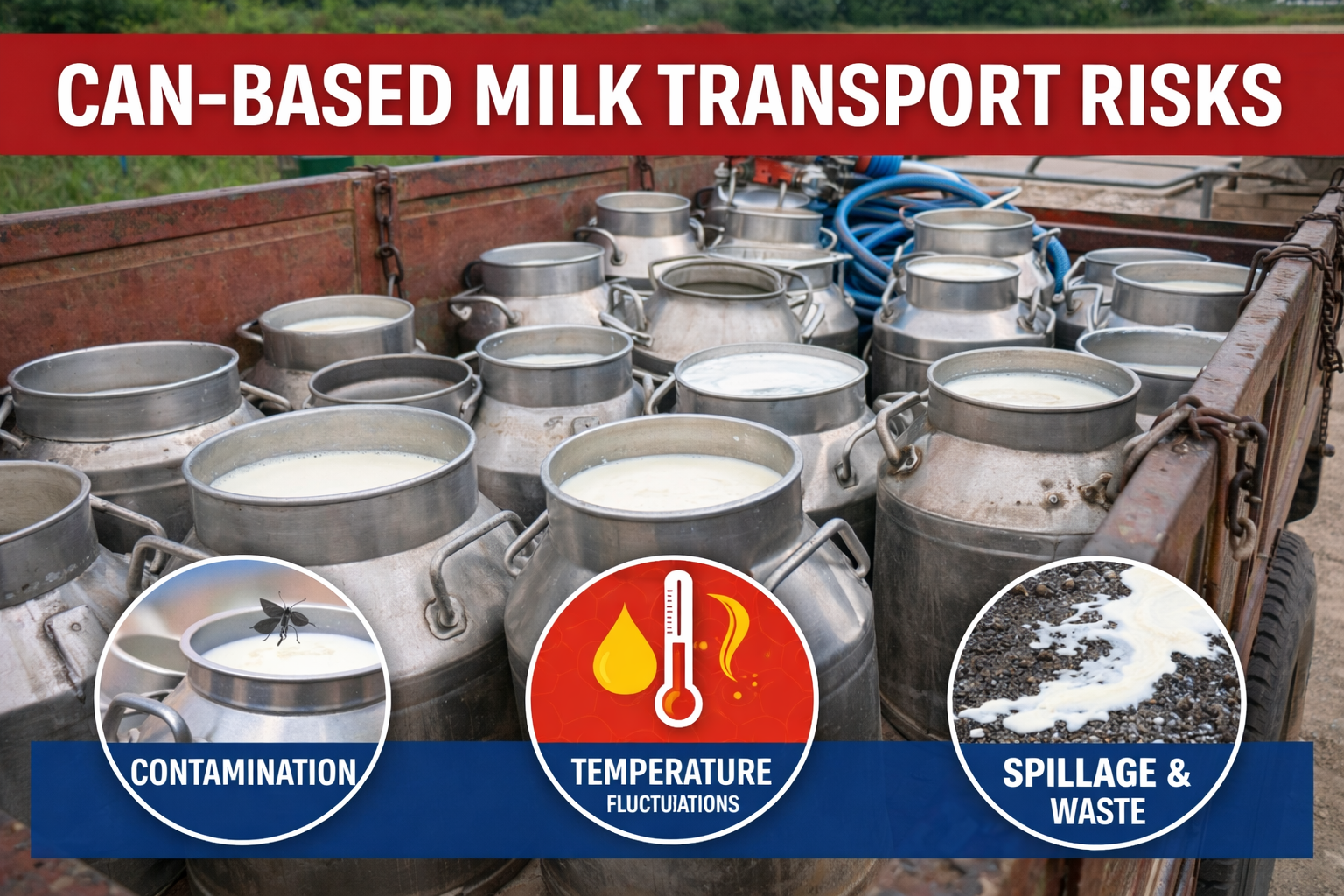
5. Can-Based Transport: Risks and Mitigation
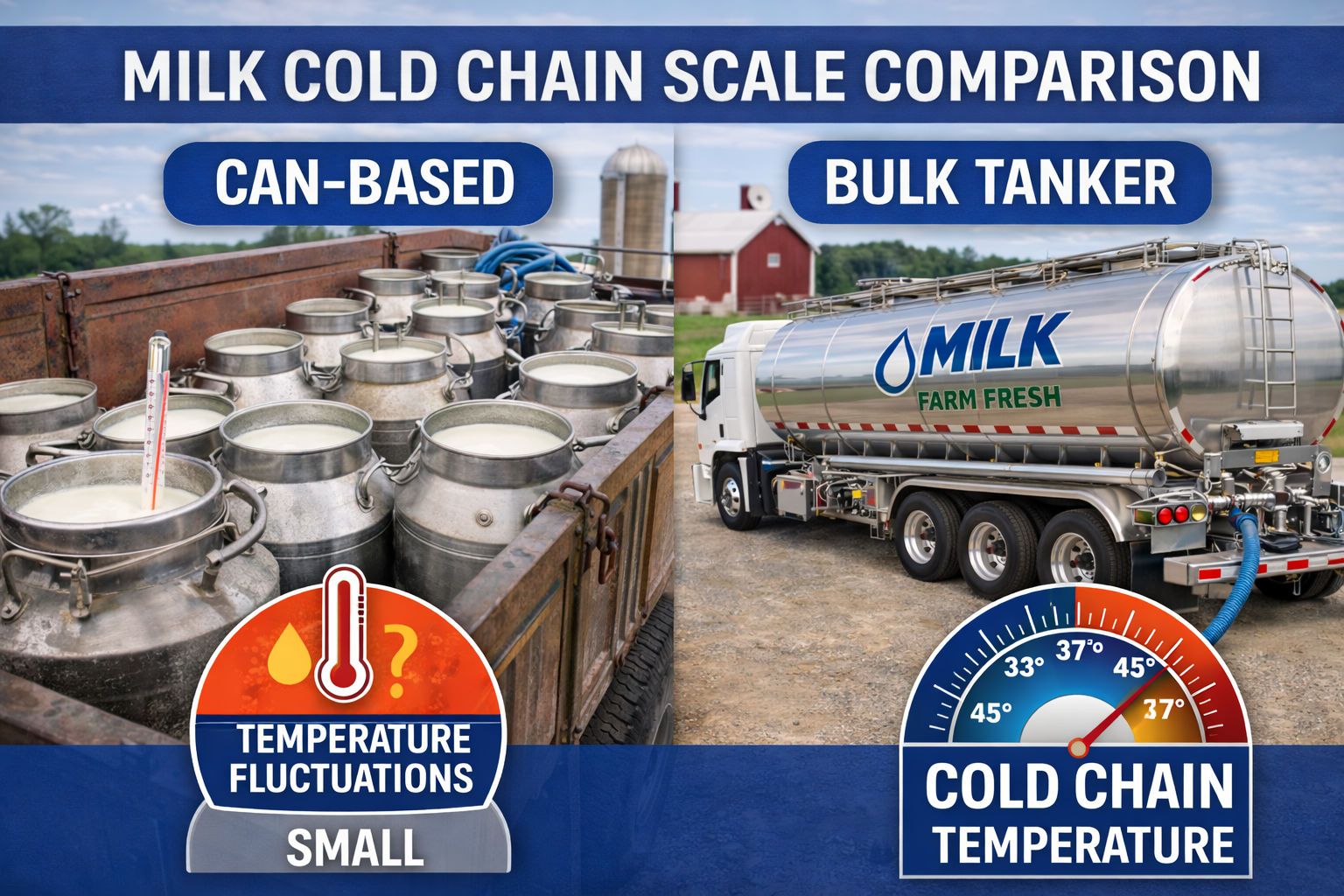
Traditional can-based transport remains widespread in smallholder systems. While flexible and low-cost, it poses significant quality risks if not managed rigorously.
Major risks
● Inadequate cooling
● Recontamination during transfer
● Exposure to sunlight and dust
● Poor sanitation of cans
Risk-reduction strategies
● Rapid chilling before dispatch
● Covered transport
● Stainless-steel cans only
● Strict cleaning protocols
6. Bulk Milk Tanker Transport Systems
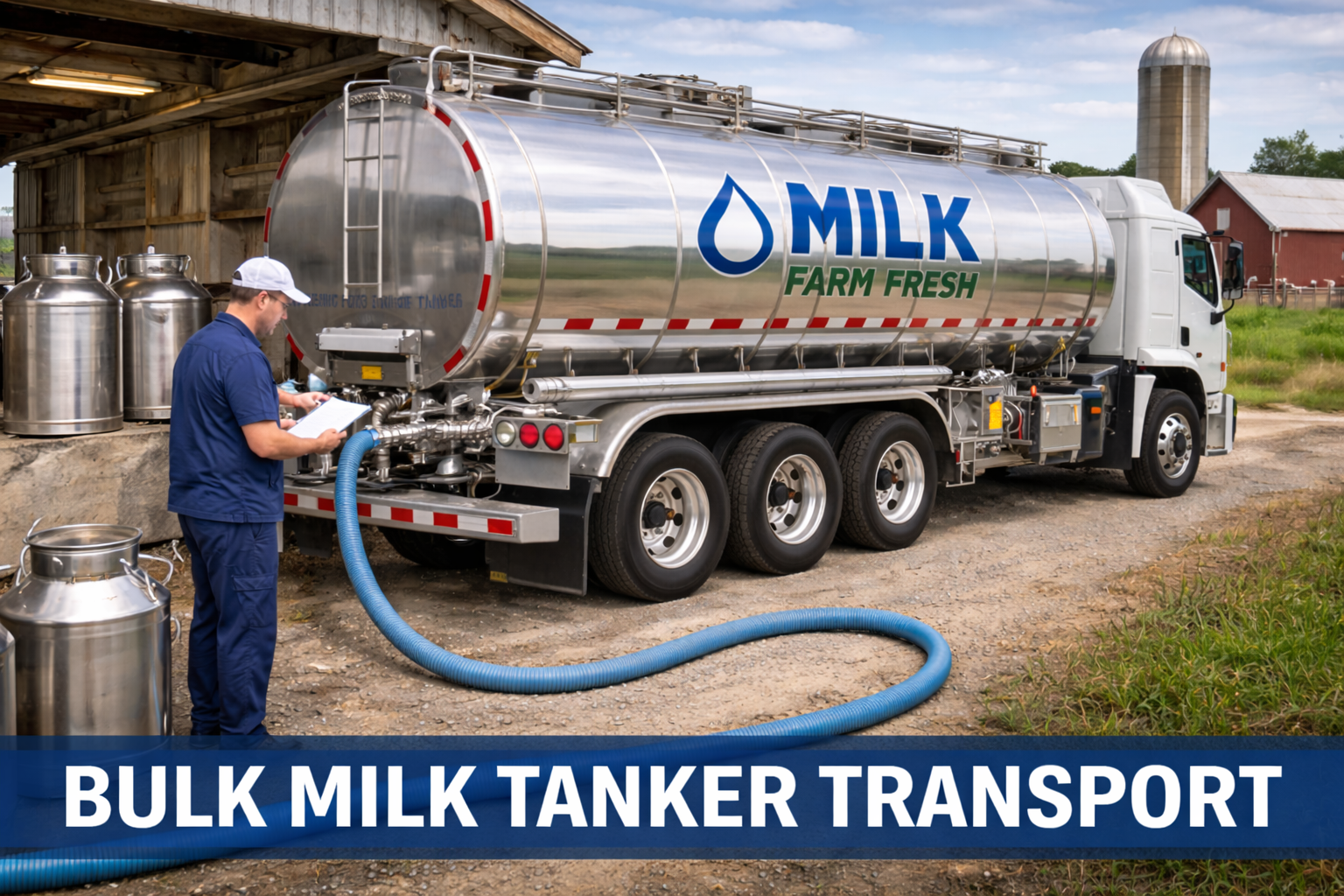
Bulk tankers are the backbone of organized dairy supply chains. They minimize handling, reduce contamination risk, and preserve temperature when operated correctly.
Operational advantages
● Closed system transport
● Reduced exposure to environment
● Efficient high-volume movement
● Compatibility with quality testing
Operational challenges
● High capital cost
● Dependence on road quality
● Strict cleaning requirements
7. Hygiene and Cleaning of Transport Equipment
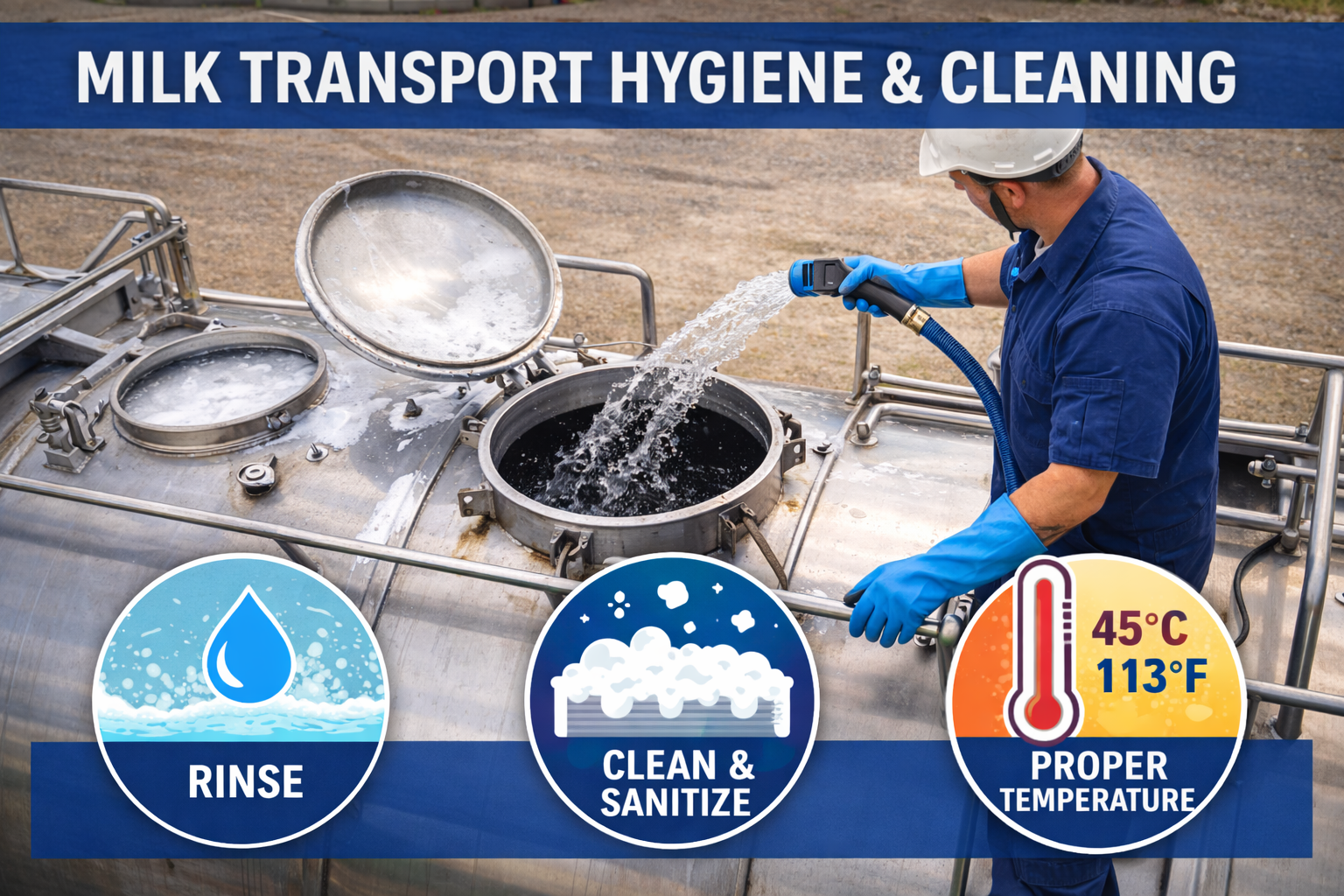
Milk transport equipment must be cleaned and sanitized with the same rigor as processing plant equipment. Residual milk films support biofilm formation, leading to chronic contamination.
Cleaning requirements
● Daily cleaning-in-place (CIP)
● Verified detergent concentration
● Hot water sanitation where applicable
● Regular inspection of valves and seals
8. Temperature Monitoring and Traceability
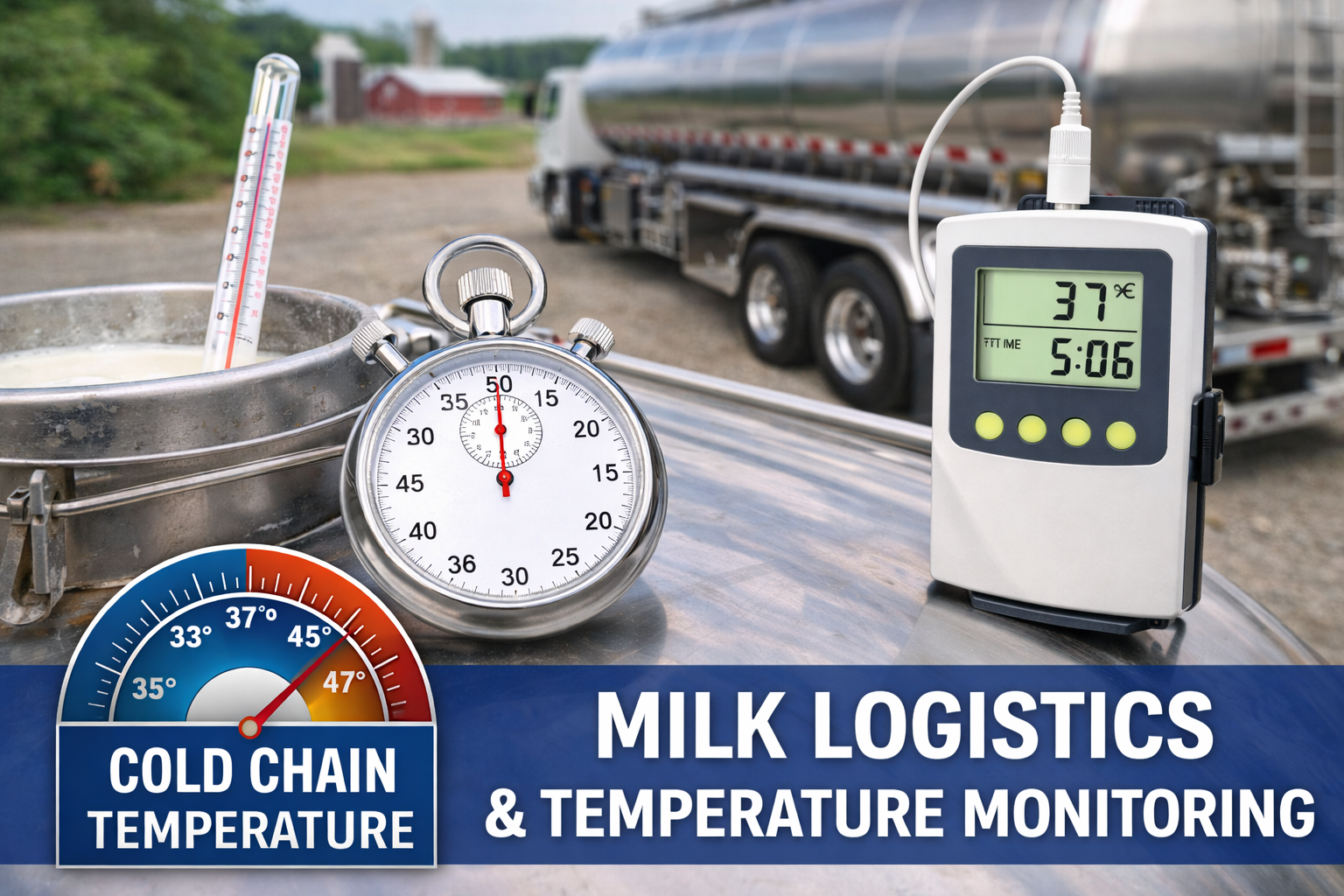
Modern cold chains rely on data, not assumptions. Continuous temperature monitoring and route traceability enable early detection of failures and accountability across the supply chain.
Monitoring tools
● Temperature data loggers
● GPS-enabled tracking
● Digital milk collection records
● Time–temperature alerts
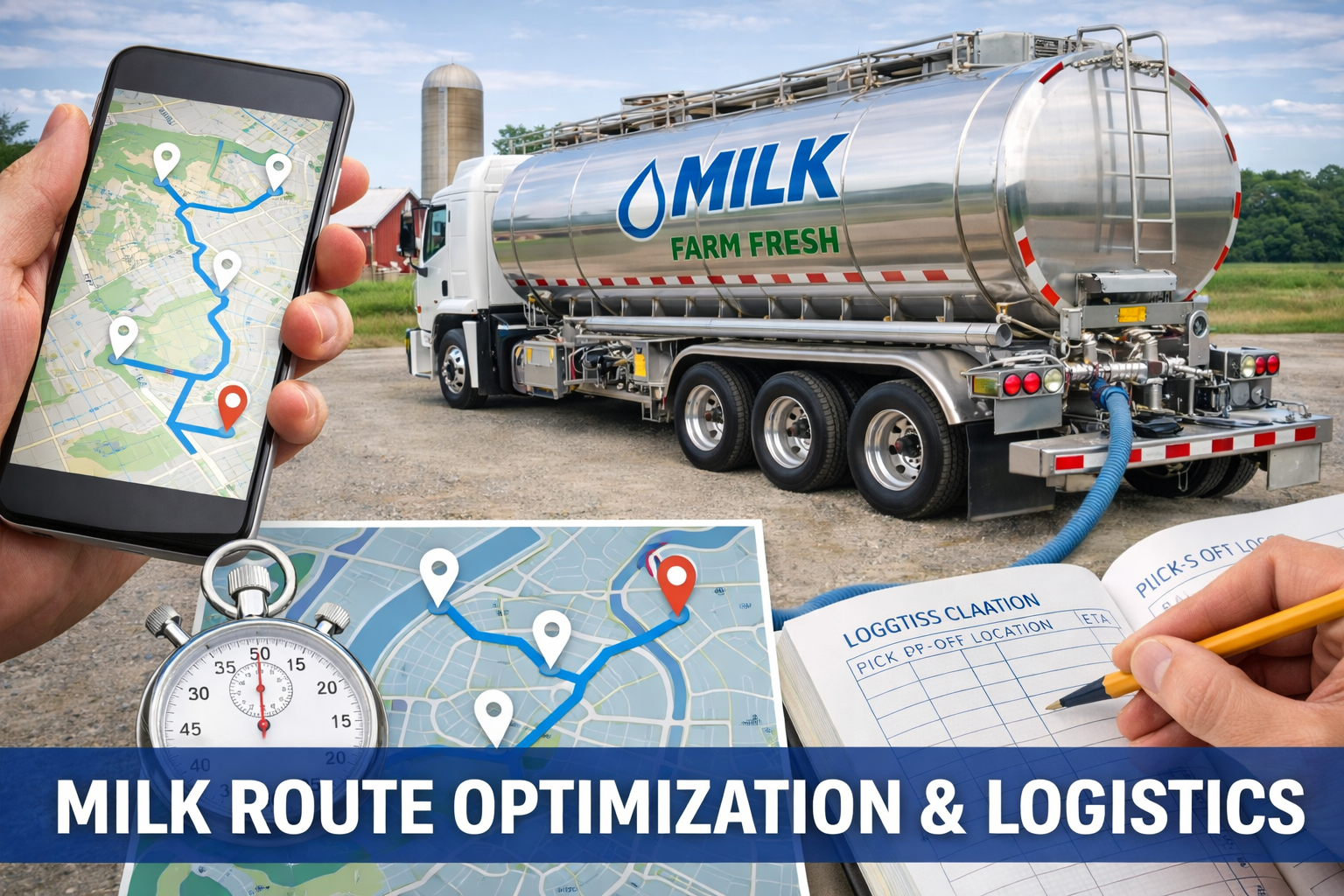
9. Logistics Optimization and Route Planning
Efficient logistics reduce both quality loss and operational cost. Poor routing increases transit time, fuel use, and spoilage risk.
Optimization strategies
● Shortest-time routing
● Clustered collection points
● Scheduled pickup windows
● Integration with chilling capacity
10. Smallholder vs Large-Scale Cold-Chain Systems
Milk logistics must be tailored to scale and geography.
Smallholder systems
● Emphasis on community chilling
● Simple transport discipline
● Cooperative collection models
Large-scale systems
● Integrated tanker networks
● Automated data capture
● Centralized quality control
Uniform solutions fail in diverse contexts.
_
Conclusion: Cold Chain Is Continuous Responsibility
Milk transportation is not merely movement—it is quality preservation in motion. Every kilometer traveled without temperature control erodes value created on the farm and in the plant. Dairy systems that enforce disciplined cold-chain logistics protect shelf life, ensure food safety, and build long-term trust with processors and consumers alike.