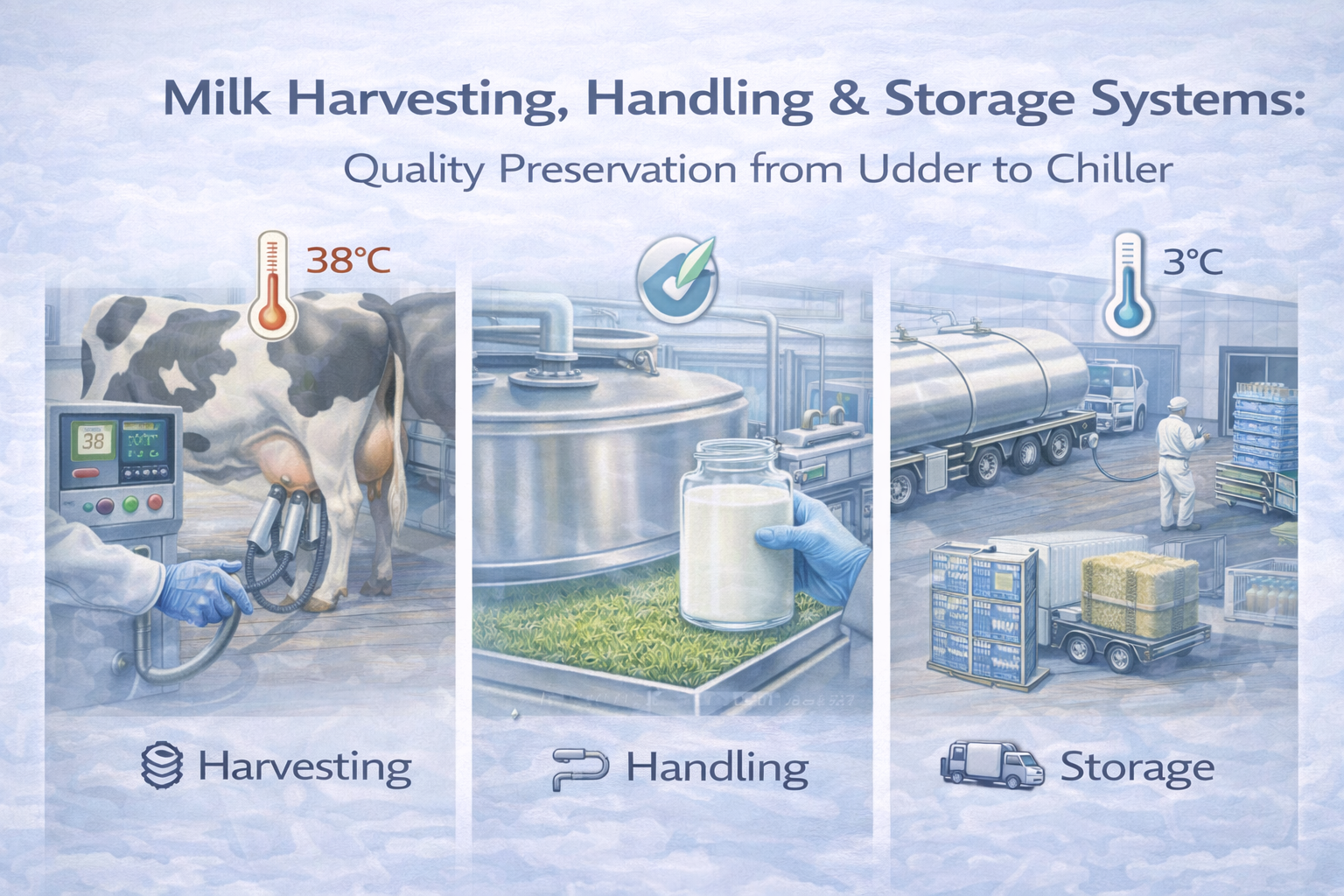
1. Milk Harvesting as a Biological–Hygienic Interface
Milk harvesting represents the most vulnerable point in the dairy value chain. At this interface, sterile milk produced in the mammary gland is suddenly exposed to the external environment. The speed and discipline with which milk is harvested determine microbial load, shelf life, and processing suitability.
From a biological standpoint, stress, poor teat preparation, or delayed milk removal disrupt oxytocin release and compromise milk let-down, increasing residual milk and mastitis risk.
Why harvesting discipline matters
● Milk leaves the udder essentially sterile
● Contamination occurs immediately after exposure
● Stress alters milk let-down and immunity
● Early errors cannot be corrected later
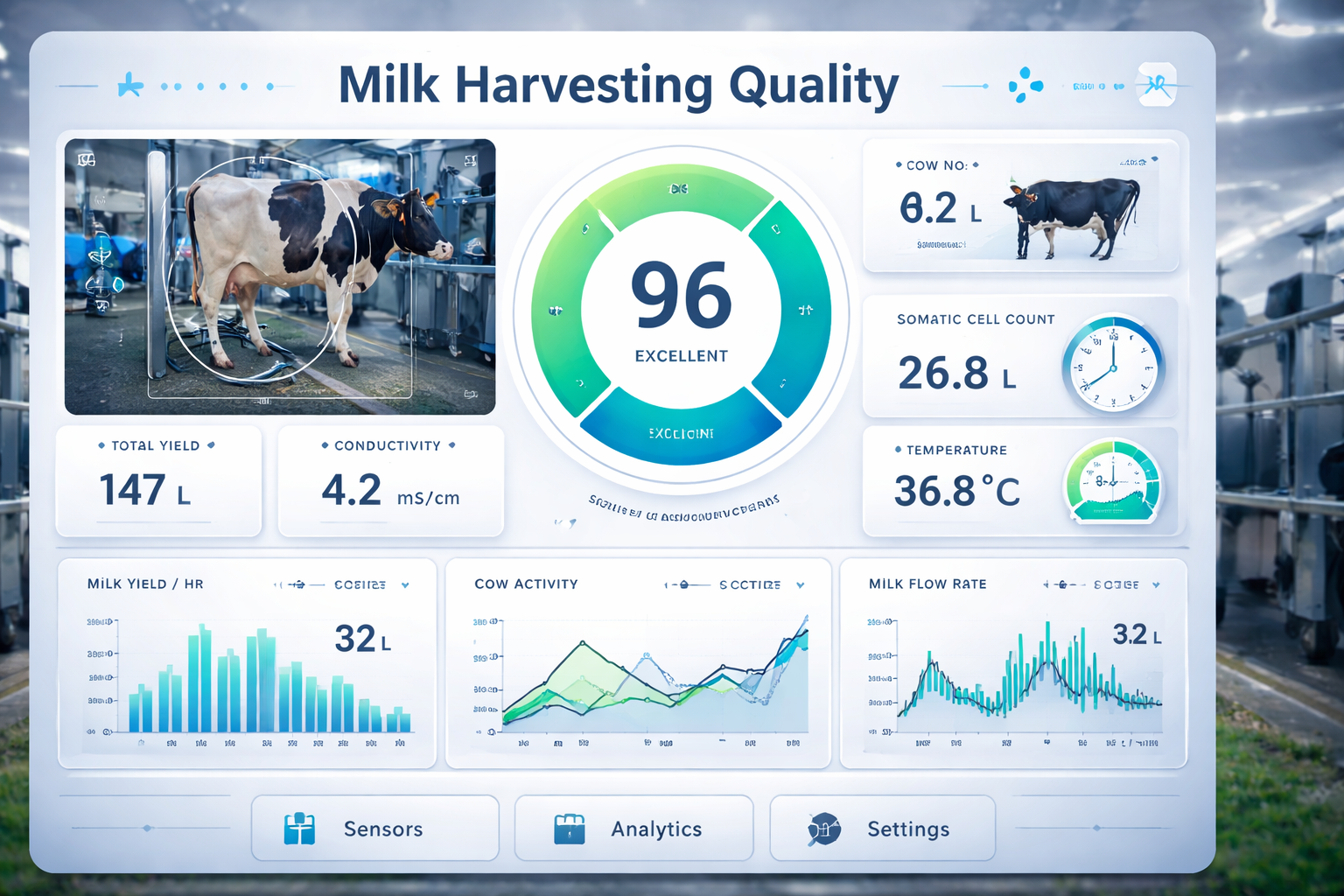
2. Physiology of Milk Let-Down and Milking Timing
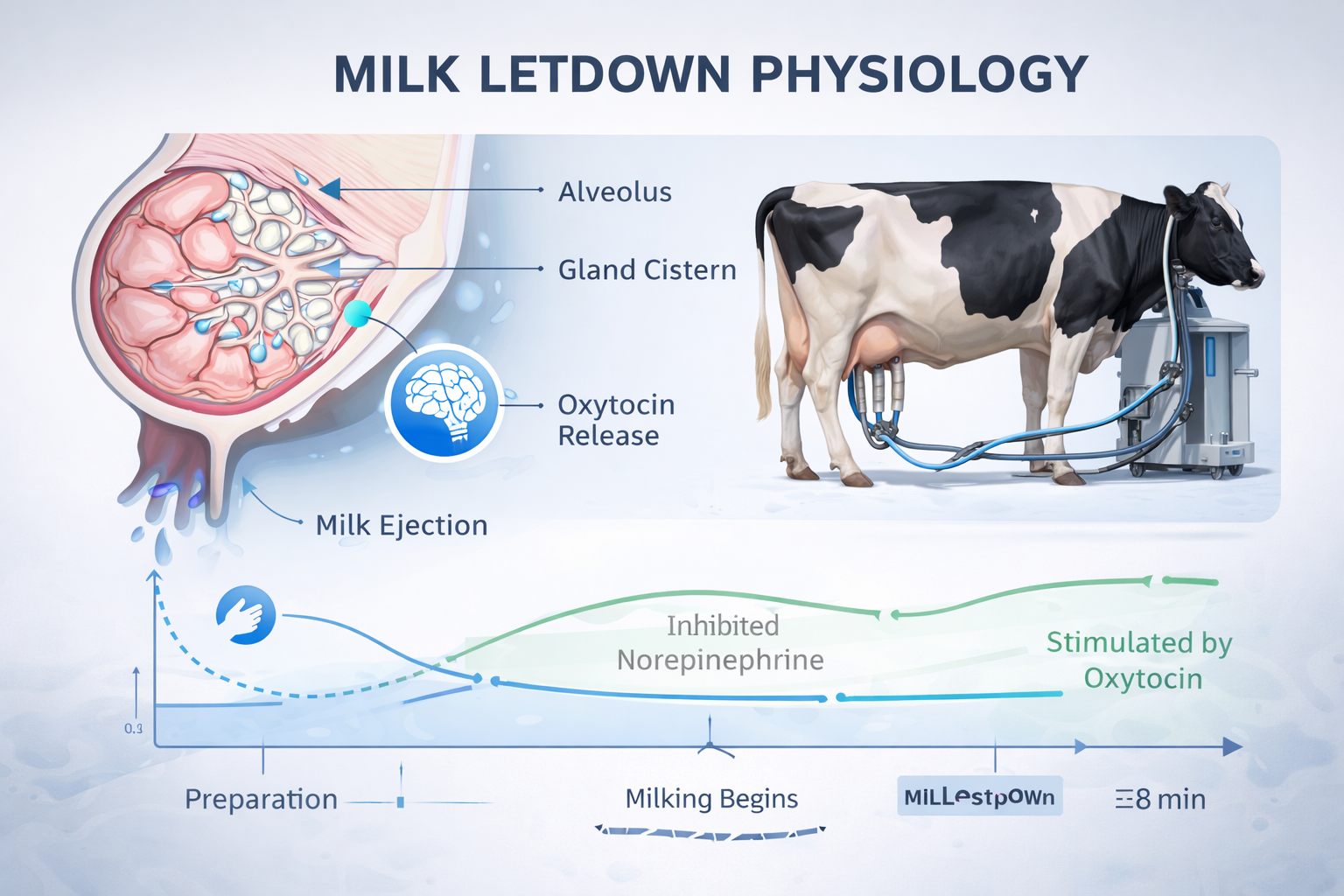
Milk ejection is hormonally regulated by oxytocin, released in response to tactile stimulation of the teats. Proper pre-milking routines synchronize milk let-down with milking unit attachment, maximizing yield and minimizing liner slips and teat damage.
Delayed or inconsistent routines lead to bimodal milk flow, longer milking times, and increased teat end stress.
Milk let-down fundamentals
● Oxytocin release within 60–90 seconds
● Peak milk flow occurs early in milking
● Stress inhibits hormone release
● Consistency improves efficiency and udder health
3. Milking Systems: Hand Milking to Automated Units
Milking systems vary widely across Indian dairies, from hand milking in smallholder systems to fully automated parlours in commercial farms. Each system carries unique hygiene risks and labor dynamics.
While mechanization improves consistency and labor efficiency, it demands strict maintenance and sanitation discipline.
Common milking systems ● Hand milking (smallholders) ● Bucket-type milking machines ● Pipeline milking systems ● Herringbone and parallel parlours ● Robotic milking systems (emerging)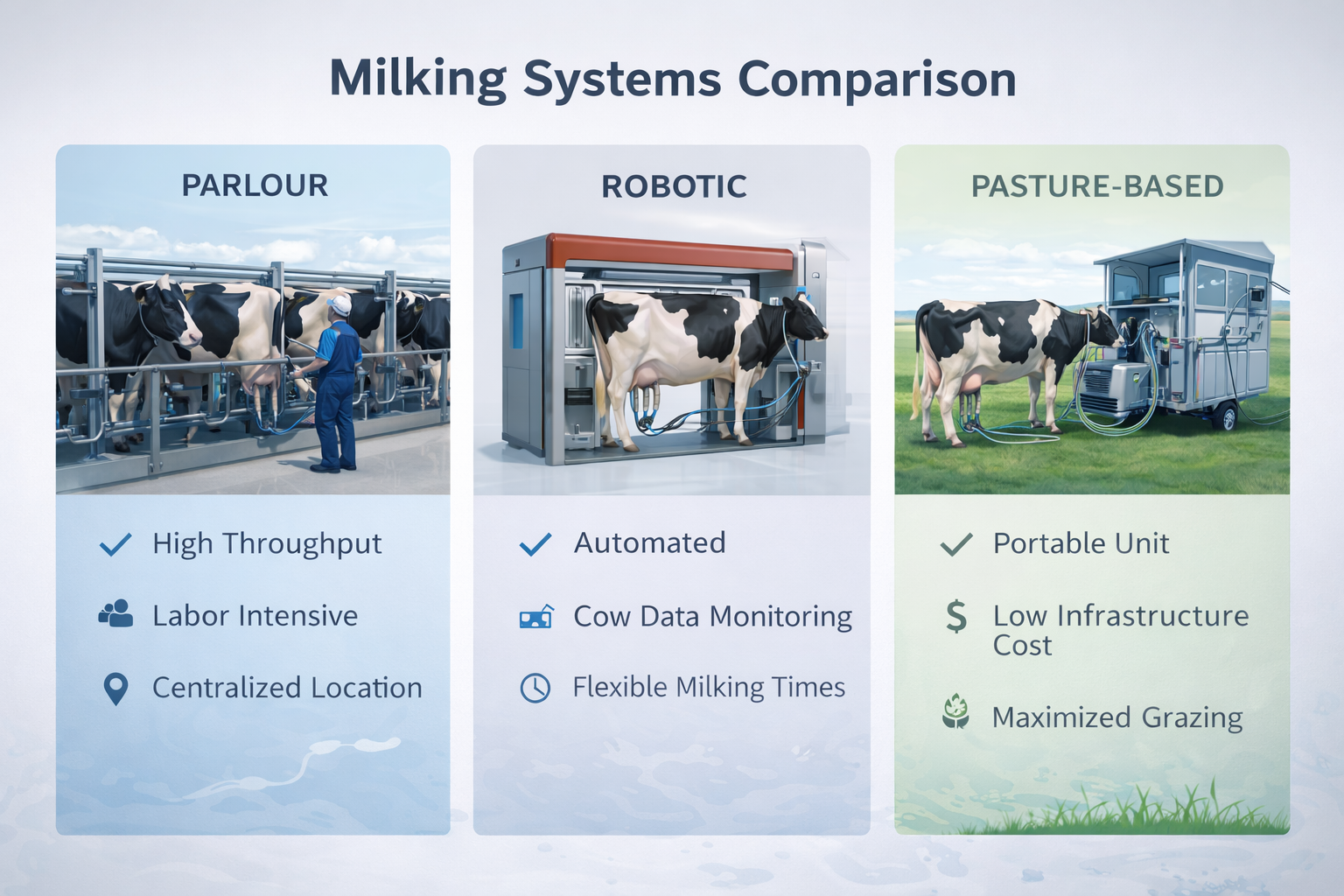
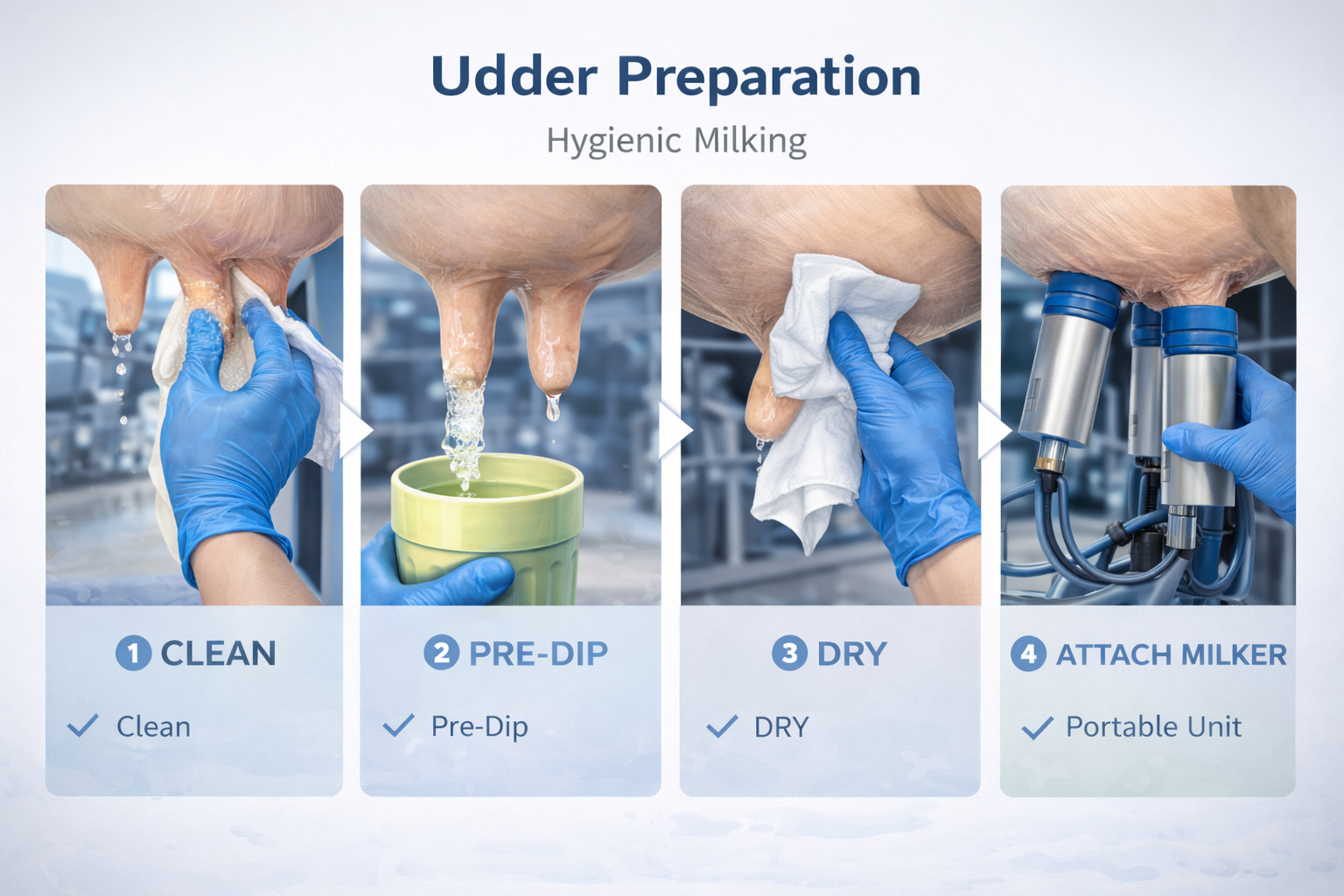
4. Udder Preparation and Milking Hygiene
Udder preparation is the single most effective control point for reducing bacterial contamination. Teat skin is a major reservoir of environmental pathogens, and improper cleaning directly elevates bacterial counts.
Effective routines balance cleanliness with minimal teat irritation.
Pre-milking hygiene steps
● Fore-stripping to detect abnormalities
● Teat cleaning and drying
● Avoiding wet milking
● Post-milking teat disinfection
5. Milk Contamination Pathways
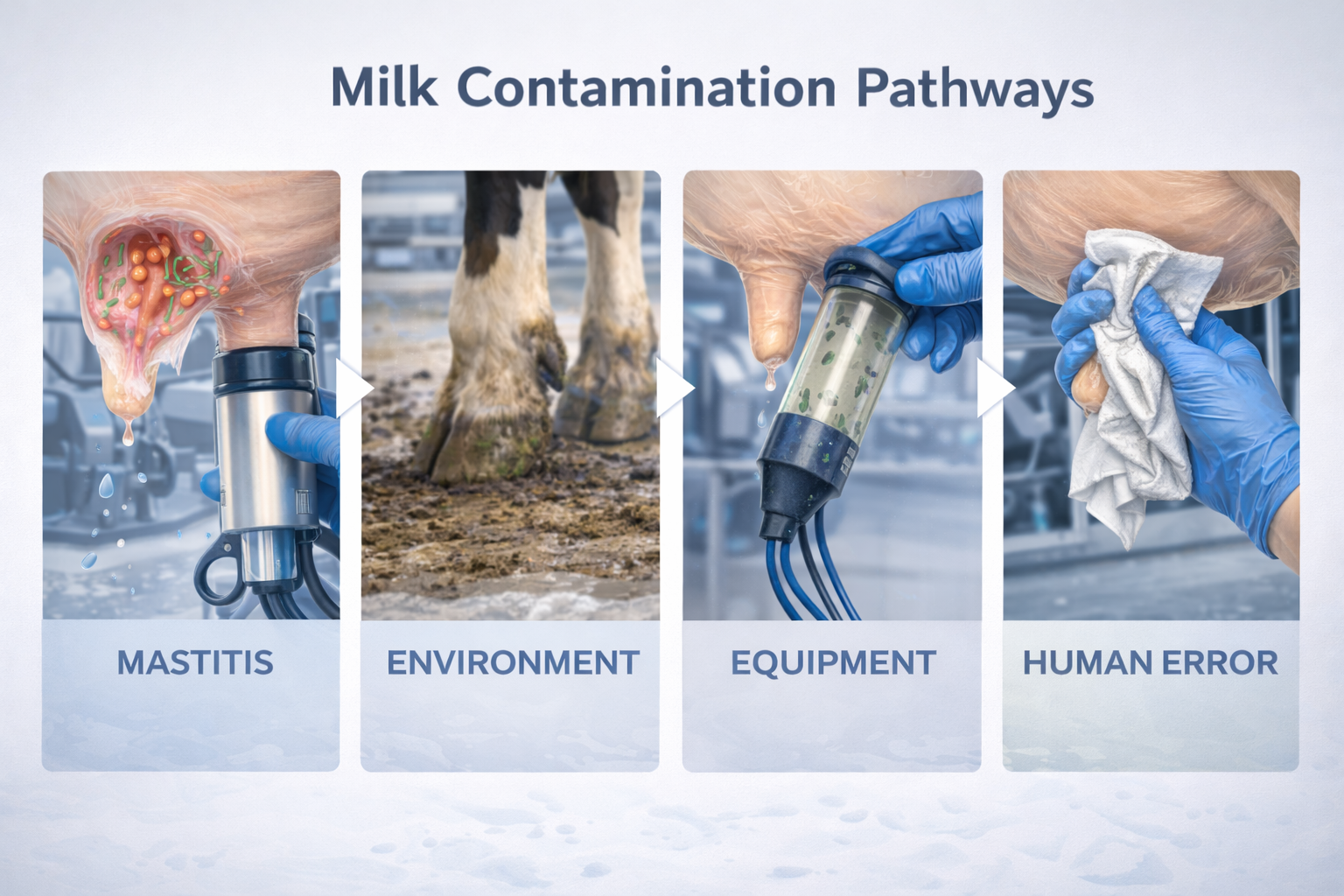
Milk contamination can be biological, chemical, or physical. Understanding contamination pathways allows targeted control rather than blanket interventions.
Major contamination sources
● Infected udders (mastitis)
● Dirty teats and equipment
● Water quality used for cleaning
● Improper storage vessels
Critical insight
● Most contamination is preventable
● Prevention is cheaper than correction
6. Immediate Handling After Milking
Once milk is harvested, time and temperature become the dominant quality determinants. Delays in cooling allow exponential bacterial growth, even if initial contamination is low.
Milk must be filtered, transferred, and cooled with minimal exposure to ambient conditions.
Post-milking handling priorities
● Rapid transfer to clean containers
● Filtration to remove debris
● Avoiding agitation and foaming
● Immediate cooling initiation

7. Milk Cooling and Storage Technologies
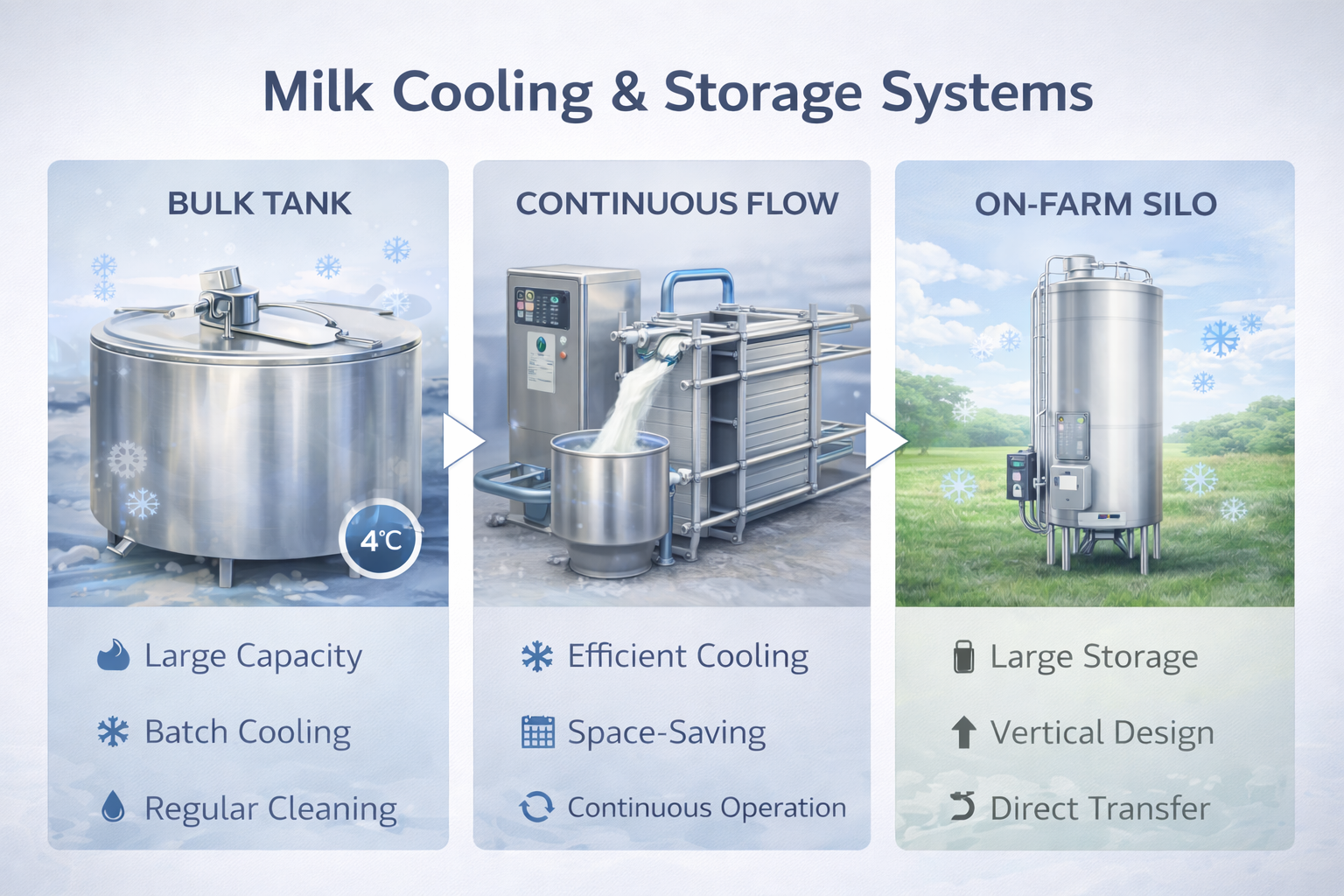
Cooling slows bacterial growth and preserves milk quality. The choice of cooling system depends on farm scale, power availability, and milk collection frequency.
Common cooling systems
● Immersion cans (smallholders)
● Direct expansion bulk milk coolers
● Ice-bank cooling systems
● Community milk chilling centres
Temperature benchmarks
● Cool to ≤4°C within 2 hours
● Maintain cold chain until processing
8. Storage Containers and Materials
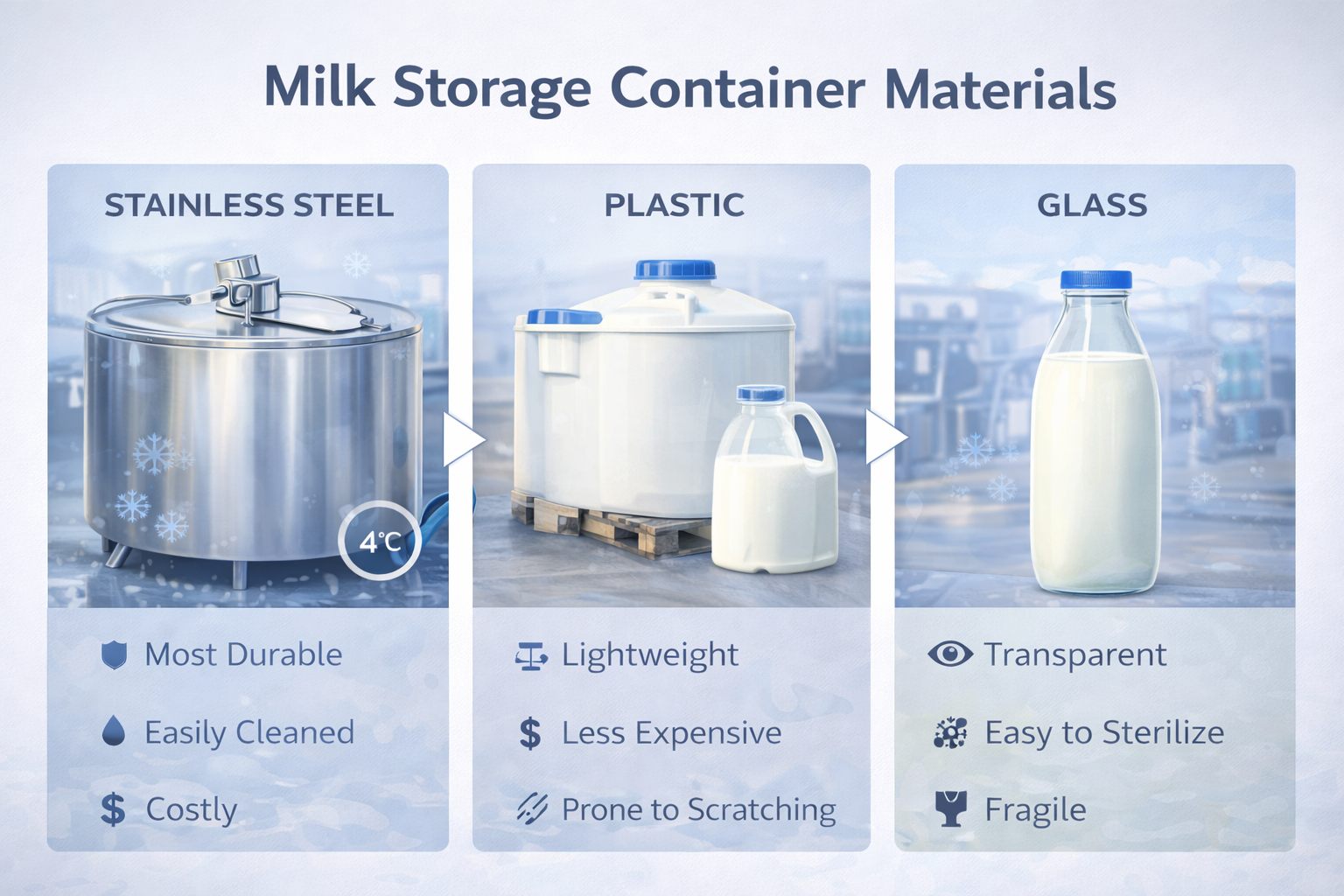
Milk storage vessels must be inert, smooth, and easy to sanitize. Material choice affects cleaning efficiency and contamination risk.
Acceptable storage materials
● Stainless steel (preferred)
● Food-grade aluminum (limited use)
Materials to avoid
● Plastic containers
● Rusted or pitted surfaces
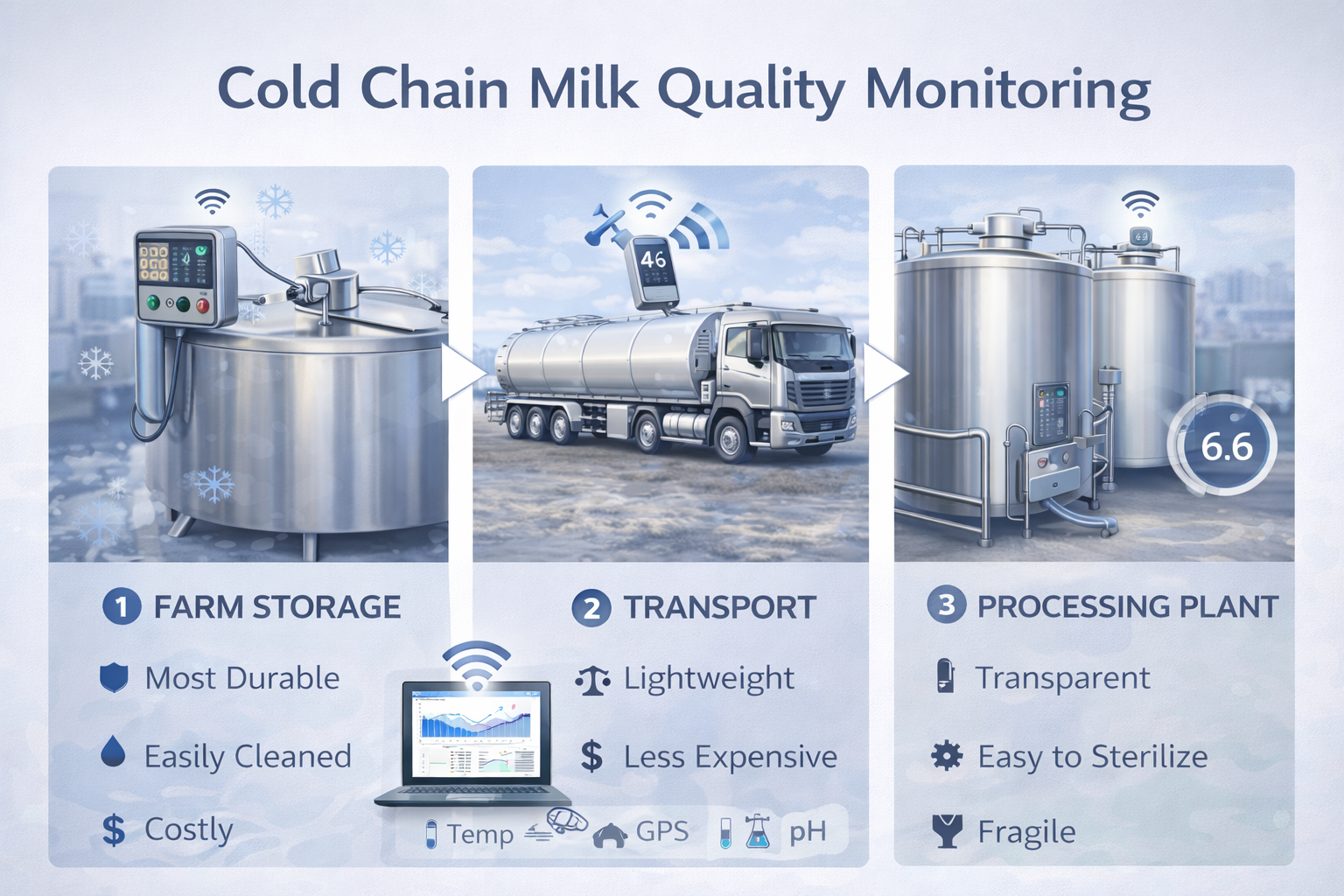
9. Cold Chain Discipline and Quality Monitoring
Milk quality deteriorates rapidly when the cold chain is broken. Continuous temperature control and monitoring are essential, especially in hot climates.
Cold chain management tools
● Temperature loggers
● Time–temperature tracking
● Regular equipment calibration
● Milk quality testing (MBRT, SCC)
10. Smallholder vs Commercial Handling Systems
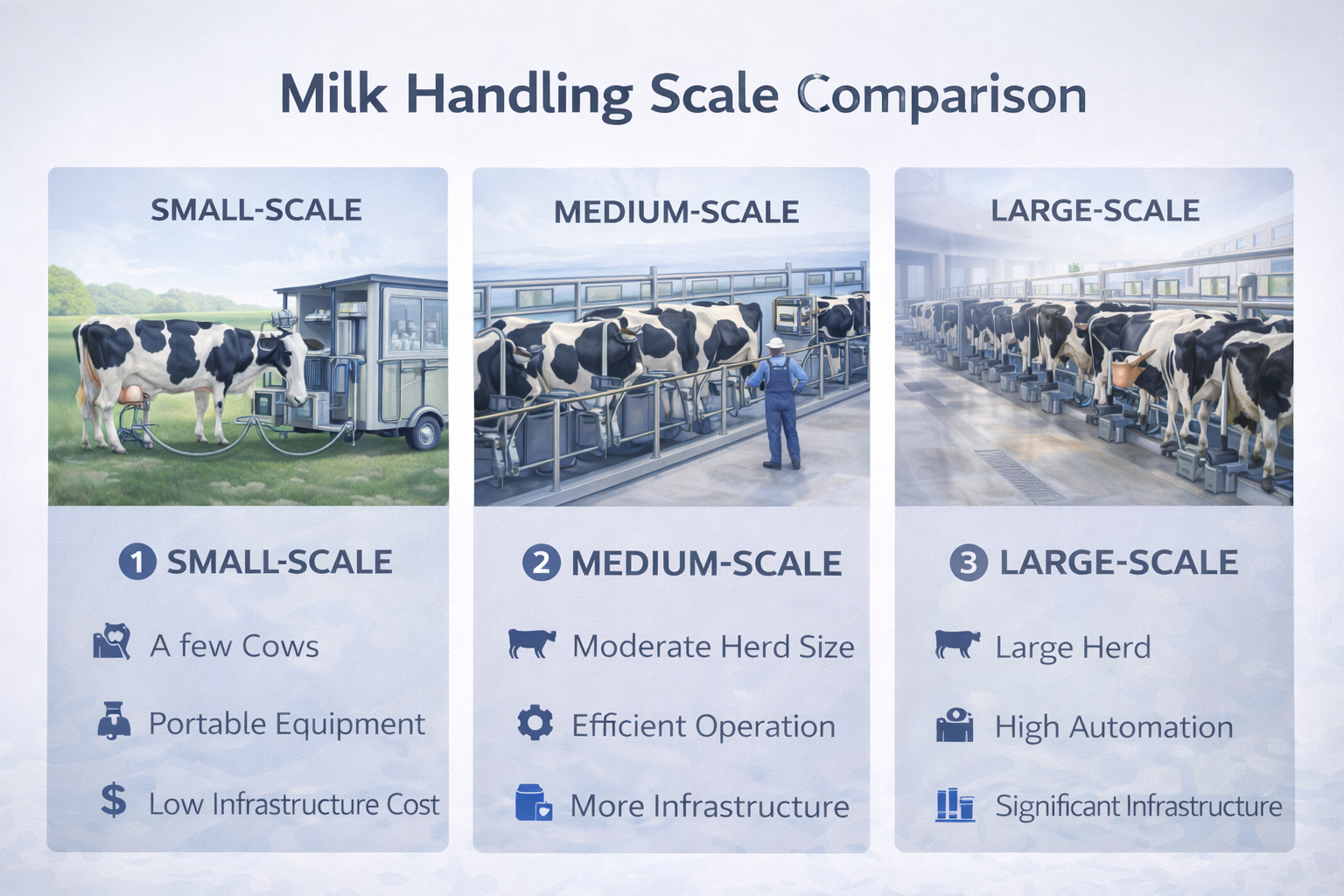
India’s dairy sector spans a wide spectrum. Quality systems must be scalable and context-appropriate rather than uniform.
Smallholder focus
● Simple hygiene discipline
● Community cooling access
Commercial focus
● Automated cleaning (CIP)
● Integrated chilling and transport
Conclusion: Milk Quality Is Made on the Farm
Milk quality cannot be improved after it leaves the farm; it can only be preserved or destroyed. Farms that invest in disciplined harvesting, hygienic handling, and reliable cooling systems consistently produce milk with higher value, longer shelf life, and better processing performance. In dairy farming, quality is not an accident—it is a system.