1. Why Alternative Feed Systems Are Being Explored
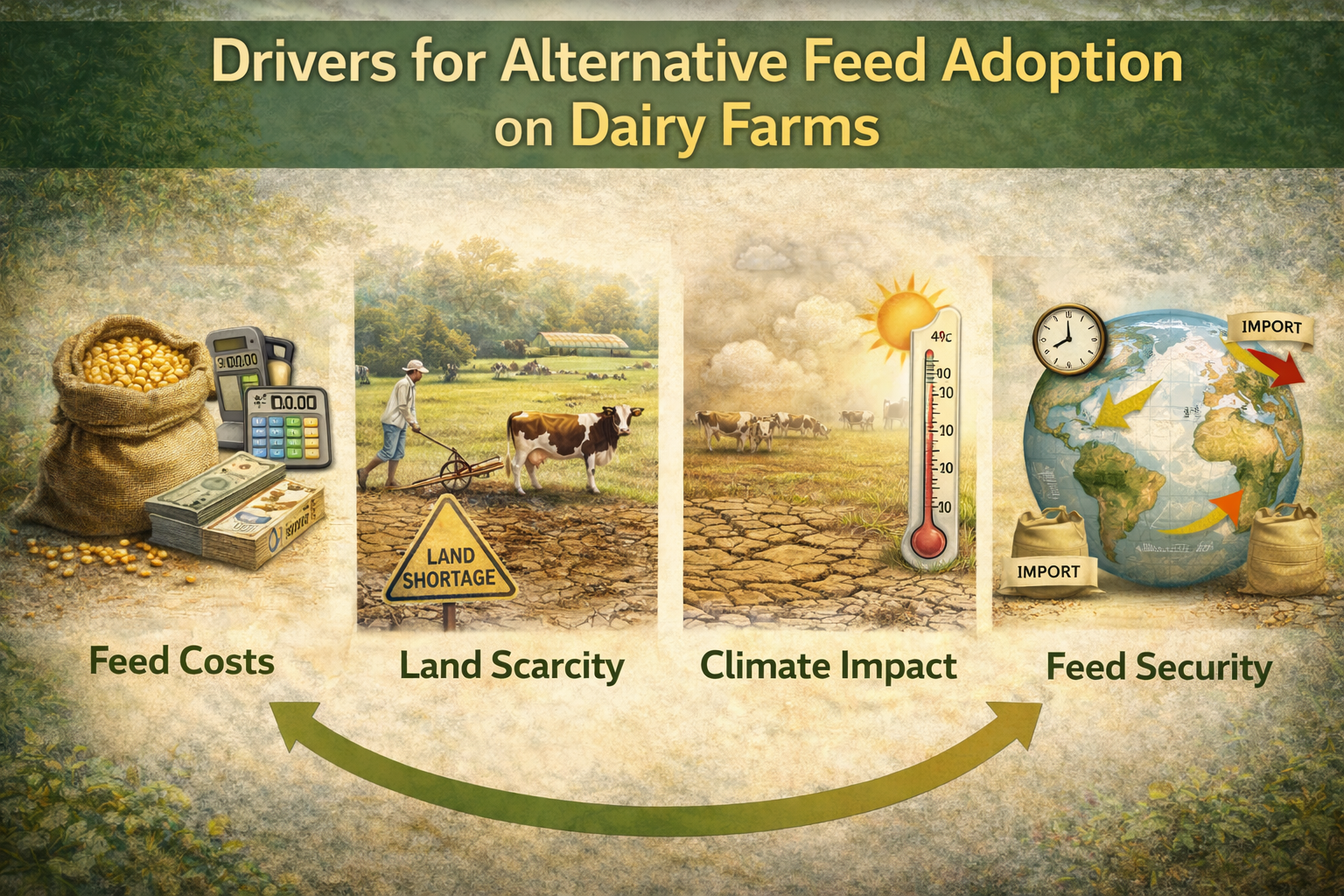
Dairy nutrition systems across India are under pressure from shrinking land availability, erratic rainfall, rising concentrate costs, and competition for crop residues. These constraints have driven interest in alternative feed systems—especially hydroponic green fodder—as perceived substitutes for conventional green and dry fodder.
However, from a biological standpoint, no feed system can bypass the fundamental constraints of rumen physiology, dry matter intake, and nutrient partitioning. Alternative feeds must therefore be evaluated not by novelty, but by measurable biological and economic contribution.
Drivers behind alternative feed adoption
● Land scarcity near urban dairies
● Seasonal green fodder shortages
● Rising cost of concentrates
● Marketing-driven technology adoption
2. Hydroponic Green Fodder: System Overview
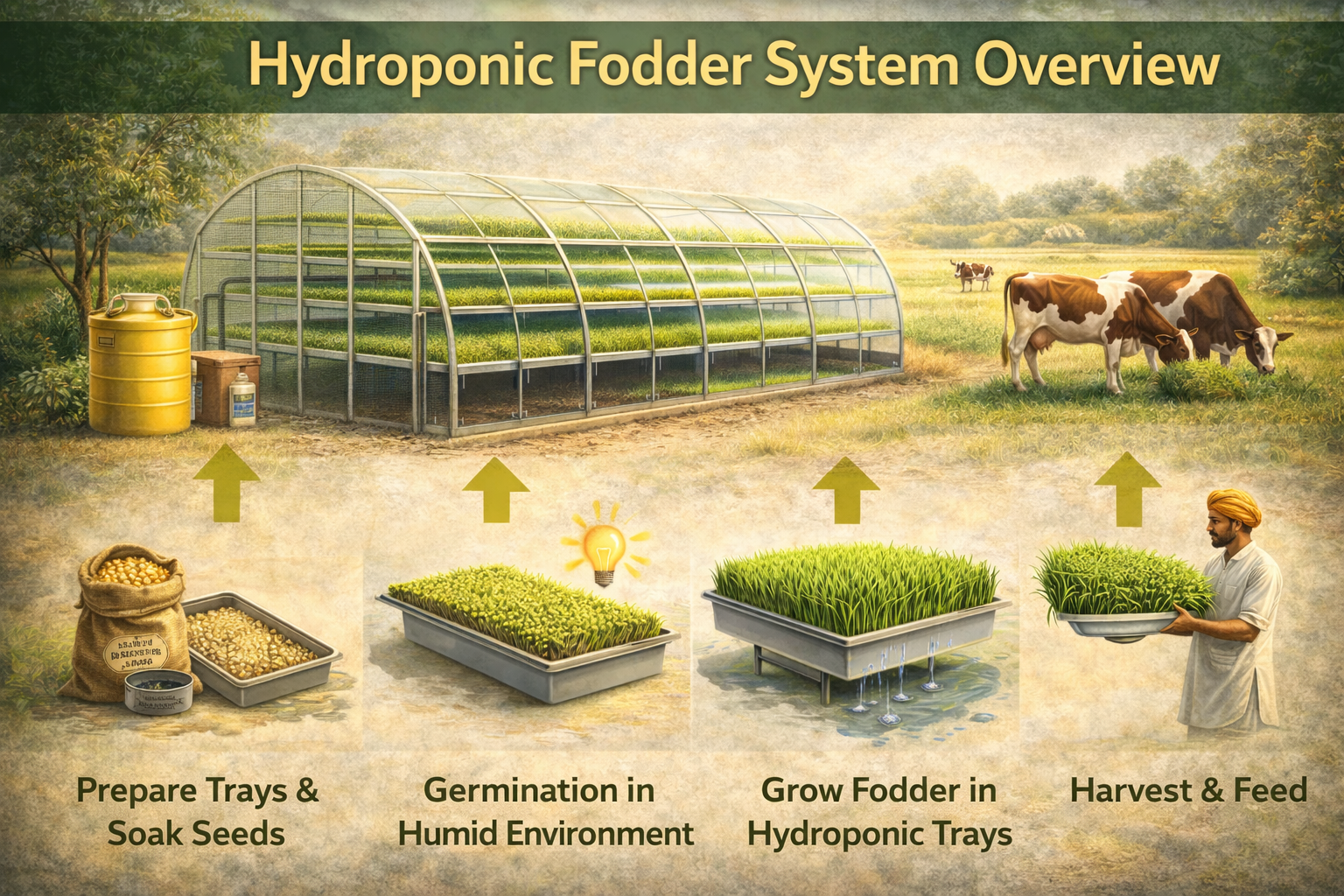
Hydroponic fodder production involves sprouting cereal grains—typically maize, barley, wheat, or oats—in controlled environments without soil. Within 7–10 days, sprouts form dense green mats consisting of shoots, roots, and residual grain.
While visually appealing, hydroponic fodder systems must be assessed on dry matter preservation, nutrient transformation, and feeding behavior, not fresh weight yield.
Core system characteristics
● Growth cycle: 7–10 days
● Moisture content: 85–90%
● Feed form: whole sprouted mat
● Infrastructure: racks, trays, water, power
3. Dry Matter Reality of Hydroponic Fodder
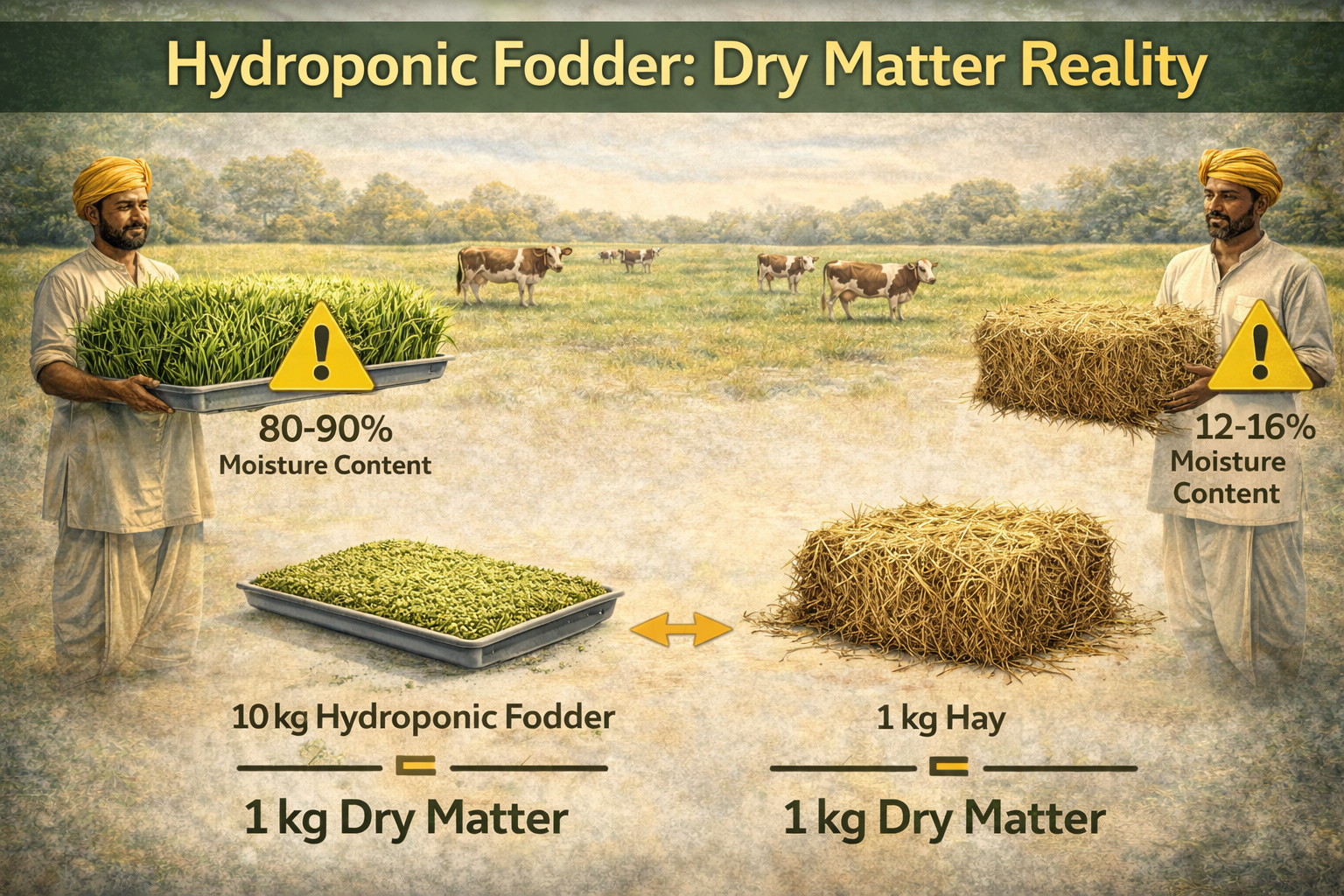
A critical misconception surrounding hydroponic fodder is the belief that it “creates feed.” In reality, hydroponic systems do not increase dry matter; they transform existing grain starch into plant tissue while incurring respiration losses.
Fresh weight increases dramatically due to water uptake, creating a visual illusion of productivity.
Dry matter truths
● No net dry matter gain
● Apparent protein increase is concentration effect
● Energy losses occur during sprouting
● Feeding value depends on inclusion rate
4. Nutritional Profile and Rumen Response
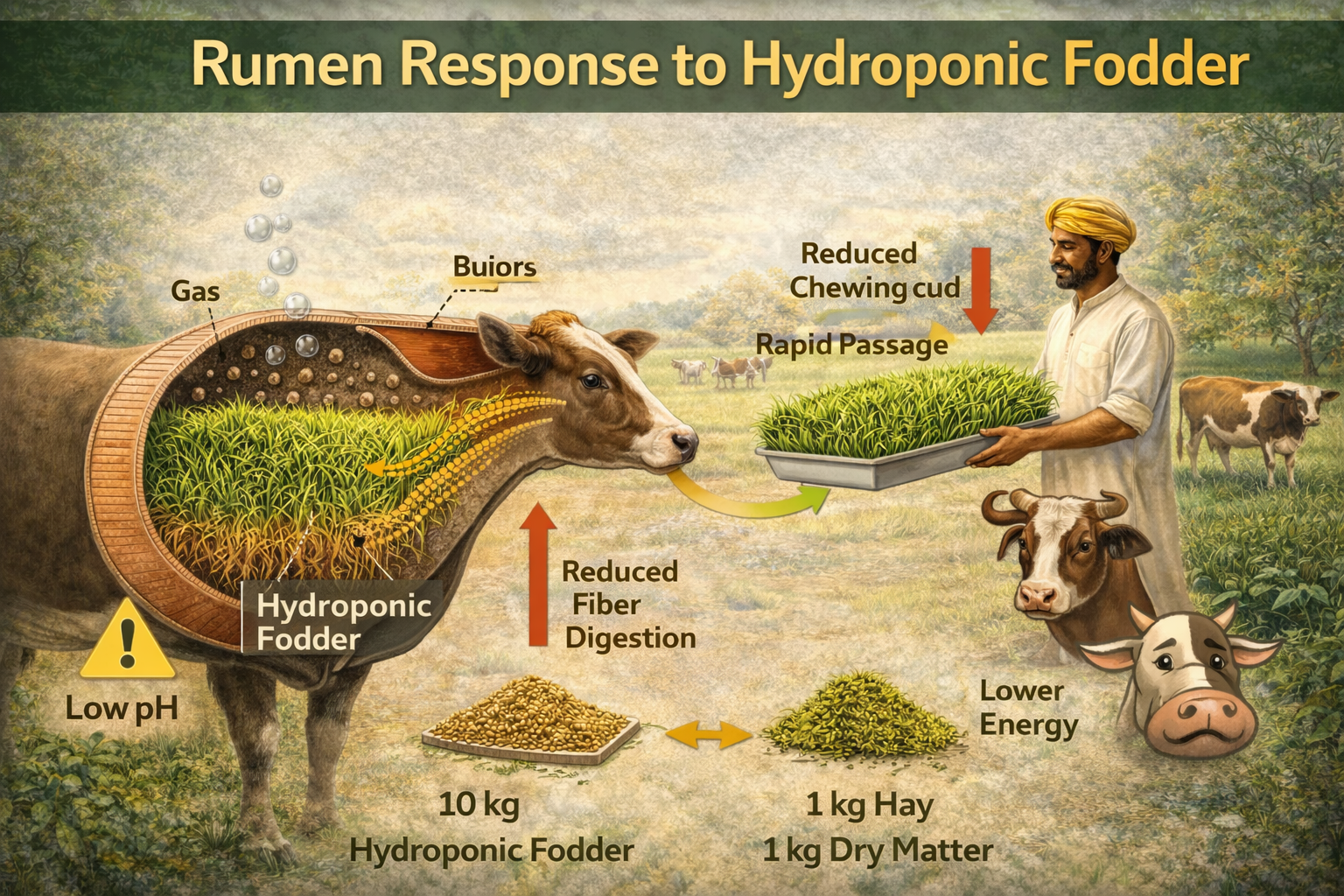
Hydroponic fodder provides highly digestible carbohydrates and moderate protein but lacks sufficient physically effective fiber to function as a sole roughage. Feeding large quantities without dry fodder compromises rumination and rumen pH stability.
From a rumen biology perspective, hydroponic fodder behaves more like a high-moisture supplement than a forage replacement.
Rumen interaction characteristics
● Rapid fermentability
● Low peNDF
● Limited chewing stimulation
● Must be paired with dry fodder
5. Economics of Hydroponic Fodder in India
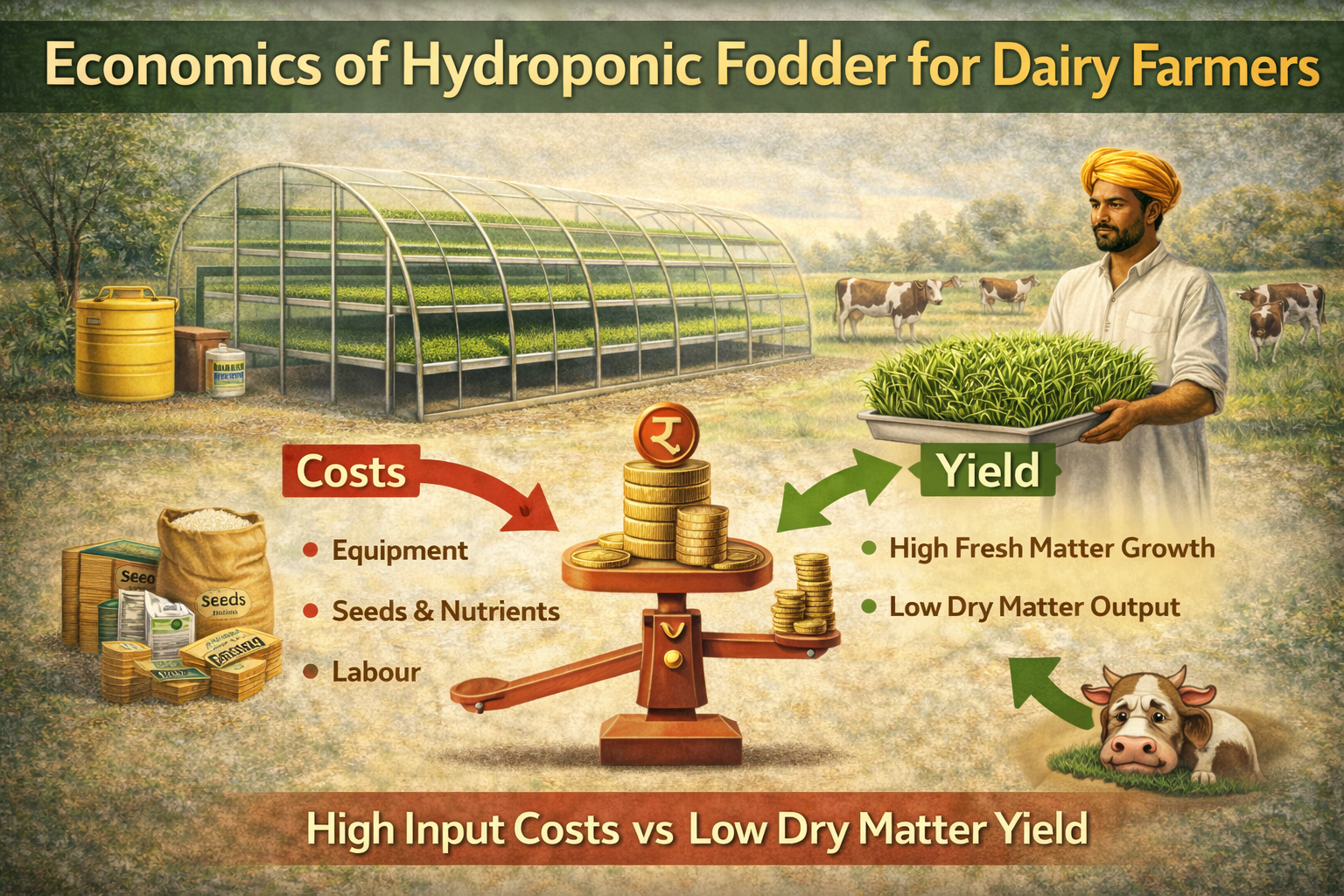
The economics of hydroponic fodder are highly context-specific. Capital cost, electricity, labor, seed cost, and water availability all influence feasibility. In many cases, the cost per kilogram of dry matter exceeds that of conventional fodder.
Hydroponic systems make sense only under specific constraints, not as universal solutions.
Economic advantages
● Reduced land requirement
● Predictable daily output
● Fresh feed availability
Economic limitations
● High cost per kg dry matter
● Dependence on electricity
● Seed cost sensitivity
● Limited scalability
6. Appropriate Use Cases for Hydroponic Fodder
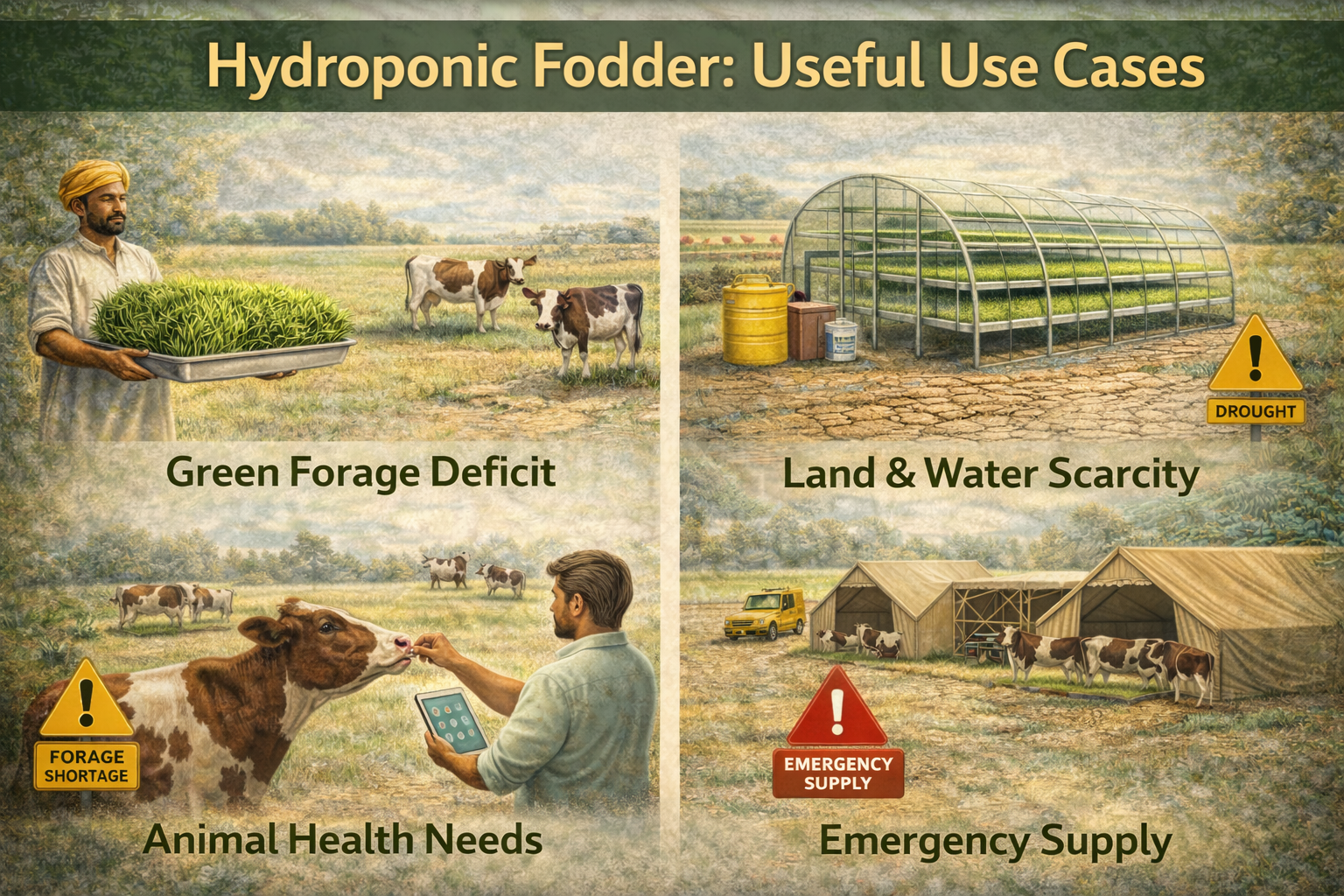
Hydroponic fodder should be positioned as a strategic supplement, not a replacement for green or dry fodder.
Where it works
● Urban and peri-urban dairies
● Landless or land-scarce farms
● Emergency fodder situations
● Small to medium herd sizes
Where it fails
● Large commercial dairies
● Low-cost milk production systems
● Sole roughage feeding strategies
7. Alternative Non-Conventional Feed Resources in India
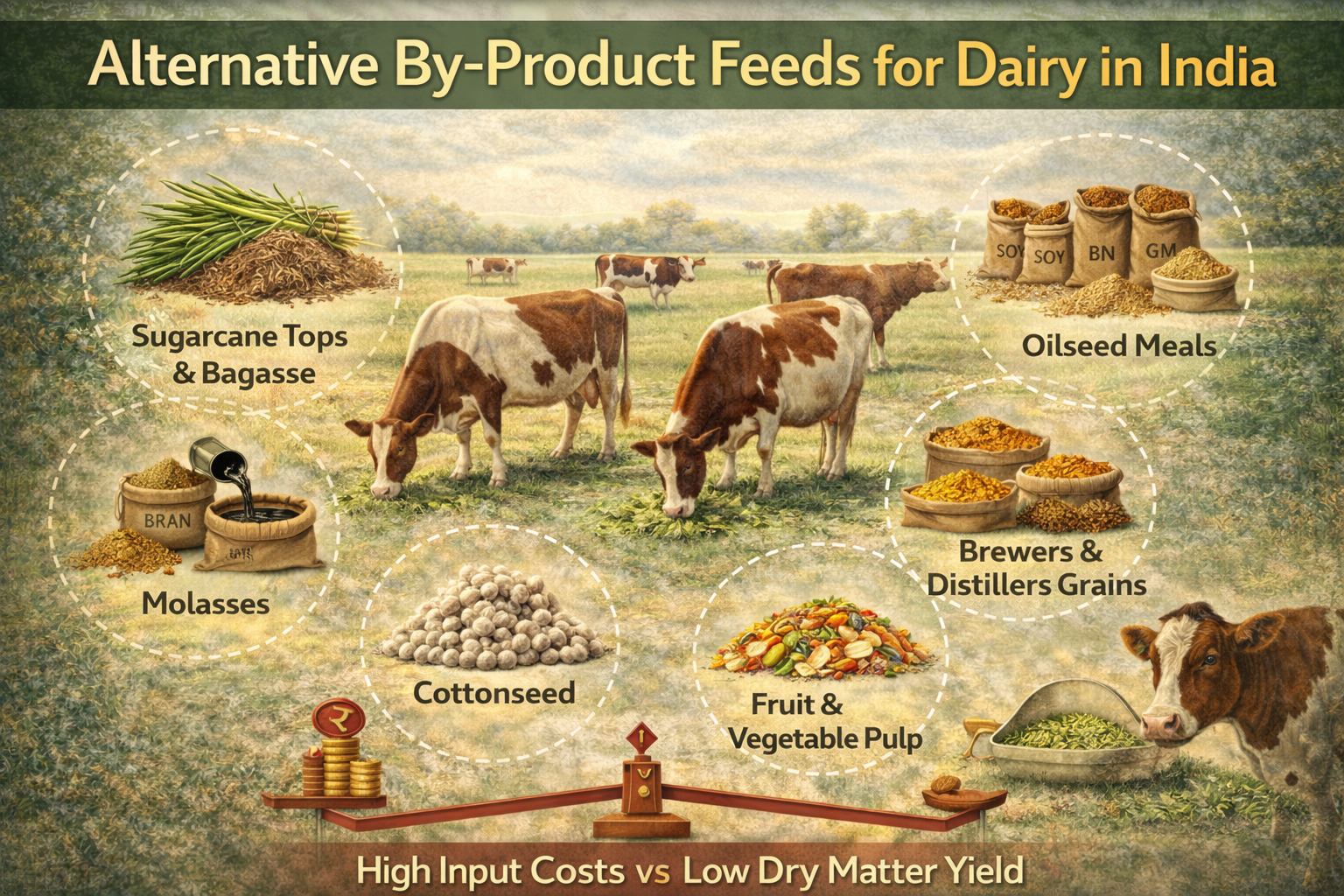
Beyond hydroponics, Indian dairying relies heavily on non-conventional and byproduct feeds that convert waste streams into milk. These feeds are often more economical and scalable than hydroponic fodder.
Common alternative feeds
● Brewery spent grain
● Distillery dried grains
● Oilseed cakes (cottonseed, groundnut)
● Sugar industry byproducts (molasses, press mud)
Key considerations
● Nutrient variability
● Storage and spoilage risk
● Mycotoxin contamination
● Transport logistics
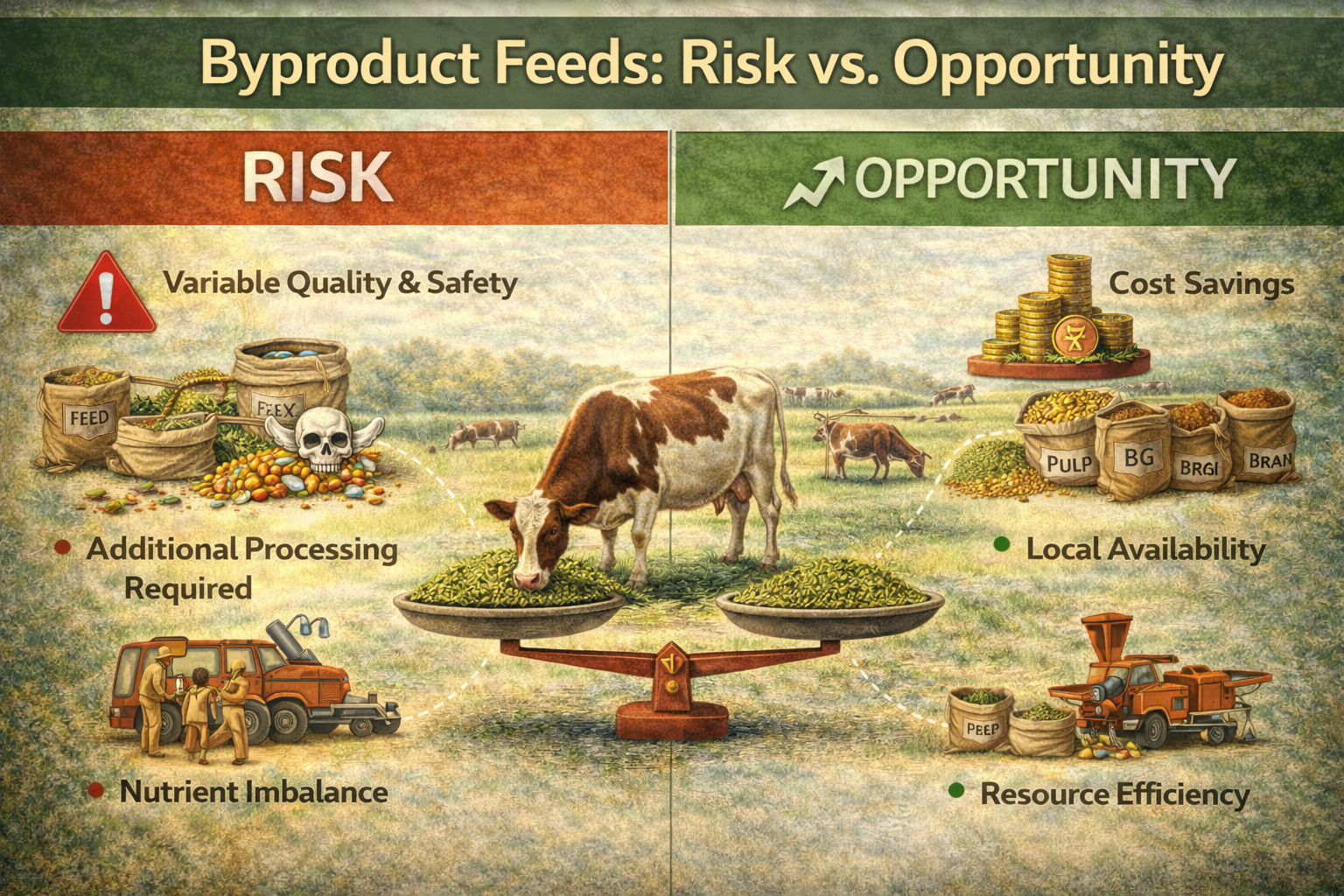
8. Agro-Industrial Byproducts: Opportunities and Risks
Byproducts offer cost-effective nutrients but require technical understanding to avoid health issues. Improper inclusion rates or poor quality control can lead to toxicity, milk quality issues, or reduced intake.
Risk management principles
● Laboratory nutrient testing
● Gradual ration inclusion
● Maximum safe inclusion limits
● Supplier reliability
9. Integrating Alternative Feeds into Balanced Rations
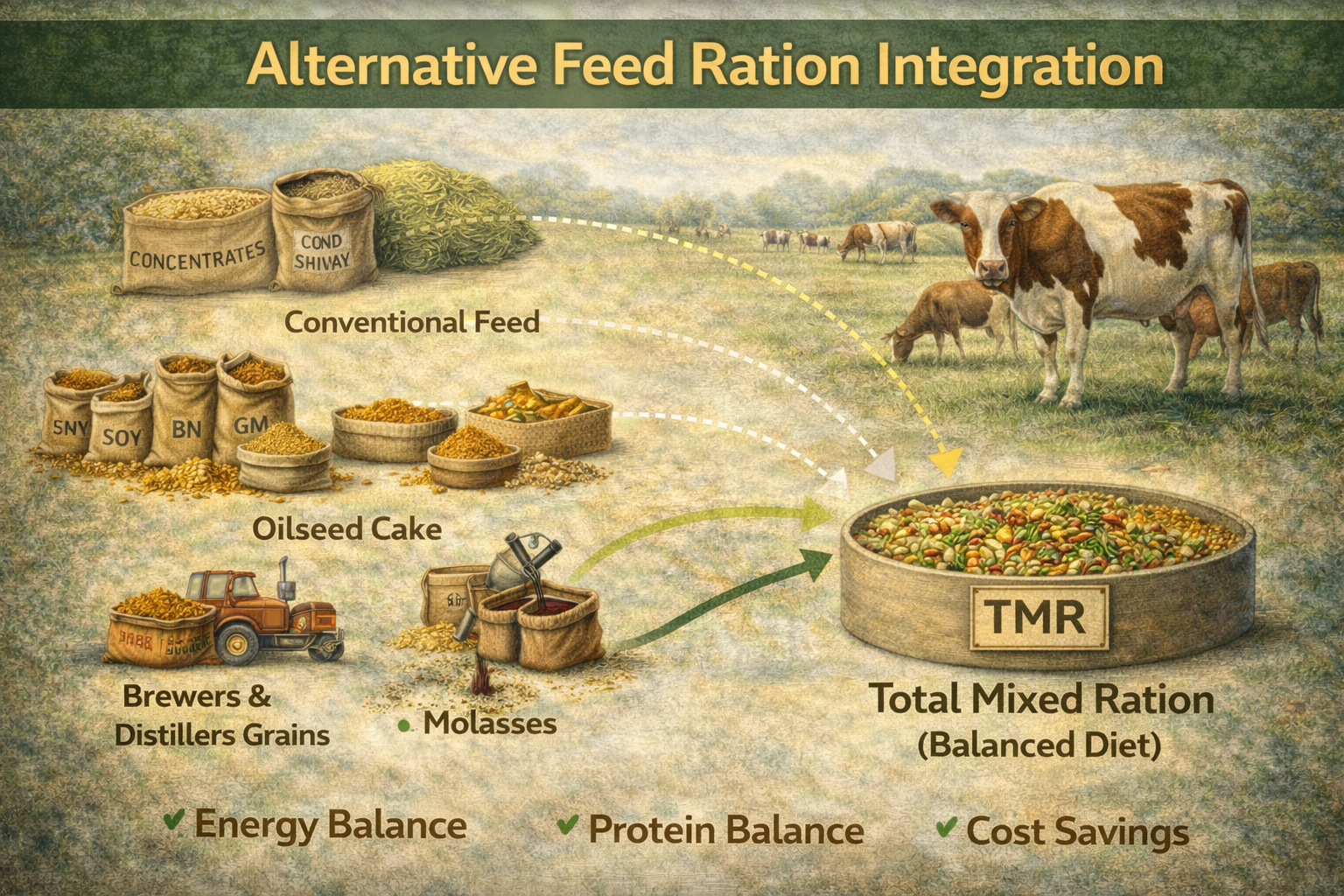
Alternative feeds should be integrated into rations based on nutrient contribution, rumen function, and economics, not availability alone. Successful integration requires ration balancing and continuous monitoring.
Integration principles
● Maintain minimum effective fiber
● Balance protein and energy
● Monitor milk fat and intake
● Adjust based on performance
10. Future Outlook: Innovation Without Illusion
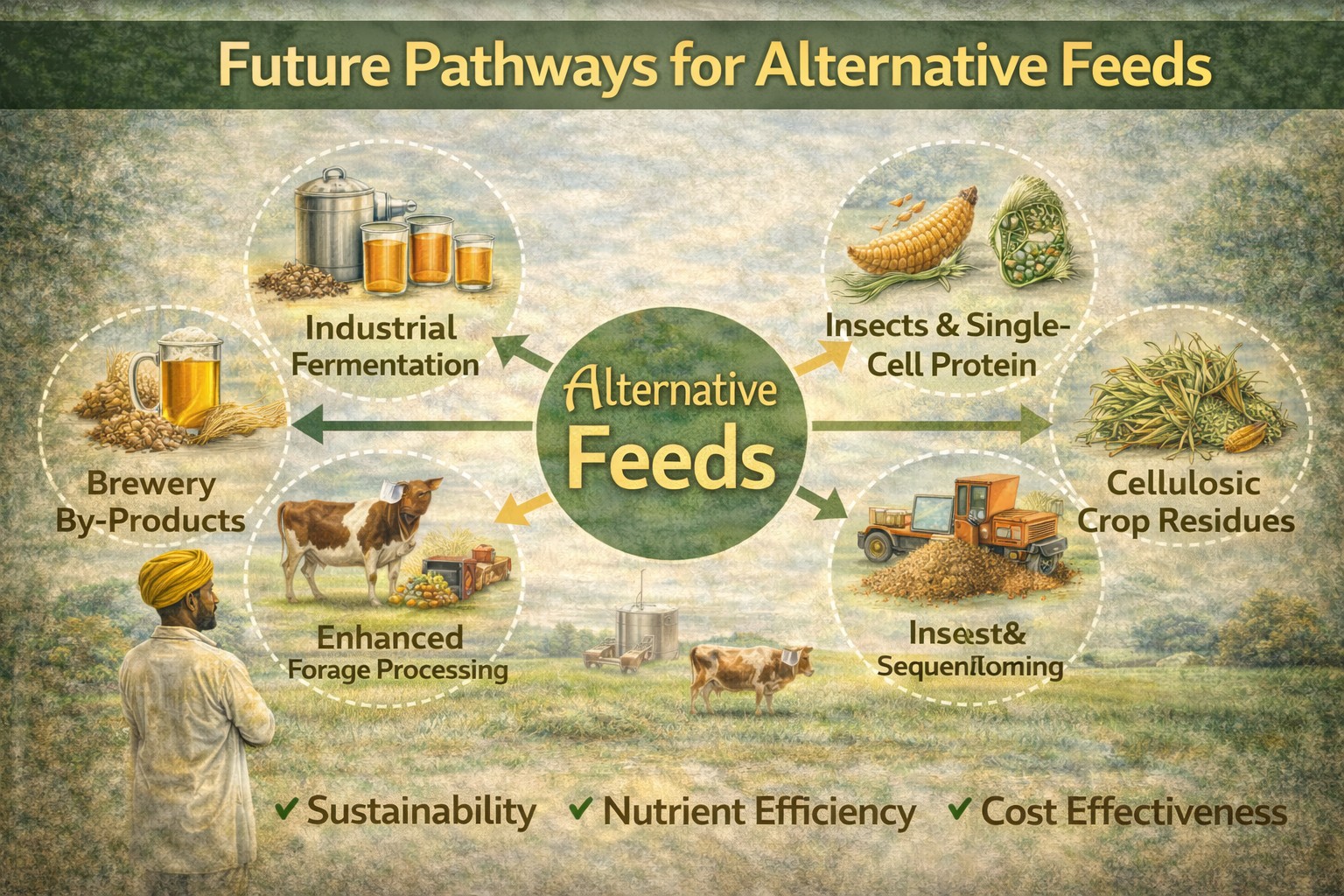
Innovation in dairy feeding must respect biological limits. Technologies that align with rumen physiology, economic reality, and farm context will endure; those driven purely by novelty will fade.
Hydroponic and alternative feeds have roles—but only when integrated intelligently into holistic nutrition systems.
Conclusion: Feed Innovation Must Serve Biology
Alternative feed systems are tools, not miracles. Their value lies in strategic use, honest evaluation, and biological compatibility. Indian dairying will benefit most from innovation that complements—not replaces—well-managed fodder, nutrition, and feeding discipline.