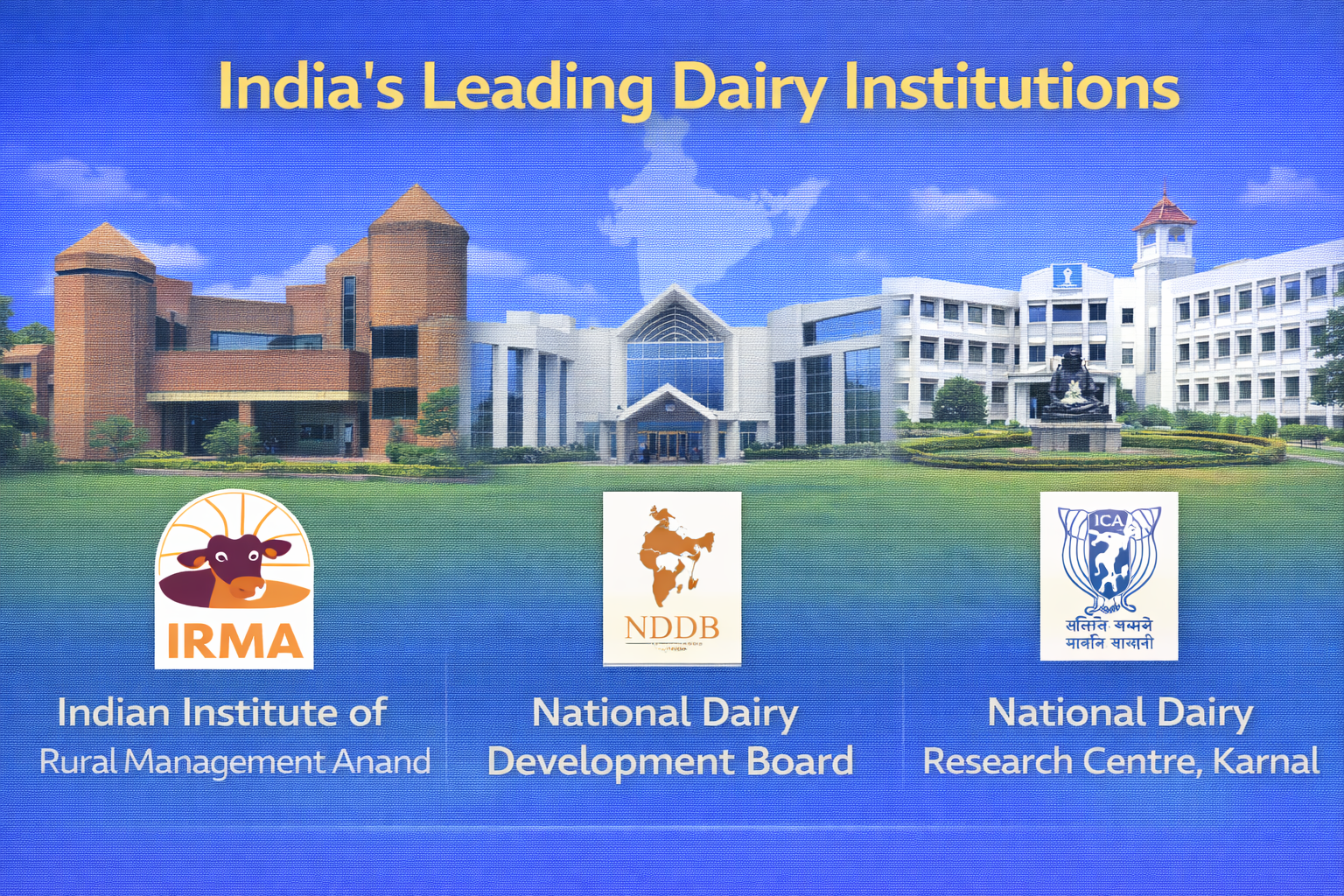
1. National Dairy Development Board (NDDB)
The National Dairy Development Board is the central institution responsible for shaping India’s dairy development strategy. It played a pivotal role in transforming India into the world’s largest milk producer through cooperative-led models.
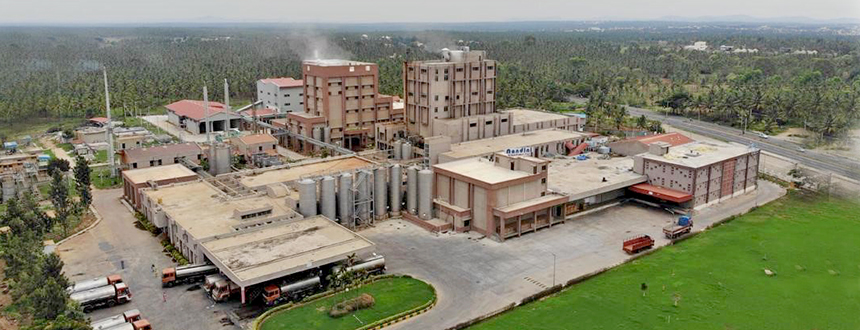
Core roles
● Dairy cooperative development
● National milk grid planning
● Farmer-centric institutional frameworks
● Policy advisory to government
Why NDDB matters
● Architect of Operation Flood
● Backbone of India’s cooperative dairy structure
● Focus on farmer ownership and value retention
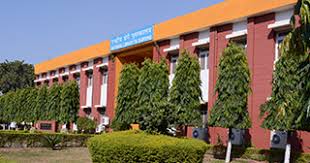
2. National Dairy Research Institute (NDRI), Karnal
NDRI is India’s premier dairy research institute, focusing on animal nutrition, breeding, milk processing, and dairy engineering.
Core roles
● Dairy research & innovation
● Advanced animal nutrition studies
● Milk processing technology development
● Postgraduate and doctoral education
Why NDRI matters
● Scientific foundation of Indian dairying
● Source of trained dairy scientists
● Research-driven productivity improvements
3. Institute of Rural Management Anand (IRMA)
IRMA specializes in management education for rural, cooperative, and agri-based institutions, including dairies.


Core roles
● Rural and cooperative management education
● Leadership training for dairy cooperatives
● Policy and institutional research
Why IRMA matters
● Produces professional managers for dairy institutions
● Bridges management science with rural realities
● Strengthens governance of dairy organizations
4. State Dairy Federations & Milk Unions
Every major milk-producing state in India operates dairy federations and district-level milk unions that implement cooperative dairy programs on the ground.

Core roles
● Milk procurement and payment systems
● Processing and marketing of milk
● Farmer extension and support
Why they matter
● Direct interface with farmers
● Regional milk price stabilization
● Local employment generation
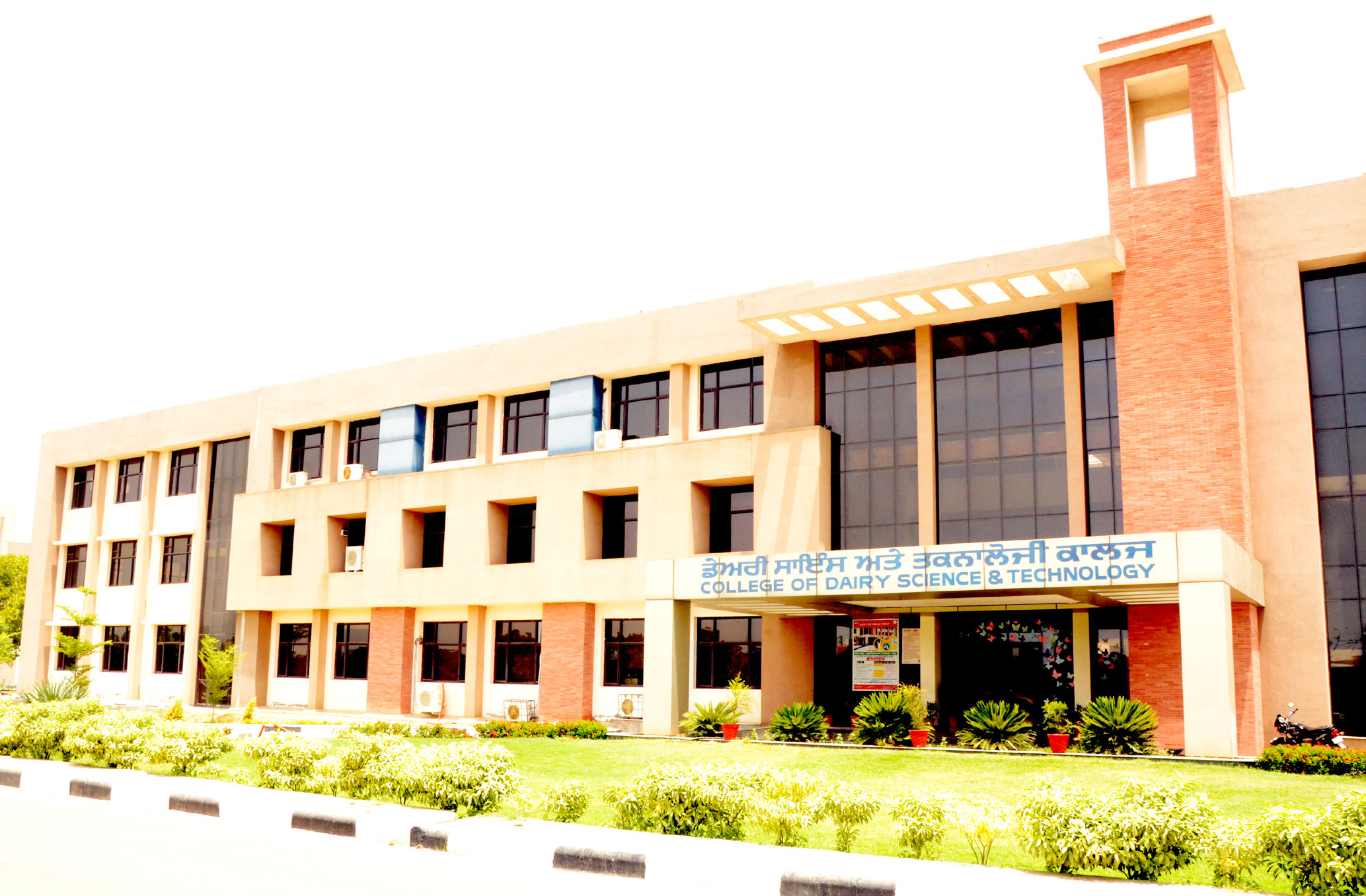
5. State Agricultural & Veterinary Universities
Several state universities offer specialized programs in dairy science, animal husbandry, and veterinary medicine.

Core roles
● Undergraduate and postgraduate education
● Veterinary extension services
● Applied research for local conditions
Why they matter
● Regional problem-solving
● Skilled manpower generation
● Knowledge transfer to farmers
6. Central & State Training Institutes for Dairy Farmers
These institutes focus on hands-on skill development for farmers, technicians, and cooperative staff.
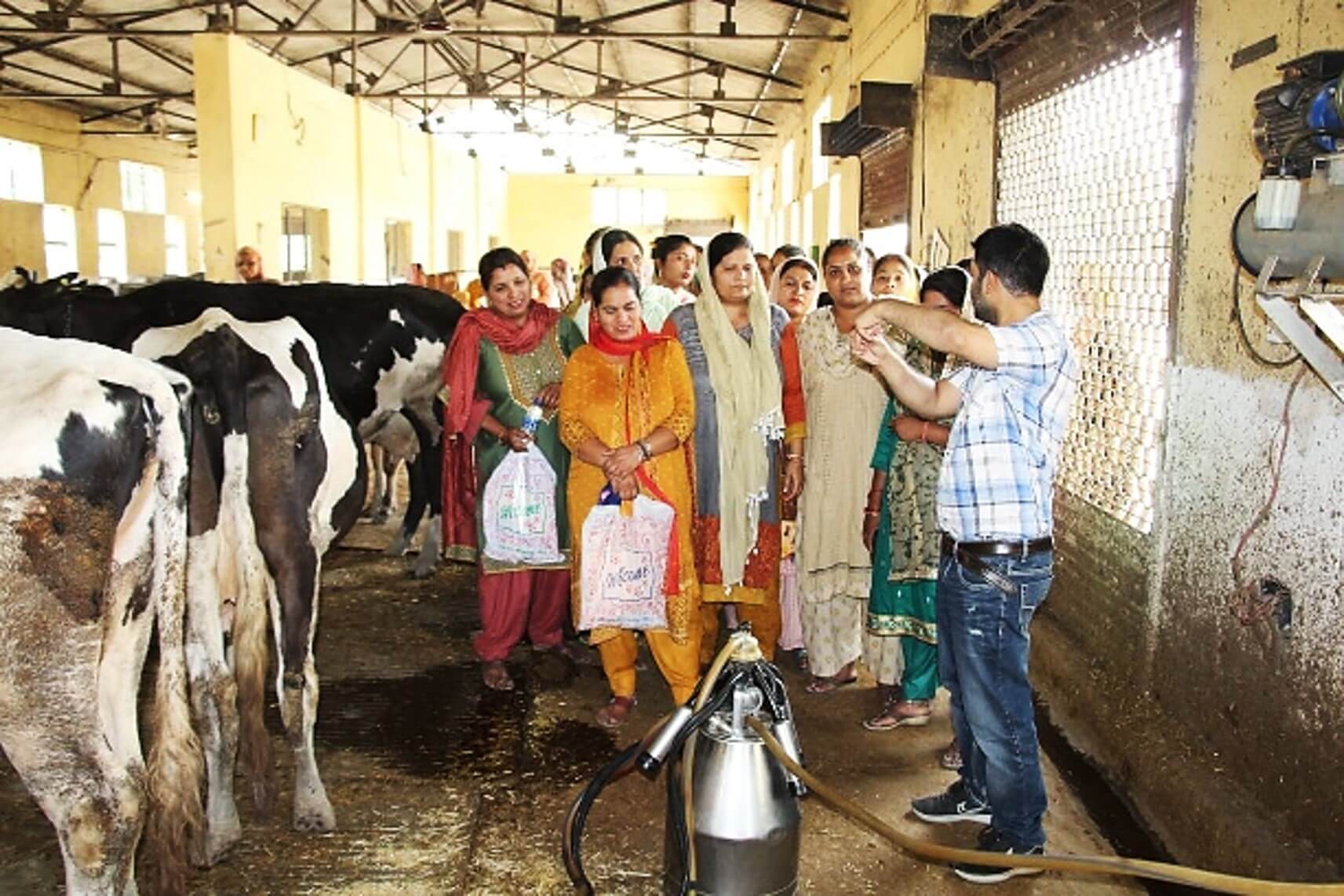
Core roles
● Practical dairy training
● Skill upgradation
● Extension and advisory services
Why they matter
● Converts theory into practice
● Improves on-farm decision-making
● Strengthens grassroots dairy capacity
Conclusion: Institutions as Invisible Infrastructure
India’s dairy sector stands on strong institutional foundations built over decades. These institutions provide policy direction, scientific knowledge, management capacity, and grassroots implementation support. While cows produce milk, institutions create the environment in which dairying becomes sustainable, scalable, and inclusive. Understanding these organizations helps farmers and entrepreneurs navigate the dairy ecosystem with clarity and confidence.