1. Why Breed Selection Determines Dairy Success
Breed selection is not a cosmetic or emotional choice; it is a biological investment decision that shapes productivity, cost structure, disease risk, and long-term sustainability. In Indian conditions, mismatched breeds often fail not because of poor genetics, but because the environment and management do not support their biological needs.
Effective breed selection balances genetic potential with adaptability, ensuring that animals perform consistently under local climate, feed availability, and management intensity.
Core principles of breed selection
● Match breed to climate, not aspiration
● Productivity must align with feed resources
● Disease tolerance reduces hidden costs
● Longevity often matters more than peak yield
2. Indigenous Dairy Cattle Breeds of India (Bos indicus)
India’s indigenous cattle breeds are characterized by heat tolerance, disease resistance, and lower maintenance requirements. While their peak milk yields may be lower than exotic breeds, their lifetime productivity and resilience often make them economically efficient under Indian conditions.
Key indigenous cattle breeds
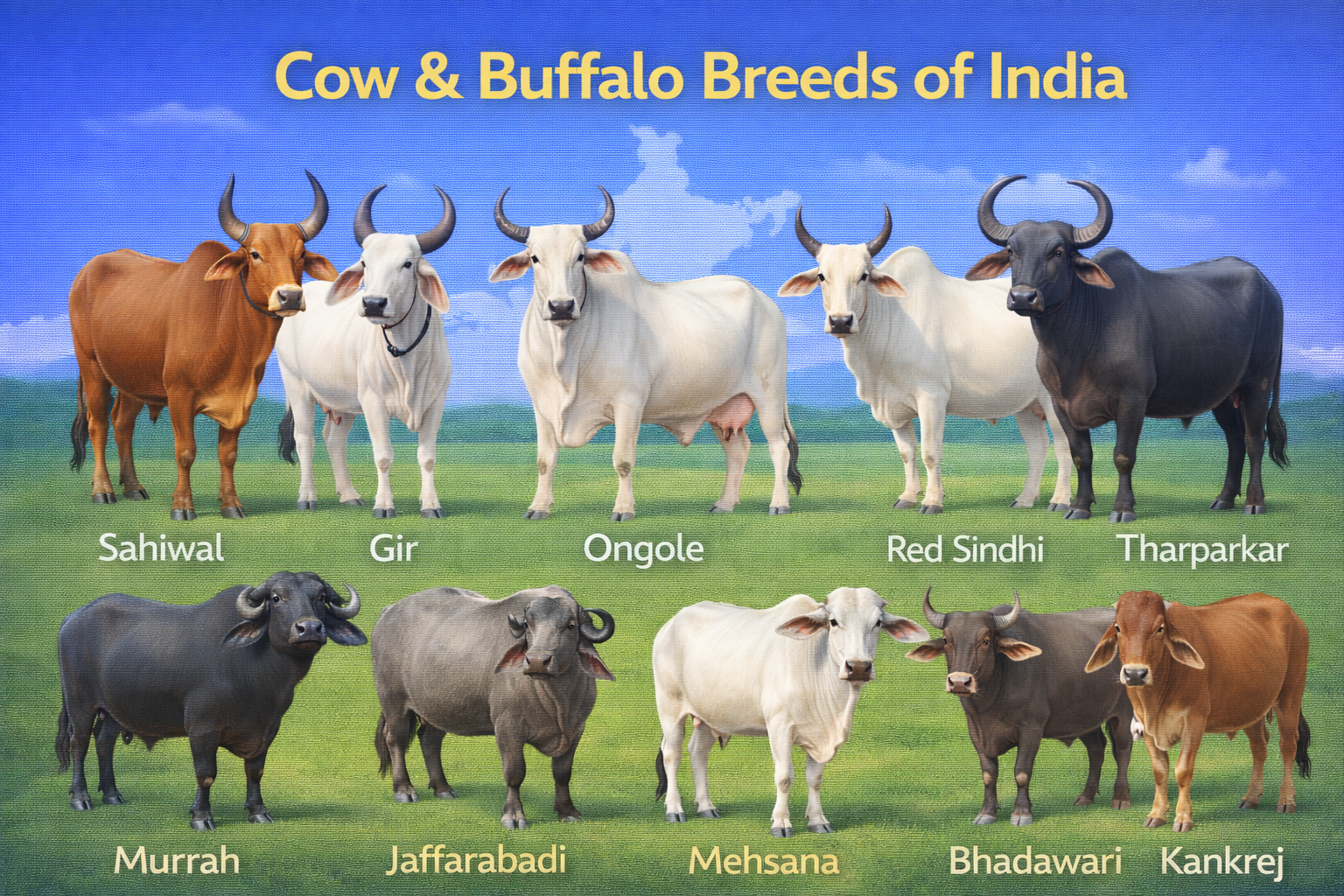
● Gir – High milk potential among indigenous breeds; well-suited for semi-arid regions
● Sahiwal – Excellent heat tolerance and consistent milk yield; widely used in crossbreeding
● Red Sindhi – Adaptable and hardy; good for hot, humid climates
● Tharparkar – Dual-purpose breed; thrives in arid and semi-arid zones
● Kankrej – Strong draught traits with moderate milk production
General traits
● Strong heat tolerance
● Lower incidence of metabolic disorders
● Efficient utilization of low-quality roughage
● Longer productive lifespan
3. Exotic and Crossbred Dairy Cattle in India
Exotic dairy breeds such as Holstein Friesian and Jersey have significantly influenced Indian dairying through crossbreeding programs. These animals offer higher milk yields but demand higher-quality feed, superior management, and climate mitigation.
Common crossbred types
● HF Cross – High milk yield; sensitive to heat and disease
● Jersey Cross – Better heat tolerance than HF; higher fat content
Management implications
● Require balanced, energy-dense rations
● Sensitive to heat stress
● Higher veterinary and reproductive management costs
Strategic insight
Crossbreds perform best where feed quality, housing, and health systems are reliable.
4. Buffalo Breeds of India (Bubalus bubalis)
Buffaloes contribute a major share of India’s milk production, particularly in northern and western regions. Their milk is richer in fat and SNF, making them highly valuable for value-added dairy products.
Major dairy buffalo breeds
● Murrah – India’s premier dairy buffalo; high yield and adaptability
● Jaffarabadi – Large-bodied, high-fat milk; suited to western India
● Surti – Moderate yield, excellent milk quality
● Mehsana – Balanced yield and adaptability
● Bhadawari – Exceptionally high milk fat percentage
Buffalo-specific traits
● Higher milk fat content
● Better suitability for paneer, ghee, and khoa
● Longer calving intervals compared to cows
● Higher heat sensitivity but strong disease resistance
5. Regional Distribution of Dairy Breeds in India
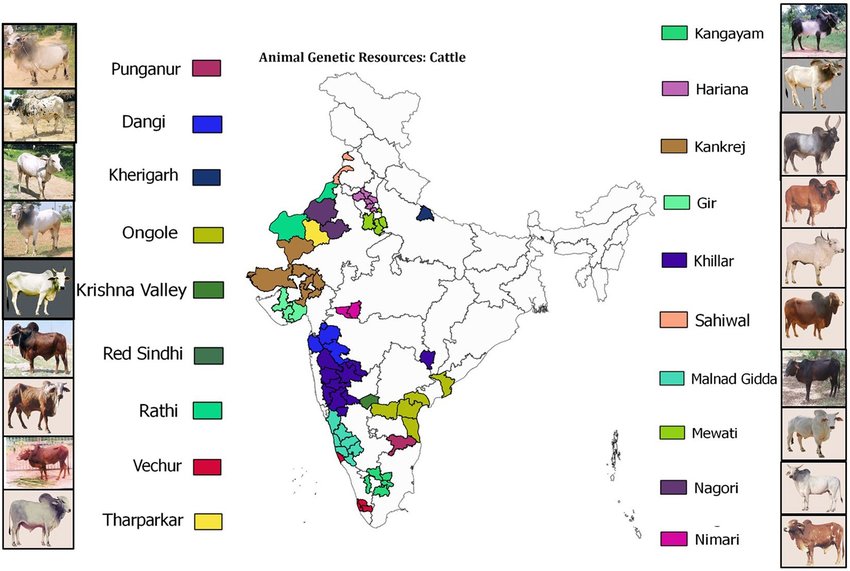
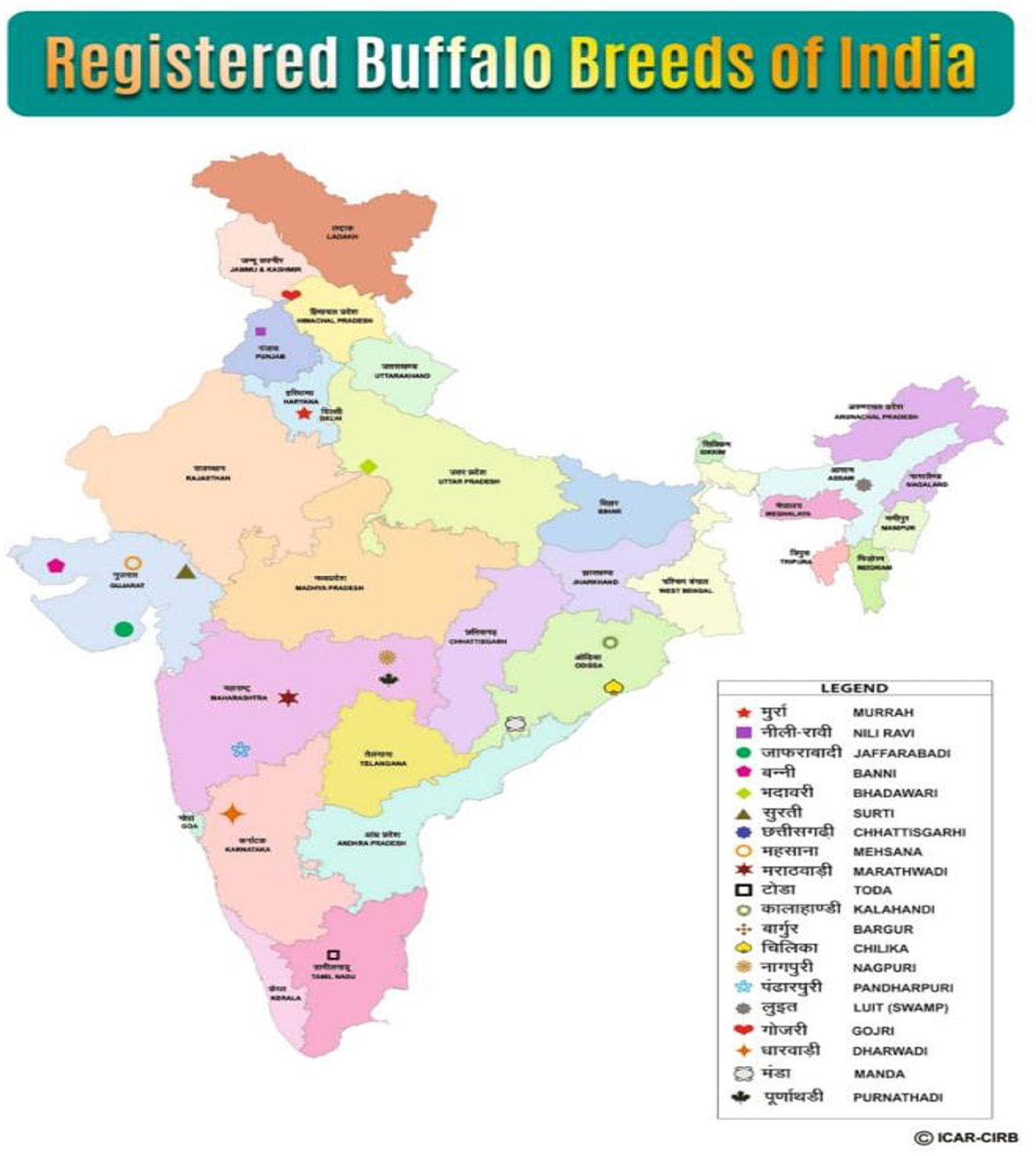
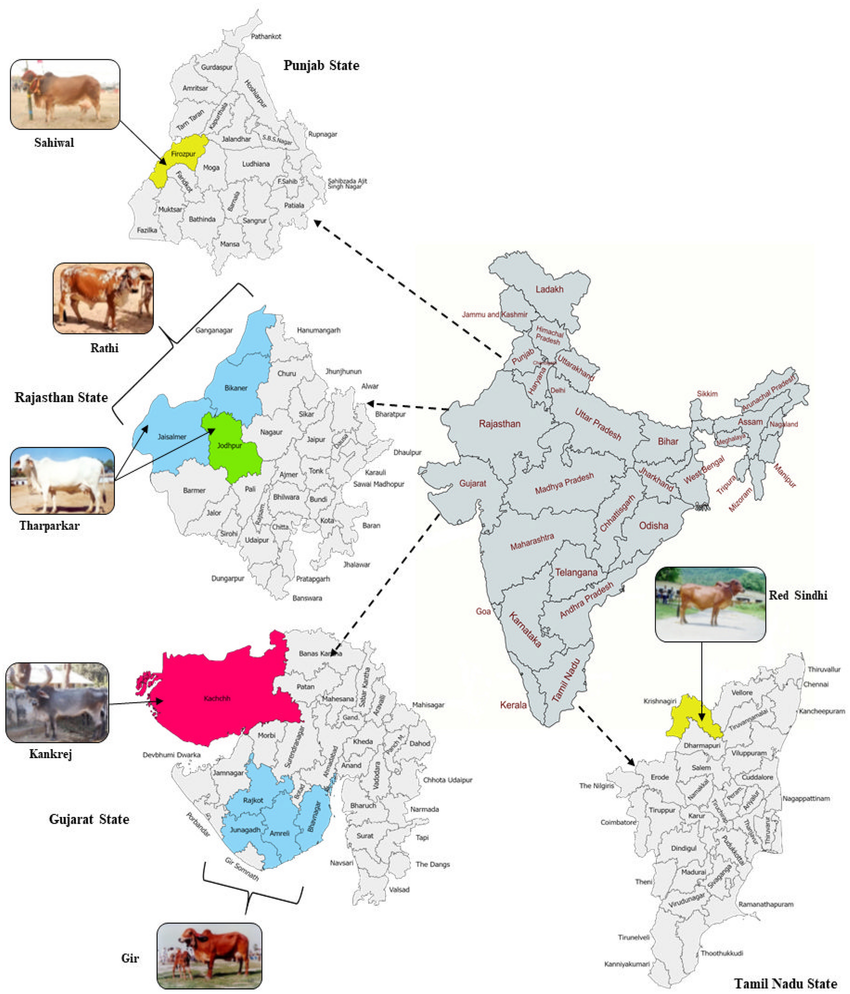
Breed distribution across India reflects centuries of adaptation to local climate, feed systems, and farming practices. Understanding regional breed dominance helps in sourcing animals and predicting performance.
Broad regional patterns
● North & North-West India: Murrah, HF cross, Sahiwal
● Western India: Gir, Kankrej, Jaffarabadi
● Southern India: Jersey cross, HF cross, local indigenous breeds
● Eastern India: Red Sindhi, local cattle, mixed buffalo populations
6. Choosing the Right Breed: A Decision Framework
Rather than asking “Which breed gives the most milk?”, farmers should ask “Which breed performs best in my system?”
Decision variables
● Climate and heat load
● Feed and fodder availability
● Labour skill level
● Veterinary access
● Market preference (fat vs volume)
Practical rule
The best breed is the one that performs consistently, not occasionally.
Conclusion: Genetics Must Match Geography
India’s dairy strength lies in its genetic diversity. Sustainable dairying emerges when breed selection respects geography, management capacity, and economic reality. Indigenous cattle and buffalo breeds remain invaluable biological assets, while crossbreds offer productivity when supported by strong systems. Successful dairy enterprises choose breeds strategically, not emotionally.