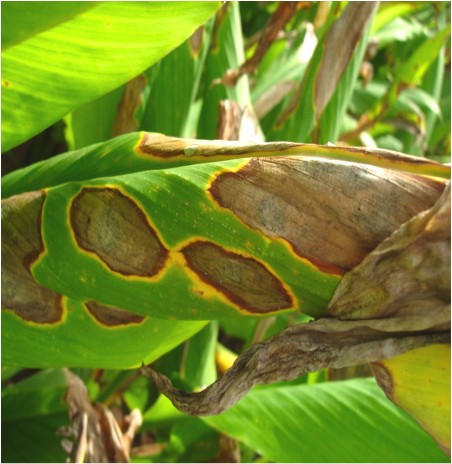
1. Disease Risk Profile in Turmeric Cultivation
Turmeric cultivation is particularly vulnerable to soil-borne and moisture-associated diseases due to its underground rhizome system and long crop duration. Among these, rhizome rot remains the most destructive disease, often leading to severe yield loss and quality degradation.
In Lakadong turmeric, disease impact extends beyond yield reduction to include:
● Loss of curcumin concentration
● Deterioration of rhizome texture and colour
● Increased microbial contamination risk
These outcomes directly undermine the premium positioning of Lakadong turmeric.
________________________________________
2. Major Diseases Affecting Lakadong Turmeric
Common diseases observed in turmeric cultivation include:
● Rhizome rot caused by Pythium, Phytophthora, and Fusarium species
● Leaf blotch and leaf spot diseases affecting photosynthetic efficiency
● Bacterial soft rot under prolonged waterlogged conditions
Disease outbreaks are often triggered by excess moisture, poor drainage, and compromised soil biology rather than by pathogen presence alone.
________________________________________
3. Polyhouse Cultivation as a Disease-Preventive System
Polyhouse cultivation enables growers to address disease risk at the system level rather than through reactive chemical control. By regulating moisture, improving aeration, and limiting soil splash, polyhouses significantly reduce conditions favourable to pathogen proliferation.
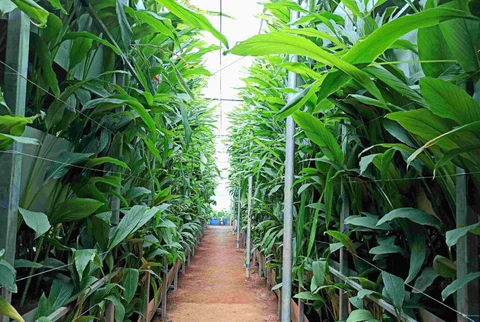
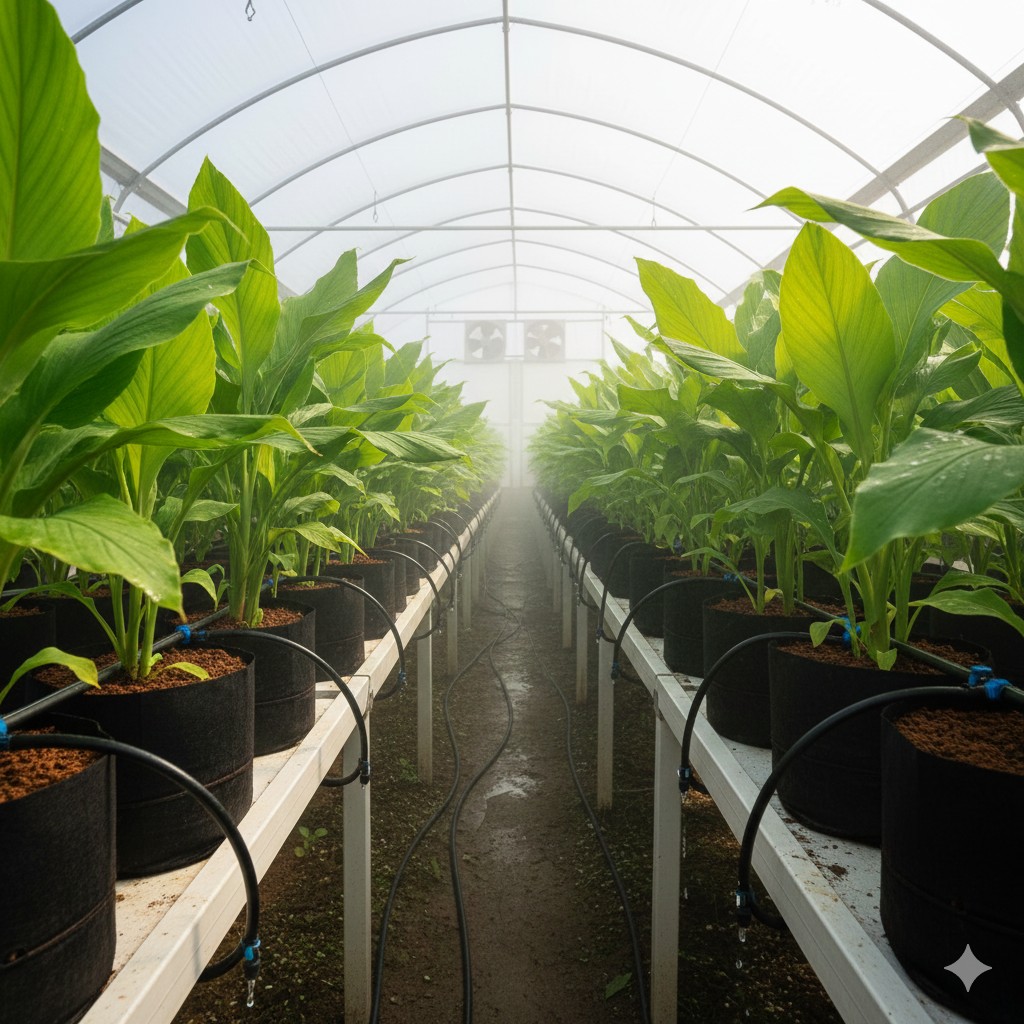
Key preventive advantages include:
● Decoupling irrigation from rainfall
● Maintenance of aerated root zones
● Reduced leaf wetness duration
● Improved sanitation and crop monitoring
These factors collectively lower disease pressure throughout the crop cycle.
________________________________________
4. Role of Soil Biology in Disease Suppression
Healthy soil biology is central to disease suppression in turmeric cultivation. Beneficial microorganisms compete with pathogens, enhance nutrient availability, and stimulate plant defense responses.
Important biological agents include:
● Trichoderma spp. for suppression of soil-borne fungi
● Pseudomonas spp. for root-zone protection
● Mycorrhizal fungi for improved nutrient uptake and stress tolerance
In polyhouse systems, maintaining active soil biology is easier due to reduced leaching and controlled moisture conditions.
________________________________________
5. Integrated Disease Management (IDM) Approach
An effective disease management strategy for Lakadong turmeric under polyhouse cultivation integrates multiple preventive measures rather than relying on curative treatments.
Core IDM components include:
● Use of disease-free planting material
● Raised beds with efficient drainage
● Biological soil amendments
● Controlled irrigation scheduling
● Strict sanitation and crop residue management
Chemical interventions, when required, should be minimal and targeted, preserving beneficial soil organisms and residue compliance.
________________________________________
6. Pest Incidence and Management Considerations
Compared to diseases, insect pest pressure in turmeric is relatively low under polyhouse conditions. However, pests such as shoot borers, mites, and minor leaf feeders may occasionally occur.
Polyhouse cultivation reduces pest incidence by:
● Physical exclusion through netting
● Improved crop vigor reducing susceptibility
● Easier scouting and early detection
Integrated pest management (IPM) principles focusing on monitoring and biological control are recommended.
________________________________________
7. Soil Health as a Long-Term Asset
For long-duration crops like turmeric, soil health must be viewed as a long-term production asset rather than a short-term input. Repeated cycles of poor drainage, chemical overuse, or organic matter depletion can compromise soil resilience.
Polyhouse cultivation supports soil health by enabling:
● Controlled organic matter incorporation
● Reduced erosion and nutrient loss
● Stable microbial populations
This foundation is essential for sustaining high-quality Lakadong turmeric production across multiple seasons.
________________________________________
8. Strategic Implications for Premium Turmeric Production
Disease and soil biology management under polyhouse cultivation align directly with premium market requirements for residue-free, traceable, and consistent turmeric. Preventive, biology-driven systems reduce risk while enhancing both agronomic and biochemical outcomes.
________________________________________
9. Lead-in to the Next Section
This section has established pest, disease, and soil biology management as integral components of protected Lakadong turmeric cultivation. The next part focuses on harvest timing, maturity indices, and post-harvest handling, linking field management to final product quality.
________________________________________
🔗 Continued in PART 10
Harvest Timing, Post-Harvest Handling, and Quality Preservation in Lakadong Turmeric