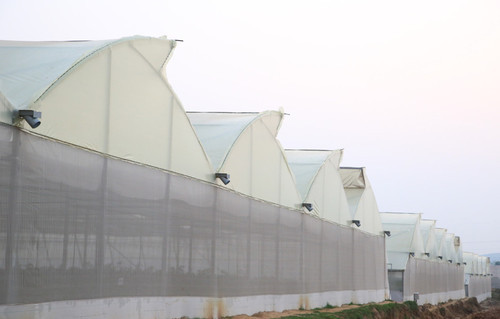
1. Importance of Structural Design for Turmeric Cultivation
Unlike short-duration vegetable crops, turmeric is a long-duration, underground storage crop requiring stable growing conditions over 8–9 months. Polyhouse design therefore plays a critical role in maintaining consistent microclimate, preventing waterlogging, and supporting sustained vegetative and rhizome development.
For Lakadong turmeric, which is sensitive to excess moisture and disease pressure, poorly designed structures can negate the advantages of protected cultivation. Structural design must prioritise drainage, ventilation, and durability rather than intensive climate control.
________________________________________
2. Type of Polyhouse Suitable for Lakadong Turmeric
Lakadong turmeric performs best under naturally ventilated polyhouses rather than fully enclosed or climate-controlled structures. Such polyhouses provide moderation of rainfall and temperature without creating excessive humidity.
Recommended structure type:
● Naturally ventilated polyhouse
● Galvanised iron (GI) pipe framework
● Side and top ventilation openings
● Provision for shade net installation during peak summer
This configuration balances protection with airflow, which is essential for disease suppression.
________________________________________
3. Orientation and Site Selection
Proper orientation ensures uniform light distribution and temperature regulation inside the polyhouse.
Recommended practices:
● Orientation: North–South for uniform solar exposure
● Site selection: Slightly elevated land to facilitate drainage
● Avoid low-lying or flood-prone areas
Good site selection reduces the need for corrective interventions later in the crop cycle.
________________________________________
4. Cladding Material and Light Transmission
The choice of cladding material influences light intensity, temperature buildup, and durability.
Preferred cladding:
● UV-stabilised polyethylene film (200 micron)
● Diffused light properties to avoid hot spots
● Anti-drip and anti-dust coatings (preferred)
Turmeric benefits from bright but diffused light, which supports photosynthesis without inducing heat stress.
________________________________________
5. Ventilation and Airflow Management
Effective ventilation is essential to prevent excessive humidity and foliar wetness.
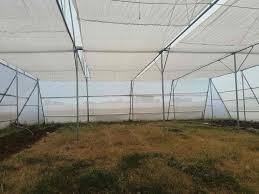
Key ventilation features:
● Continuous side ventilation with insect netting
● Roof vents or ridge openings
● Unobstructed airflow across beds
Good ventilation reduces the incidence of fungal and bacterial diseases and maintains a healthier root-zone environment.
________________________________________
6. Bed Design, Drainage, and Floor Management
Raised beds are mandatory for turmeric cultivation under polyhouse conditions.
Recommended specifications:
● Bed height: 25–35 cm
● Bed width: 1.0–1.2 m
● Pathways: 40–50 cm wide for access and drainage
Sub-surface drainage layers using gravel or sand are strongly recommended to prevent water stagnation. The polyhouse floor should have a gentle slope directing excess water away from the beds.
________________________________________
7. Longevity and Structural Durability
Given the long crop duration, polyhouse structures must be designed for durability and minimal maintenance. Reinforced joints, corrosion-resistant materials, and proper anchoring are essential, especially in regions prone to high winds or heavy rainfall.
Investing in robust structural design reduces long-term operational risk and ensures consistent production cycles.
________________________________________
8. Strategic Role of Design in Quality-Focused Production
Polyhouse design should be viewed not merely as infrastructure but as a quality-enabling system. For Lakadong turmeric, structural optimisation directly supports biochemical consistency, disease control, and overall crop reliability.
________________________________________
9. Lead-in to the Next Section
This section has detailed the structural requirements necessary to support Lakadong turmeric under protected cultivation. The next part focuses on planting material selection, seed rhizome preparation, and propagation strategies, which are equally critical for achieving uniform, high-curcumin production.
________________________________________
🔗 Continued in PART 6
Planting Material Selection and Propagation Strategies for Lakadong Turmeric