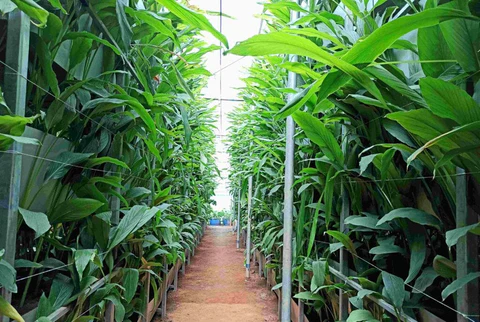
1. Limitations of Open-Field Turmeric Cultivation
Traditional open-field turmeric cultivation is highly dependent on seasonal rainfall, soil type, and ambient temperature. While this system has sustained turmeric production for centuries, it presents significant limitations when evaluated against modern quality and consistency requirements.
Key constraints include:
● Uncontrolled soil moisture leading to rhizome rot
● High disease pressure under prolonged wet conditions
● Nutrient leaching during heavy rainfall
● Inconsistent rhizome development and curcumin content
● Difficulty in maintaining uniform crop stands
For Lakadong turmeric, which derives its value primarily from curcumin concentration rather than bulk yield, these inconsistencies pose serious commercial and reputational risks.
________________________________________
2. Sensitivity of Lakadong Turmeric to Environmental Variability
Lakadong turmeric exhibits heightened sensitivity to environmental stress due to its dense rhizome structure and high metabolic activity associated with curcumin biosynthesis. Excessive moisture, poor aeration, or nutrient imbalance can disrupt enzymatic pathways involved in secondary metabolite production.
Environmental stress during the rhizome bulking phase often results in:
● Reduced curcumin accumulation
● Higher incidence of rhizome decay
● Variability in internal pigmentation
● Decline in overall market value
Such outcomes underline the need for cultivation systems that minimise environmental fluctuations.
________________________________________
3. Polyhouse as a Semi-Controlled Microclimate System
A polyhouse functions as a semi-controlled environment that moderates external climatic extremes while allowing sufficient natural ventilation. Unlike open fields, polyhouses provide the ability to regulate key growth parameters without the high capital intensity of fully automated glass greenhouses.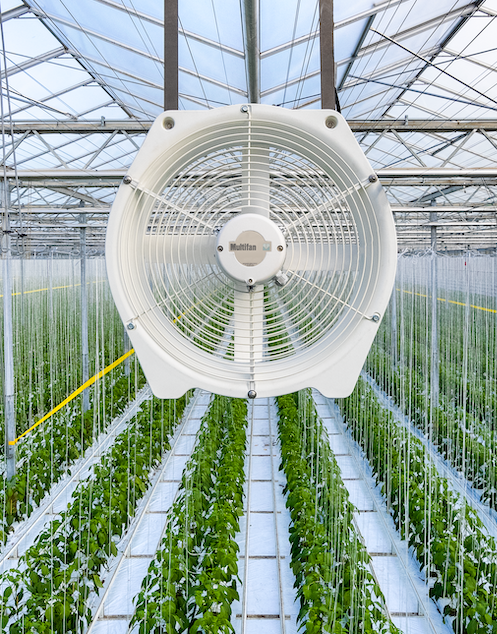
Critical advantages of polyhouse systems include:
● Protection from excessive rainfall
● Improved drainage and root-zone aeration
● Moderation of temperature fluctuations
● Reduction in foliar wetness duration
● Enhanced nutrient use efficiency
These factors directly support stable physiological activity and improved rhizome quality.
________________________________________
4. Impact of Polyhouse Cultivation on Growth Physiology
By stabilising temperature and moisture regimes, polyhouse cultivation improves the source–sink balance in turmeric plants. Enhanced photosynthetic efficiency during vegetative growth translates into greater carbohydrate availability for rhizome development during the bulking phase.
For Lakadong turmeric, this results in:
● More uniform rhizome size and density
● Improved partitioning of assimilates into rhizomes
● Greater consistency in curcumin biosynthesis
The reduction of abiotic stress under polyhouse conditions allows the plant to allocate metabolic resources toward quality rather than stress response.
________________________________________
5. Disease Suppression and Crop Health Benefits
One of the most significant advantages of polyhouse cultivation is the reduction in soil-borne and moisture-related diseases. Controlled irrigation and improved aeration minimise conditions favourable for pathogens responsible for rhizome rot and leaf diseases.
Polyhouse cultivation supports:
● Lower disease incidence
● Reduced dependency on chemical fungicides
● Improved crop longevity
● Cleaner, residue-compliant produce
These benefits align closely with the requirements of high-value nutraceutical and pharmaceutical markets.
________________________________________
6. Quality Standardisation and Market Alignment
Modern turmeric markets prioritise biochemical consistency, traceability, and food safety. Polyhouse cultivation enables growers to implement standardised production protocols, making it easier to meet curcumin specifications and quality benchmarks.
For Lakadong turmeric, polyhouse systems provide a pathway to:
● Preserve varietal integrity
● Reduce quality dilution
● Establish reproducible production models
● Support premium branding and certification
________________________________________
7. Strategic Implications for Lakadong Turmeric Cultivation
From a strategic perspective, polyhouse cultivation represents a transition from traditional farming to precision agriculture. While not intended to replace open-field systems entirely, polyhouse production can serve as a quality nucleus, supplying elite-grade Lakadong turmeric for specialised markets and downstream processing.
________________________________________
8. Lead-in to the Next Section
This section has established the scientific and agronomic rationale for adopting polyhouse cultivation for Lakadong turmeric. The next part focuses on polyhouse design parameters and structural specifications required to support long-duration turmeric crops.
________________________________________
🔗 Continued in PART 5
Polyhouse Design and Structural Requirements for Lakadong Turmeric Cultivation