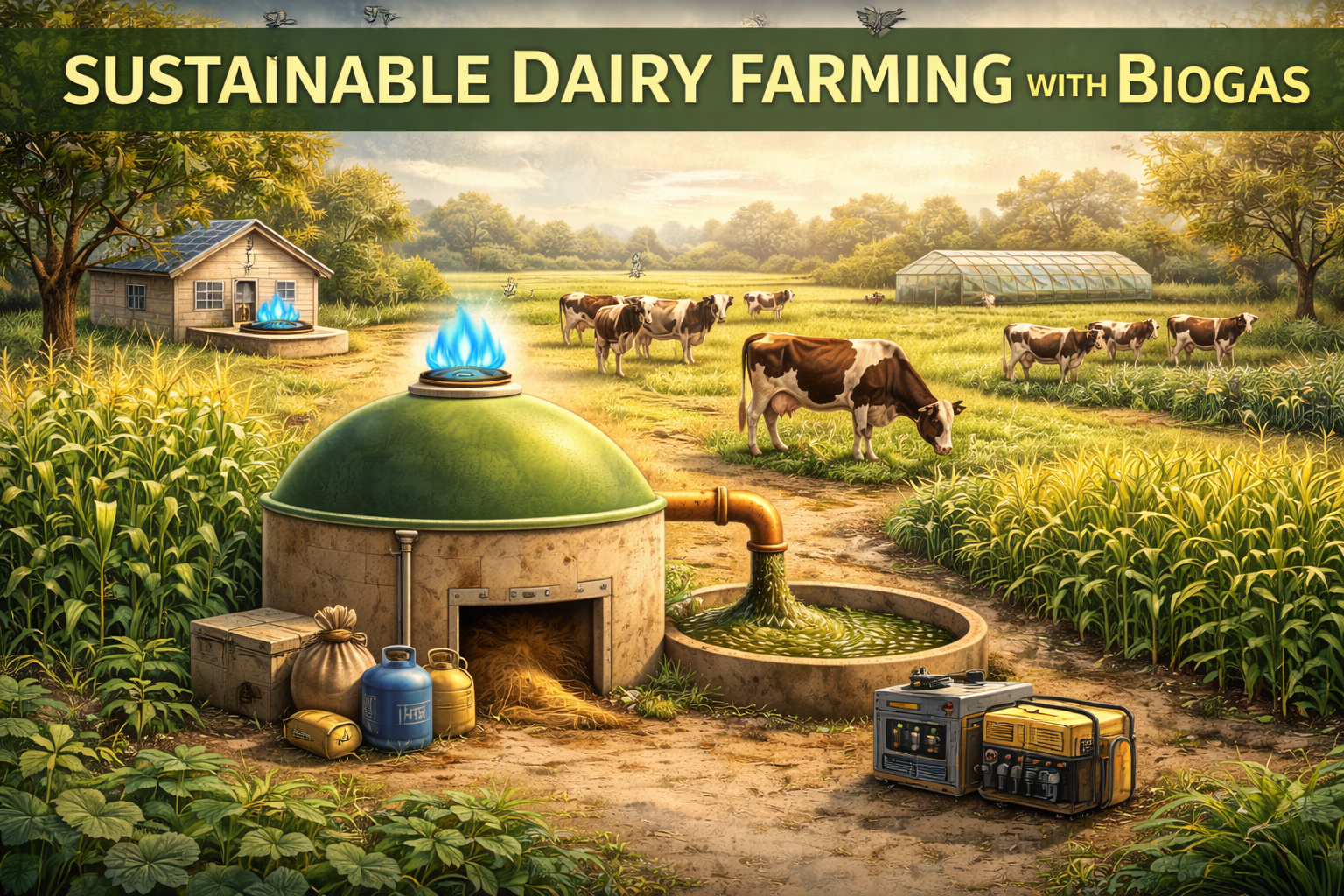
1. Manure as a Biological and Energy Resource
In dairy farming, manure is often treated as waste, yet biologically it is a concentrated reservoir of undigested organic matter, microbial biomass, and nutrients. The quantity and quality of manure produced by dairy cattle are directly linked to feed composition, digestibility, and herd size.
From a systems perspective, manure represents a secondary production stream, alongside milk, with the potential to generate energy and recycle nutrients back into fodder systems.
Why manure matters
● Continuous, predictable daily output
● High organic content suitable for anaerobic digestion
● Rich source of nitrogen, phosphorus, potassium
● Direct linkage to feed and herd size
2. Fundamentals of Biogas Science
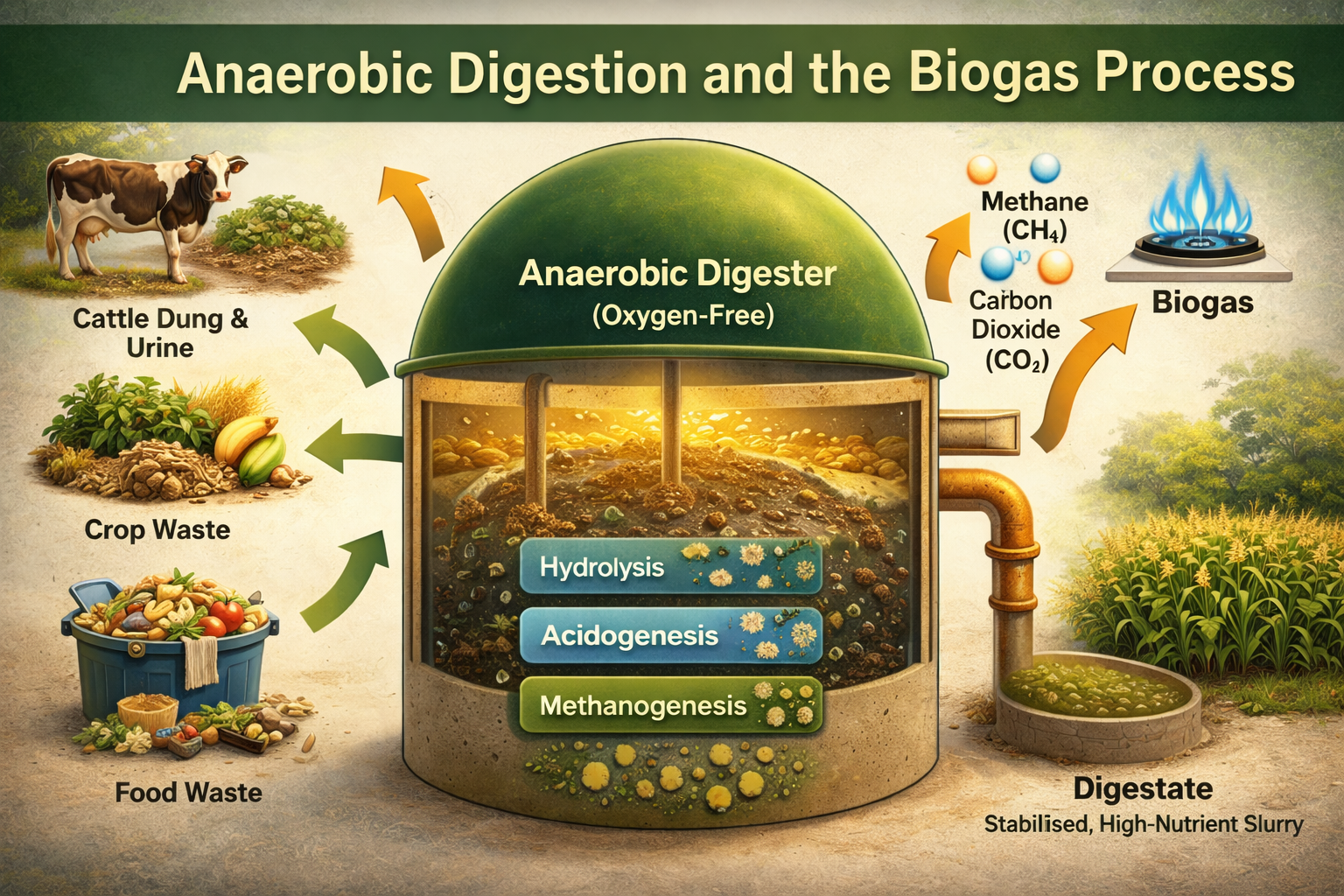
Biogas production is based on anaerobic digestion, a microbial process in which organic matter is decomposed in the absence of oxygen. The process occurs through sequential stages involving distinct microbial populations.
Understanding the biology of digestion is critical; most biogas plant failures result from biological mismanagement, not structural defects.
Stages of anaerobic digestion
● Hydrolysis: breakdown of complex polymers
● Acidogenesis: formation of volatile fatty acids
● Acetogenesis: conversion to acetate, hydrogen
● Methanogenesis: methane production
Key outputs
● Biogas (methane + carbon dioxide)
● Digestate (nutrient-rich slurry)
3. Factors Affecting Biogas Yield in Dairy Farms
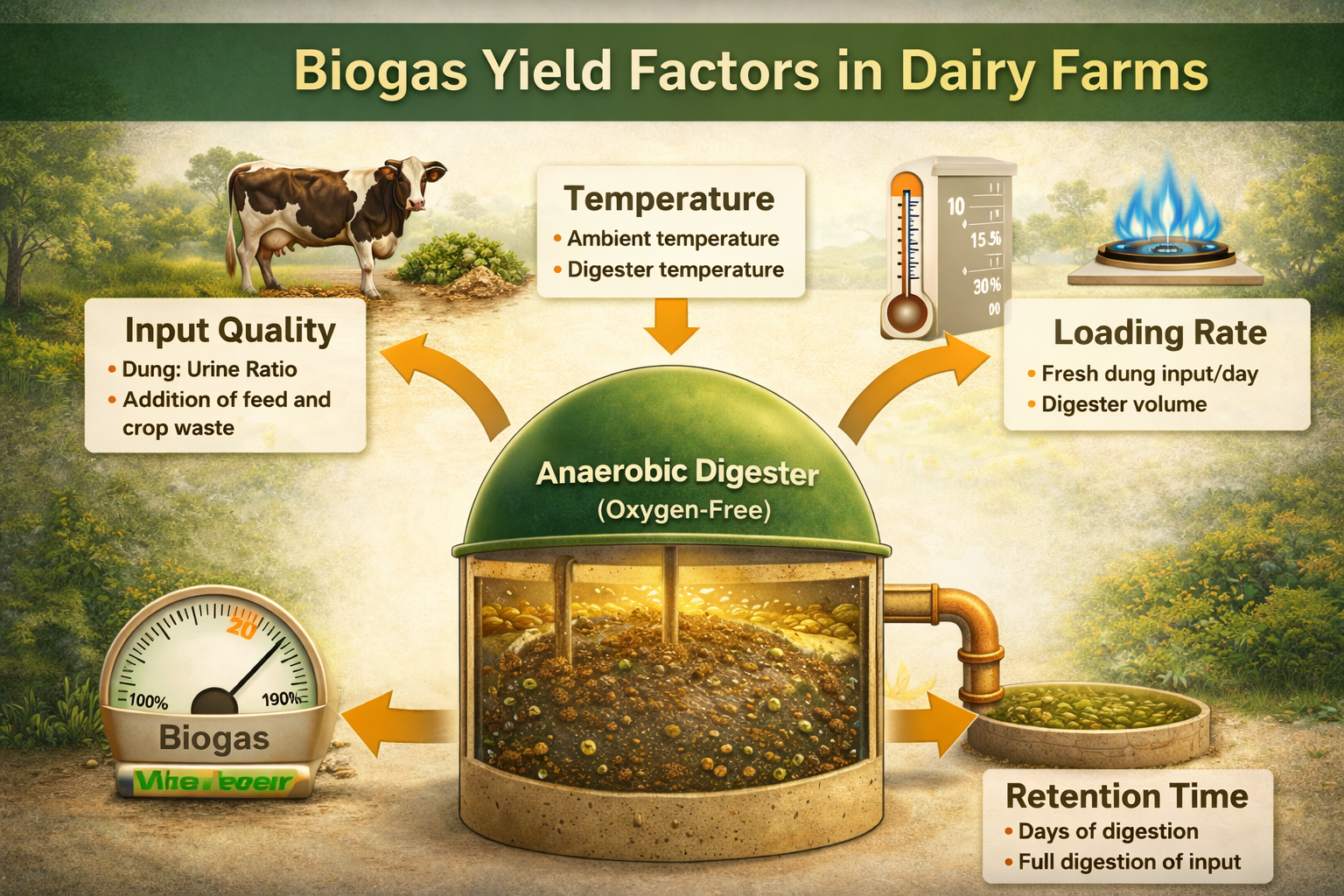
Biogas yield is not fixed; it varies widely depending on biological and operational factors. Overestimating gas production is a common planning error.
Primary determinants
● Quantity of dung per cow per day
● Dry matter and volatile solids content
● Carbon-to-nitrogen (C:N) ratio
● Digester temperature and retention time
● Consistency of daily feeding
Indian field reality
● Average cow dung: 10–15 kg/day
● Buffalo dung: higher gas yield than cow dung
● Mixed feed rations improve digestion stability
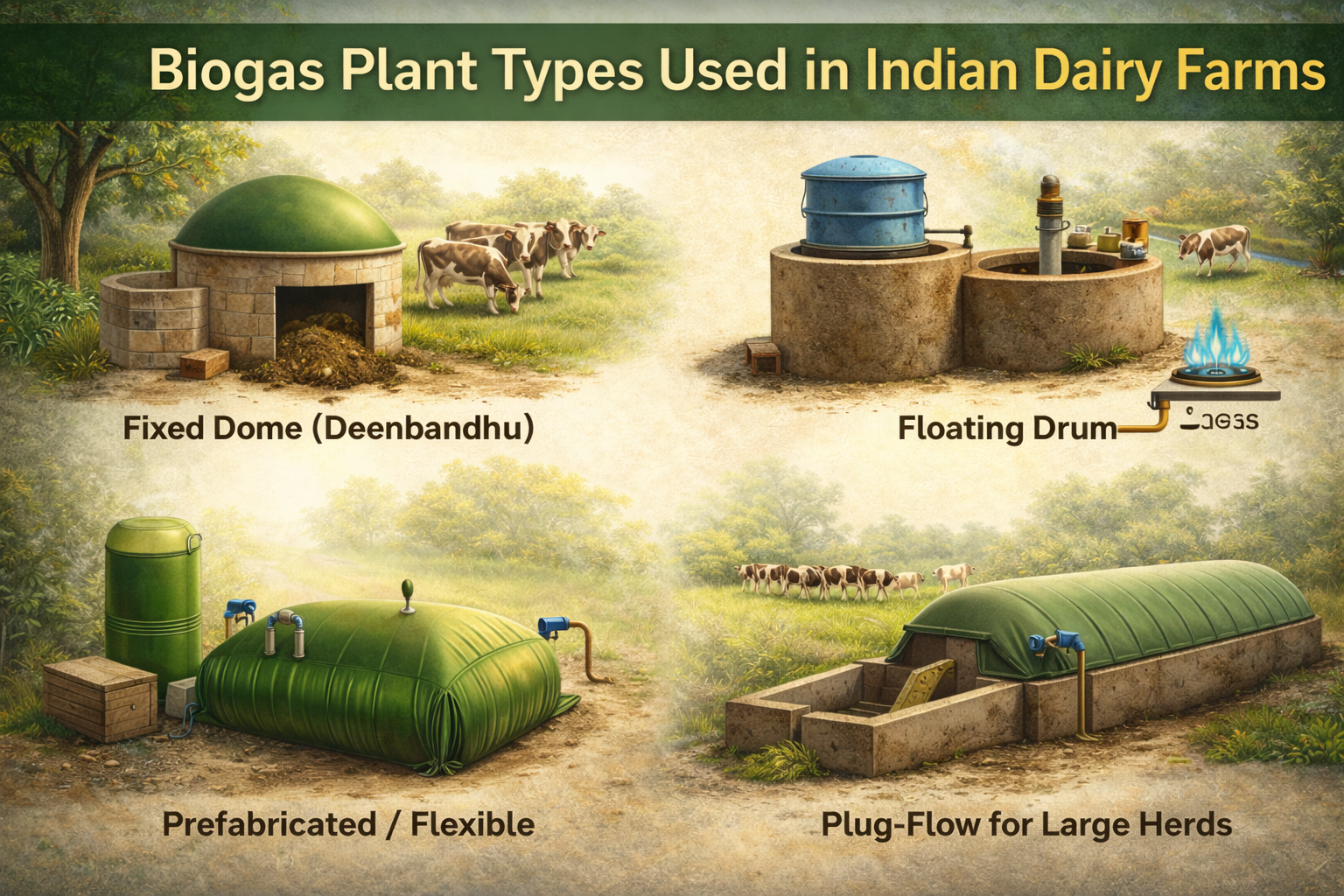
4. Types of Biogas Plants Used in India
India uses a variety of biogas plant designs, each suited to different scales, climates, and capital availability. Plant choice must align with herd size, labor availability, and intended energy use.
Common Indian biogas plant types
● Fixed dome (Deenbandhu, Janata models)
● Floating drum (KVIC design)
● Plug-flow digesters (medium to large farms)
● Prefabricated modular plants
Design trade-offs
● Cost vs durability
● Gas pressure stability
● Maintenance requirements
5. Sizing Biogas Plants for Different Dairy Farm Scales
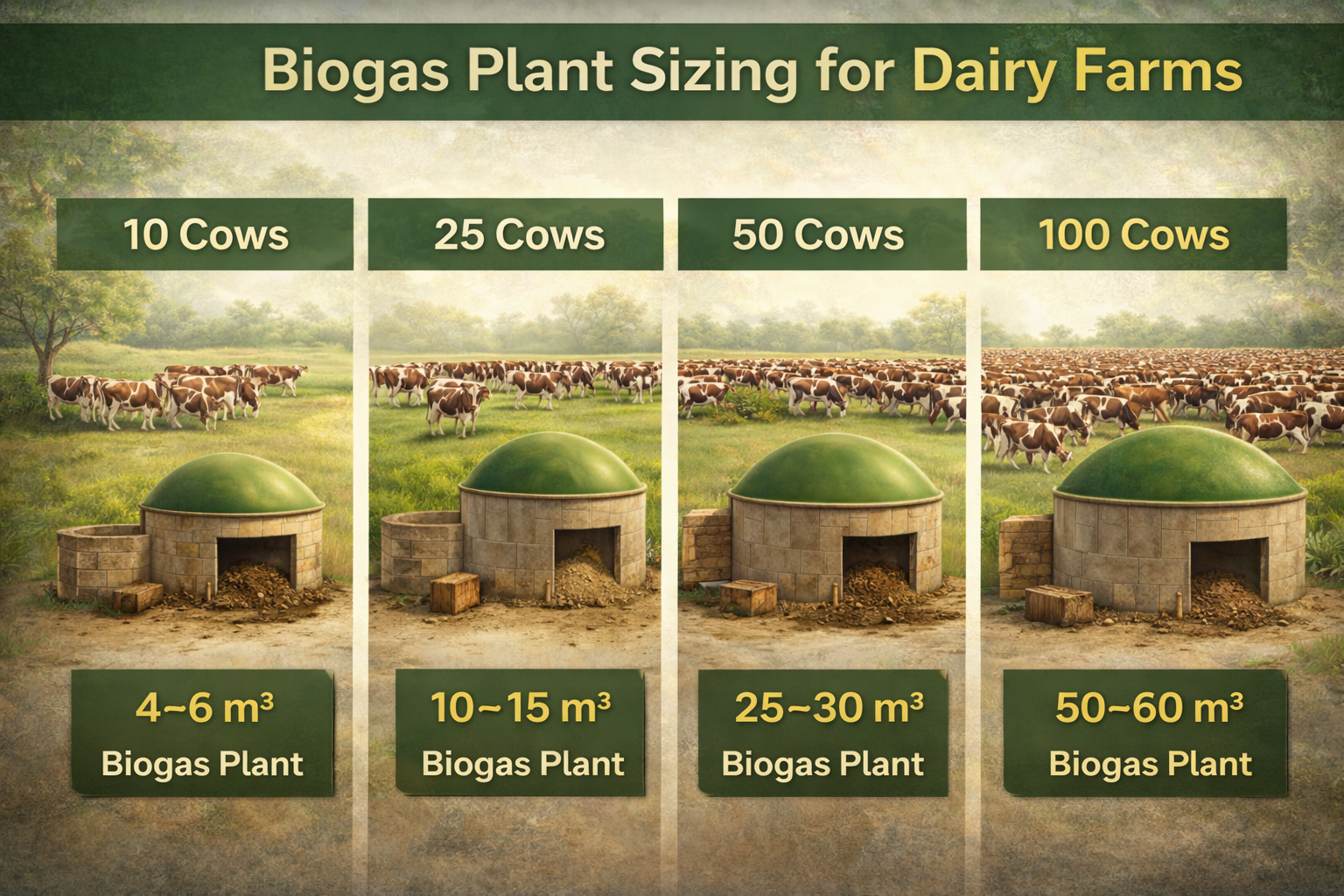
Correct sizing is essential to avoid underutilization or system failure. Biogas plants must be designed based on daily dung availability, not aspirational herd size.
Indicative sizing
● 2–5 cows: household-scale plant
● 10–20 cows: small commercial plant
● 50–100 cows: plug-flow or modular system
● 200+ cows: integrated energy systems
Design principles
● Match digester volume to retention time
● Allow for future herd expansion
● Ensure daily feeding consistency
6. Energy Utilization Pathways on Dairy Farms
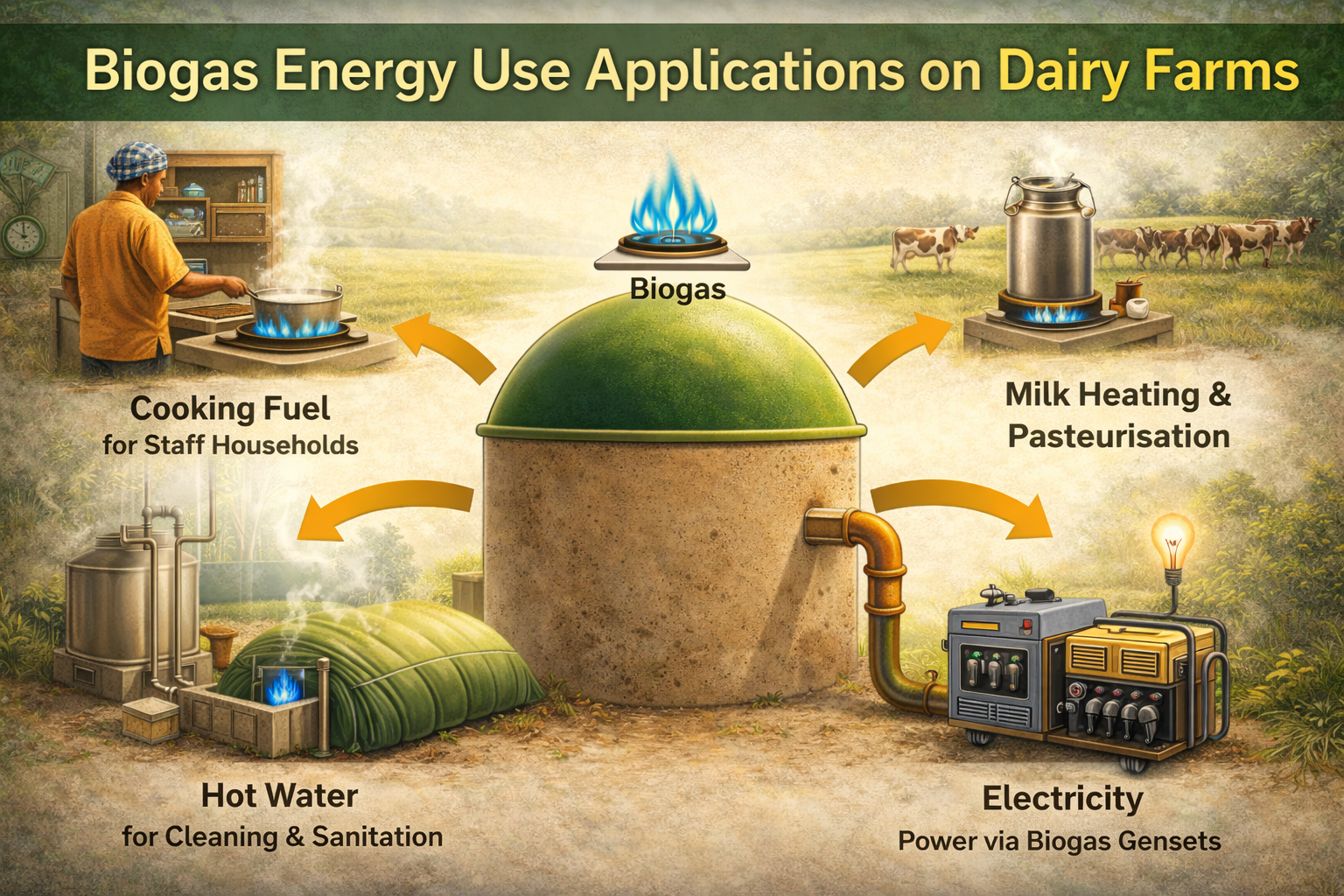
Biogas is versatile and can replace multiple energy inputs on dairy farms. Optimal utilization maximizes economic return and system resilience.
Common energy uses
● Cooking fuel for farm households
● Hot water for milking hygiene and CIP
● Electricity generation (biogas gensets)
● Heating for milk processing and pasteurization
Strategic insight
● Thermal use is more efficient than power generation
● Energy should be consumed on-site to avoid losses
7. Biogas Slurry: Nutrient Recycling and Soil Health
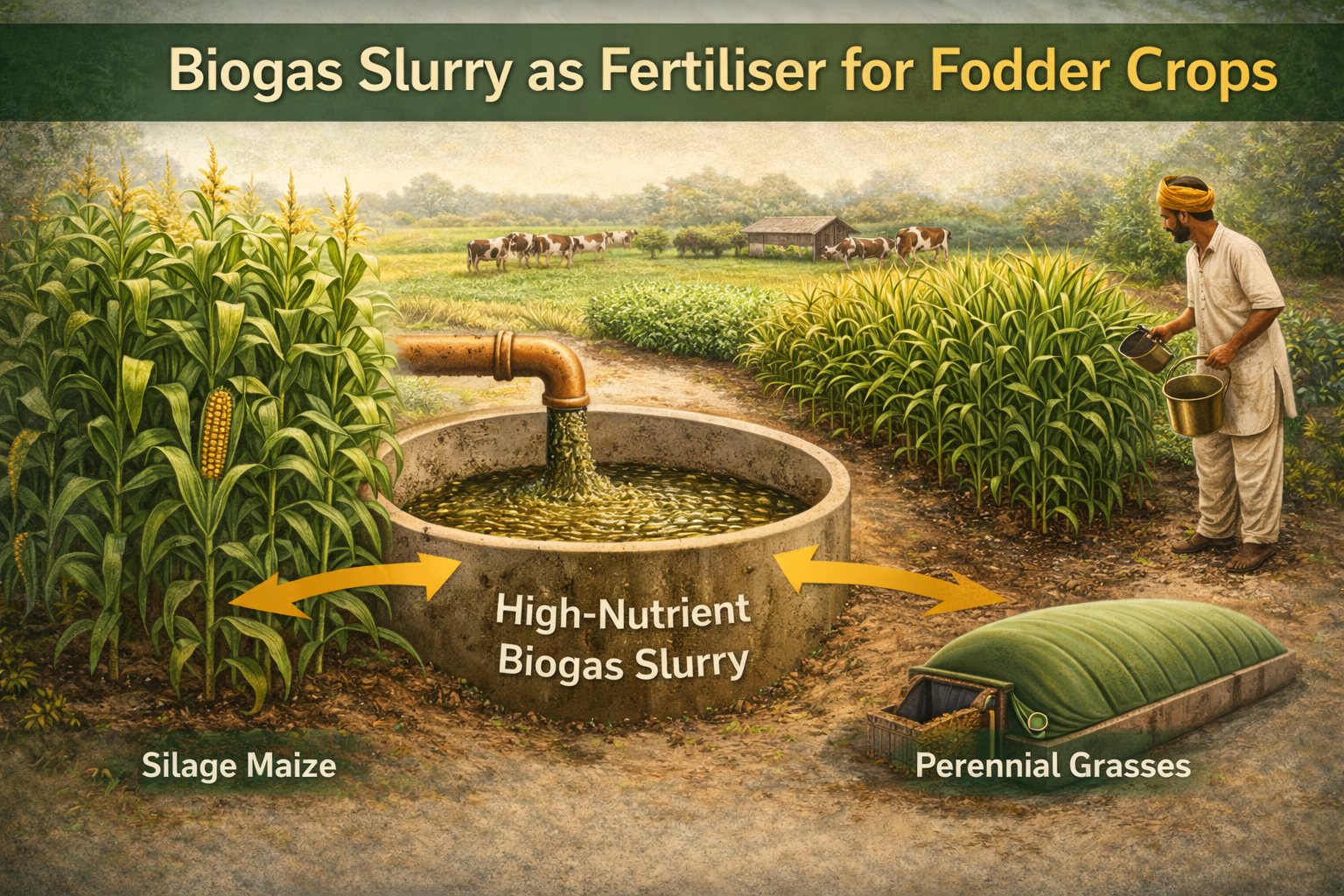
The digestate or slurry is often undervalued, yet it contains more plant-available nutrients than raw manure. Anaerobic digestion stabilizes nitrogen and reduces pathogens and weed seeds.
Benefits of slurry use
● Improved nitrogen availability
● Reduced odor and pathogen load
● Enhanced soil organic matter
● Lower chemical fertilizer requirement
Application pathways
● Direct application to fodder fields
● Liquid fertigation systems
● Composting and solid separation
8. Integrating Biogas with Fodder Systems
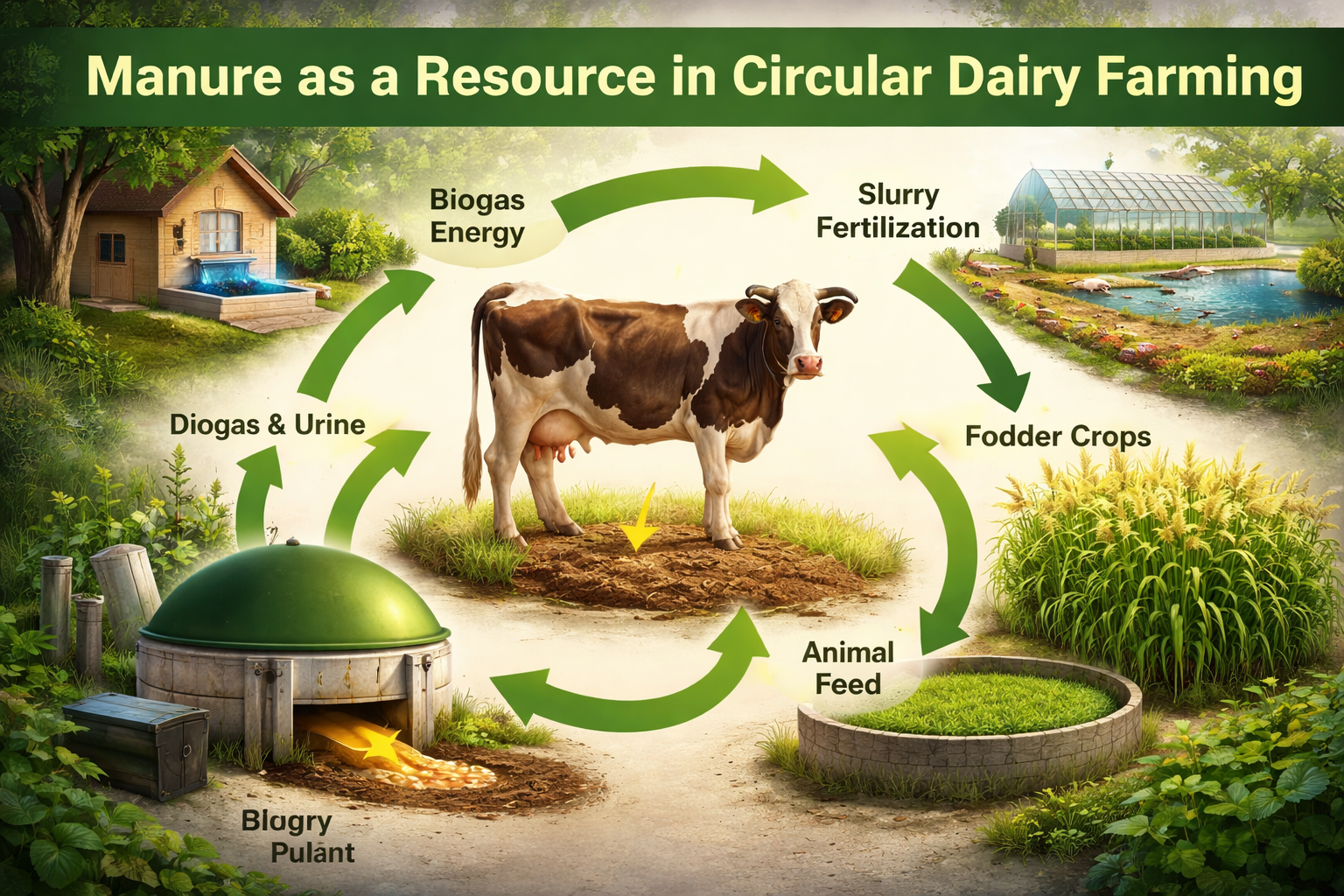
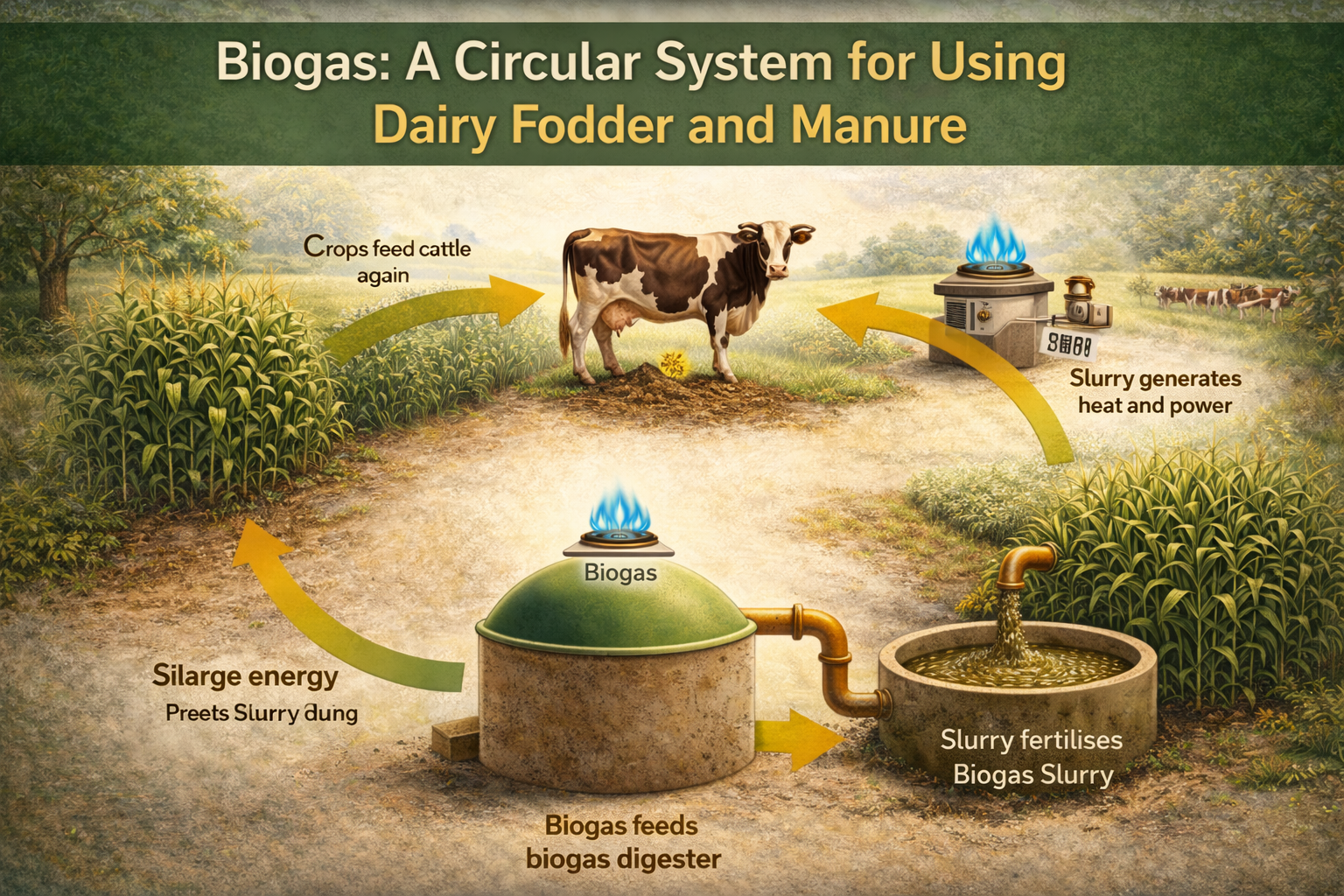
Biogas systems close the nutrient loop by linking feed intake, manure output, energy generation, and fodder production. Slurry application improves fodder yield and quality, reinforcing dairy nutrition.
Circular integration
● Feed → cow → dung
● Dung → biogas + slurry
● Slurry → fodder fields
● Fodder → feed
This loop reduces external input dependency.
9. Economics of Biogas in Dairy Farming
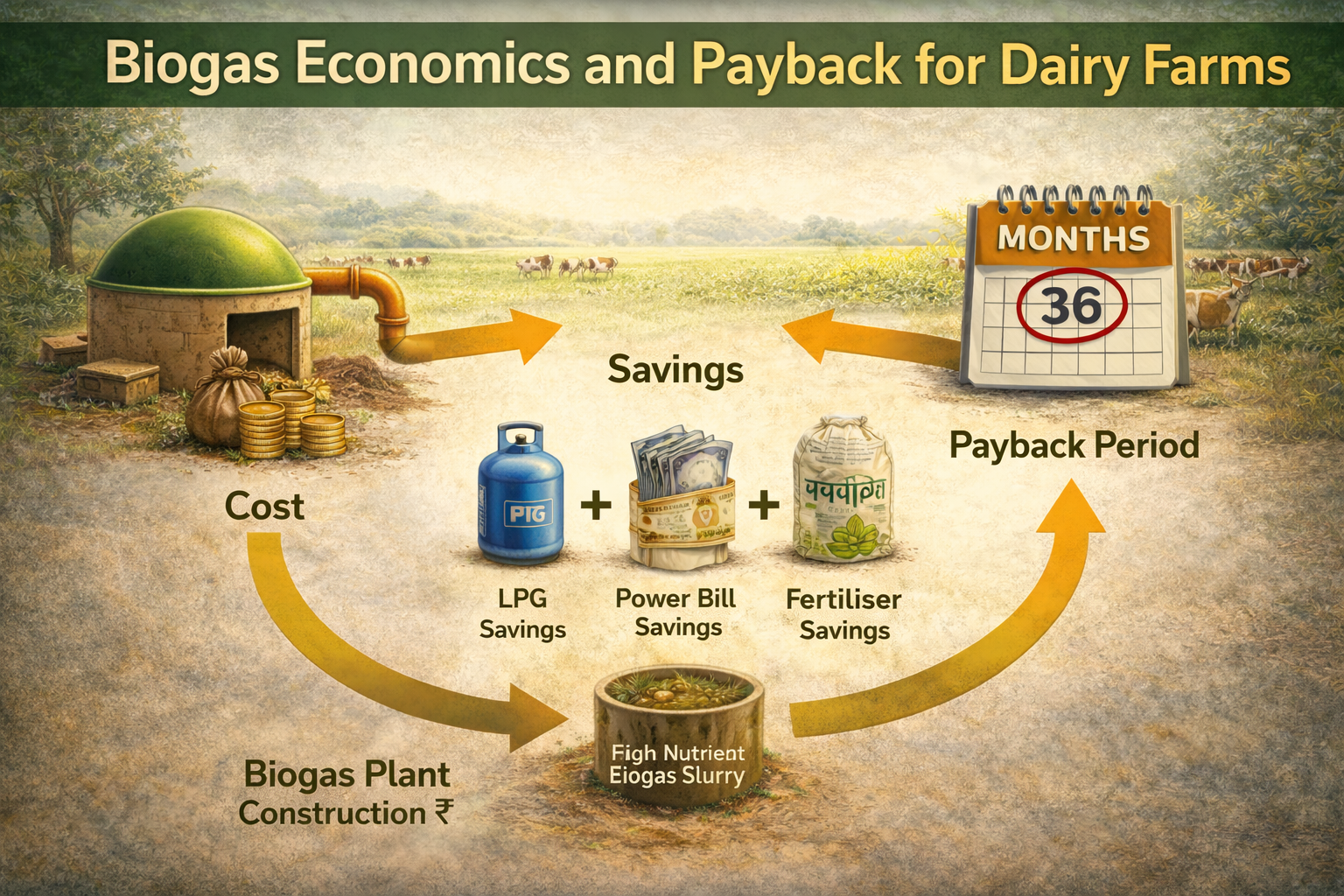
Biogas economics depend on scale, utilization efficiency, and local energy costs. While capital investment is required, operating costs are low.
Economic considerations
● Initial plant cost and lifespan
● Subsidies and government support
● Savings on LPG, electricity, fertilizers
● Payback period (typically 2–5 years)
Biogas improves resilience rather than generating standalone profit.
10. Biogas as a Pillar of Sustainable Dairy Systems
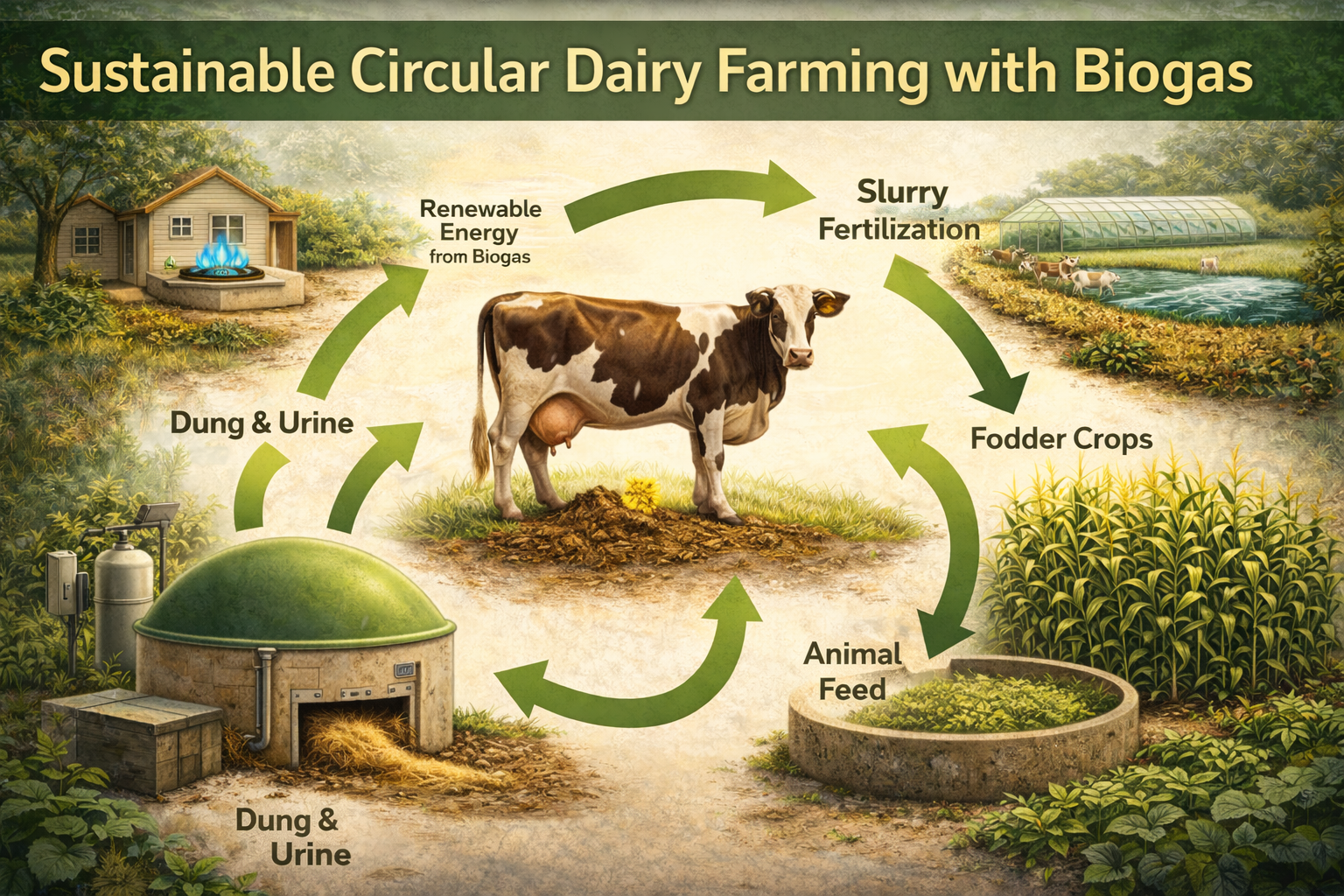
Biogas systems contribute to climate mitigation by reducing methane emissions from open manure, lowering fossil fuel use, and enhancing nutrient efficiency.
Future dairy farms integrate biogas with housing, fodder, and milk processing to form closed-loop production ecosystems.
Sustainability outcomes
● Reduced greenhouse gas emissions
● Energy self-sufficiency
● Improved soil fertility
● Enhanced farm resilience
Conclusion: From Waste Management to Energy Strategy
Biogas transforms manure management into a strategic pillar of dairy farming. Farms that adopt biogas systems move from linear production to circular resilience—producing milk, energy, and nutrients in a unified system. In Indian dairying, biogas is not a luxury; it is a practical pathway toward sustainability, cost control, and long-term viability.