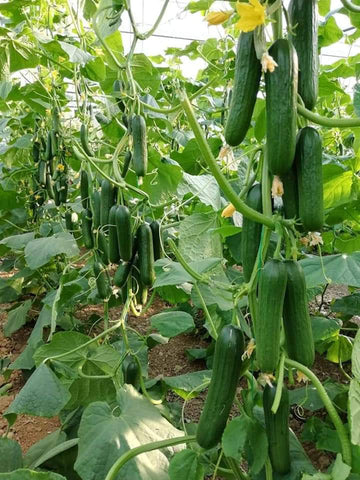
Cucumber (Cucumis sativus L.) is one of the most widely cultivated cucurbit crops under protected cultivation due to its fast growth, high productivity, and continuous harvesting potential. Polyhouse cultivation using grow bags enables precise control of the root zone environment, irrigation, and nutrient supply, resulting in uniform fruit quality and higher marketable yields compared to open-field cultivation.
Botanical and scientific background
Botanical name: Cucumis sativus L.
Family: Cucurbitaceae
Growth habit: Annual climbing vine
Pollination: Monoecious; parthenocarpic hybrids preferred for polyhouse cultivation
Parthenocarpic cucumber hybrids are particularly suitable for polyhouse systems because they set fruit without pollination, ensuring consistent yield even in enclosed structures with limited insect activity.
Climate and environmental requirements
Cucumber performs best under warm and moderately humid conditions.
Temperature: Optimal day temperature is 22–30 °C and night temperature is 16–20 °C. Sustained temperatures above 35 °C may reduce fruit quality and increase bitterness.
Relative humidity: Ideal range is 60–80%. Excess humidity promotes fungal diseases.
Light: High light intensity is required for vigorous growth and proper fruit development.
Ventilation: Adequate ventilation is essential to regulate temperature and humidity inside the polyhouse.
Why grow cucumber in grow bags under polyhouse
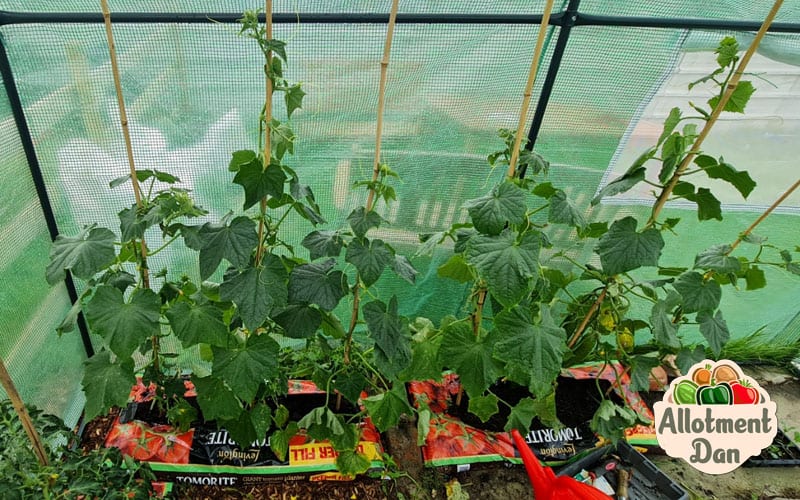
Grow bags provide uniform root aeration, excellent drainage, and protection from soil-borne pathogens. Combined with polyhouse cultivation, grow bags allow efficient fertigation, better nutrient uptake, and reduced disease pressure, leading to higher productivity per unit area.
Variety selection and nursery management
Use parthenocarpic cucumber hybrids specifically developed for protected cultivation. Seedlings are raised in plug trays filled with sterile coco peat and transplanted at the 2–3 true leaf stage (12–15 days after sowing).

Grow bag media composition and layout
An ideal grow bag medium consists of coco peat, perlite, and vermiculite in a 70:20:10 ratio. Each grow bag typically supports one plant. Arrange grow bags in double rows with adequate spacing for airflow, ease of movement, and efficient harvesting.
Plant spacing, training, and pruning
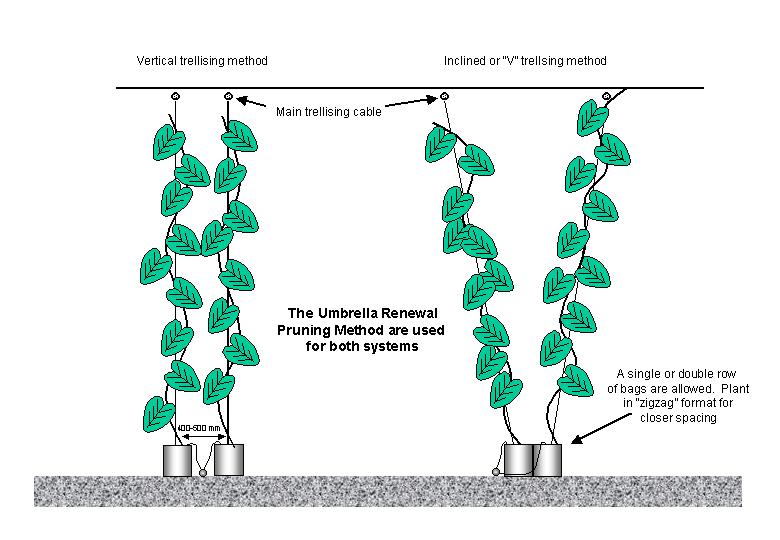
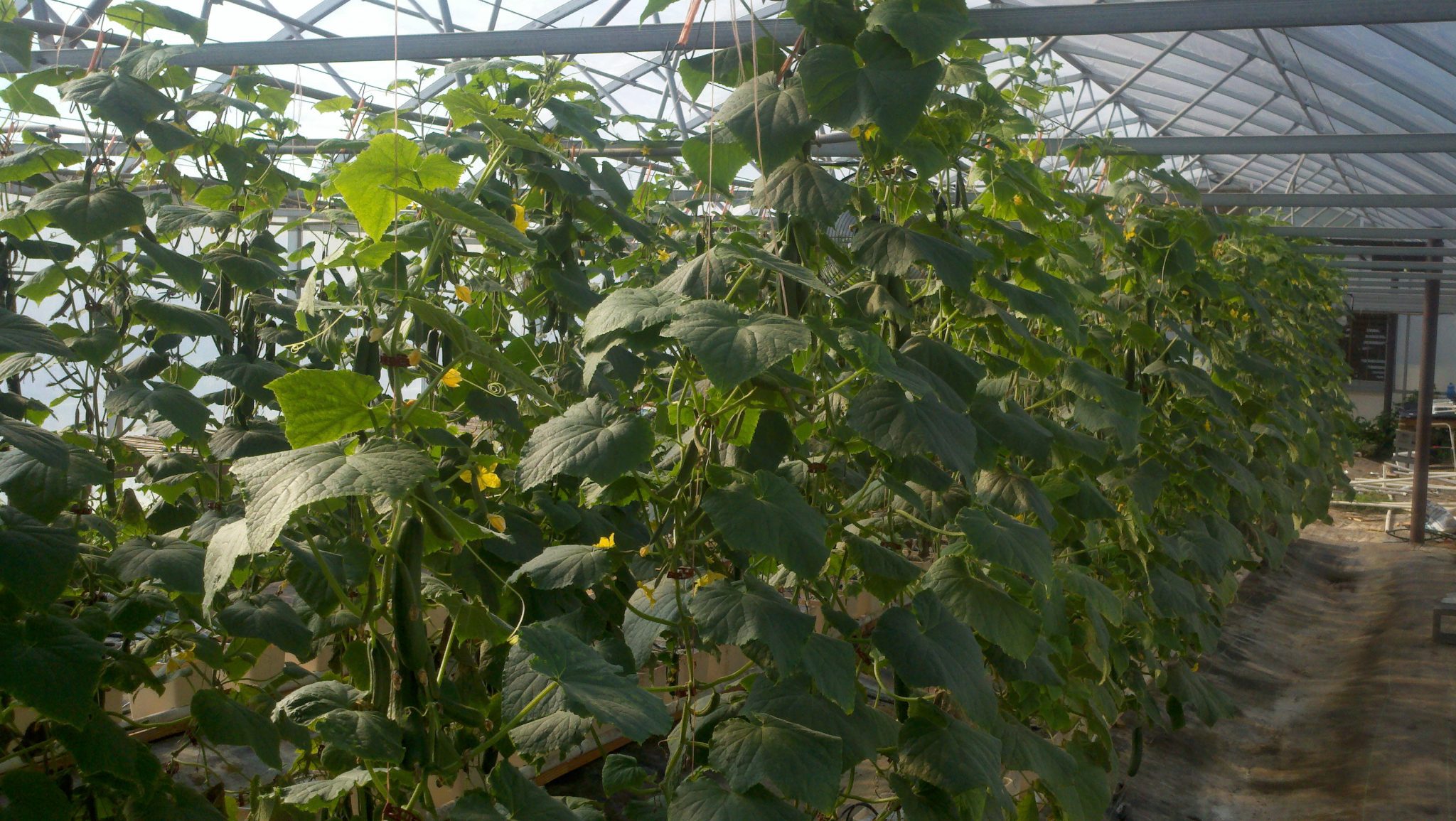
Maintain spacing of 45–60 cm between plants and 1.0–1.2 m between rows. Train cucumber plants vertically using trellis wires and nylon strings. Remove lateral shoots up to 40–50 cm from the base and regulate side shoots above this height to maintain a balanced canopy.
Nutrient and fertigation management
Cucumber is a heavy feeder and responds strongly to precise fertigation management.
Recommended ranges:
Vegetative stage: EC 1.8–2.2 mS/cm; pH 5.8–6.5
Flowering and fruiting stage: EC 2.5–3.5 mS/cm; pH 5.8–6.5
Potassium and calcium are particularly important for fruit quality and to prevent physiological disorders. Apply fertigation daily in split doses through drip irrigation.
Irrigation scheduling
Young plants require frequent, low-volume irrigation. As plants mature and fruit load increases, irrigation volume should be increased while ensuring free drainage to prevent root zone saturation.
Pest and disease management
Common pests include thrips, aphids, whiteflies, and mites. Diseases such as powdery mildew and downy mildew may occur under high humidity conditions.
Integrated pest management practices include:
Use of insect-proof nets
Regular monitoring with sticky traps
Biological control agents
Need-based application of selective pesticides
Expected yield and harvest
Harvesting generally begins 35–40 days after transplanting. Under well-managed polyhouse grow bag systems, yields of 10–18 kg per plant are achievable depending on hybrid, climate, and management practices.
Economics and cost–return analysis
Detailed economics covering fixed costs, operating expenses, yield assumptions, revenue scenarios, cash flow, and key financial indicators are based on below
Cost Structure – Cucumber Grow Bag Polyhouse
Polyhouse structure and basic infrastructure
Grow bags, cocopeat, and planting material
Drip irrigation and fertigation system
Labour, inputs, and routine crop management
Yield and Revenue Assumptions
Continuous harvesting over the crop cycle
Yield depends on hybrid, climate control, and fertigation
Market price varies with season and quality
Revenue improves with consistent grade and supply
Financial Perspective
Costs are mostly upfront and operational
Returns depend on yield stability and market access
Cash flow improves with good crop planning
Scenario-based evaluation is essential before investment
Post-harvest handling
Harvest fruits at the appropriate size and colour preferred by the market. Handle gently to avoid mechanical damage. Store cucumbers at 10–12 °C with high relative humidity to maintain freshness and shelf life.
References and further reading
For detailed scientific and extension-based guidance, refer to the following resources:
- FAO Protected Cultivation Manual: https://www.fao.org/home/en
- Indian Council of Agricultural Research (ICAR): https://icar.org.in
- University of California Greenhouse Cucumber Guide: https://ucanr.edu
- Wageningen University Greenhouse Horticulture: https://www.wur.nl
Checklist before starting
Select parthenocarpic cucumber hybrids
Ensure good ventilation in polyhouse
Prepare uniform grow bag media
Install reliable drip fertigation system
Monitor EC, pH, temperature, and humidity daily