Introduction
Ginger (Zingiber officinale Roscoe) is one of the most widely used spice and medicinal crops, valued for its pungent rhizomes rich in bioactive compounds such as gingerols and shogaols. Traditionally cultivated under open-field conditions, ginger production is often constrained by soil-borne diseases, excess rainfall, and inase pressure.
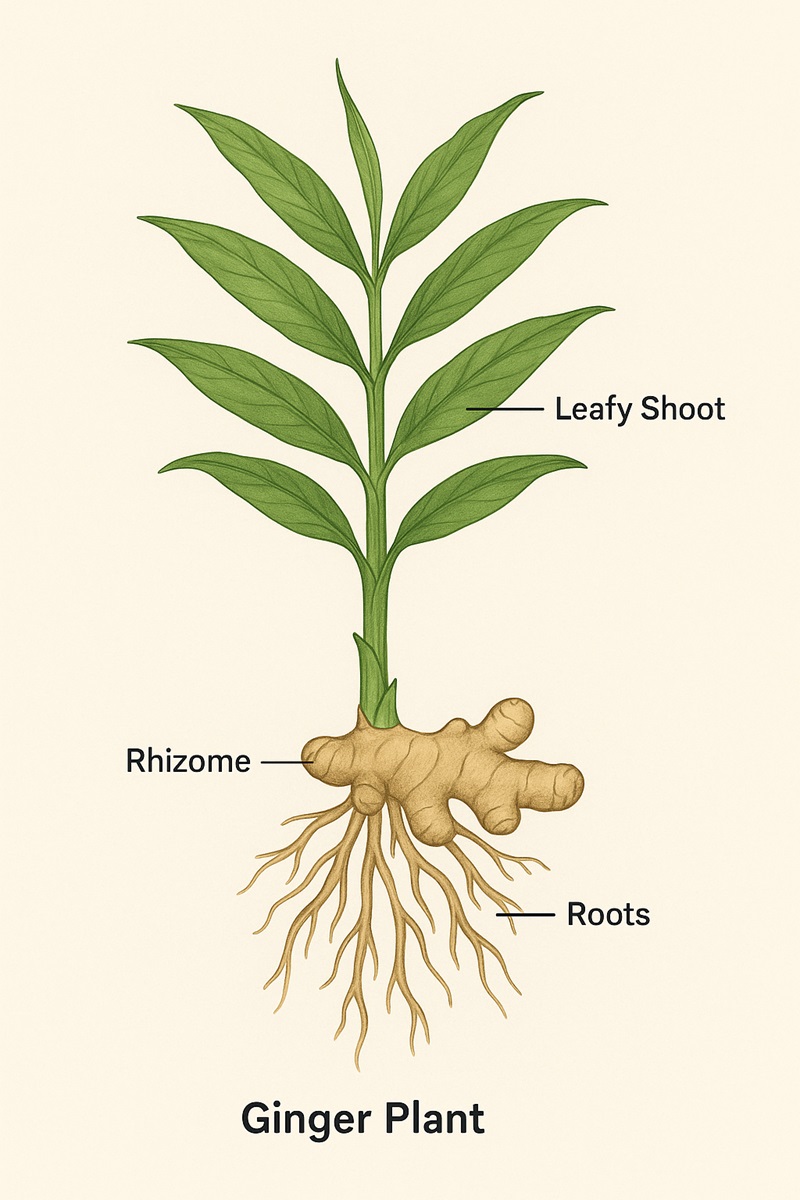
Botanical characteristics and growth habit
Botanical name: Zingiber officinale
Family: Zingiberaceae
Growth habit: Herbaceous perennial (cultivated as annual)
Economic part: Underground rhizome
Root system: Fibrous, shallow
Propagation: Vegetative (seed rhizomes)
Ginger plants develop pseudostems formed by overlapping leaf sheaths and produce rhizomes that function as storage and propagation organs. Healthy vegetative growth during early stages is essential for subsequent rhizome bulking.
Why polyhouse cultivation for ginger
Polyhouse systems provide protection from excessive rainfall and enable better control of soil moisture—two critical factors influencing ginger health. Ginger is highly susceptible to rhizome rot under waterlogged conditions, making protected cultivation particularly advantageous in humid and high-rainfall regions.
Key advantages include:
Reduced rhizome rot and soil-borne diseases
Improved drainage and root-zone aeration
More uniform crop establishment
Better quality rhizomes with reduced losses
Planting material and nursery management
Healthy, disease-free seed rhizomes are the foundation of successful ginger cultivation. Medium-sized rhizome pieces with well-developed buds are preferred. Pre-planting treatments using biological agents such as Trichoderma help reduce pathogen load.
Seed rhizomes may be pre-sprouted under shade to ensure uniform emergence before transplanting into raised beds inside the polyhouse.
Soil, bed preparation, and spacing
Raised beds are essential for ginger cultivation under polyhouse conditions. Beds should be well-drained and rich in organic matter.
Recommended practices:
Bed height: 25–30 cm
Bed width: 1.0–1.2 m
Spacing: 25–30 cm between plants
Loose, friable soil supports healthy rhizome expansion and reduces mechanical resistance.
Nutrient and irrigation management
Ginger requires balanced nutrition throughout its growth cycle. Nitrogen supports vegetative growth, while potassium plays a key role in rhizome development and quality.
Irrigation should be light and frequent, avoiding saturation. Drip irrigation is preferred for maintaining optimal soil moisture and minimizing disease risk.
Pest and disease management
Rhizome rot remains the most serious disease affecting ginger. Polyhouse cultivation reduces disease incidence by controlling excess moisture and improving sanitation.
Preventive strategies include:
Raised beds and proper drainage
Biological soil amendments
Use of clean planting material
Regular crop monitoring
Insect pest pressure is generally low under polyhouse conditions.
Harvesting and expected yield
Ginger reaches maturity within 7–8 months after planting. Harvest timing depends on market preference—early harvest for fresh ginger and full maturity for dry ginger.
Under well-managed polyhouse systems, ginger yields are typically more consistent and of higher quality compared to open-field cultivation, with reduced post-harvest losses.
Post-harvest handling
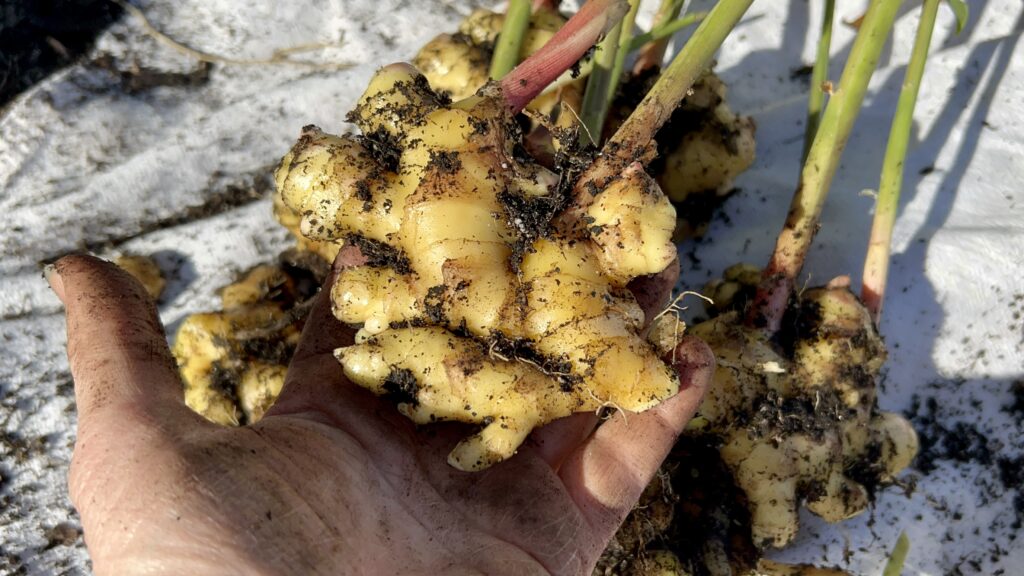
Harvested rhizomes should be cleaned carefully to remove adhering soil. For fresh market use, gentle washing and grading are sufficient. Proper handling preserves aroma, appearance, and storage life.
Conclusion
Polyhouse cultivation represents a practical and scalable approach for ginger production in regions prone to excessive rainfall and soil-borne diseases. By stabilising the growing environment and improving crop health, protected cultivation enables consistent production of high-quality ginger suitable for fresh consumption and value-added markets.