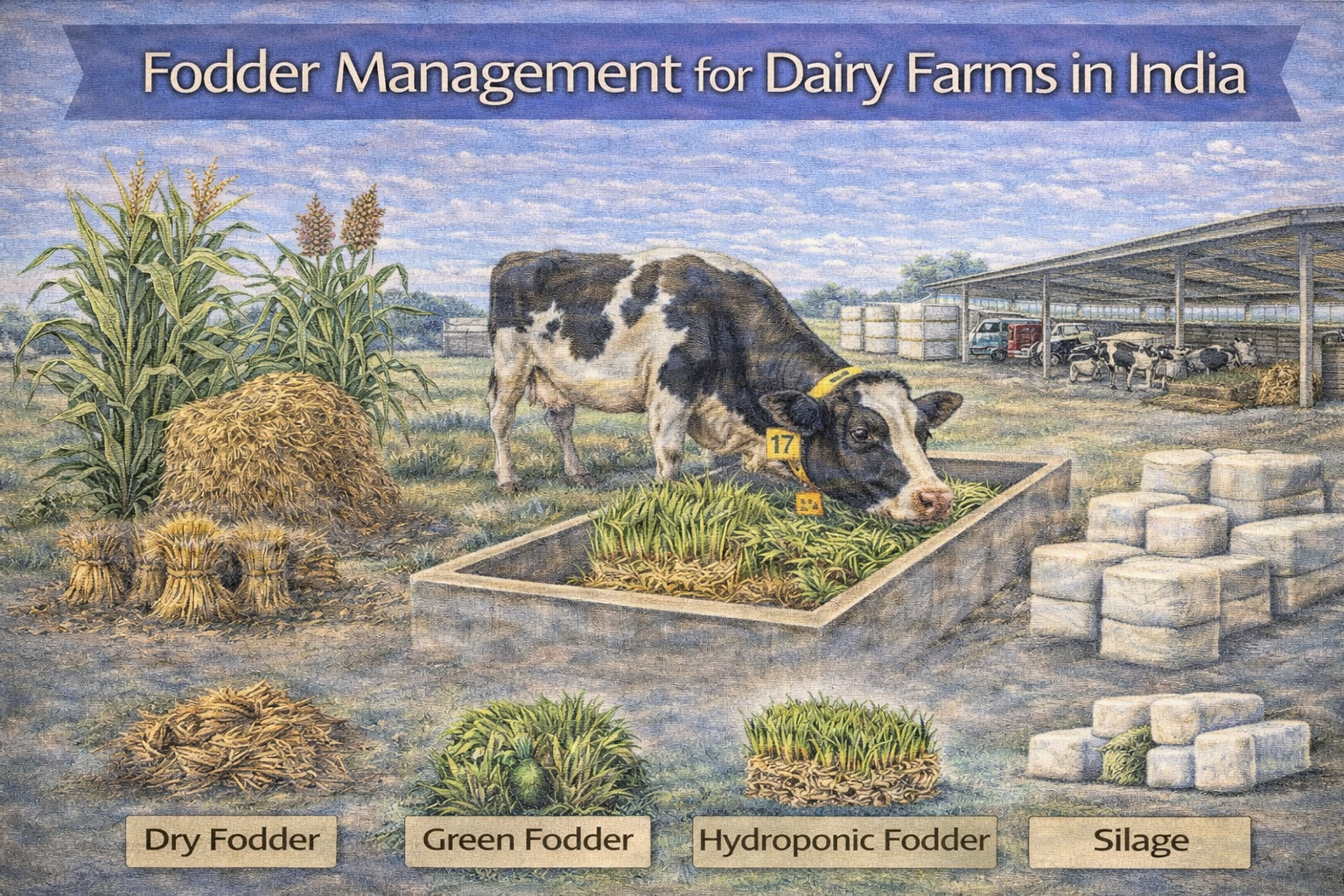
1. Role of Fodder in Dairy Nutrition Systems
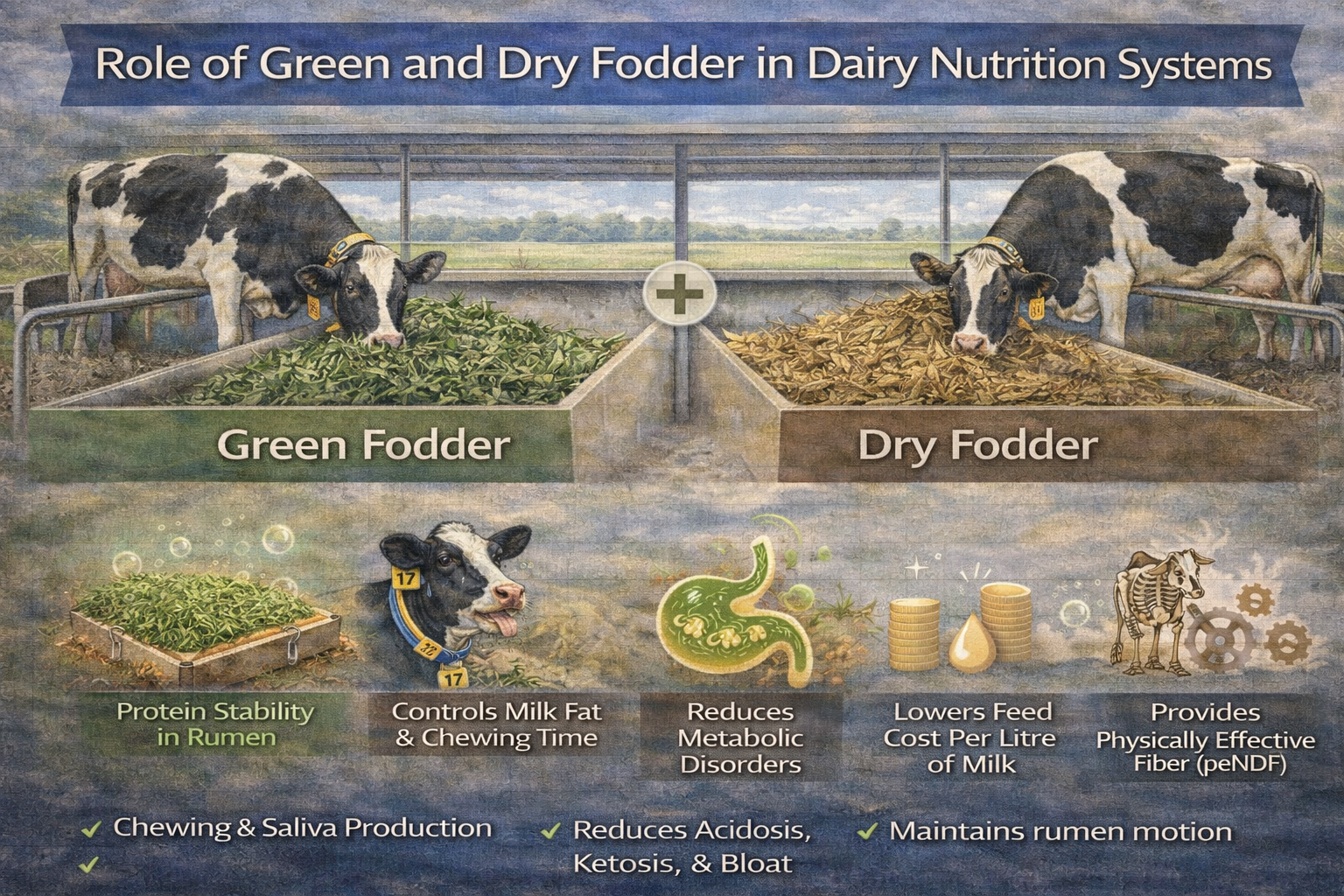
In Indian dairy systems, fodder is not a supplementary feed but the primary biological driver of rumen function, feed intake, milk fat synthesis, and animal longevity. Unlike concentrate feeds, fodder governs chewing behavior, saliva production, rumen pH stability, and microbial protein synthesis.
Poor fodder quality or inconsistency leads to subclinical acidosis, milk fat depression, reproductive failure, and increased dependence on concentrates—raising costs and disease risk.
Why fodder dominates dairy biology
● Provides physically effective fiber (peNDF)
● Maintains rumen motility and microbial balance
● Controls milk fat and chewing time
● Reduces metabolic disorders
● Lowers feed cost per litre of milk
2. Green Fodder Systems in India (Seasonal & Perennial)
Green fodder availability in India is highly seasonal and region-specific. Successful dairy farms design fodder calendars aligned with monsoon, irrigation availability, and cropping patterns.
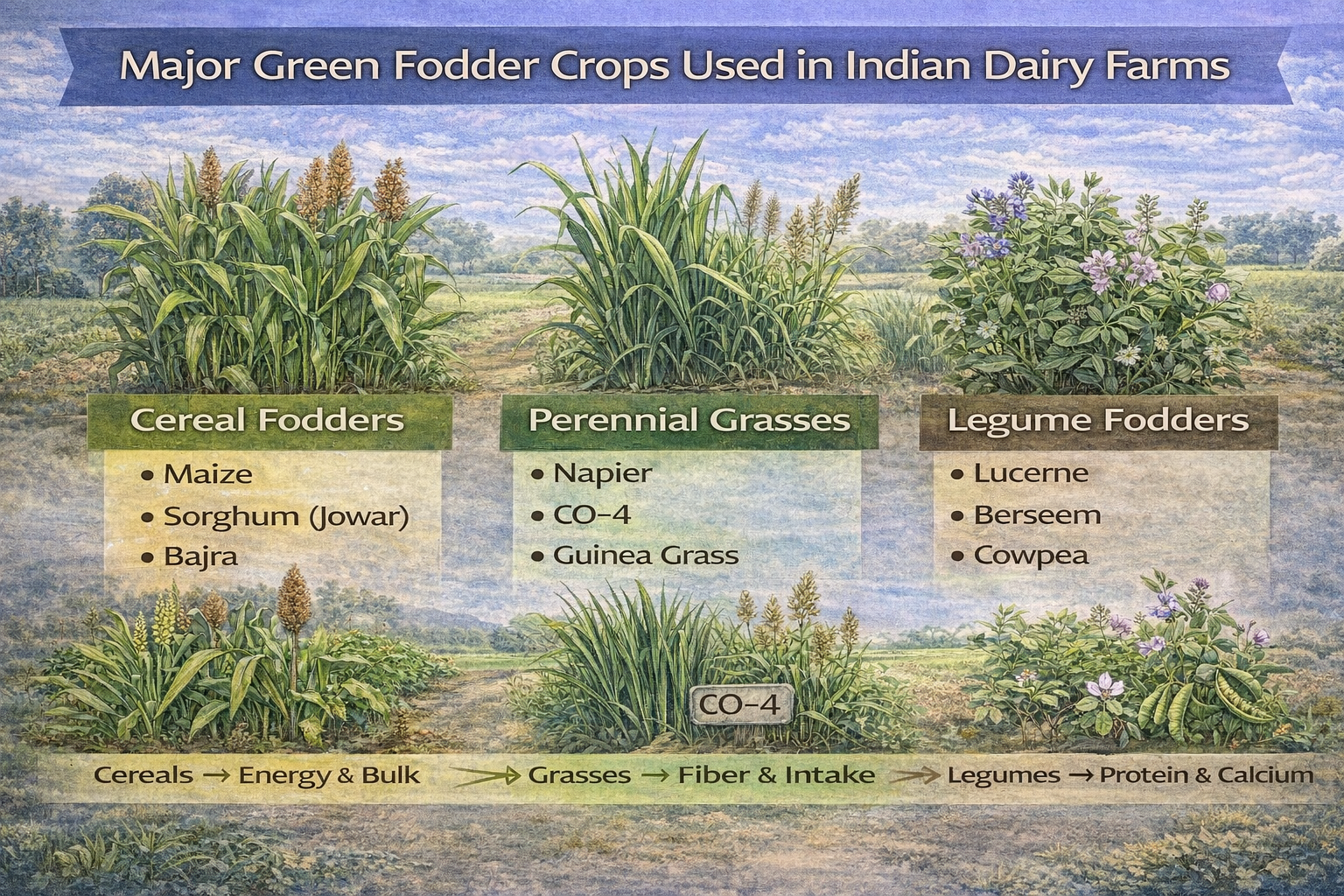
Green fodders are broadly classified into cereals, grasses, and legumes—each serving distinct nutritional roles.
Major green fodder categories
● Cereal fodders: maize, sorghum, bajra
● Perennial grasses: Napier, CO-4, Guinea grass
● Legume fodders: lucerne, berseem, cowpea
Nutritional roles
● Cereals → energy & bulk
● Grasses → fiber & intake
● Legumes → protein & calcium
3. Popular Green Fodder Crops (India-Specific Details)
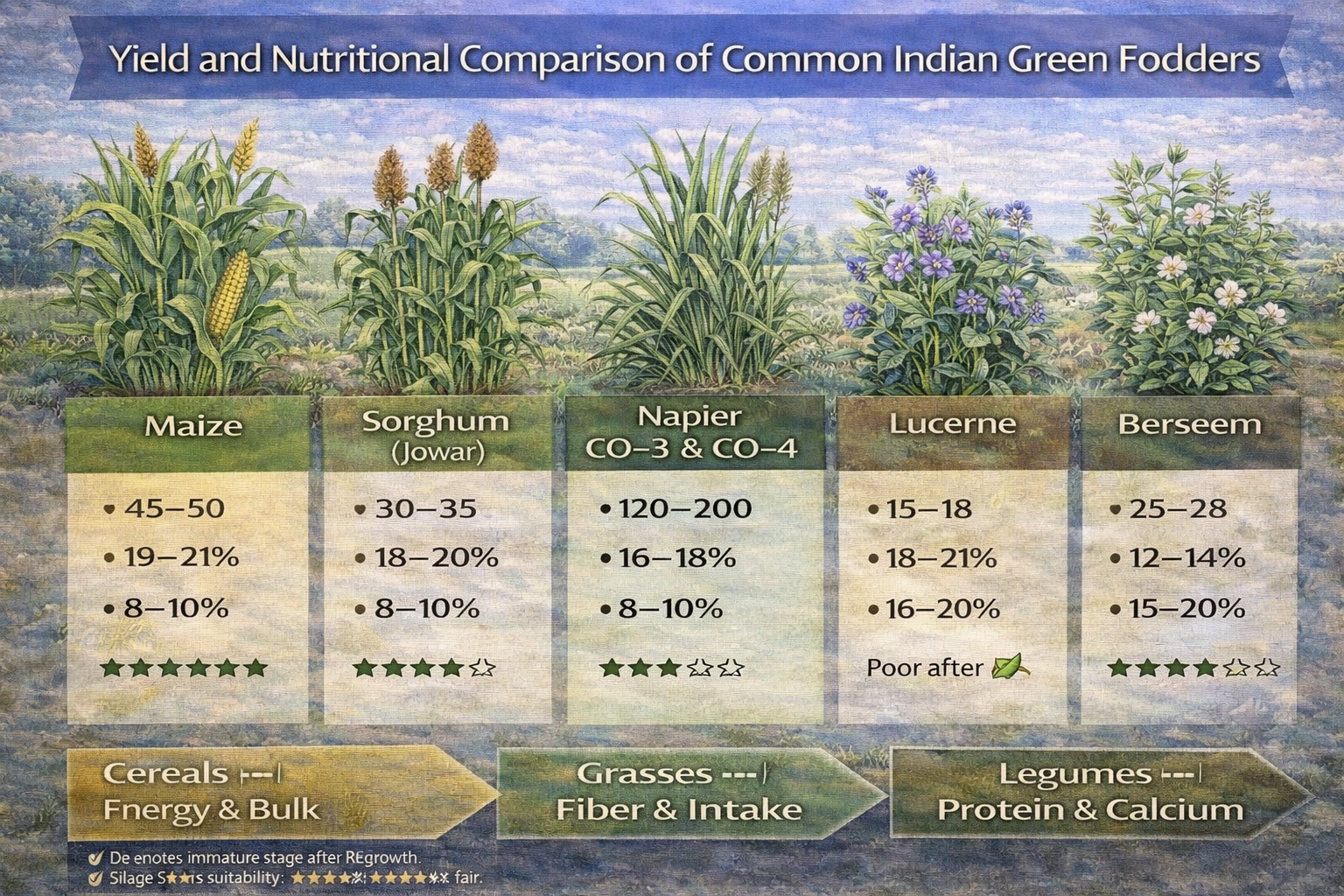
Each fodder crop differs in yield potential, nutrient density, water requirement, and suitability for silage or direct feeding.
Common Indian green fodders
● Maize fodder: high yield, excellent silage crop
● Sorghum (jowar): drought-tolerant, multi-cut
● Napier hybrids (CO-3, CO-4): perennial, high biomass
● Lucerne: protein-rich, ideal for lactating cows
● Berseem: winter legume, highly palatable
Practical considerations
● Stage of harvest affects nutritive value
● Young fodder → higher protein, lower fiber
● Over-mature fodder → poor digestibility
4. Dry Fodder Systems: Backbone of Indian Dairying
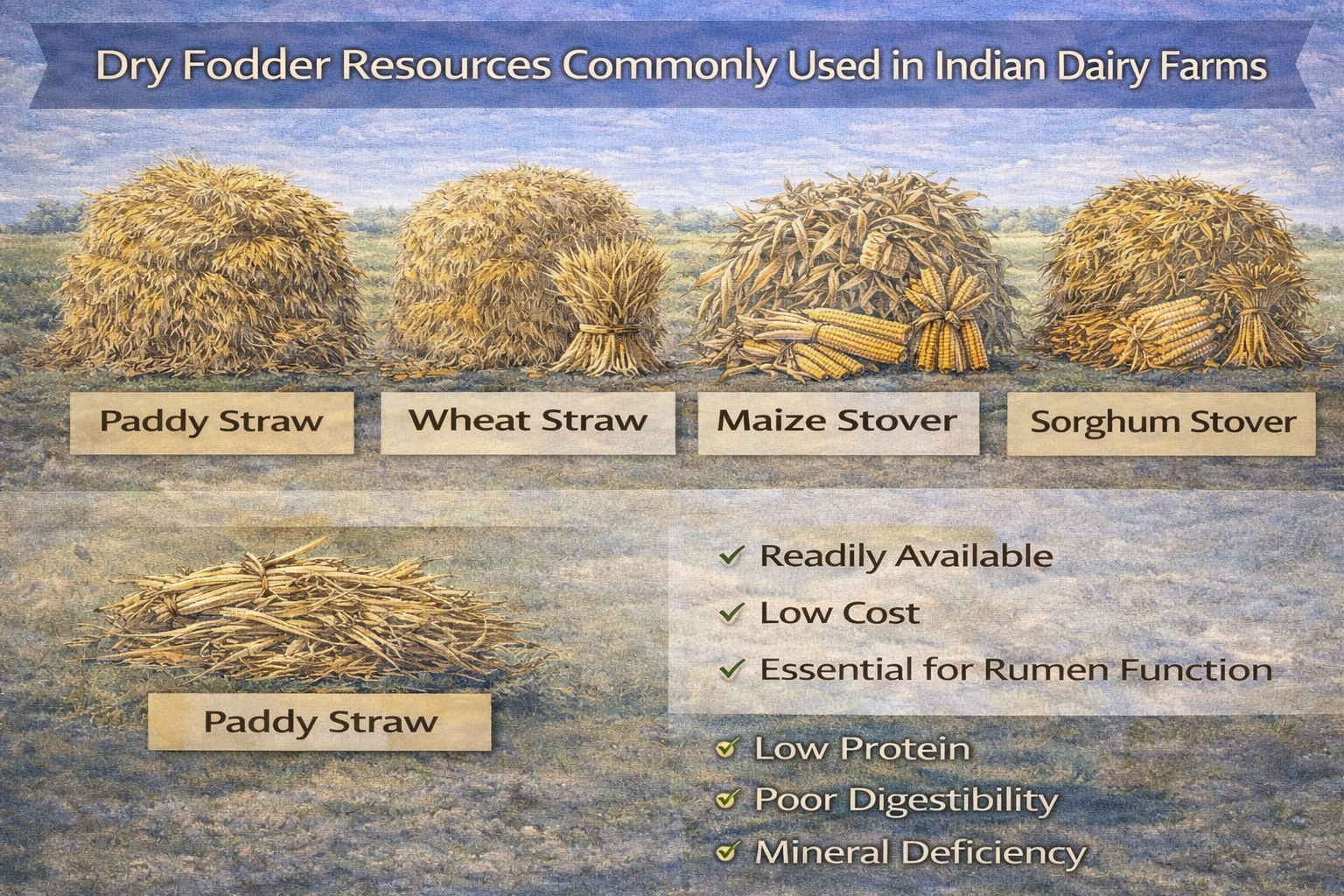
Dry fodder forms the largest roughage source in Indian dairy farms, especially during dry seasons. Though nutritionally inferior to green fodder, dry fodders are indispensable for maintaining rumen fill and chewing activity.
Major dry fodder sources
● Paddy straw
● Wheat straw
● Maize stover
● Sorghum stover
Limitations
● Low protein
● Poor digestibility
● Mineral deficiency
Why dry fodder still matters
● Readily available
● Low cost
● Essential for rumen function
5. Improving Dry Fodder Utilization
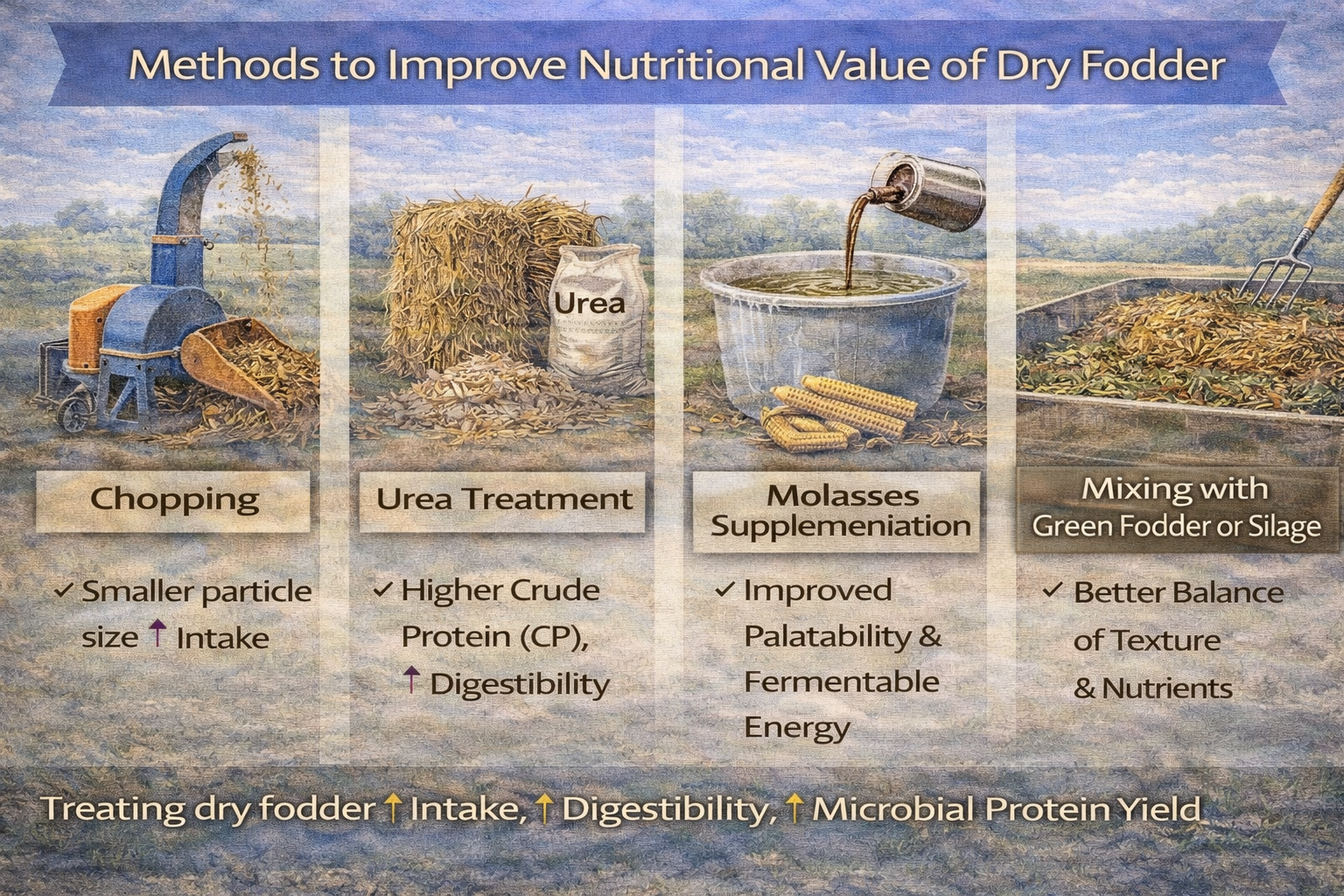
Modern dairies improve dry fodder value through physical, chemical, and biological treatments rather than abandoning it.
Dry fodder improvement methods
● Chopping and grinding
● Urea treatment
● Molasses supplementation
● Mixing with green fodder or silage
These methods increase intake, digestibility, and microbial protein yield.
6. Hydroponic Green Fodder: Science vs Reality
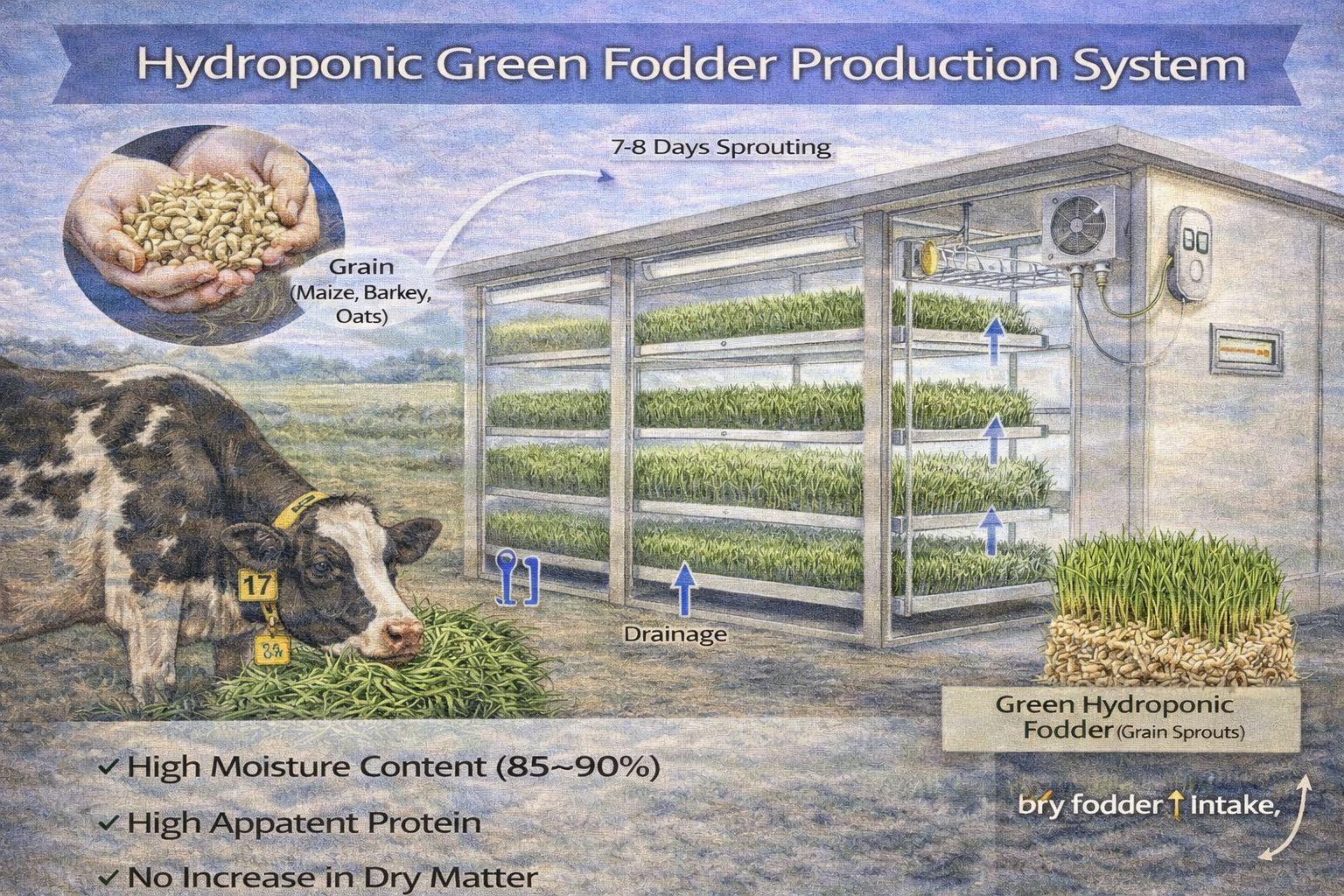
Hydroponic fodder involves growing cereal grains (maize, barley, oats) into green sprouts within 7–10 days under controlled conditions, without soil.
While often promoted aggressively, hydroponic fodder must be evaluated biologically and economically, not emotionally.
Biological reality
● No increase in dry matter
● Apparent protein increase is concentration effect
● High moisture content (85–90%)
Where hydroponic fodder helps
● Urban dairies
● Land-scarce regions
● Fodder emergency situations
Where it fails
● Large herds
● Low-cost milk systems
● When used as sole roughage
7. Integrating Hydroponic Fodder into Rations
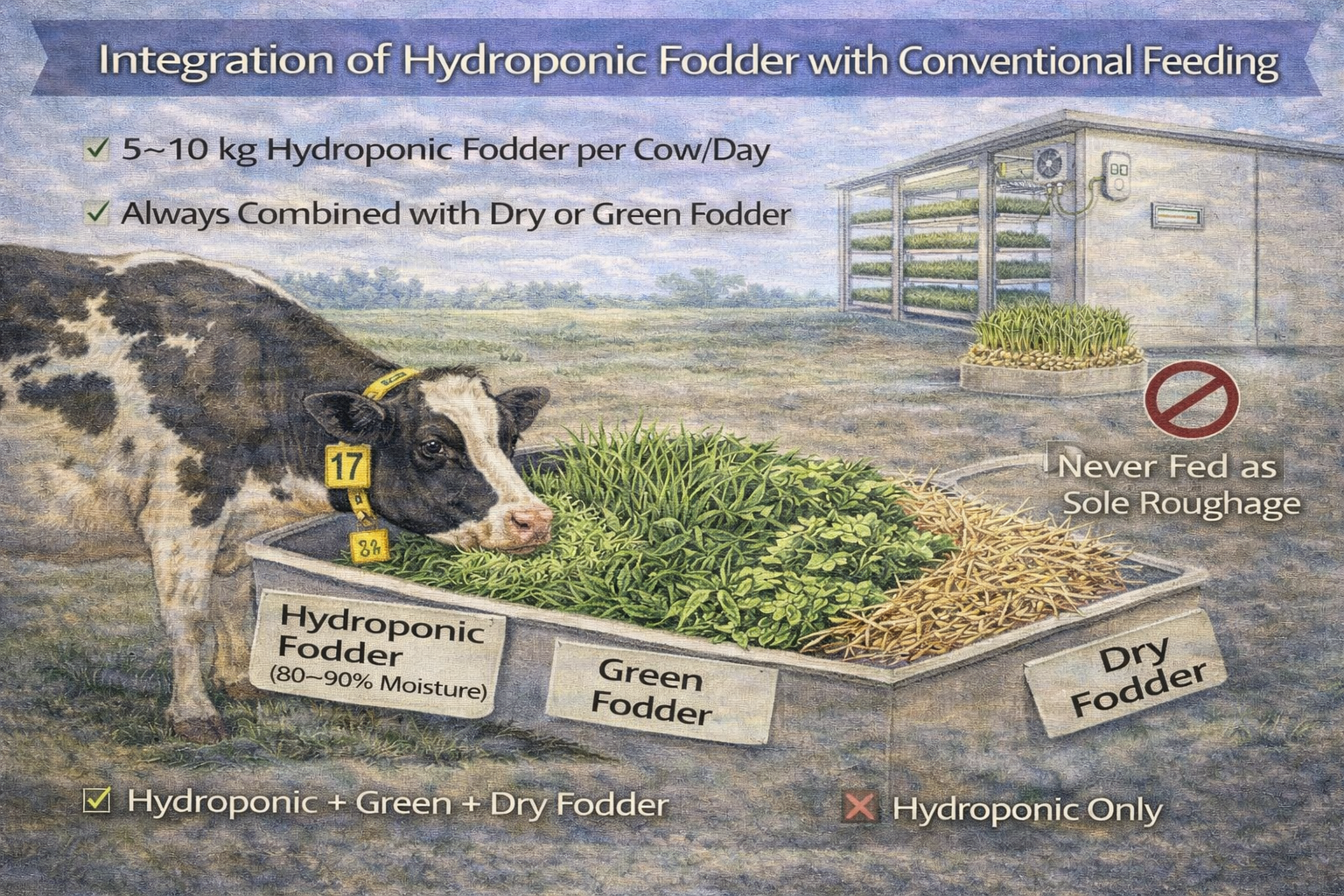
Hydroponic fodder should be treated as a supplement, not a replacement for conventional fodder.
Recommended use
● 5–10 kg fresh hydroponic fodder per cow/day
● Always combined with dry or green fodder
● Never fed as sole roughage
8. Fodder Storage: Smallholder & Village-Level Systems
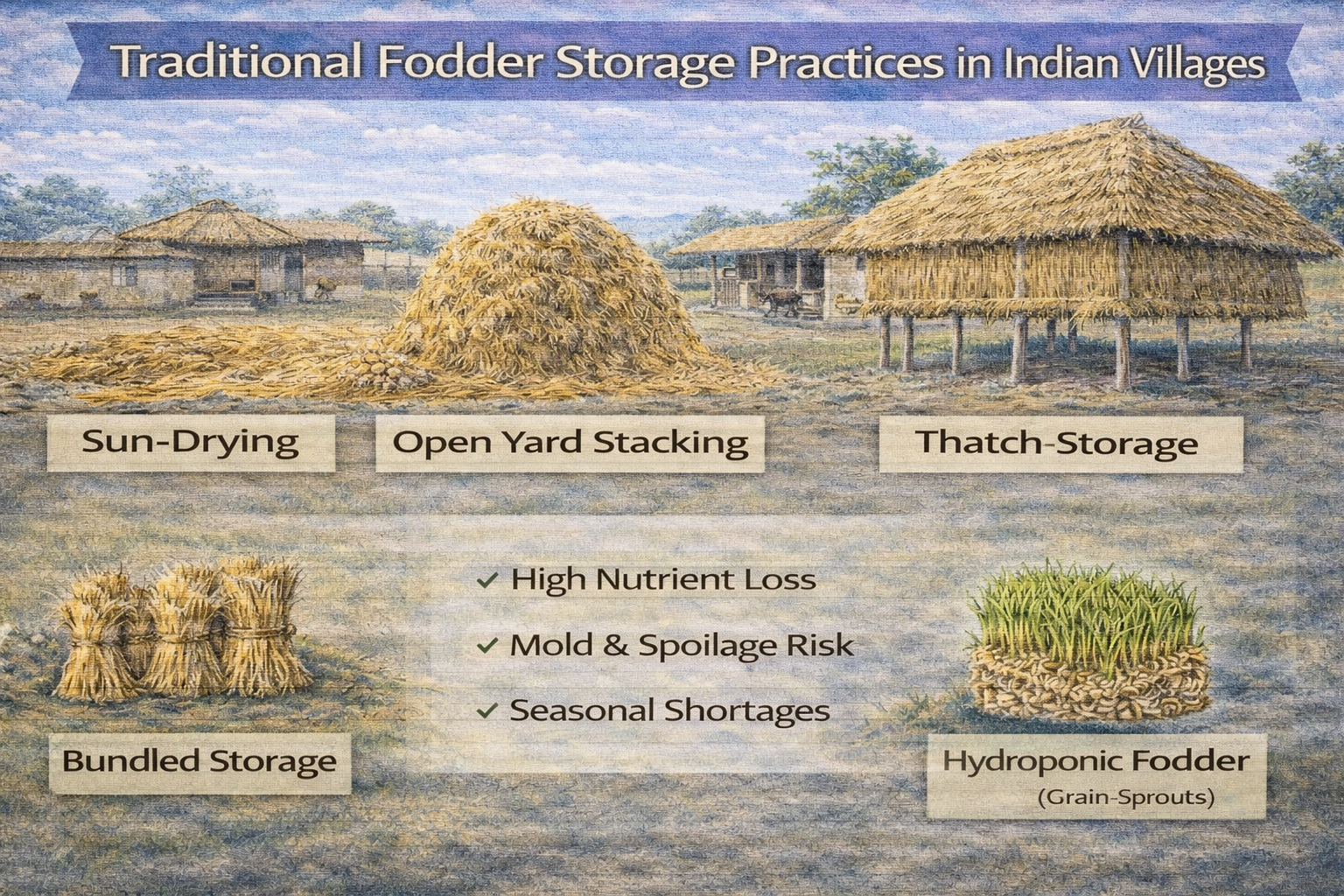
Traditional Indian farms rely on simple storage methods that prioritize availability over nutrient preservation.
Common village practices
● Sun-drying fodder
● Stacking straw bundles
● Thatch or open-yard storage
Limitations
● High nutrient loss
● Mold and spoilage risk
● Seasonal shortages
9. Semi-Commercial & Modern Fodder Storage Systems
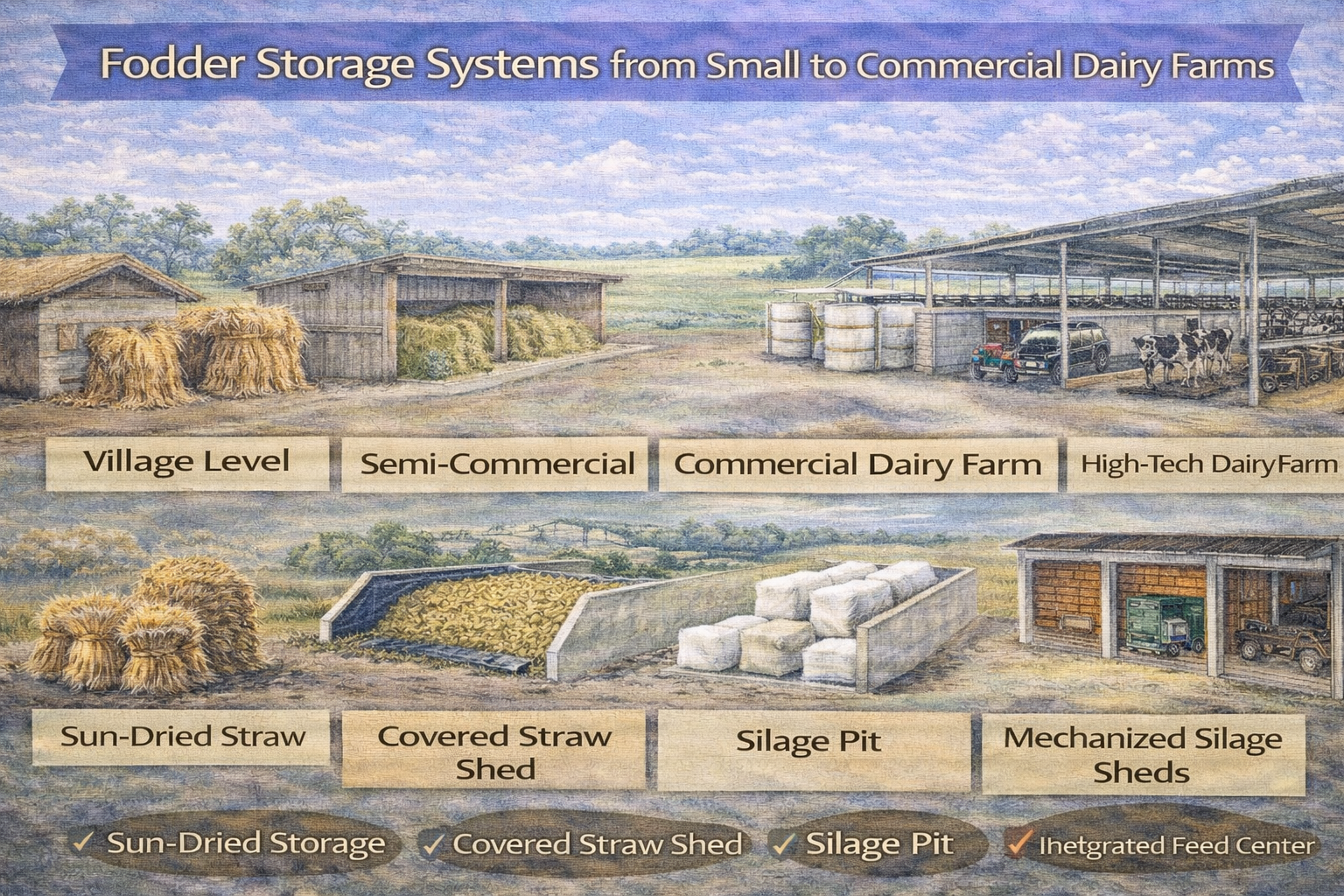
As farm scale increases, fodder storage shifts toward preservation and consistency.
Semi-commercial methods
● Covered straw sheds
● Chaffed fodder storage
● Silage pits
Commercial & high-tech systems
● Bunker silos
● Bale silage
● Mechanized fodder sheds
● Integrated feed centers
10. Fodder Planning for Year-Round Supply
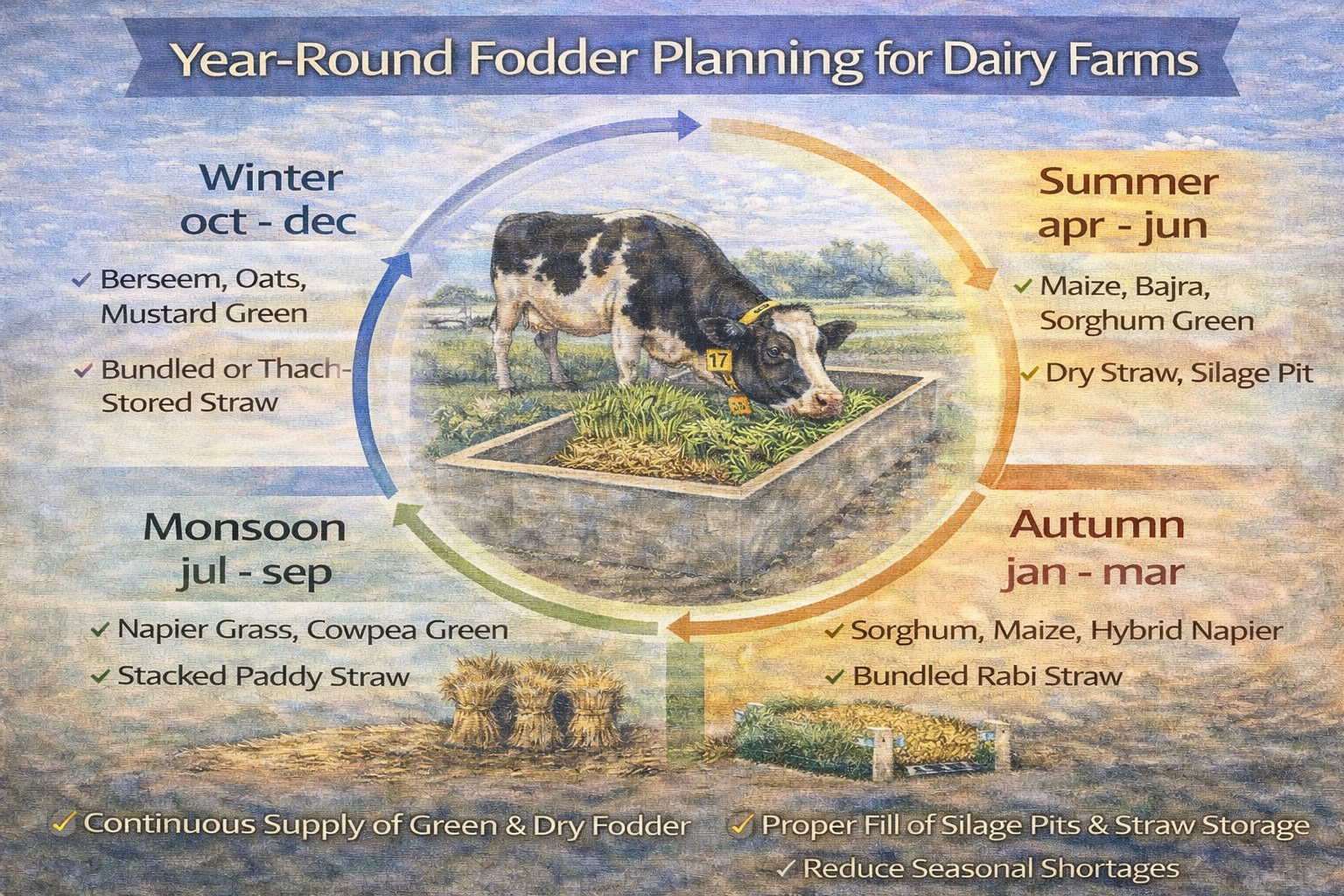
Successful dairies plan fodder 12 months ahead, not season to season.
Core planning principles
● Crop diversification
● Conserved fodder buffers
● Land-to-cow ratio planning
● Integration with slurry & manure
Conclusion: Fodder Is Strategy, Not Just Feed
Fodder systems determine whether dairy nutrition is resilient or fragile. Farms that invest in planned fodder production, storage, and integration reduce feed costs, stabilize milk yield, and protect animal health. In Indian dairying, fodder is not optional—it is the foundation of sustainable milk production.