Introduction
Cherry tomatoes (Solanum lycopersicum var. cerasiforme) are ideal for hydroponic production due to their compact growth, high market value, and rapid harvest cycles. Controlled-environment production reduces soil-borne disease, improves fruit quality, and enables year-round supply. This article provides a pragmatic, research-informed protocol for small-to-medium hydroponic farms.
System selection: NFT vs substrate systems
Two common systems are recommended:
1. Nutrient Film Technique (NFT)
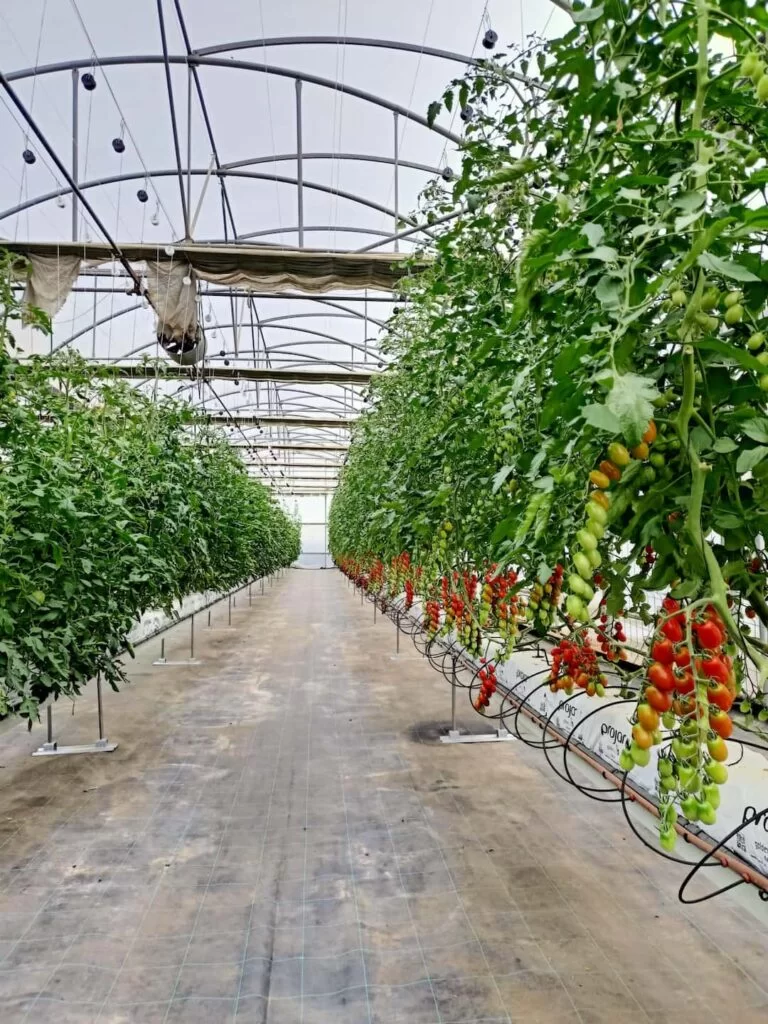
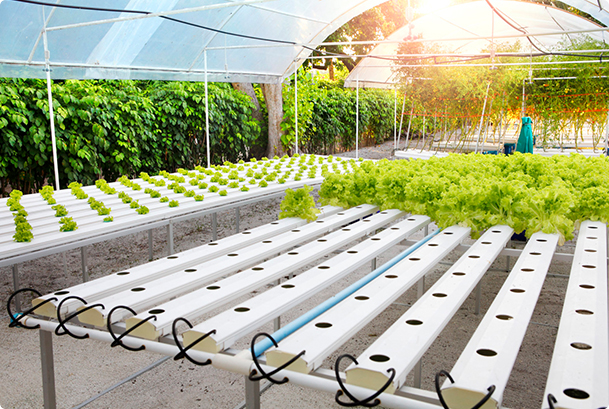
NFT uses continuous thin film flow of nutrient solution along a sloped channel. It gives excellent root oxygenation and minimal substrate cost, but is sensitive to pump failures and root clogging. Use NFT for trained indeterminate cherry varieties in well-managed operations.
2. Substrate (coco/perlite) with drip or ebb-and-flow
A substrate system (coco fiber mixed with perlite 70:30) provides buffering capacity and reduces risk from pump interruptions. For beginners or for farms where uninterrupted power is an issue, substrate-based drip systems are more forgiving.
Varieties and planting material
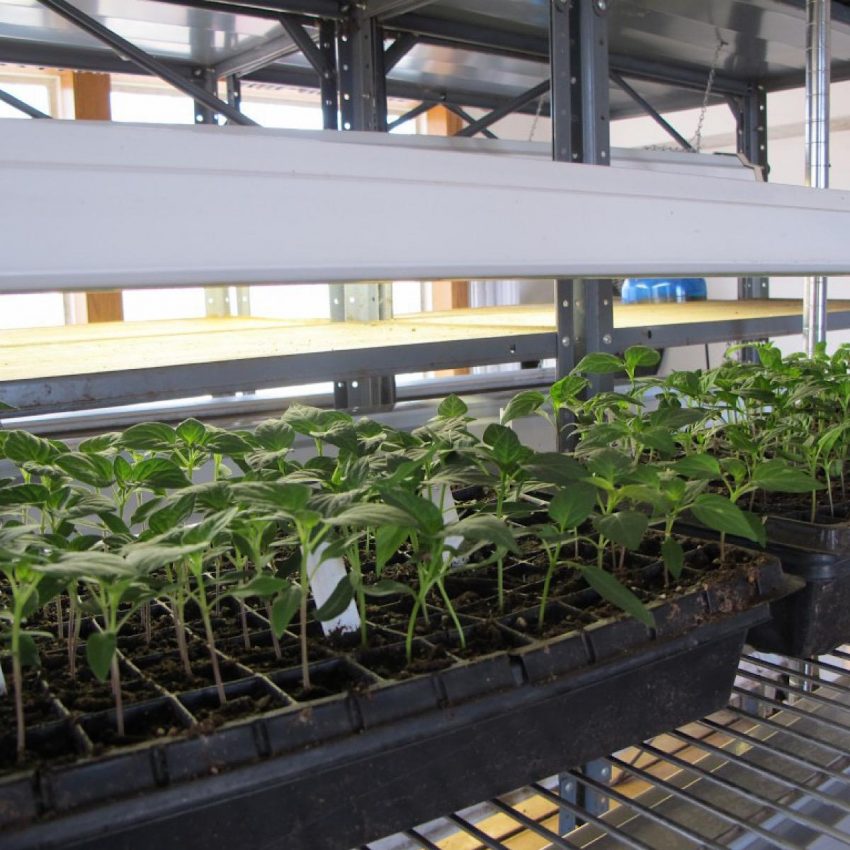
Select high-yielding cherry varieties suited to protected cultivation (choose local, heat-tolerant hybrids if available). Use certified, disease-free seedlings raised in plug trays (cell size 128–288 cells) and transplant at the 4–6 true-leaf stage (12–16 cm seedling height).
Planting density and trellising
● Plant spacing (NFT): 20–25 cm between plants on the row, 60–90 cm row spacing for access.
● Plant spacing (substrate/drip): 30–40 cm plant spacing, 1.0–1.2 m bed spacing.
● Train plants to a single or double stem depending on desired yield vs canopy size. Use vertical trellis strings and adjustable clips. Maintain canopy height control by topping at 2.2–2.4 m for ease of management.
Environmental controls (temperature, RH, light)
● Temperature: Day 22–28 °C; Night 16–20 °C. Avoid sustained >30 °C during flowering.
● Relative humidity (RH): 60–75% (prevent >85% to reduce fungal disease).
● Light: 14–18 h photoperiod for vegetative/fruiting cycles; supplemental LEDs (if used) 150–250 µmol·m⁻²·s⁻¹ PPFD for fruiting support, higher during winter.
● CO₂: Optional enrichment to 600–900 ppm can increase yield when light is not limiting.
Nutrient management (recipe & targets)
Maintain electrical conductivity (EC) and pH within critical ranges that change during crop phases:
● Seedling/rooting: EC 0.8–1.2 mS/cm; pH 5.8–6.2
● Vegetative growth: EC 1.5–2.2 mS/cm; pH 5.8–6.2
● Flowering/fruiting: EC 2.0–3.5 mS/cm; pH 5.8–6.2
Example macronutrient concentrations (approximate ionic recipe for fruiting phase):
● NO₃⁻: 150–250 mg·L⁻¹
● NH₄⁺: <20 mg·L⁻¹ (keep low)
● PO₄³⁻: 30–60 mg·L⁻¹ as P
● K⁺: 240–400 mg·L⁻¹ as K
● Ca²⁺: 120–200 mg·L⁻¹ as Ca
● Mg²⁺: 30–60 mg·L⁻¹ as Mg
● SO₄²⁻ / micronutrients: supplied according to standard hydroponic mixes (Fe, Mn, Zn, B, Cu, Mo)
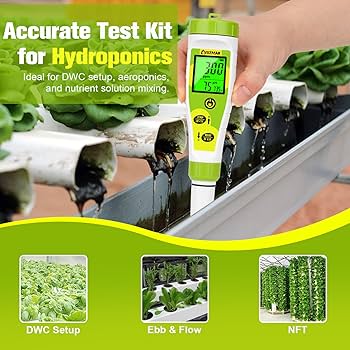
Use a commercial hydroponic nutrient concentrate and adjust EC/pH with potassium nitrate/calcium nitrate, monoammonium phosphate, magnesium sulfate, and trace elements as needed. Test and replace nutritive solution on a schedule: top up daily, monitor EC and pH twice daily, and perform a full nutrient solution replacement every 7–14 days depending on system and crop uptake.
Irrigation scheduling
● NFT: continuous or pulsed flow with return; aim for 24/7 thin film and ensure pump redundancy.
● Drip/substrate: 4–8 light irrigations per day depending on climate and substrate water-holding capacity. Adjust duration to maintain moderate substrate moisture (not saturated).
Pollination
Cherry tomatoes are self-pollinating, but vibration improves fruit set and uniformity. Use:
● Bumblebee hives (if crops large-scale and greenhouse sealed)
● Mechanical vibrators / electric pollinators or hand vibration in small farms
● Maintain moderate RH during anthesis to aid pollen viability (40–70% ideal).
Pruning & crop management
● Pinch suckers below first flower cluster for single-stem systems.
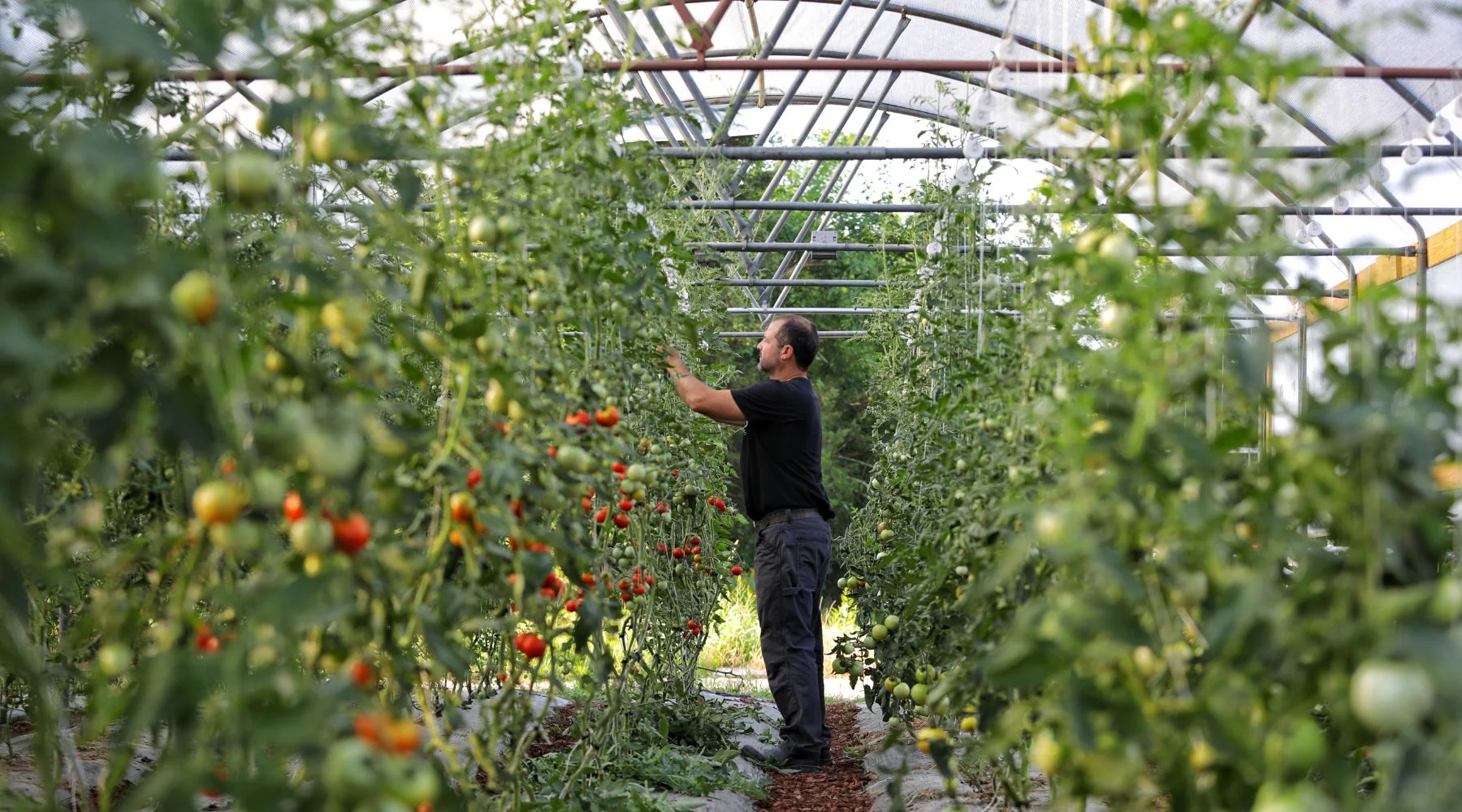
● Regularly remove diseased foliage and lower leaves to improve airflow.
● Stagger planting in waves (every 2–3 weeks) for continuous harvest.
Pest & disease management (IPM basics)
Common issues: aphids, whiteflies, thrips, powdery mildew, botrytis. Adopt IPM:
1. Preventive sanitation and screening.
2. Biological control agents (e.g., Encarsia, Amblyseius spp.).
3. Sticky traps and monitoring thresholds.
4. Selective, greenhouse-approved pesticides as last resort.
5. Maintain airflow, proper irrigation, and avoid high humidity pockets.
Expected yields & harvest
Under well-managed protected hydroponic conditions:
● Cherry tomato yields: 8–20 kg/m² per crop cycle (varies by cultivar, environment and management).
● Harvest begins ~60–80 days after transplant depending on variety and conditions; multiple flushes possible over 3–5 months in continuous production systems.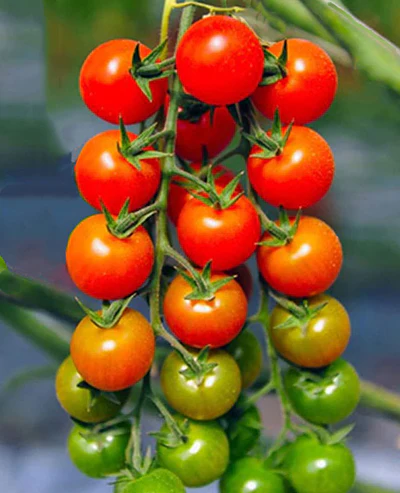
Post-harvest handling
Harvest at desired ripeness (market preference: vine-ripe or partially ripe for transport). Cool rapidly to 10–12 °C for storage, avoid chilling below 7 °C for cherry varieties to prevent flavor loss. Use gentle handling to minimize bruising.
Economics & labour
● Labour: pruning, trellising and harvesting are labor-intensive; design workflows for seated harvesting lines and efficient trellis clips to reduce time.
● Input costs: seedling production, nutrient solutions, energy (pumps + lights + climate control), and packaging.
● Revenue: cherry tomatoes command higher per-kg prices; break-even depends on market, scale, and energy costs.
Data logging & quality control
Log EC, pH, temperature, and RH at least twice daily. Use simple spreadsheets or free IoT sensors to trend values — early detection reduces crop loss.
Checklist before you start (quick)
● Secure reliable water source and pre-filter RO or good-quality tap water
● Select system (NFT for experienced, substrate/drip for reliable farm ops)
● Source disease-free seedlings and build trellis infrastructure
● Prepare nutrient stock and measuring instruments (EC & pH meters)
● Prepare IPM program and monitoring routine
References & further reading (select, practical)
● FAO resources on protected cultivation and hydroponics (practical guides)
● Standard hydroponic nutrient texts and local university horticulture extension notes
● Peer-reviewed reviews of greenhouse tomato production and controlled-environment agriculture