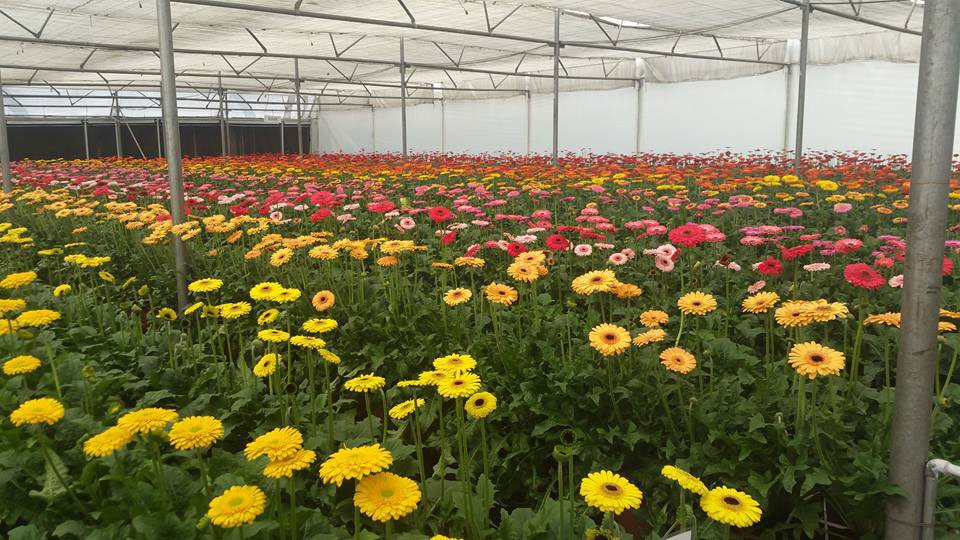
Introduction to Gerbera polyhouse cultivation
Gerbera (Gerbera jamesonii) is one of the most widely cultivated cut flowers in protected environments due to its vibrant colors, high market demand, and continuous flowering habit. Polyhouse cultivation offers the optimal balance between environmental control and cost-effectiveness for Gerbera production, making it the preferred structure for commercial growers in tropical and subtropical regions.
Why grow Gerbera under polyhouse
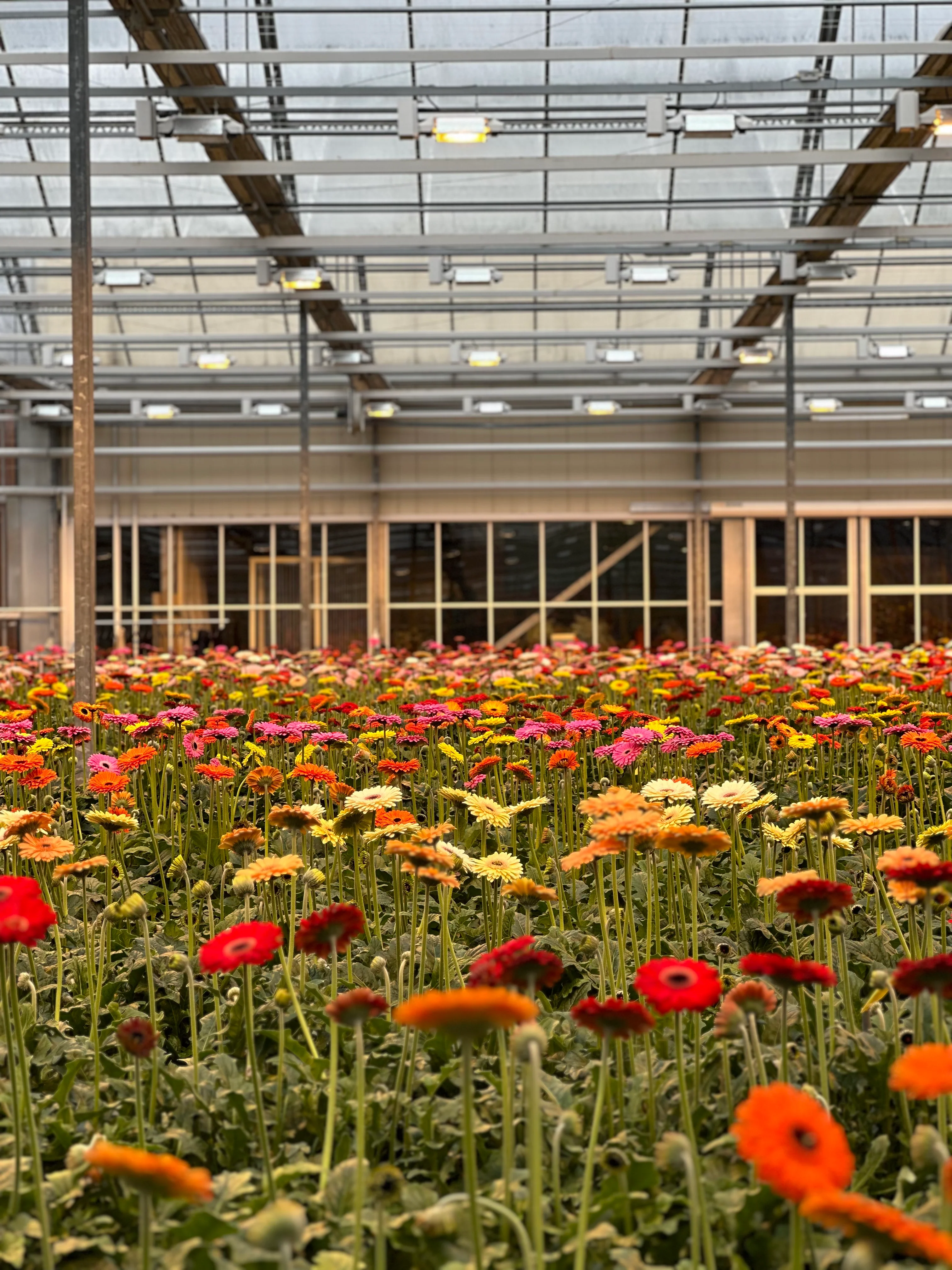
Polyhouses provide protection from excessive rainfall, wind, and temperature extremes while allowing sufficient light diffusion and ventilation. Gerbera responds well to these conditions, producing uniform flowers with strong stems and intense color.
Key advantages of polyhouse cultivation:
• Moderate climate control at affordable cost
• Protection from rain-induced diseases
• Extended flowering period
• High flower quality suitable for domestic and export markets
Botanical and varietal characteristics

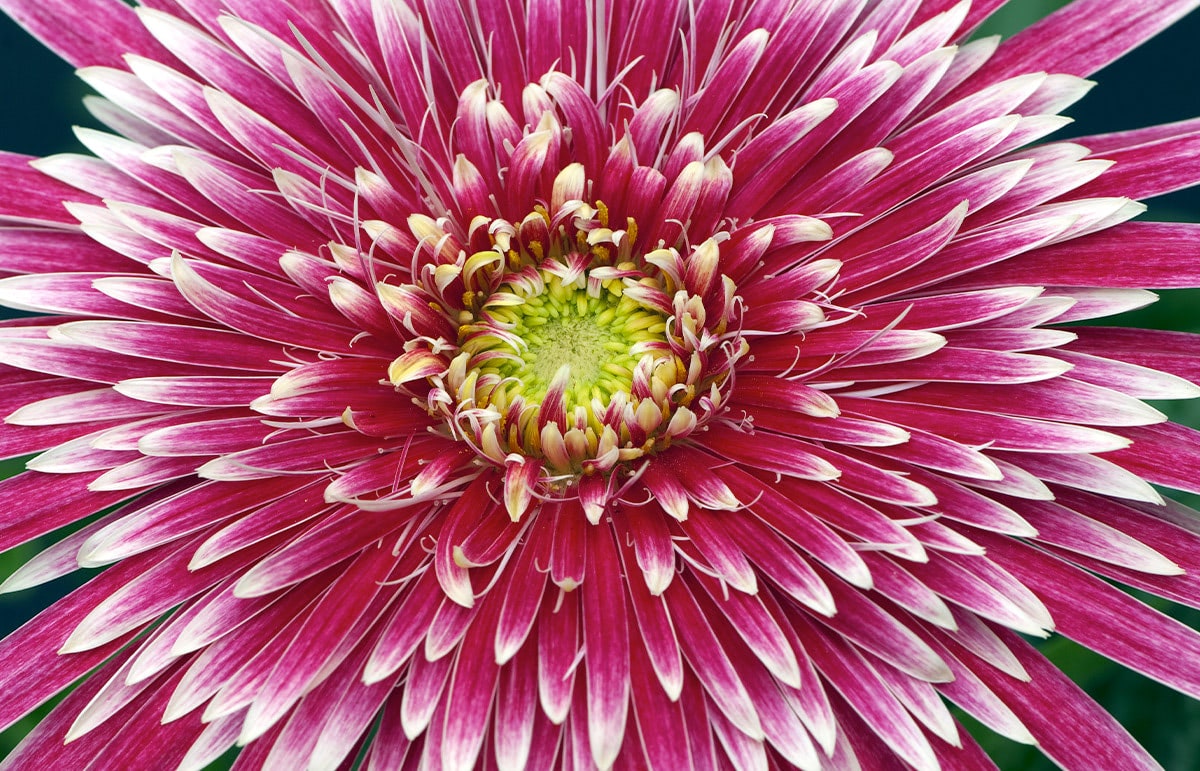
Botanical name: Gerbera jamesonii
Family: Asteraceae
Growth habit: Herbaceous perennial
Root system: Shallow, fibrous
Life cycle: Perennial
Harvested part: Flower stalk (cut flower)
Pollination: Insect-pollinated
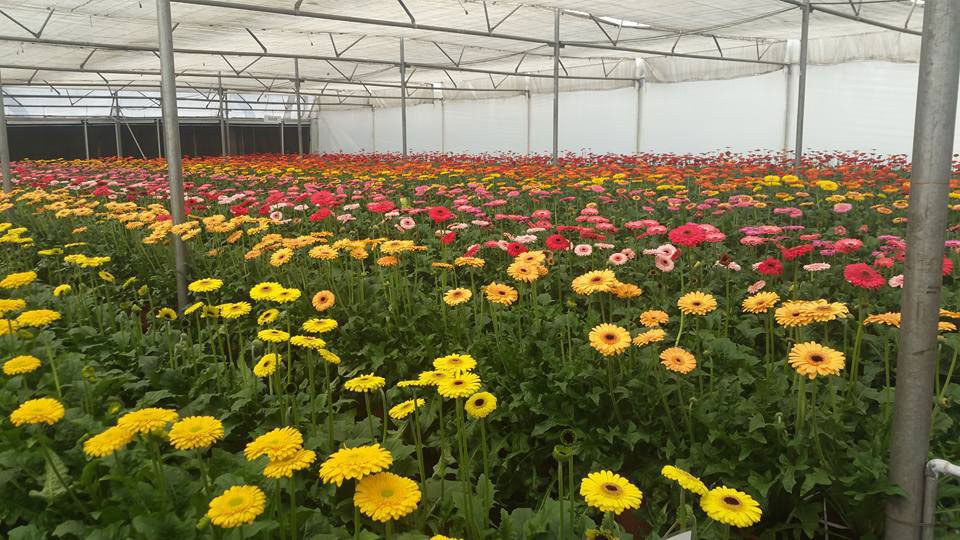
Popular polyhouse varieties include red, yellow, pink, orange, and bi-colour hybrids selected for stem strength, uniform bloom size, and disease tolerance.
Polyhouse design and planting system
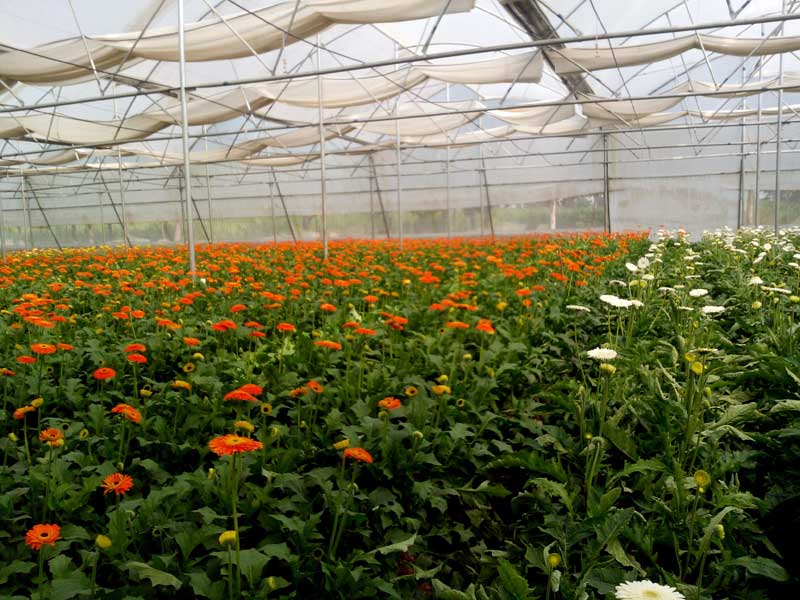
Gerbera is typically grown on raised beds inside polyhouses using soilless media such as cocopeat or cocopeat–perlite mixtures. Proper drainage is critical to prevent root rot.
Recommended planting density:
• 8–10 plants per square metre
• Raised beds with drip fertigation
• Excellent drainage and aeration
Climate and environmental requirements
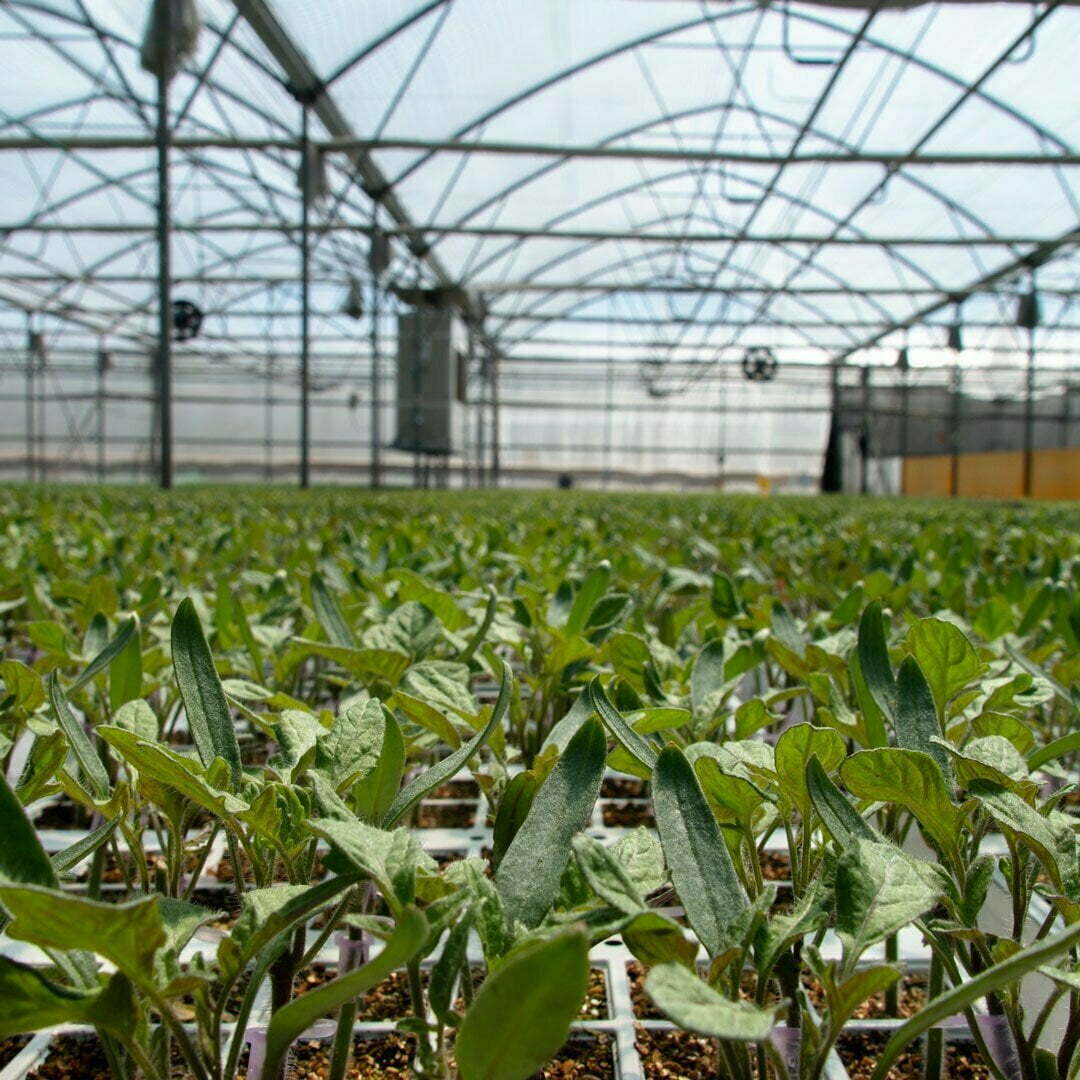
Temperature:
• Day: 20–25 °C
• Night: 14–18 °C
Relative Humidity: 60–70%
Light: Bright, diffused light
Ventilation: Continuous airflow essential
Excessive humidity or temperature fluctuations can lead to flower deformities and disease incidence. Proper ventilation and shading during peak summer are critical.
Nutrient and irrigation management
EC: 1.5–2.2 mS/cm
pH: 5.8–6.5
Key nutrients: Nitrogen, potassium, calcium, magnesium, micronutrients
Balanced fertigation promotes continuous flowering. Potassium improves flower colour and stem strength, while calcium prevents stem bending and physiological disorders.
________________________________________
Pest and disease management
Common pests include thrips, aphids, mites, and whiteflies. Diseases such as powdery mildew, Botrytis, and root rot may occur under high humidity or poor drainage. Integrated pest management (IPM), proper sanitation, and climate regulation are essential for successful Gerbera production.
________________________________________
Harvesting standards and yield potential
Gerbera flowers are harvested when the outer ray florets are fully developed and pollen visibility is minimal. Under well-managed polyhouse conditions, yields of 180–250 flowers per square metre per year are achievable, depending on variety and management practices.
________________________________________
Post-harvest handling
Harvested flowers should be immediately placed in clean water and graded based on stem length and bloom diameter. Storage at 2–4 °C maintains freshness and extends vase life. Proper hydration is essential to prevent stem bending.
________________________________________
Checklist before starting Gerbera polyhouse cultivation
• Disease-free planting material
• Well-designed polyhouse with ventilation
• Raised beds with excellent drainage
• Calibrated EC and pH meters
• Access to flower markets or cold chain
________________________________________
References and further reading
• FAO – Protected floriculture manuals
• National Horticulture Board (India) guidelines
• Peer-reviewed research on Gerbera polyhouse cultivation