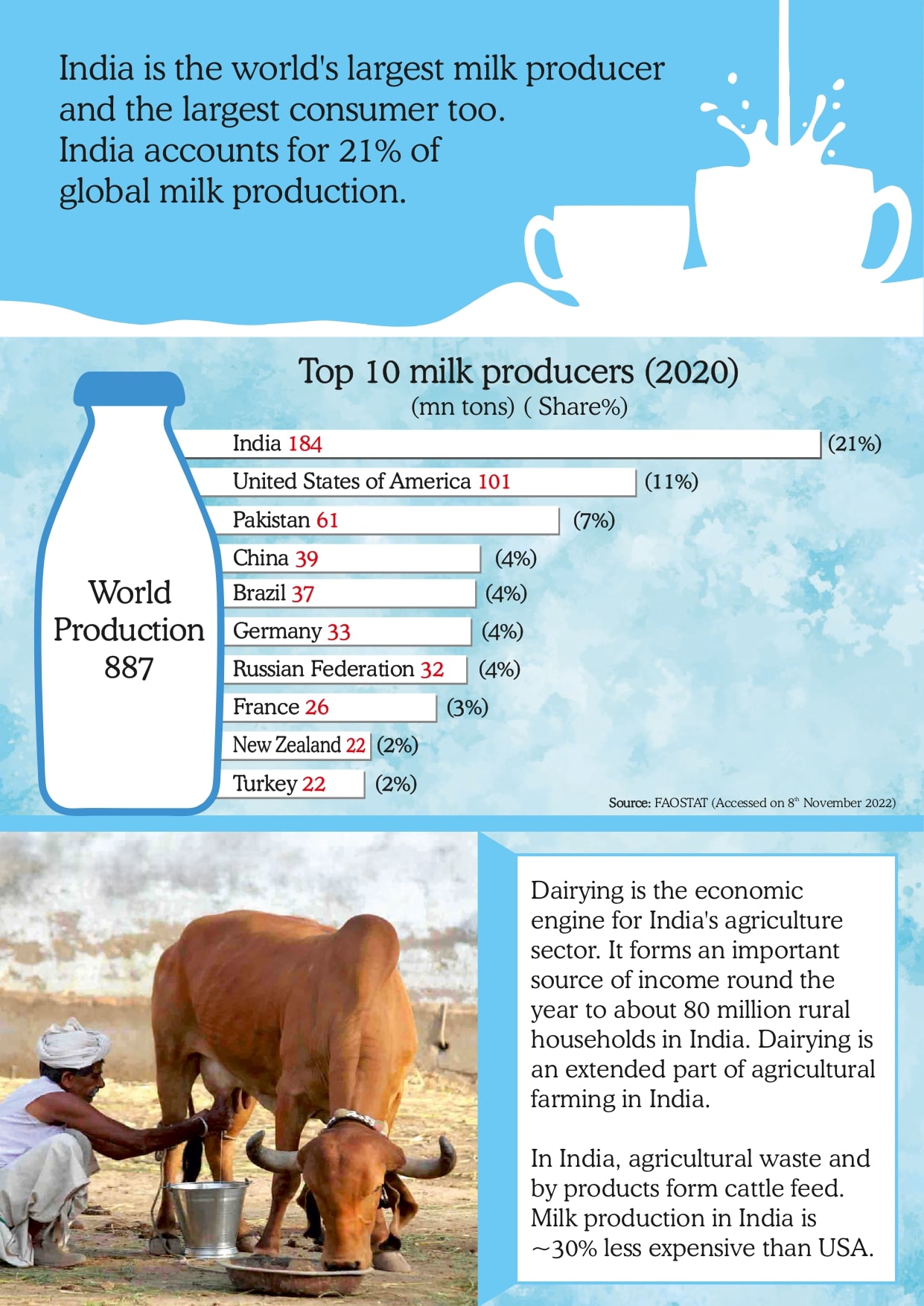
1. Understanding Dairy Economics: Why Milk Is Not the Business
Milk is the output of dairy farming, but it is not the business itself. The business lies in managing biological cycles, cost structures, and risk exposure while maintaining uninterrupted cash flow. Unlike seasonal crops, dairying operates daily, leaving no margin for prolonged inefficiency.
Dairy profitability is determined by the relationship between milk realization, feed cost, labour discipline, and health stability. Any imbalance among these variables erodes margins rapidly.
Core economic truths
● Milk price is largely non-negotiable
● Costs are partially controllable
● Biology sets production ceilings
● Cash flow matters more than annual profit
2. Cost Structure of a Dairy Farm (Universal Framework)
Regardless of herd size, dairy costs follow a similar hierarchy.
Major cost heads
● Feed and fodder (50–65%)
● Labour (10–18%)
● Veterinary & breeding (5–8%)
● Power, water, consumables (5–7%)
● Repairs, depreciation, interest (balance)
Feed cost volatility represents the single greatest economic risk in dairying.
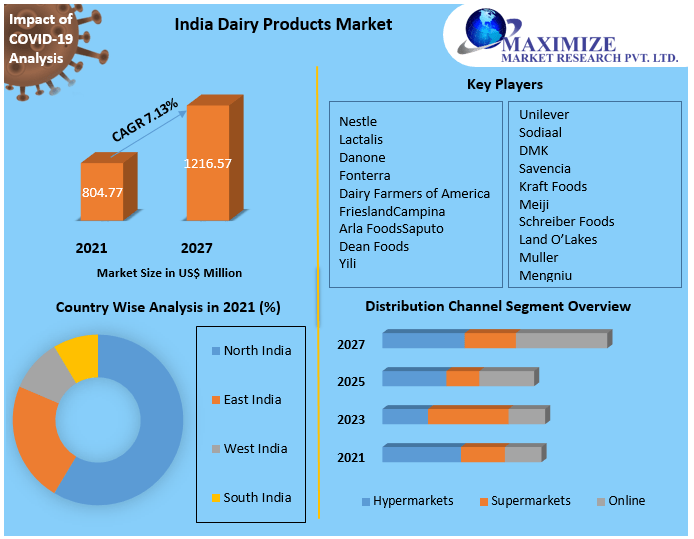
3. Economics of a 10-Animal Dairy Unit (Smallholder Model)
Production Assumptions
● Lactating animals: 10
● Average yield: 10–12 litres/day
● Daily milk output: 100–120 litres
Revenue Structure
● Average milk price: ₹38–42/litre
● Daily gross revenue: ₹3,800–5,000
Operating Costs (Daily)
● Feed & fodder: ₹2,000–2,400
● Labour (family + hired): ₹600–800
● Veterinary, breeding, misc: ₹300–400
Economic Outcome
● Daily surplus: ₹600–1,200
● Monthly surplus: ₹18,000–30,000
Risk Profile
● High dependence on family labour
● Limited disease shock absorption
● Highly sensitive to feed price rise
Strategic insight
10-animal dairies survive through labour substitution, not scale efficiency.
________________________________________
4. Economics of a 50-Animal Dairy Unit (Transition Scale)
Production Assumptions
● Lactating animals: 50
● Average yield: 12–14 litres/day
● Daily milk output: 600–700 litres
Revenue Structure
● Average milk price: ₹36–40/litre
● Daily gross revenue: ₹22,000–27,000
Operating Costs (Daily)
● Feed & fodder: ₹13,000–15,000
● Labour (3–4 workers): ₹3,000–3,500
● Veterinary, breeding, misc: ₹1,200–1,500
Economic Outcome
● Daily surplus: ₹4,000–6,000
● Monthly surplus: ₹1.0–1.5 lakh
Risk Profile
● Better disease shock tolerance
● Feed sourcing becomes critical
● Labour management becomes central
Strategic insight
50 animals is the most dangerous scale — large enough to incur costs, small enough to lack economies of scale.
________________________________________
5. Economics of a 100-Animal Dairy Unit (Commercial Threshold)
Production Assumptions
● Lactating animals: 100
● Average yield: 14–16 litres/day
● Daily milk output: 1,400–1,600 litres
Revenue Structure
● Average milk price: ₹34–38/litre
● Daily gross revenue: ₹48,000–60,000
Operating Costs (Daily)
● Feed & fodder: ₹28,000–32,000
● Labour (6–8 workers): ₹6,000–7,000
● Veterinary, breeding, misc: ₹2,500–3,000
Economic Outcome
● Daily surplus: ₹10,000–15,000
● Monthly surplus: ₹2.5–4.0 lakh
Risk Profile
● Capital-intensive
● Disease outbreaks become systemic risks
● Requires professional management
Strategic insight
100 animals is not “big farming” — it is minimum commercial discipline scale.
________________________________________
6. CAPEX Thinking: Why Overbuilding Destroys Dairies
Many dairies fail due to premature capital investment rather than poor milk production.
Common CAPEX mistakes
● Oversized sheds
● Over-automated milking systems
● Excessive loan dependence
● Infrastructure built for imagined scale
Principle
● Build for current capacity + 20%
● Expand only after cash flow stabilizes
7. Scaling Strategy: When and How to Grow
Scaling should follow biological stability first, volume second.
Correct scaling indicators
● Consistent conception rates
● Stable feed sourcing
● Predictable labour productivity
● Controlled disease incidence
Incorrect scaling indicators
● Temporary high milk price
● Subsidy availability
● Neighbour comparison
8. Risk Management in Dairy Farming
Biological Risks
● Mastitis outbreaks
● Metabolic disorders
● Reproductive failure
Economic Risks
● Feed price spikes
● Milk price suppression
● Input inflation
Operational Risks
● Labour attrition
● Power and water interruptions
● Cold chain failures
Risk mitigation principles
● Diversified fodder sources
● Preventive health programs
● Cash reserve discipline
● Gradual expansion
9. Why Most Dairy Failures Are Management Failures
Dairy farming rarely fails due to cows.
It fails due to:
● Poor records
● Emotional decisions
● Ignoring early warning signs
● Chasing scale without systems
Reality
Cows respond to biology.
Dairies fail due to human behaviour.
Conclusion: Economics Is Discipline Applied Daily
Dairy farming rewards those who respect biology, understand numbers, and scale patiently. Profitability emerges not from herd size alone, but from disciplined execution across feeding, health, labour, and financial control. Sustainable dairies are built step by step, where growth follows stability and risk is managed before it becomes visible.