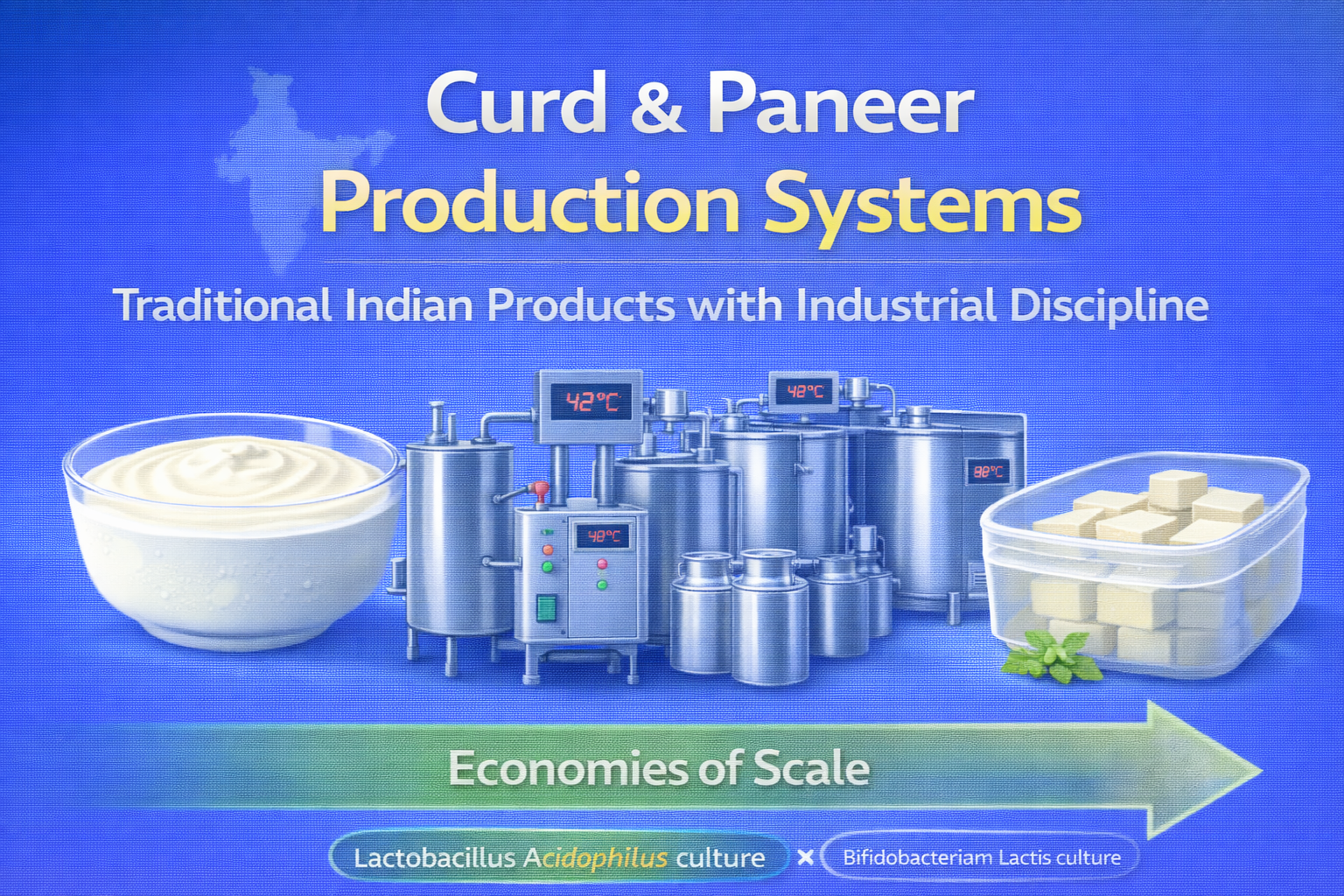
PART A — CURD (DAHI) PRODUCTION SYSTEMS
1. Curd as a Controlled Fermentation Product
Curd, or dahi, is fundamentally a lactic acid–fermented milk gel. Its quality is determined not by recipe, but by the interaction between milk composition, starter cultures, temperature control, and time. Small deviations in any variable lead to sourness, weak set, whey separation, or short shelf life.
In commercial systems, curd must be treated as a biological process under engineering control, not a household routine.
Why curd needs discipline ● Gel structure depends on casein chemistry ● Acidification rate controls texture ● Contamination accelerates spoilage ● Consistency defines market acceptance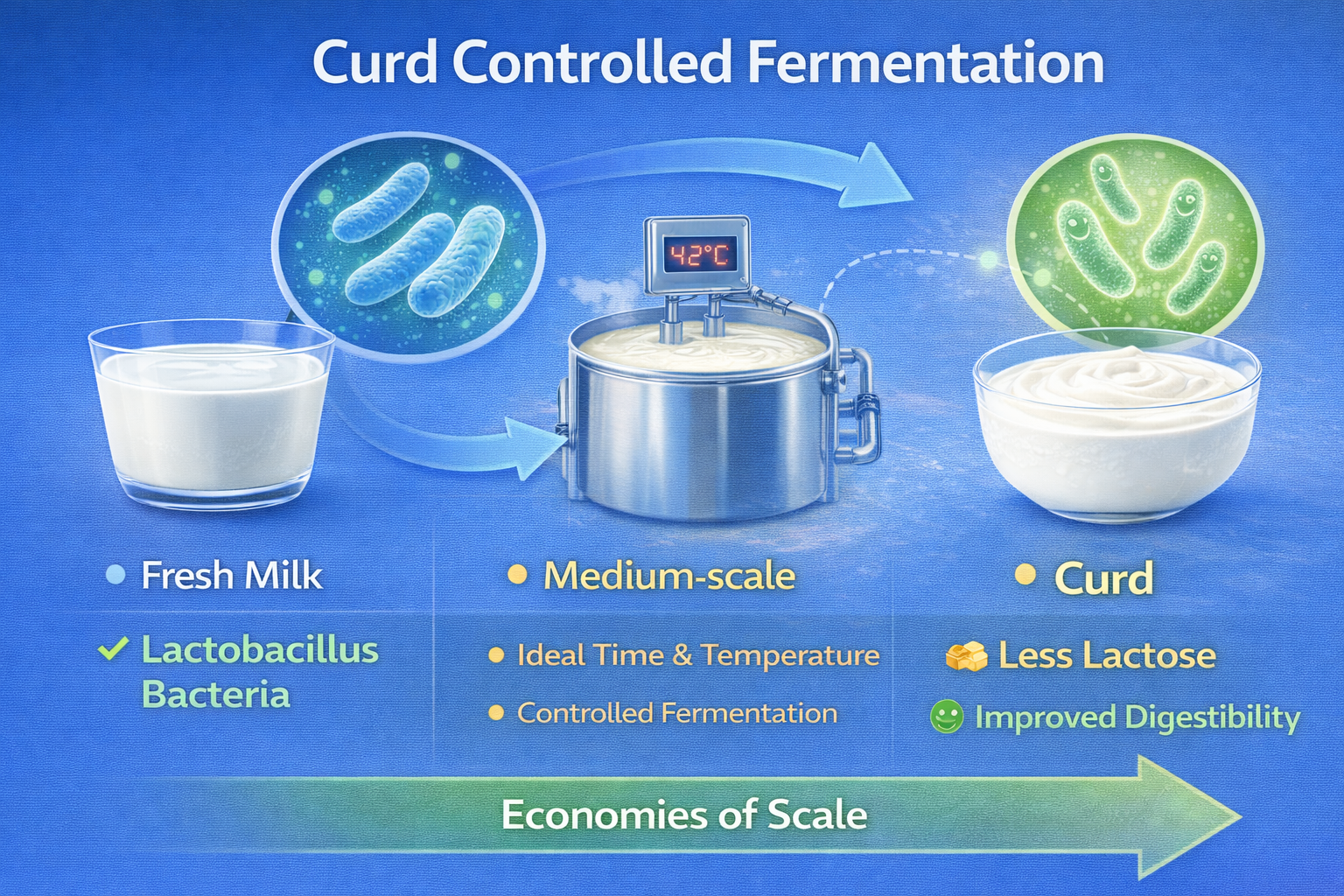
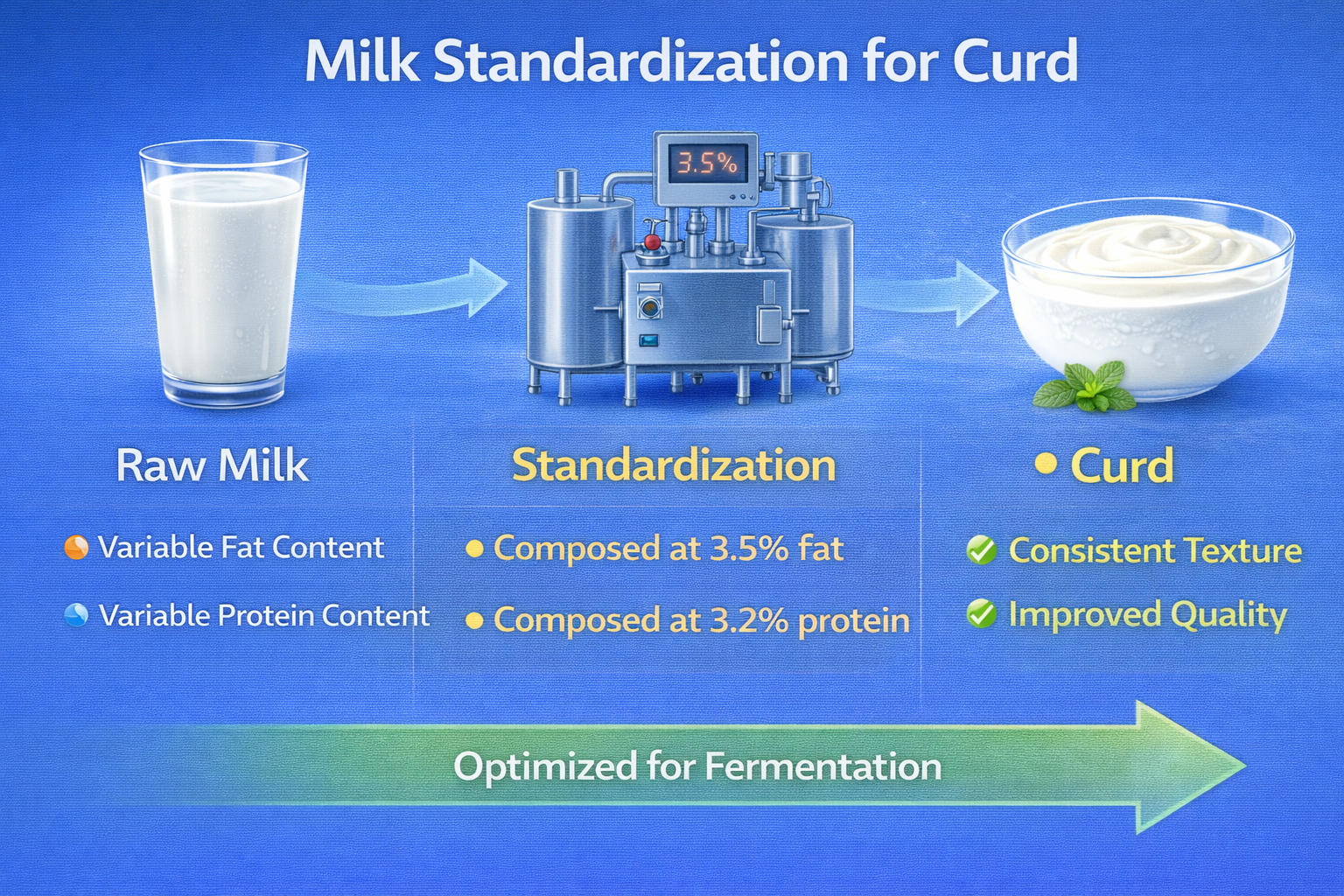
2. Milk Selection and Standardization for Curd
Milk quality sets the ceiling for curd quality. No processing intervention can compensate for poor milk chemistry or high microbial load.
Milk requirements
● Fresh milk with low bacterial count
● Adequate casein and calcium content
● Stable fat and SNF levels
Standardization objectives
● Consistent gel strength
● Uniform acidity development
● Predictable yield
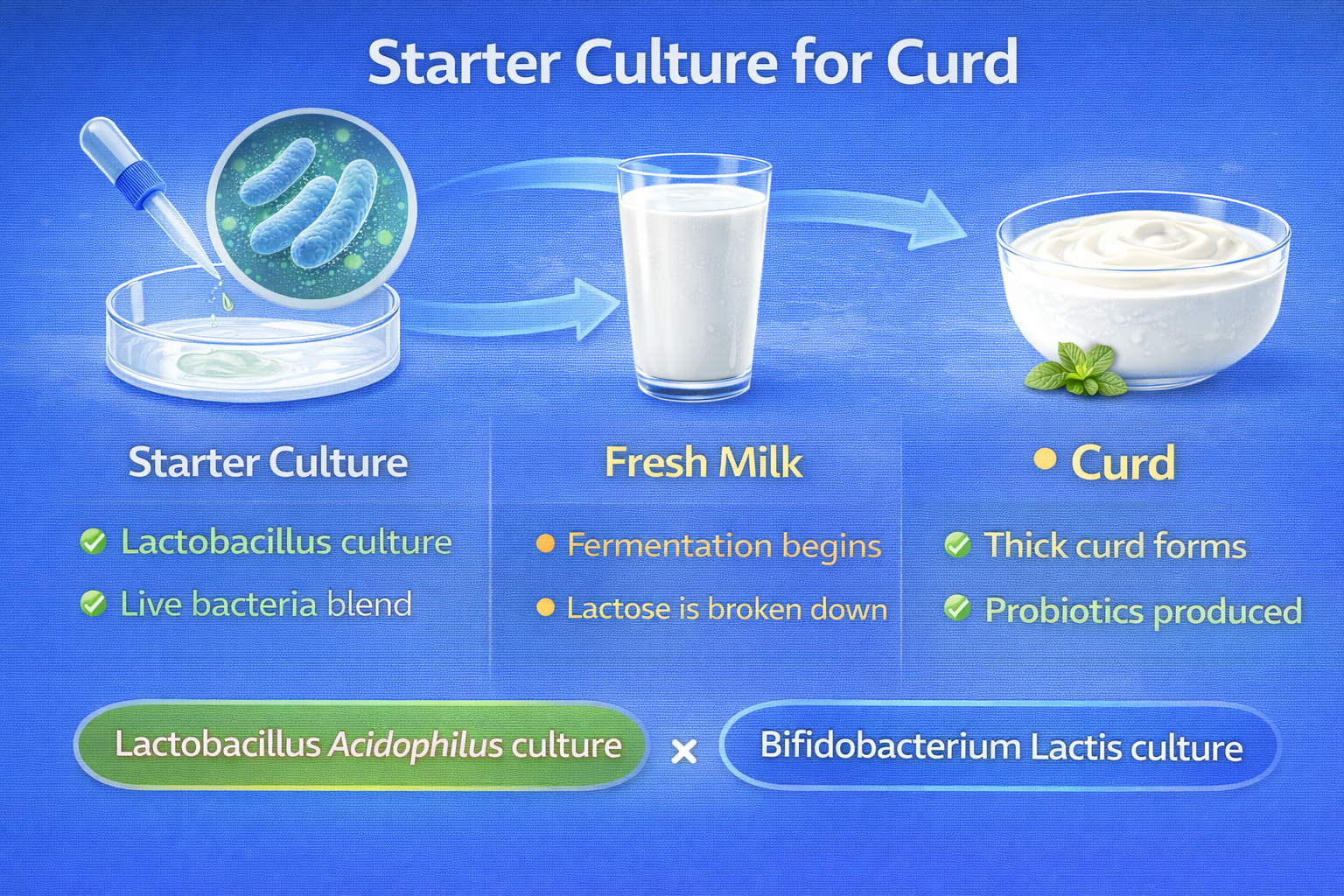
3. Starter Cultures for Curd Production
Starter cultures are the core intellectual asset of curd production. They determine acidification speed, flavor profile, and shelf life.
Traditional back-slopping introduces variability and contamination risk. Commercial production relies on defined cultures.
Common curd cultures
● Lactobacillus delbrueckii subsp. bulgaricus
● Streptococcus thermophilus
Culture management principles
● Accurate dosing
● Correct incubation temperature
● Protection from phage contamination
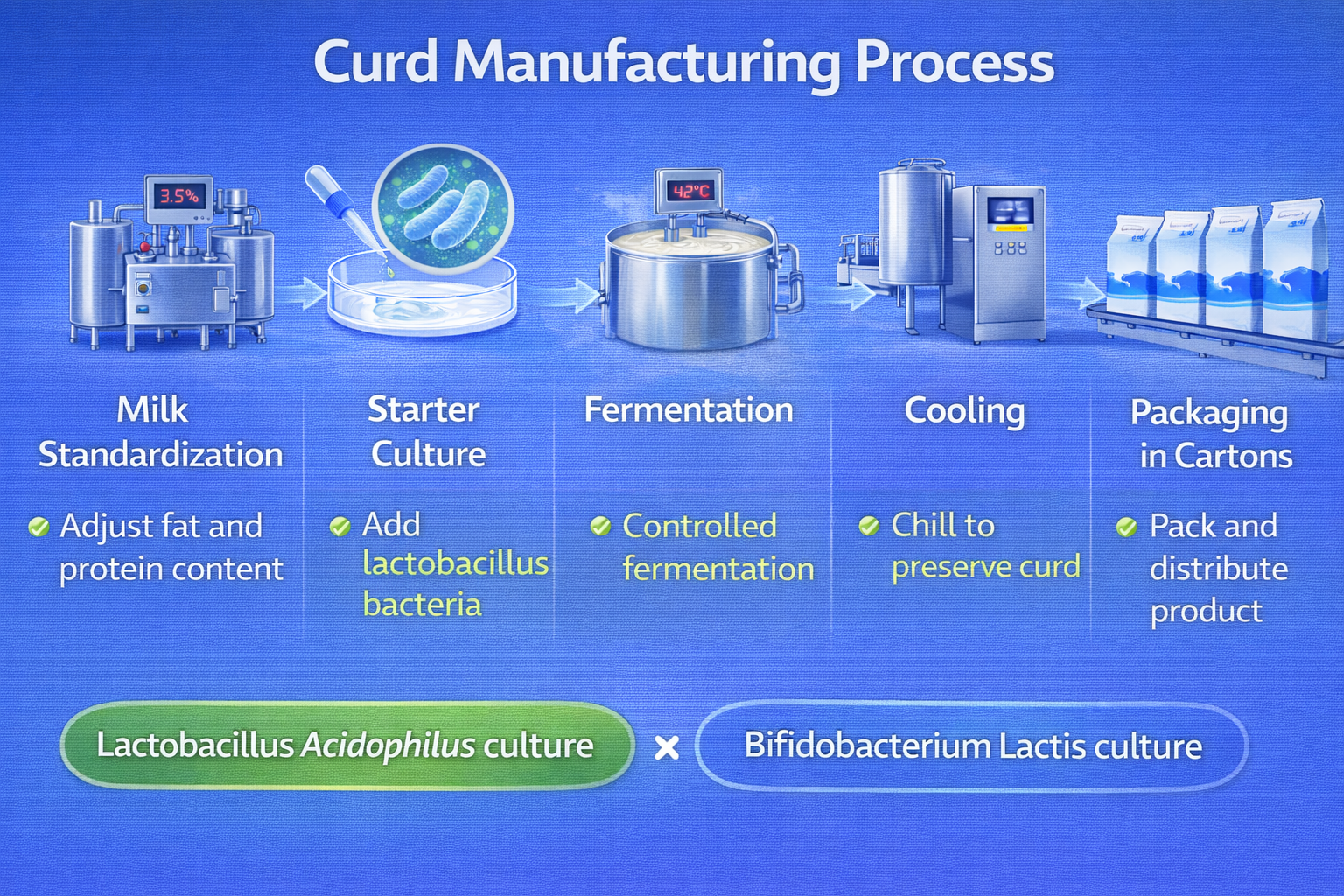
4. Step-by-Step Commercial Curd Manufacturing Process
Curd manufacturing follows a precise sequence. Skipping or rushing steps compromises product stability.
Process sequence
1. Milk standardization
2. Pasteurization
3. Cooling to inoculation temperature
4. Starter culture addition
5. Incubation under controlled temperature
6. Gel formation and acidity development
7. Rapid cooling to arrest fermentation
8. Packaging and cold storage
Critical control points
● Pasteurization adequacy
● Incubation temperature stability
● Hygiene during post-set handling
5. Shelf Life, Texture Defects, and Quality Failures in Curd
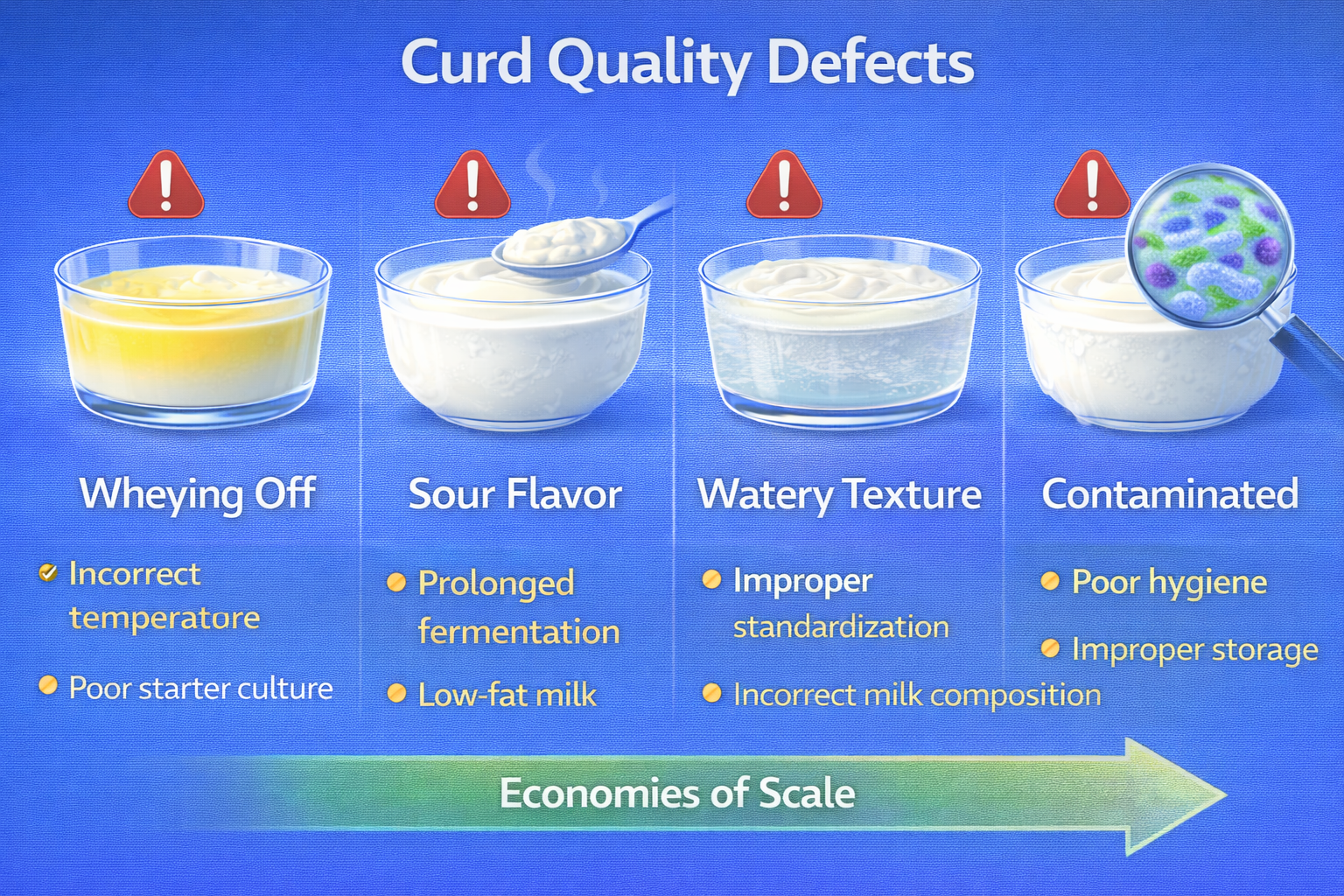
Curd defects are almost always process-driven.
Common defects
● Excess sourness (over-incubation)
● Weak or broken set (low casein or calcium)
● Whey separation (temperature abuse)
● Short shelf life (post-contamination)
Prevention strategies
● Tight temperature control
● Rapid chilling after setting
● Strict hygiene discipline
PART B — PANEER PRODUCTION SYSTEMS
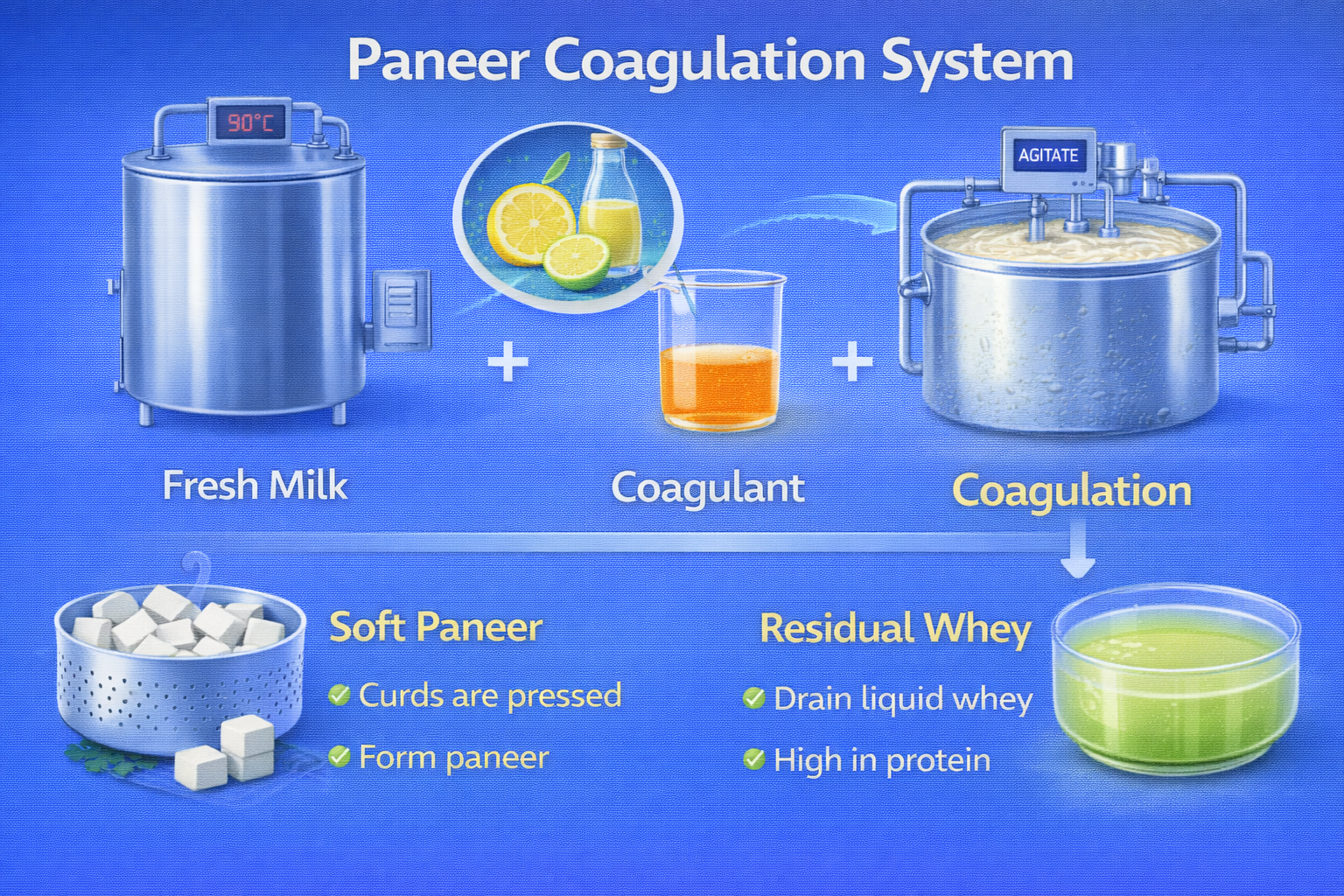
6. Paneer as a Heat–Acid Coagulated Protein System
Paneer is a fresh, acid-coagulated dairy product where milk proteins are precipitated by controlled acidification at elevated temperatures. Unlike cheese, paneer involves no ripening or enzymatic action.
Paneer yield and texture depend on milk composition, coagulation temperature, acid type, and pressing conditions.
Key paneer characteristics
● High moisture, fresh product
● No aging or cultures
● Rapid processing cycle
● Strong dependence on milk quality
7. Milk Requirements for Paneer Production
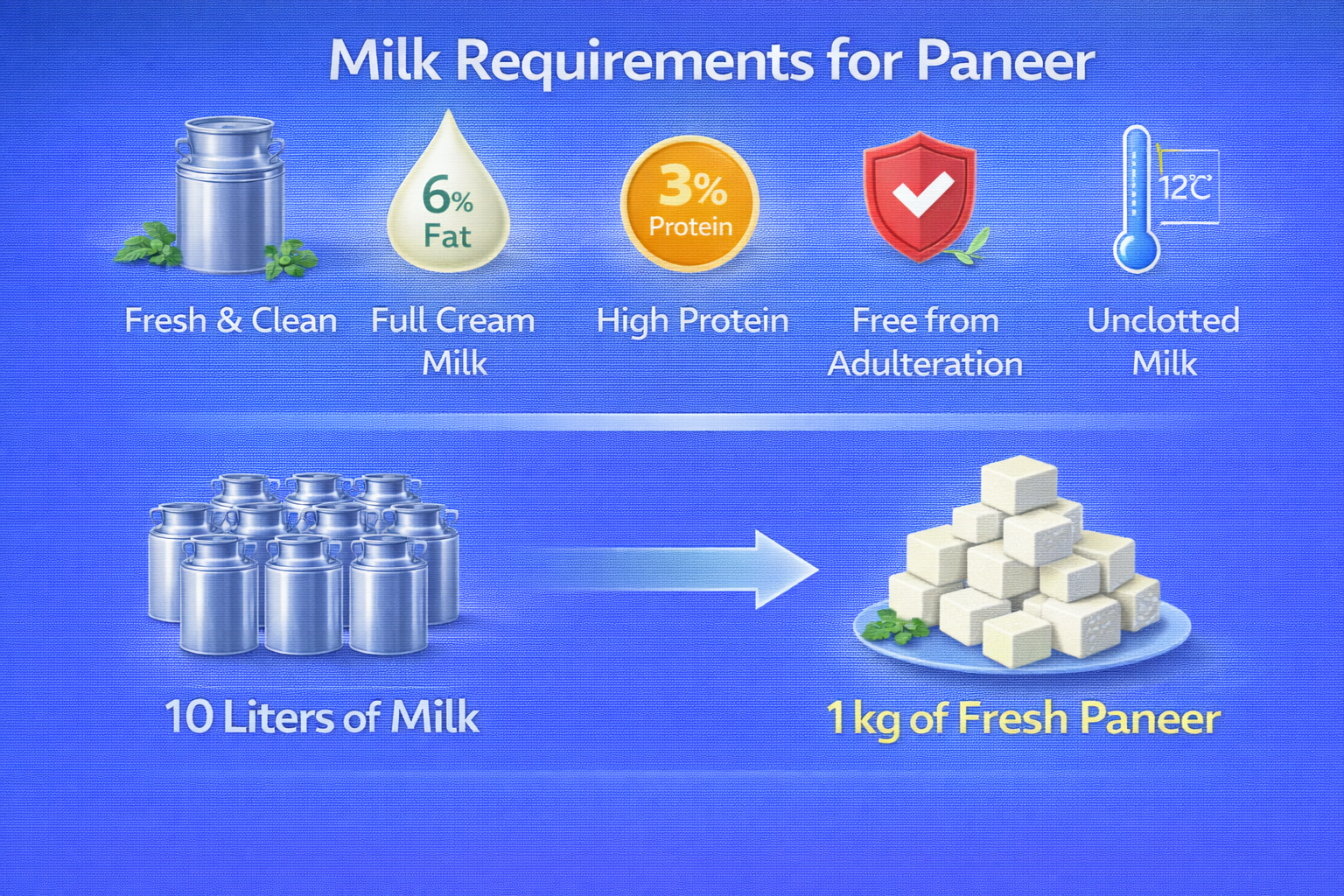
Paneer demands milk with higher fat and protein content compared to curd.
Ideal milk parameters
● Higher SNF and casein
● Adequate fat for softness
● Low acidity prior to coagulation
Milk standardization directly affects paneer yield and body.
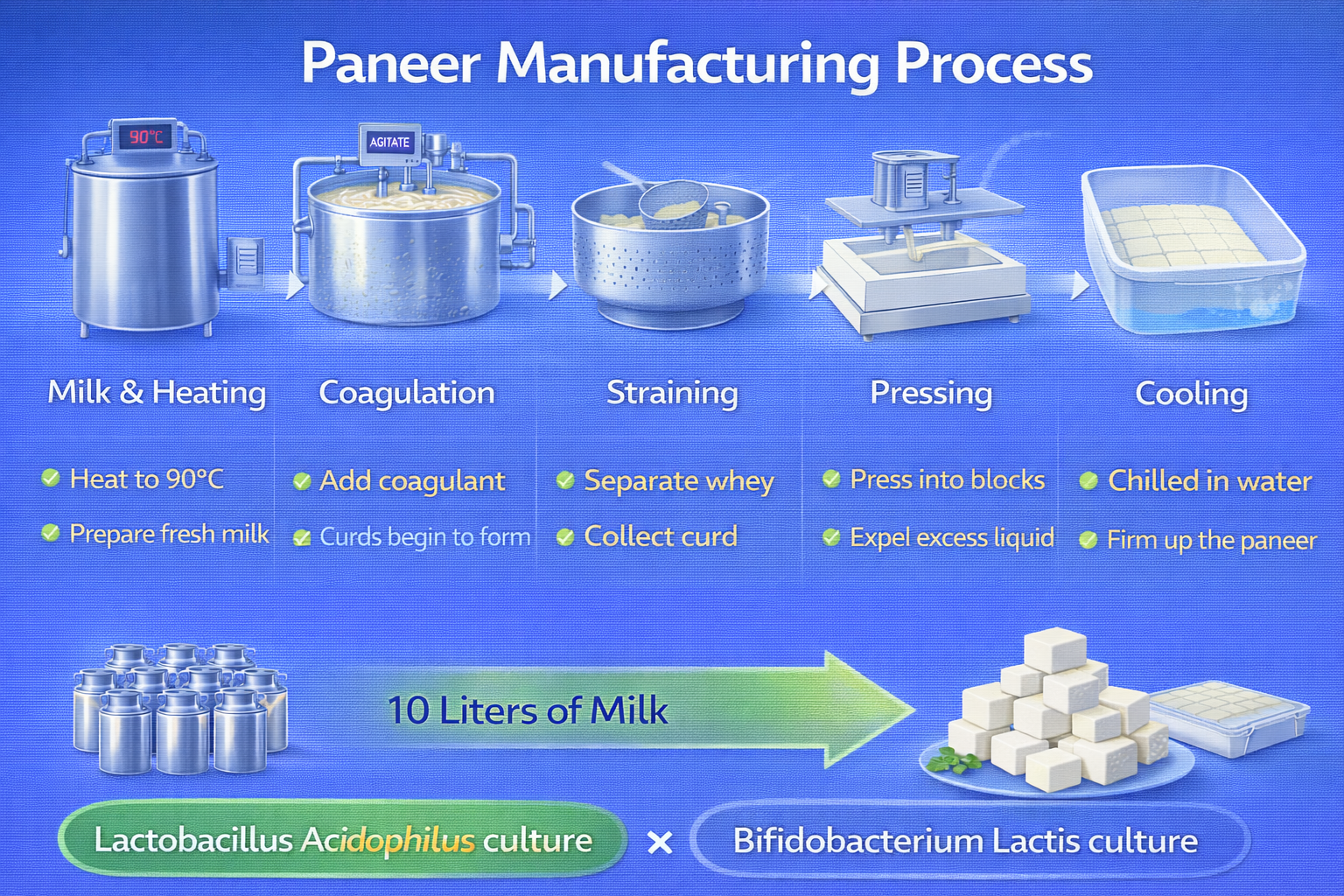
8. Step-by-Step Paneer Manufacturing Process
Paneer production is sequential and time-sensitive.
Process steps
1. Milk standardization
2. Heating to coagulation temperature
3. Controlled acid addition
4. Curd formation and whey separation
5. Draining and washing
6. Pressing to desired moisture
7. Cutting and cooling
8. Packaging and refrigeration
Critical variables
● Coagulation temperature
● Acid strength and addition rate
● Pressing pressure and duration
9. Paneer Yield Optimization and Quality Control
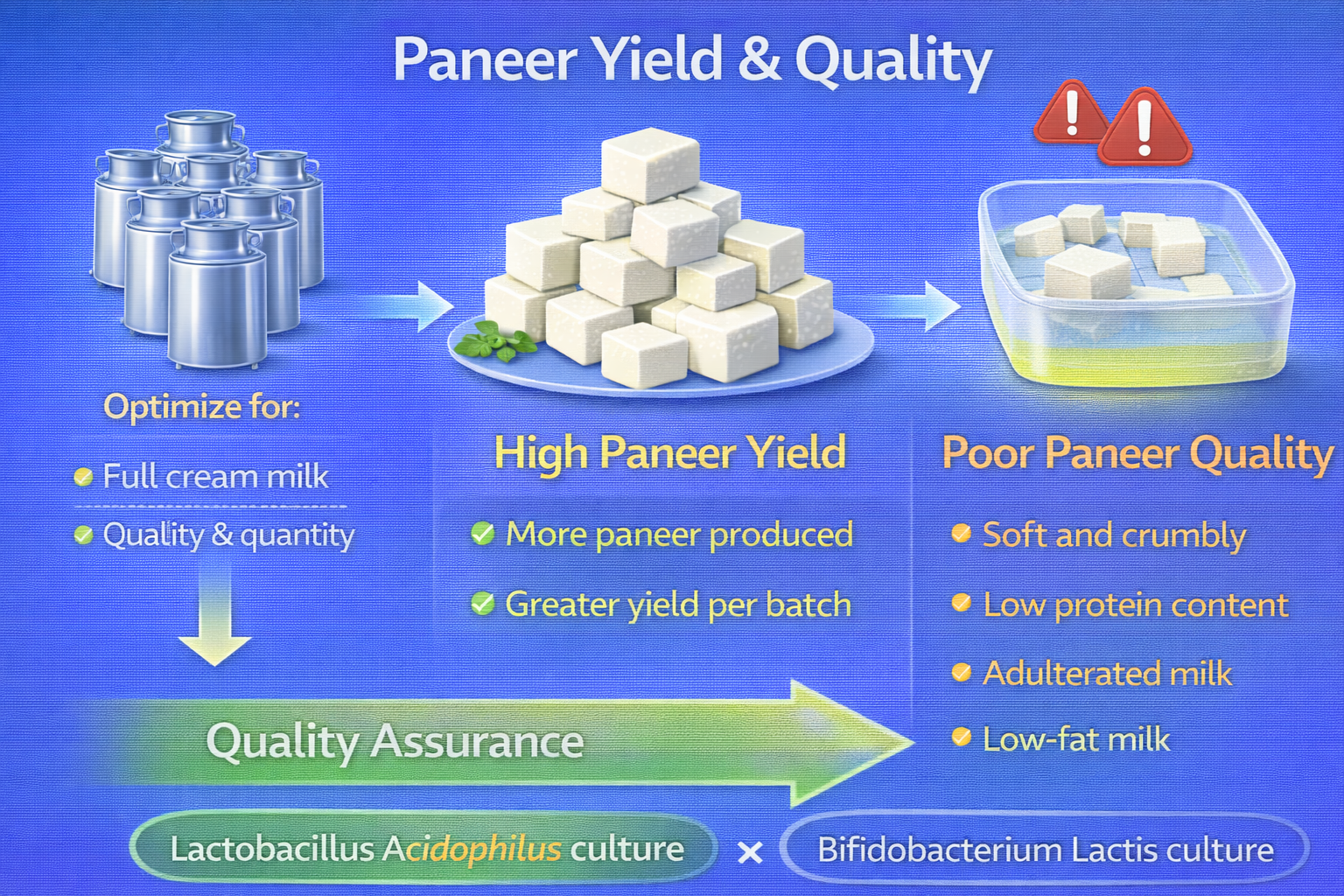
Paneer profitability depends on yield consistency and moisture control.
Yield influencers
● Milk composition
● Coagulation efficiency
● Whey drainage control
Quality indicators
● Soft but firm body
● Clean flavor
● Uniform texture
● Minimal whey leakage
10. Machinery & Scaling for Curd and Paneer Units
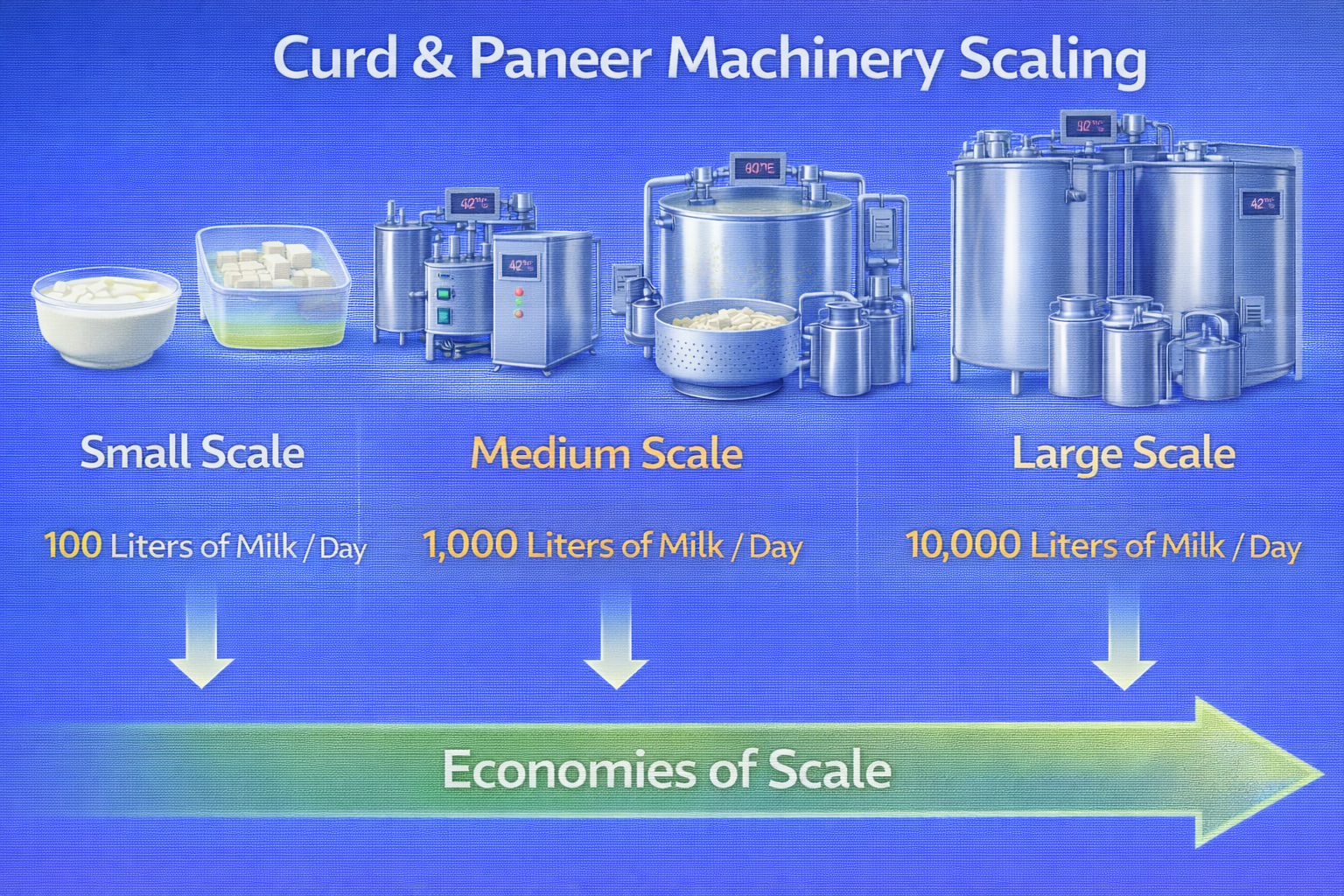
Curd and paneer share several processing assets, enabling integrated production.
Common equipment
● Pasteurizer
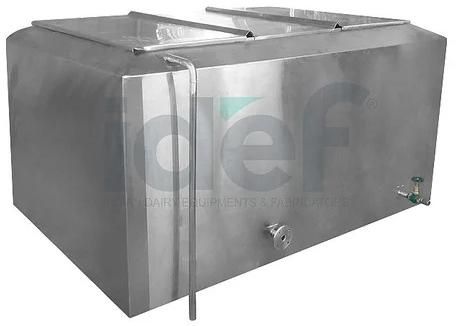
● Coagulation vats
● Fermentation tanks
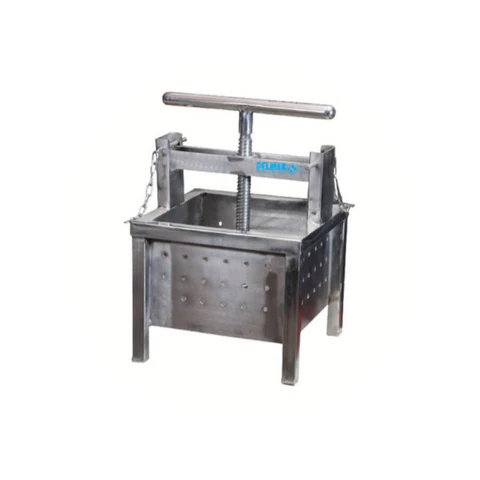
● Pressing units
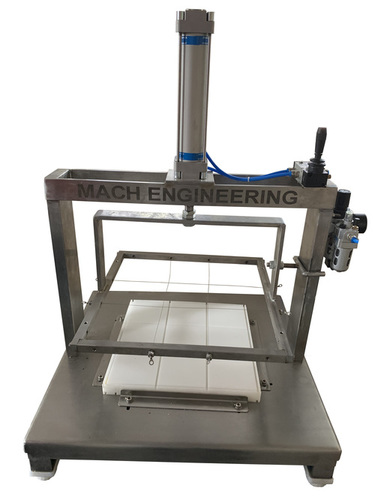
● Cutting machines
● Cold storage
● CIP systems
Scaling logic
● Start batch-based
● Add automation gradually
● Protect quality before volume
ECONOMICS OF CURD & PANEER (100-COW HERD, INDIA)
Baseline Assumptions
● Herd size: 100 lactating cows
● Average yield: 15 litres/cow/day
● Total milk production: 1,500 litres/day
● Milk allocation:
○ Curd: 600 litres/day
○ Paneer: 500 litres/day
○ Balance milk sold as fluid milk
● Milk internal transfer price: ₹32/litre
● Operation: Integrated farm + processing
🟡 CURD (DAHI) ECONOMICS
Daily Inputs
● Milk used: 600 litres
● Milk cost: ₹19,200
● Starter culture & ingredients: ₹500–600
● Power, water, labour, consumables: ₹2,000–2,200
● Packaging (cups / pouches): ₹3,000–3,500
➡️ Total curd processing cost/day:
₹25,000 – ₹26,500
Output & Revenue
● Curd output: ~600–620 kg
● Average selling price (blended wholesale + retail):
₹55–60/kg
➡️ Daily curd revenue:
₹33,000 – ₹36,000
➡️ Daily gross surplus from curd:
₹7,000 – ₹9,500
🟢 PANEER ECONOMICS
Daily Inputs
● Milk used: 500 litres
● Milk cost: ₹16,000
● Coagulant & processing inputs: ₹700–900
● Power, water, labour: ₹1,500–1,800
● Packaging & cold storage: ₹1,200–1,500
➡️ Total paneer processing cost/day:
₹19,500 – ₹21,000
Output & Revenue
● Paneer yield: 18–20%
● Paneer output: 90–100 kg/day
● Average selling price (bulk + retail):
₹320–360/kg
➡️ Daily paneer revenue:
₹30,000 – ₹36,000
➡️ Daily gross surplus from paneer:
₹9,000 – ₹14,000
🔵 COMBINED DAILY PERFORMANCE (CURD + PANEER)
● Total daily gross surplus:
₹16,000 – ₹23,000/day
● Monthly surplus (26 working days):
₹4.2 – 6.0 lakh/month
● Annual surplus (10–11 effective months):
₹45 – 65 lakh/year
🔴 Capital Cost (Indicative, One-Time)
● Coagulation vats: ₹4–6 lakh
● Paneer presses: ₹3–5 lakh
● Cutting machines: ₹2–3 lakh
● Pasteurizer & fermentation tanks: ₹12–15 lakh
● Cold storage & utilities: ₹6–8 lakh
➡️ Total CAPEX:
₹30 – 40 lakh
Conclusion: Discipline Makes Traditional Products Profitable
Curd and paneer succeed commercially not because they are traditional, but because they are biologically simple yet process-sensitive. Dairies that apply industrial discipline—standardization, hygiene, temperature control, and yield monitoring—transform these everyday products into reliable revenue engines. In Indian dairy systems, curd and paneer remain foundational products when tradition is guided by science.