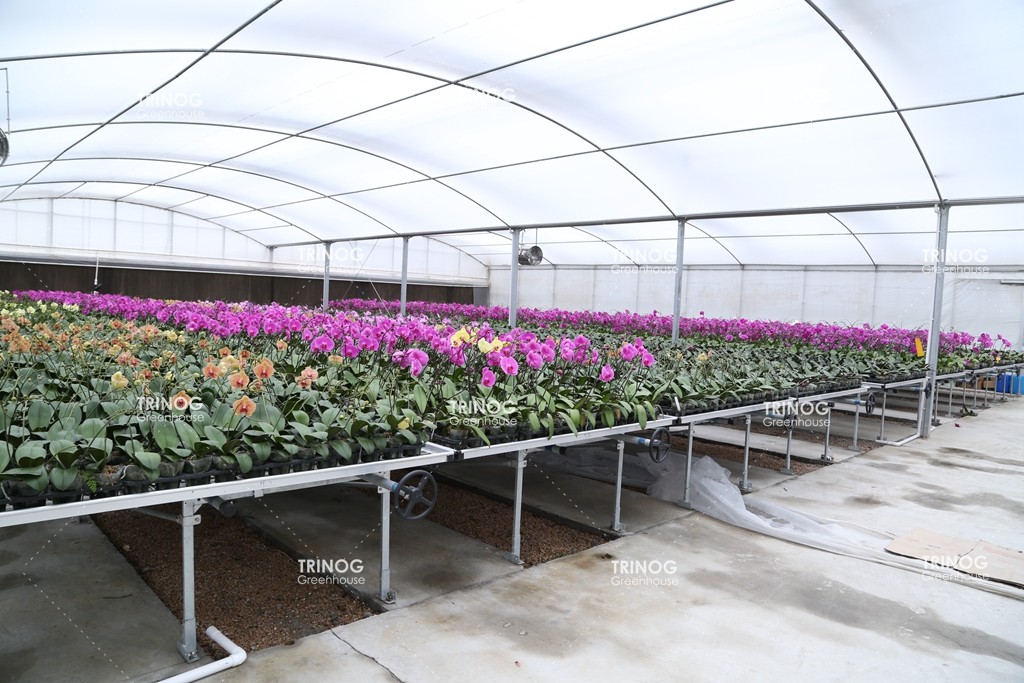
While glass greenhouse systems establish the structural and climatic foundation for Phalaenopsis orchid cultivation, commercial success is ultimately determined by operational precision and market alignment. In India, Phalaenopsis production demands disciplined root-zone management, scientifically balanced fertigation, rigorous disease and pest control, and careful selection of hybrids suited to regional conditions. This article builds upon the structural rationale discussed earlier and moves into the practical realities of producing, grading, and marketing Phalaenopsis orchids as a premium, long-cycle greenhouse crop in the Indian context.
Root-Zone Science, Growing Media, Fertigation, and Water Quality Management
Why Root-Zone Control Is Critical in Phalaenopsis
Phalaenopsis orchids are epiphytic by evolution, meaning their roots are biologically adapted to high oxygen availability, intermittent moisture, and rapid drainage. Unlike terrestrial ornamentals, Phalaenopsis roots are not designed to remain continuously wet or compacted.
Any mismatch between root biology and cultivation system manifests rapidly as:
• Root suffocation
• Nutrient imbalance
• Reduced spike initiation
• Premature plant decline
•
Therefore, root-zone management is a primary determinant of plant longevity and commercial consistency.
________________________________________
Aerial Root Physiology and Oxygen Demand
Phalaenopsis roots perform dual functions:
• Water and nutrient uptake
• Photosynthesis (through chlorophyll-containing cortex cells)
Because of this dual role, roots require:
• Continuous oxygen diffusion
• High but transient moisture availability
• Absence of anaerobic conditions
Failure to meet these conditions results in irreversible root necrosis.
Growing Media Selection and Physical Properties
Phalaenopsis is cultivated in soilless substrates that mimic epiphytic attachment surfaces.
Common commercial media:
• Pine bark chips (coarse grade)
• Coco husk chips (aged and buffered)
• Perlite–bark blends
• Specialized orchid substrates
Ideal physical properties:
• High air-filled porosity (>30%)
• Rapid drainage
• Structural stability for 18–24 months
• Minimal fine particles
Media breakdown directly increases water retention and reduces oxygen availability, making periodic media replacement a biological necessity rather than a cultural preference
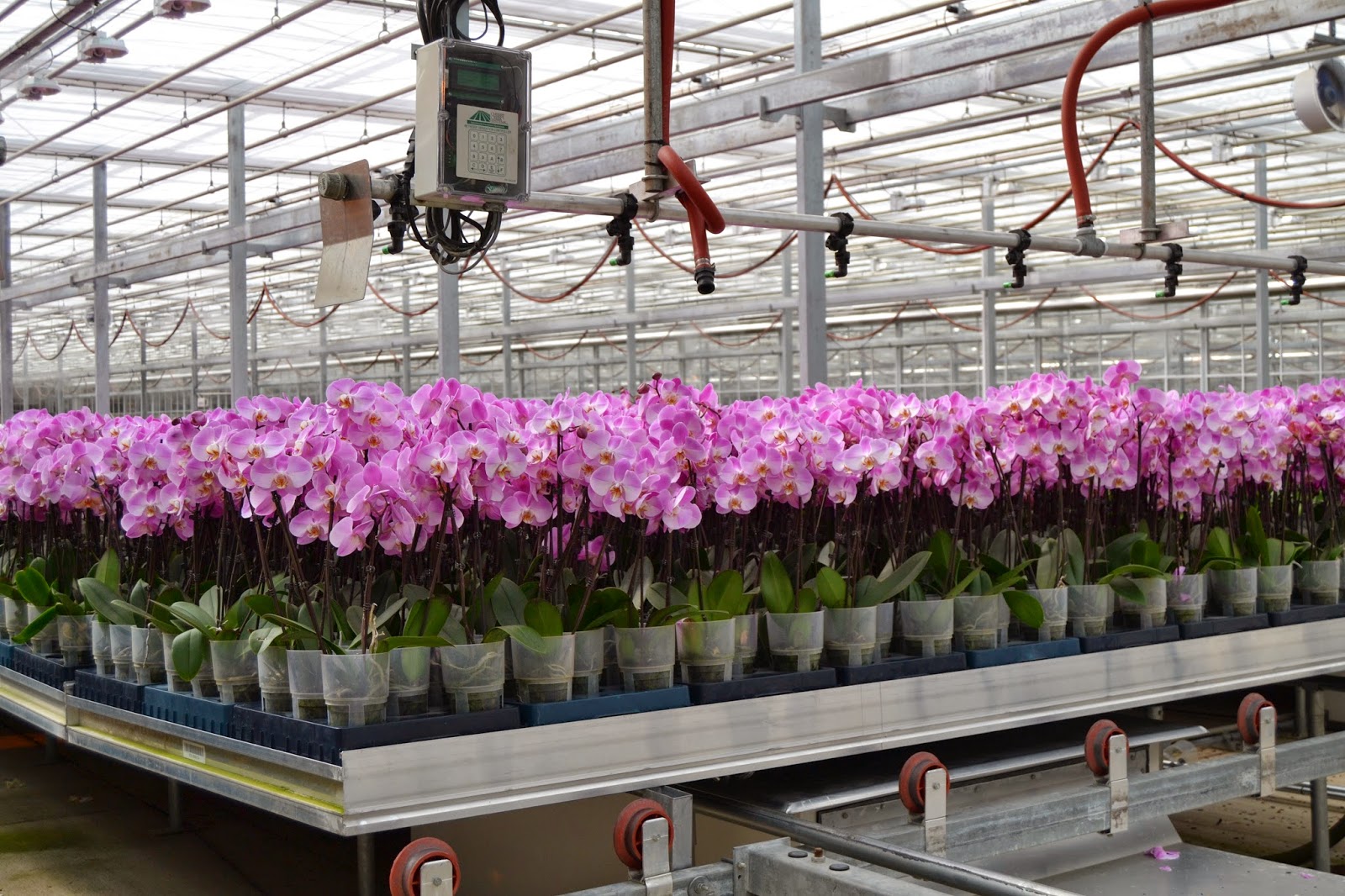
Container Design and Drainage Dynamics
Container choice directly affects root aeration.
Best practices:
• Slotted or perforated pots
• Transparent containers (for root monitoring)
• Elevated benches for free drainage
Improper container design leads to water stagnation at the pot base, initiating anaerobic zones and accelerating root decay.
Fertigation Strategy for Phalaenopsis
Phalaenopsis requires low-concentration, high-frequency fertigation, reflecting its natural exposure to dilute nutrient sources.
Recommended nutrient parameters:
• EC: 0.8–1.2 mS/cm
• pH: 5.5–6.5
• Nitrogen form: Nitrate-dominant
• Calcium and magnesium: consistently supplied
Fertigation principles:
• Frequent low-volume application
• Avoidance of salt accumulation
• Periodic clear-water flushing
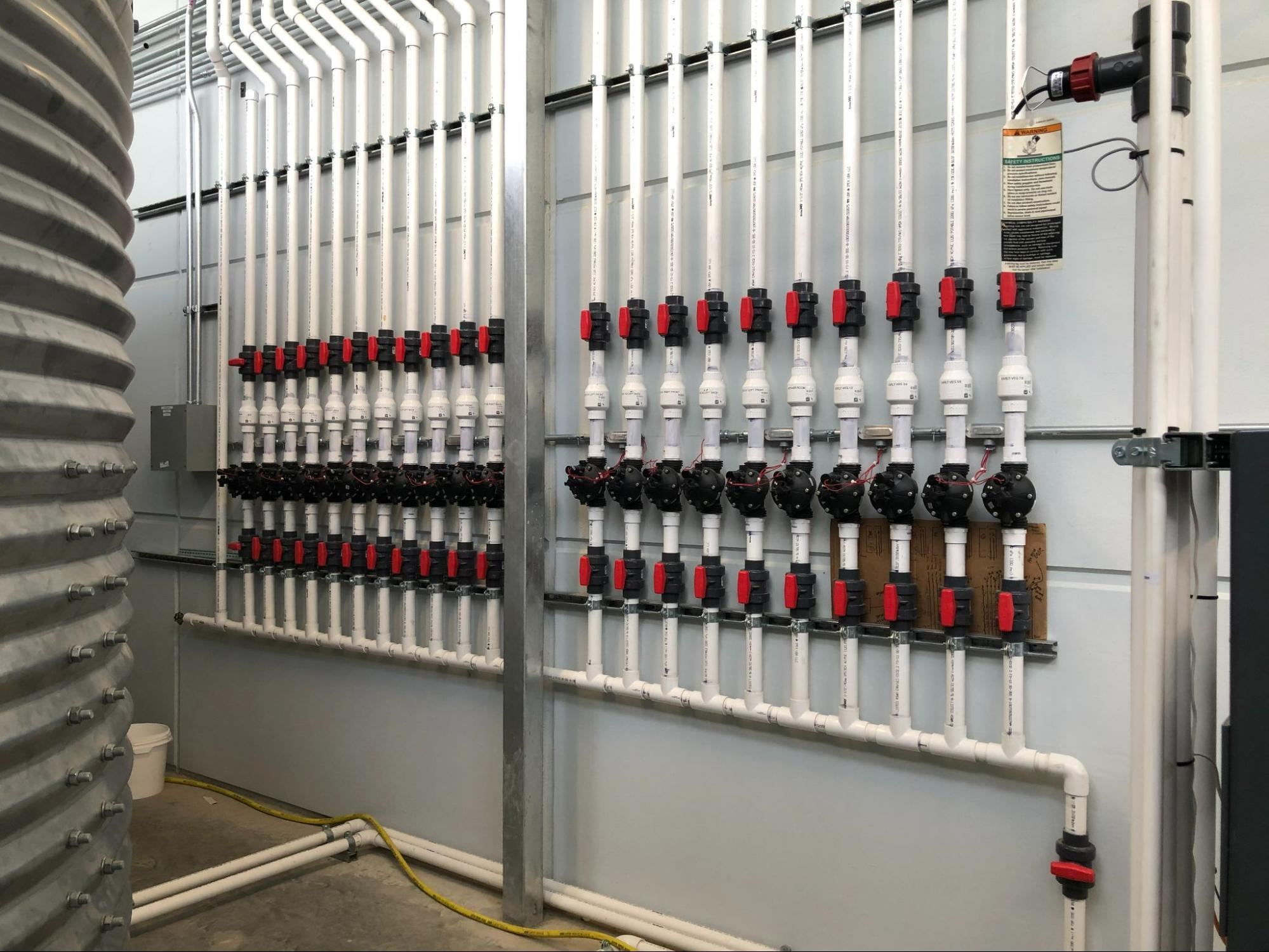
Glass greenhouses allow precise EC and pH control through centralized fertigation systems—something difficult to maintain consistently in polyhouse setups.
 .
.
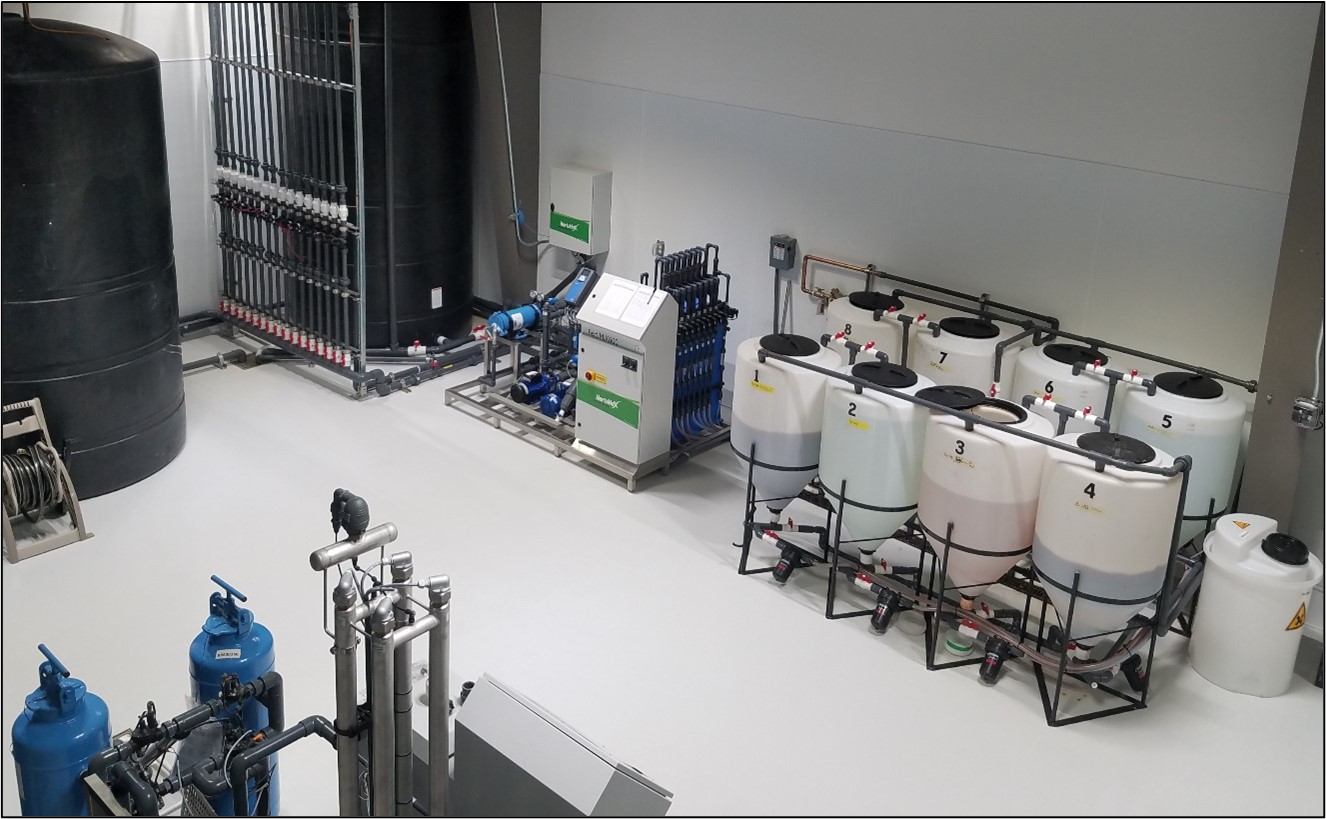
Central Nutrient Storage and Mixing Infrastructure
Large-scale Phalaenopsis operations rely on centralized nutrient rooms equipped with:
• Stock solution tanks
• Automated dosing pumps
• Inline EC and pH sensors
• Redundant filtration systems
Operational advantages:
• Uniform nutrient delivery
• Rapid formula adjustment
• Reduced labor dependency
• Lower risk of nutrient imbalance
Water Quality Requirements
Water quality is often underestimated but is a limiting factor in orchid cultivation.
Critical water parameters:
• Low bicarbonate content
• Electrical conductivity <0.5 mS/cm (raw water)
• Absence of phytotoxic ions (Na⁺, Cl⁻, B)
Where raw water quality is suboptimal, reverse osmosis (RO) systems are essential to prevent long-term salt stress.
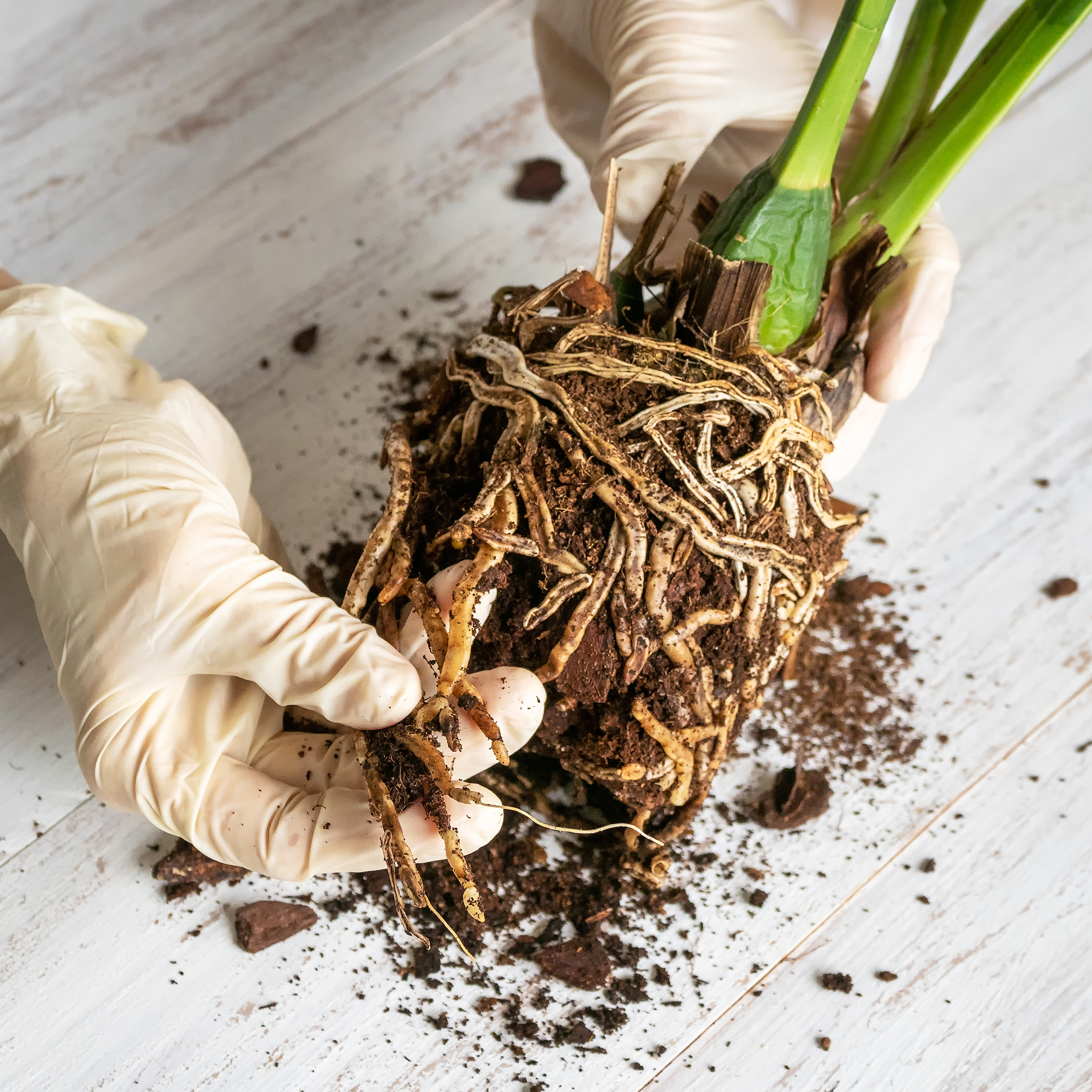
Root Diseases and Physiological Disorders
The most common root-zone disorder in Phalaenopsis is root rot, typically caused by a combination of:
• Overwatering
• Poor aeration
• High temperatures
• Opportunistic pathogens (Pythium, Phytophthora)
Early indicators:
• Loss of root turgidity
• Brown or translucent velamen
• Reduced water uptake despite wet media
Prevention strategy:
• Strict irrigation discipline
• High-porosity media
• Adequate airflow
• Preventive sanitation protocols
•
Once advanced root rot sets in, recovery is biologically limited and often uneconomical.
Root-Zone Management: Polyhouse vs Glass Greenhouse
Polyhouse limitations:
• Inconsistent drying cycles
• Manual fertigation variability
• Higher pathogen pressure
Glass greenhouse advantages:
• Predictable wet–dry cycles
• Automated nutrient dosing
• Lower root disease incidence
• Extended plant productive lifespan
Diseases, Insect Pests, Physiological Disorders, and IPM in Phalaenopsis Cultivation
Disease Ecology in Phalaenopsis: Why Environment Matters More Than Chemistry
Phalaenopsis orchids do not suffer from disease randomly; disease expression is almost always the outcome of environmental imbalance. High humidity, poor air movement, temperature stress, and root hypoxia collectively create conditions where opportunistic pathogens dominate.
In commercial systems, disease management therefore begins with climate engineering and hygiene, not pesticide application.
Major Root Diseases
Fungal and Oomycete Root Rots
Root rot is the most destructive disease complex in Phalaenopsis cultivation and is commonly associated with Pythium and Phytophthora species.
Predisposing factors:
• Excessive moisture retention in growing media
• Poor oxygen diffusion at root zone
• High root-zone temperatures
• Accumulated organic fines in substrate
Disease progression:
• Initial velamen discoloration
• Collapse of cortical tissues
• Loss of water and nutrient uptake
• Secondary bacterial infection
Once the vascular connection between root and shoot is compromised, recovery is biologically unlikely.
Leaf and Crown Diseases
Fungal Leaf Spots and Blights
Leaf diseases are often caused by Fusarium, Colletotrichum, and related fungi.
Common triggers:
• Free moisture on leaves
• High night humidity
• Condensation in poorly ventilated houses
Symptoms:
• Circular or elongated necrotic lesions
• Yellow halos around infected tissue
• Progressive leaf collapse in severe cases
________________________________________
Bacterial Soft Rot
Bacterial infections, often caused by Erwinia species, progress rapidly under warm, humid conditions.
Characteristics:
• Water-soaked lesions
• Foul odor
• Rapid tissue breakdown
•
Immediate plant removal is required to prevent spread.
________________________________________
Viral Diseases (Latent but Economically Severe)
Viruses such as Cymbidium mosaic virus (CymMV) and Odontoglossum ringspot virus (ORSV) may remain asymptomatic for extended periods.
Key risks:
• Mechanical transmission via tools
• Infected planting material
• No chemical cure
•
Prevention strategy:
• Certified virus-free tissue culture plants
• Tool sterilization
• Strict quarantine protocols
Insect Pests of Commercial Importance
Thrips – The Primary Economic Pest
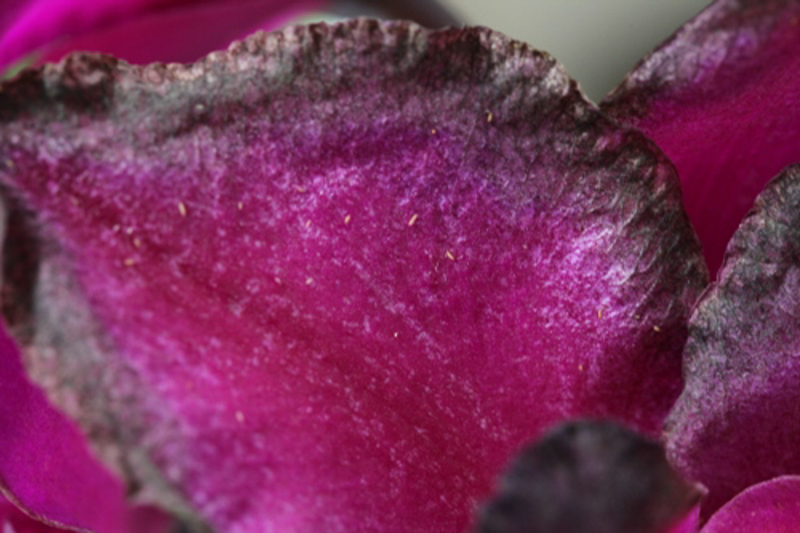
Thrips are the most damaging insect pest in Phalaenopsis cultivation due to their feeding behavior and rapid reproduction.
Damage caused:
• Silvering and scarring of leaves
• Deformed flowers
• Reduced aesthetic quality
• Direct rejection in premium market
Favorable conditions:
• Warm temperatures
• Low to moderate humidity
• Dense canopy with limited airflow
Other Common Insect Pests
• Mealybugs
• Scale insects
• Fungus gnats (larvae affecting roots)
•
These pests are often secondary problems arising from sanitation lapses or excessive humidity.
Physiological Disorders Mimicking Disease
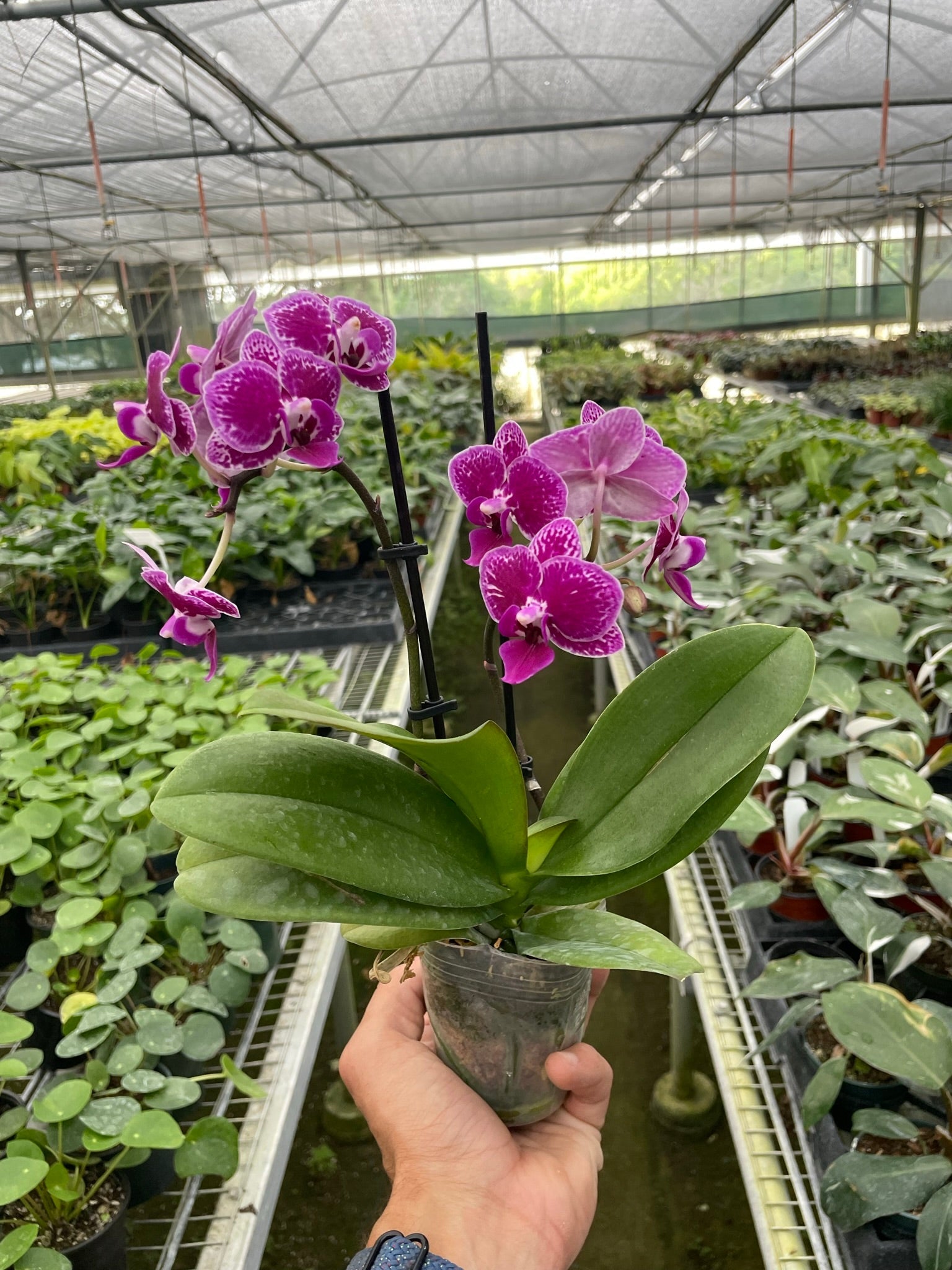
Purple Spotting and Stress Pigmentation
Purple spotting is frequently misdiagnosed as a fungal disease but is often a physiological stress response.
Common causes:
• Sudden temperature drops
• Excess light exposure
• Nutrient imbalance (especially phosphorus)
• Cold irrigation water
•
Correct diagnosis is critical, as chemical intervention is ineffective against physiological disorders.
Integrated Pest Management (IPM) Strategy
Effective IPM in Phalaenopsis relies on prevention rather than reaction.
Core IPM pillars:
• Environmental control (temperature, RH, airflow)
• Sanitation and hygiene
• Regular scouting and monitoring
• Biological controls where feasible
• Targeted chemical use only when necessary
Structural advantage of glass greenhouses:
• Reduced pest ingress
• Better compartmentalization
• Stable conditions unfavorable to pest outbreaks
•
Polyhouse systems, with open ventilation and higher environmental variability, experience significantly higher pest pressure.
Disease and Pest Risk: Polyhouse vs Glass Greenhouse
Polyhouse
• High humidity swings
• Greater insect entry
• Limited sanitation control
• Frequent reactive chemical use
•
Glass Greenhouse
• Stable microclimate
• Lower disease incidence
• Preventive IPM feasible
• Reduced chemical dependency
Indian Varieties, Regional Suitability, and Production Scheduling for Phalaenopsis
Phalaenopsis Hybrids Suitable for Indian Commercial Cultivation
Commercial Phalaenopsis cultivation in India relies almost entirely on hybrid cultivars, developed for compact growth, heat tolerance, uniform spiking, and extended shelf life. Pure species are rarely used due to their narrow adaptability and inconsistent flowering behavior
.
Key hybrid trait requirements for India:
• Tolerance to short-duration high temperatures (>30 °C)
• Compact leaf architecture suitable for bench systems
• Strong peduncle strength for transport
• Uniform spike emergence across batches
• Long flower longevity under retail conditions
Most Indian commercial growers source tissue-cultured plantlets derived from Taiwanese and Dutch breeding programs, acclimatized locally under glass greenhouse conditions.
________________________________________
Color and Market-Driven Hybrid Selection
White-flowered hybrids
• Dominant in export and premium domestic markets
• Highly sensitive to heat and light stress
• Require strict climate control
Pink and pastel hybrids
• More forgiving under Indian conditions
• Preferred for domestic gifting and hospitality markets
• Better tolerance to minor environmental deviations
Yellow, spotted, and novelty hybrids
• Niche market appeal
• Higher stress sensitivity
• Best grown only in advanced glass greenhouse facilities
Visual Reference: Commercial Hybrid Appearance
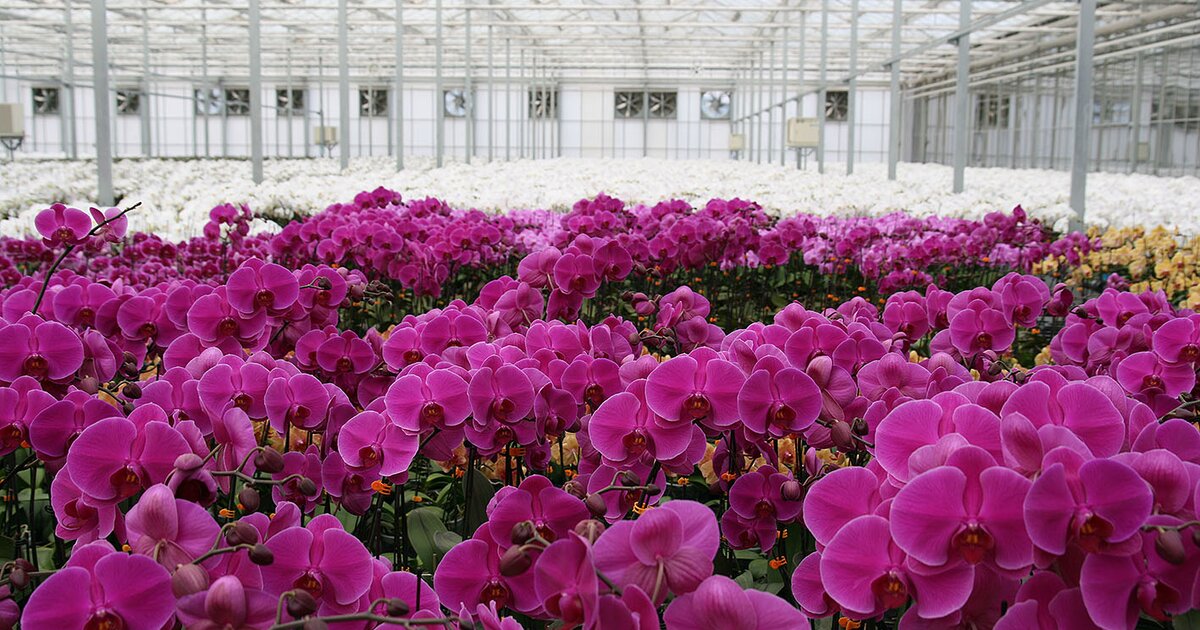
This image represents a typical commercial hybrid grown for potted plant markets, emphasizing compact growth, uniform leaf symmetry, and premium flower presentation.
Regional Suitability of Phalaenopsis Cultivation in India
Phalaenopsis is not location-flexible in India without advanced climate control. Regional suitability depends entirely on the ability to engineer stable greenhouse conditions.
Highly Suitable Regions (with glass greenhouse)
Southern India
• Karnataka (Bengaluru plateau)
• Tamil Nadu (Nilgiris, Coimbatore with cooling)
• Kerala (select highland zones)
Western India
• Maharashtra (Pune, Nashik belts)
Northern & Hill Regions
• Himachal Pradesh (controlled low-altitude zones)
• Uttarakhand (only with heating and humidity control)
In all regions, polyhouse-only systems are biologically inadequate for long-term commercial success.
________________________________________
Climate Risk by Region
Hot tropical zones
• Excessive daytime temperatures
• High cooling demand
• Strong justification for glass greenhouse with fogging
Humid coastal zones
• Elevated disease pressure
• Dehumidification and airflow critical
Cooler hill regions
• Night temperature drops
• Heating systems essential during winter months
________________________________________
Production Scheduling and Crop Phasing
Phalaenopsis production is a time-intensive, schedule-driven operation rather than a rapid turnover crop.
Typical production timeline:
• Tissue culture acclimatization: 3–4 months
• Vegetative growth phase: 12–18 months
• Flower induction phase: 6–8 weeks
• Flowering and market window: 2–3 months
Total crop cycle from flask to market-ready plant often exceeds 18–24 months.
________________________________________
Batch Management and Year-Round Supply
Commercial success depends on staggered batch scheduling, not single-cycle production.
Best practices:
• Maintain multiple age cohorts simultaneously
• Induce flowering in batches using temperature control
• Align peak flowering with market demand periods
• Avoid complete crop synchronization
Glass greenhouse systems enable precise scheduling, while polyhouse environments force growers into reactive, weather-driven cycles.
________________________________________
Labor and Skill Requirements
Phalaenopsis cultivation is skill-intensive.
Critical skill areas:
• Climate monitoring and interpretation
• Root health assessment
• Disease scouting
• Spike induction timing
• Post-flowering plant handling
•
Training and retention of skilled labor is a key success factor, particularly in large-scale Indian operations.
Market Dynamics, Commercial Economics, and Final Recommendation for Phalaenopsis Cultivation
Market Positioning of Phalaenopsis Orchids
Phalaenopsis orchids are a market-driven crop, not a volume-driven one. Commercial success depends more on uniformity, presentation, and timing than on sheer plant numbers.
Primary market segments:
• Premium potted plant retail
• Corporate and institutional gifting
• Hospitality and real estate interiors
• Export markets (Middle East, Southeast Asia)
• Online flower and lifestyle platforms
Visual Reference: Market-Ready Phalaenopsis Plants

This image represents fully finished, market-ready Phalaenopsis plants with uniform spike height, flower symmetry, and presentation suitable for premium retail and export channels.
Commercial Grading Parameters
Commercial grading is based on visual and physiological consistency, not botanical classification.
Key grading criteria include:
• Number of spikes per plant
• Spike length and rigidity
• Number of flowers per spike
• Flower size and symmetry
• Leaf color, thickness, and blemish-free appearance
• Root health and pot presentation
•
Plants failing to meet grade standards are heavily discounted, regardless of production cost.
________________________________________
Economics of Phalaenopsis Cultivation (Bullet Points Only)
Capital Expenditure (CAPEX) Considerations
• Glass greenhouse structure and glazing
• Climate control systems (cooling, heating, dehumidification)
• Automation and sensors
• Benching and internal layout
• Centralized fertigation infrastructure
• Backup power and redundancy systems
Operating Expenditure (OPEX) Components
• Electricity (cooling, ventilation, lighting)
• Skilled labor and supervision
• Planting material (tissue culture plants)
• Growing media and pots
• Fertilizers and water treatment
• Plant protection and sanitation
• Packaging and logistics
Revenue Characteristics
• Revenue realized per plant, not per square meter
• Price varies significantly by grade and spike count
• Premium plants command multiples of basic grades
• Export-grade plants fetch higher margins but require tighter quality control
Profitability Drivers
• Uniformity across batches
• Reduced rejection rates
• Extended plant lifespan (multiple flowering cycles)
• Efficient climate and energy management
• Strong market linkages and branding
Financial Risk Factors
• High upfront capital commitment
• Long production cycle (18–24 months)
• Sensitivity to climate control failures
• Market price volatility for non-uniform stock
________________________________________
Polyhouse vs Glass Greenhouse: Economic Reality
Polyhouse systems
• Lower initial investment
• Higher biological and quality risk
• Inconsistent marketable output
• Suitable only for learning or hobby-scale production
Glass greenhouse systems
• Higher capital requirement
• Predictable quality and scheduling
• Lower rejection rates
• Aligned with premium and export markets
•
Over the full production lifecycle, glass greenhouse systems consistently outperform polyhouses in net commercial viability for Phalaenopsis.
________________________________________
Final Recommendation
Phalaenopsis orchids are not structurally compatible with polyhouse cultivation for commercial-scale, premium-oriented production. Their physiological sensitivity, long crop duration, and strict market quality standards make glass greenhouse systems a biological and economic necessity, not an optional upgrade.
For Indian growers targeting serious domestic or export markets, investment in a fully automated glass greenhouse is essential. Polyhouse systems may serve educational or experimental purposes but cannot deliver consistent, high-grade Phalaenopsis output.
________________________________________
Pre-Startup Checklist for Phalaenopsis Cultivation
• Fully automated glass greenhouse infrastructure
• Redundant climate control and power systems
• Certified tissue-cultured planting material
• Skilled orchid-specific technical management
• Centralized fertigation and water treatment
• Strict sanitation and biosecurity protocols
• Clear market linkage before production scale-up
________________________________________
References and Further Reading
• FAO Greenhouse Floriculture Manuals
• Dutch Glasshouse Orchid Production Protocols
• Taiwanese Phalaenopsis Breeding and Production Guides
• Peer-reviewed research on orchid physiology and controlled environment cultivation