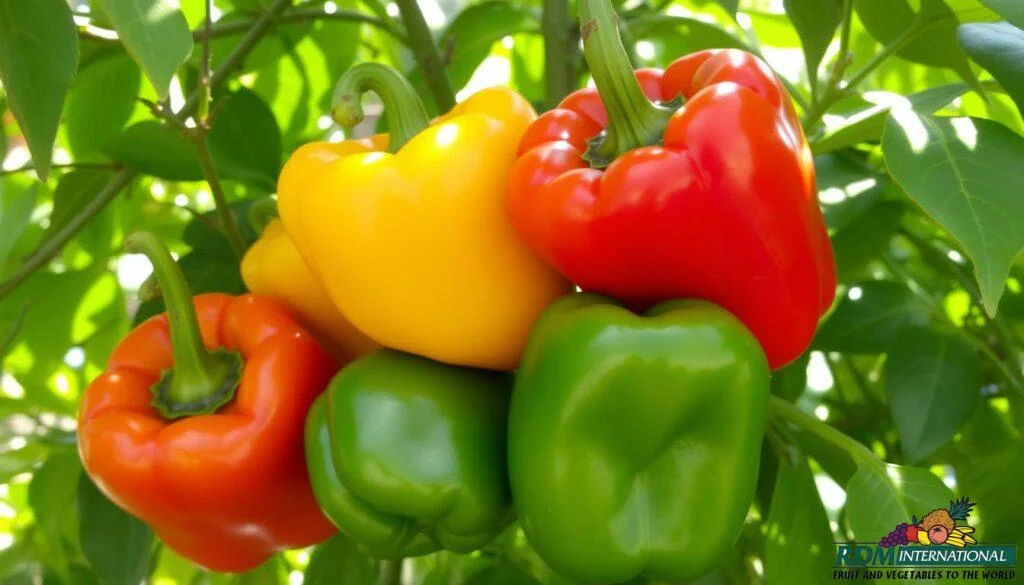
Color capsicum (Capsicum annuum), commonly known as bell pepper, is one of the most profitable vegetables grown under protected cultivation. Polyhouse cultivation using grow bags allows precise control over root zone conditions, water, and nutrients, leading to higher yields, uniform fruit size, and premium market quality. This article outlines a research-backed protocol for successful color capsicum production in grow bag systems under polyhouse conditions.
Why grow capsicum in grow bags under polyhouse
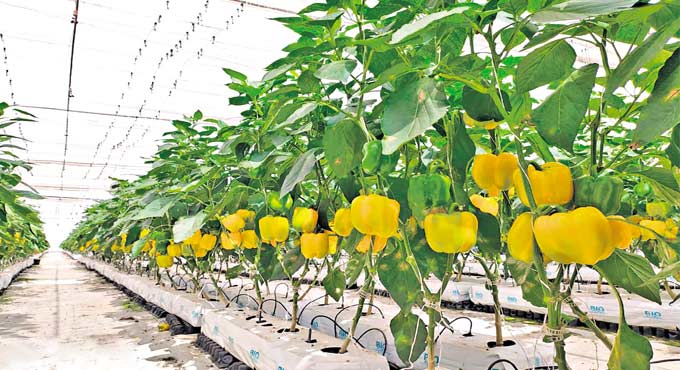
Grow bags provide an inert and disease-free root zone while polyhouse structures protect crops from extreme weather, pests, and rainfall. This combination improves nutrient efficiency, reduces soil-borne diseases, and allows multiple crop cycles per year.
Variety selection and nursery management
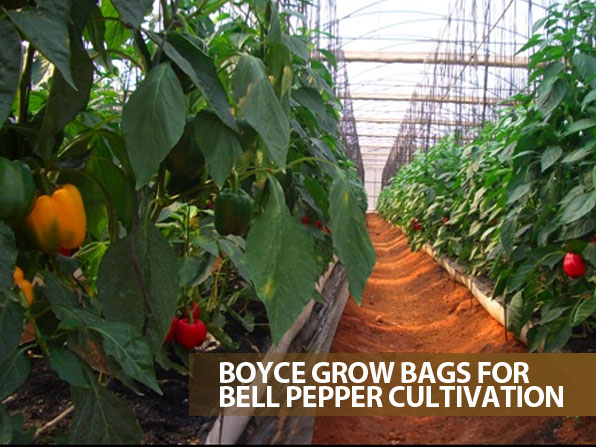
Hybrid capsicum varieties with strong vigor, uniform fruit shape, and good color development (red, yellow, orange) are preferred for polyhouse cultivation. Select varieties with resistance to viruses and fungal diseases. Seedlings should be raised in plug trays using sterile coco peat and transplanted at the 4–5 true leaf stage (30–35 days old).
Grow bag media composition and layout
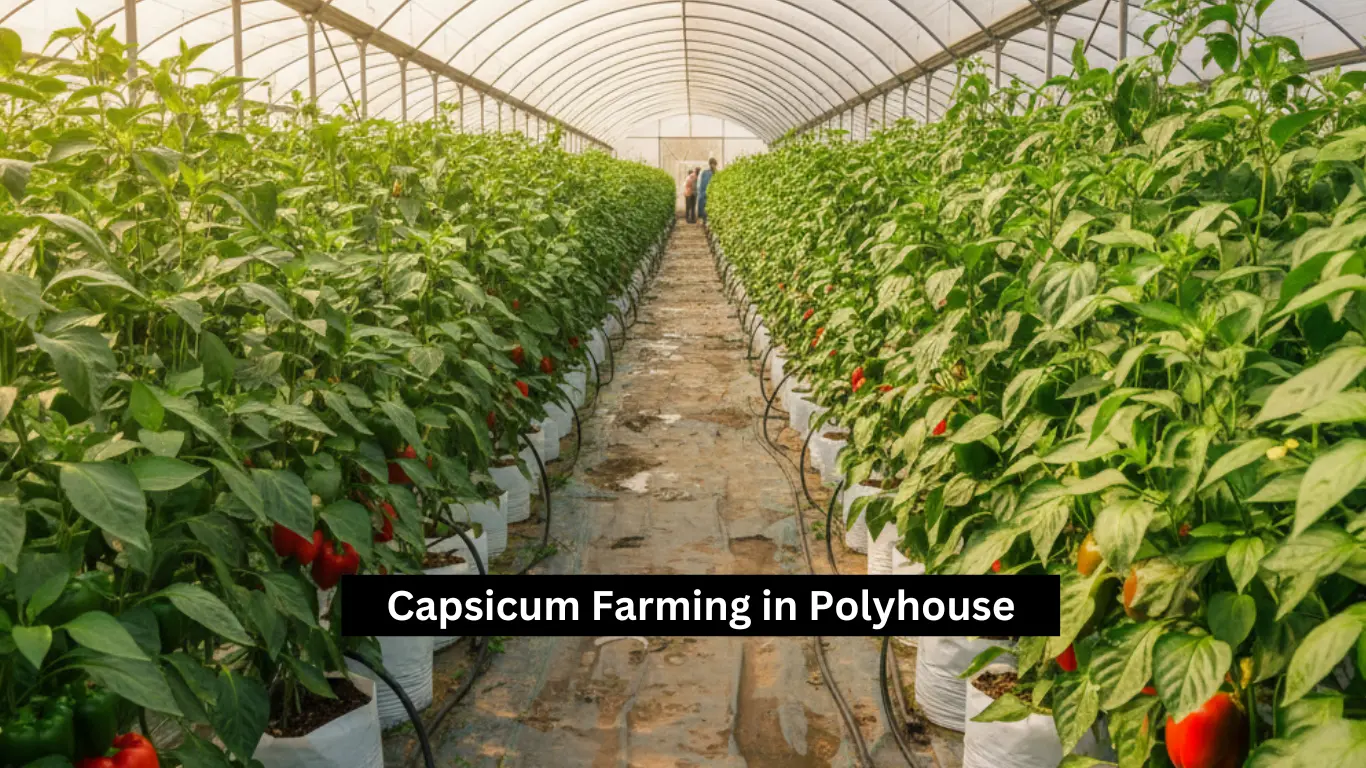
A common grow bag media consists of coco peat, perlite, and vermiculite in a 70:20:10 ratio. Each grow bag typically supports one or two plants depending on spacing. Place grow bags in double-row beds with adequate drainage channels to prevent waterlogging.
Plant spacing and training
Recommended spacing is 45–50 cm between plants and 90–100 cm between rows. Capsicum plants are trained to two or four stems using vertical trellis strings. Regular pruning of side shoots below the first fork improves airflow and directs energy towards fruit development.
Environmental management inside polyhouse
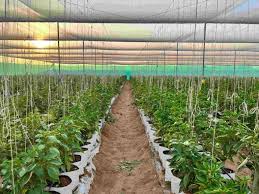
Temperature: Optimal day temperature is 22–28 °C and night temperature 16–20 °C.
Relative humidity: Maintain 60–75% to reduce disease pressure.
Light: Capsicum requires high light intensity for good fruit color and thickness.
Ventilation: Adequate ventilation and shading nets prevent heat stress during summer.
Nutrient and fertigation management
Capsicum is a heavy feeder and responds well to precise fertigation.
General nutrient targets:
Vegetative stage: EC 1.8–2.2 mS/cm; pH 5.8–6.5
Flowering and fruiting stage: EC 2.5–3.5 mS/cm; pH 5.8–6.5
Key nutrients include nitrogen for vegetative growth, potassium for fruit size and color, calcium to prevent blossom end rot, and magnesium for chlorophyll formation. Fertigation is typically applied daily in split doses using drip irrigation.
Irrigation scheduling
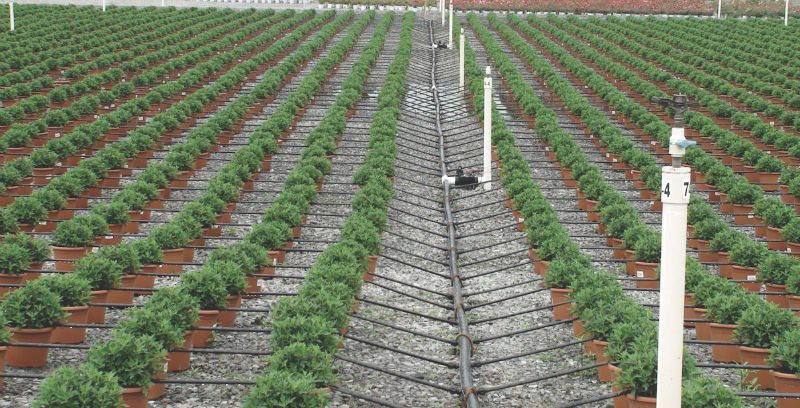
Irrigation frequency depends on plant stage and climate. Young plants require light but frequent irrigation, while fruiting plants require higher volumes. Avoid excess moisture to prevent root diseases.
Pest and disease management
Common pests include thrips, aphids, mites, and whiteflies. Diseases such as powdery mildew, bacterial leaf spot, and root rot can occur under high humidity.
Integrated pest management practices include:
Use of insect-proof nets
Regular monitoring using sticky traps
Biological control agents
Need-based application of compatible pesticides
Expected yield and harvest
Under well-managed polyhouse conditions, color capsicum yields range from 8–12 kg per plant over a 7–9 month harvest period. Harvest fruits at full color development for premium pricing.
Post-harvest handling
Harvest fruits carefully using sharp tools to avoid plant damage. Grade fruits based on size and color. Store at 7–10 °C with high humidity to maintain freshness.
Checklist before starting
Select suitable polyhouse structure and ventilation
Choose high-yielding hybrid varieties
Prepare uniform grow bag media
Install reliable drip fertigation system
Monitor climate and nutrients daily
References and further reading
Protected cultivation manuals by agricultural universities
FAO greenhouse vegetable production guidelines
Research articles on capsicum fertigation and polyhouse management