Introduction
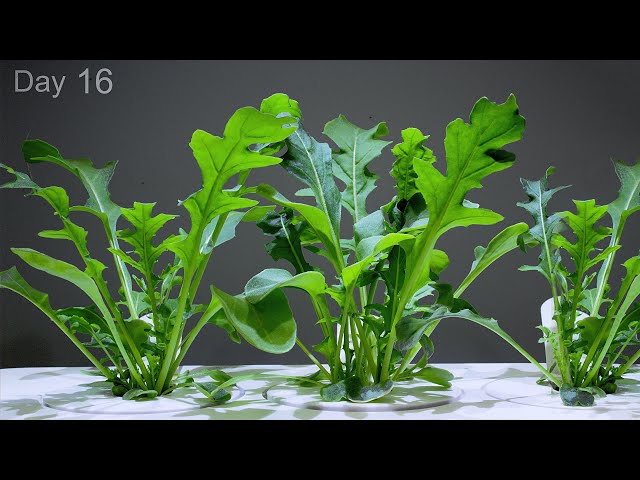
Arugula (Eruca sativa), commonly known as rocket, is a fast-growing leafy vegetable prized for its distinctive peppery flavour and high nutritional value. Due to its shallow root system, compact canopy, and short crop duration, arugula is ideally suited for NFT (Nutrient Film Technique) hydroponic cultivation. NFT-based production enables precise nutrient delivery, rapid turnover, and clean, soil-free cultivation under protected conditions.
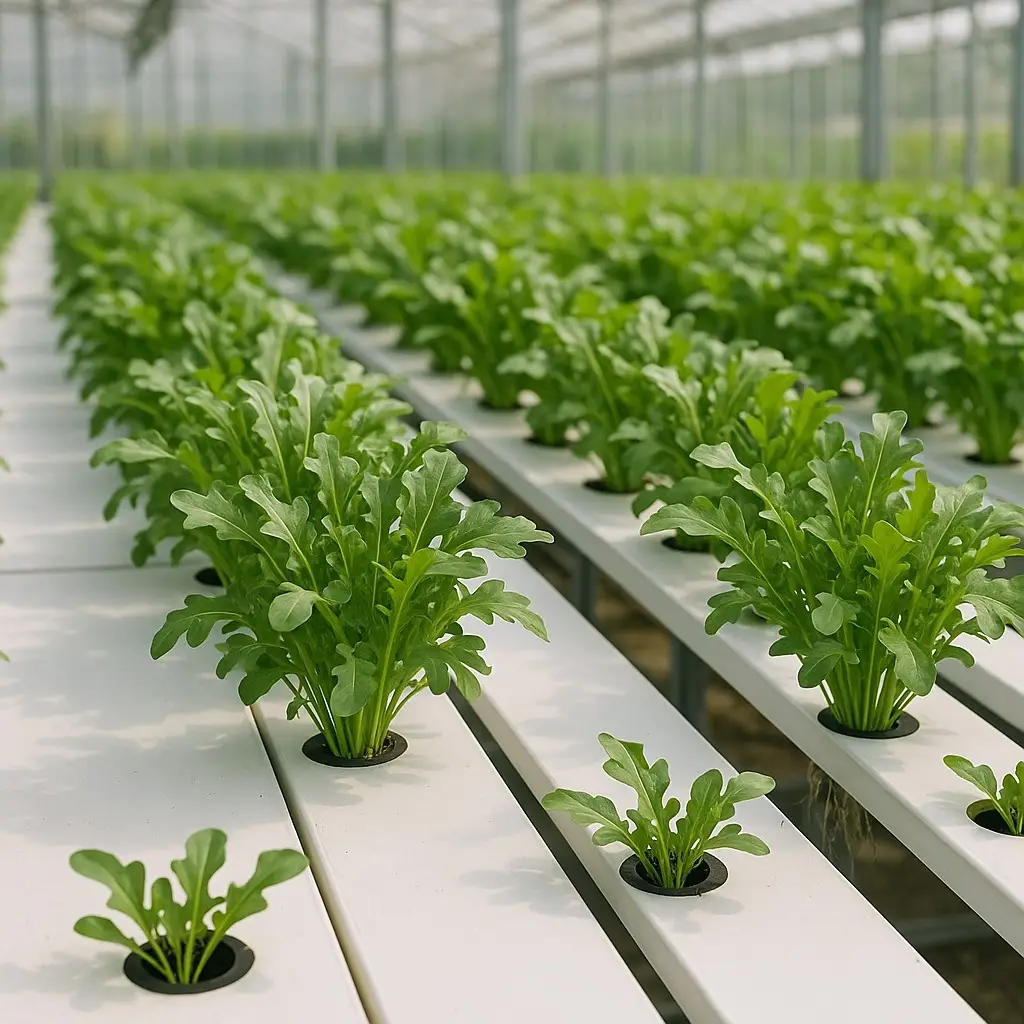
Why grow arugula under NFT system
NFT systems provide continuous access to nutrients and oxygen, resulting in uniform growth and high-quality leaves. Compared to soil-based cultivation, NFT allows better control of EC, pH, and moisture, reduces disease pressure, and enables year-round production. Arugula’s rapid growth and shallow roots make it especially suitable for NFT channels.
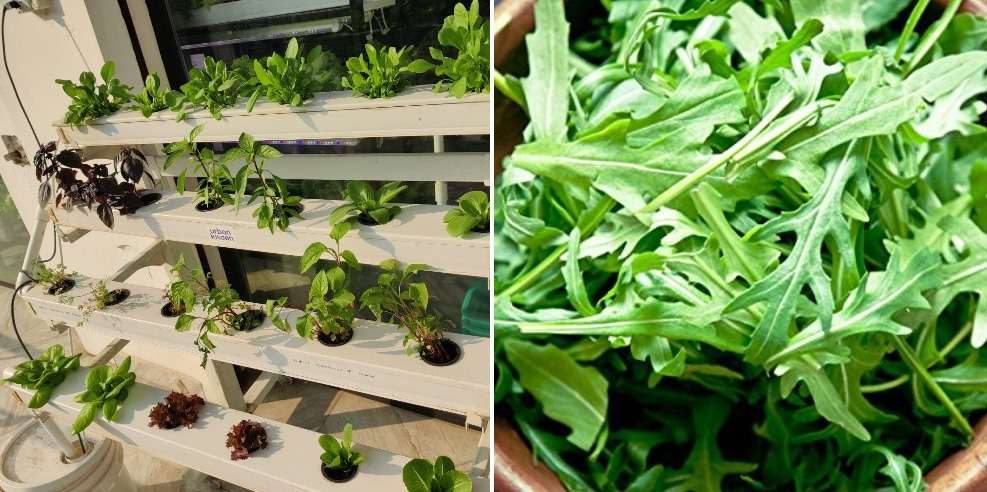
Variety selection and nursery management
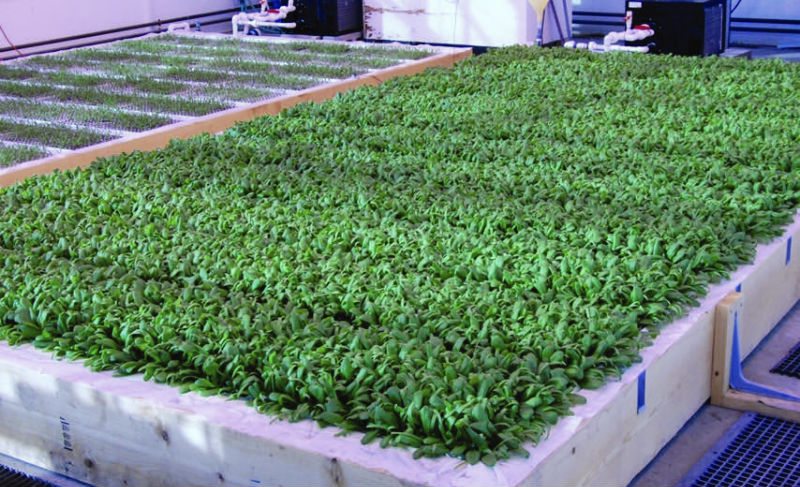
Select arugula varieties or hybrids bred for uniform leaf size, delayed bolting, and tolerance to mild heat. Use certified seeds with high germination rates. Seeds are sown in plug trays (128–200 cells) filled with sterile coco peat or rockwool. Germination occurs within 2–4 days at 18–22 °C. Transplant seedlings at the 2–3 true leaf stage, typically 7–10 days after sowing.
Botanical characteristics and growth habit
Botanical name: Eruca sativa
Family: Brassicaceae
Growth habit: Compact rosette
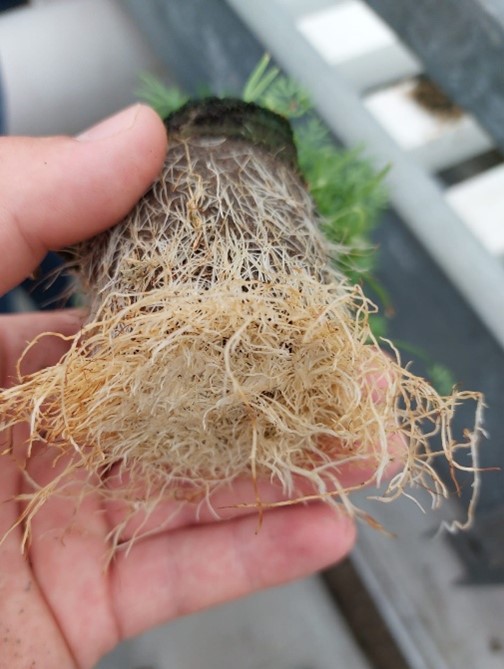
Root system: Shallow, fibrous
Life cycle: Annual
Harvested part: Leaves
Pollination: Not required (vegetative harvest)
Arugula is harvested before flowering; high temperatures accelerate bolting and reduce leaf quality.
NFT system design and layout
NFT channels of 75–100 mm width are recommended with a slope of 1:40 to 1:60 to ensure smooth nutrient flow. Nutrient solution should circulate continuously at a flow rate of 0.5–1.0 L/min per channel. Channels must be properly supported and cleaned between crop cycles to maintain hygiene and prevent clogging.
Climate and environmental requirements
Temperature:
Day: 15–22 °C
Night: 10–16 °C
Relative humidity: 55–70%
Light requirement: 12–16 hours photoperiod; 150–250 µmol·m⁻²·s⁻¹ PPFD
Ventilation: Continuous gentle airflow to reduce leaf wetness
Arugula prefers cooler growing conditions and performs well in naturally ventilated polyhouses or indoor NFT units.
Nutrient and irrigation management
Arugula is a moderate feeder and requires stable nutrient conditions.
Recommended nutrient ranges:
EC: 1.2–1.8 mS/cm
pH: 5.8–6.2
Key nutrient focus includes nitrogen for leaf growth, potassium for leaf quality, calcium for cell wall strength, and magnesium for photosynthesis. EC and pH should be monitored daily to avoid nutrient imbalance and leaf tip burn.
Pest and disease management
Common pests include aphids and flea beetles, while diseases such as downy mildew may occur under high humidity. Integrated pest management practices include insect-proof netting, sticky traps, proper sanitation, and maintaining optimal airflow. Chemical control is rarely required in well-managed NFT systems.
Expected yield and harvest
Arugula is harvested 20–25 days after transplanting. Harvesting can be done as whole rosettes or using a cut-and-come-again method. Under protected NFT systems, yields of 2.0–3.5 kg per m² per cycle are achievable. Multiple cycles per year allow consistent supply and high productivity.
Post-harvest handling
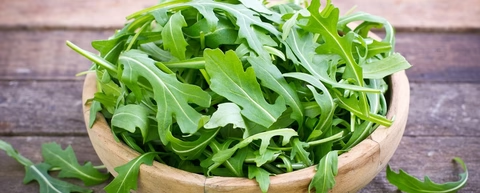
Harvest during cooler hours to maintain leaf turgidity. Wash gently with clean water, remove excess moisture, and pack in perforated food-grade bags. Store at 2–5 °C to retain freshness and quality. Shelf life ranges from 7–10 days under proper cold-chain management.
Checklist before starting
Choose suitable NFT system with continuous flow and backup power
Use certified arugula seeds and sterile nursery media
Maintain cool growing temperatures
Monitor EC and pH regularly
Follow hygiene and sanitation protocols
References and further reading
Protected cultivation manuals from agricultural universities
FAO hydroponic leafy vegetable production guides
Research literature on NFT leafy green production